
The Garter — History & Facts
A single gesture electrifies the room: a man leans in, his hand reaching for the wrist of a woman whose own hand hovers just above her exposed garter. The silk of her gown pools around her, luminous against the checkered floor, while her gaze—half startled, half appraising—meets his with a mixture of resistance and intrigue. Every surface in the chamber gleams with gold and lacquer, but it is the charged space between these two figures that draws the eye, turning a private moment into a tableau of wit and seduction.
The clock above, frozen at a particular hour, hints that time itself is a silent witness to this exchange. The Garter by Jean-François de Troy, painted in 1724, belongs to a world where conversation pieces and scenes of flirtation were prized for their cleverness and their sheen. In the early eighteenth century, Parisian interiors like this one became stages for the theater of manners, and artists delighted in capturing the coded language of glances, gestures, and luxurious fabrics. Such works were often commissioned by the wealthy to decorate their intimate salons, celebrating both their taste and their appetite for playful intrigue.
Today, the painting resides in the collection of the Metropolitan Museum of Art, a survivor of an age when pleasure and performance were inseparable—and the drama of a single moment could fill a room.
More Artworks by Jean-François de Troy
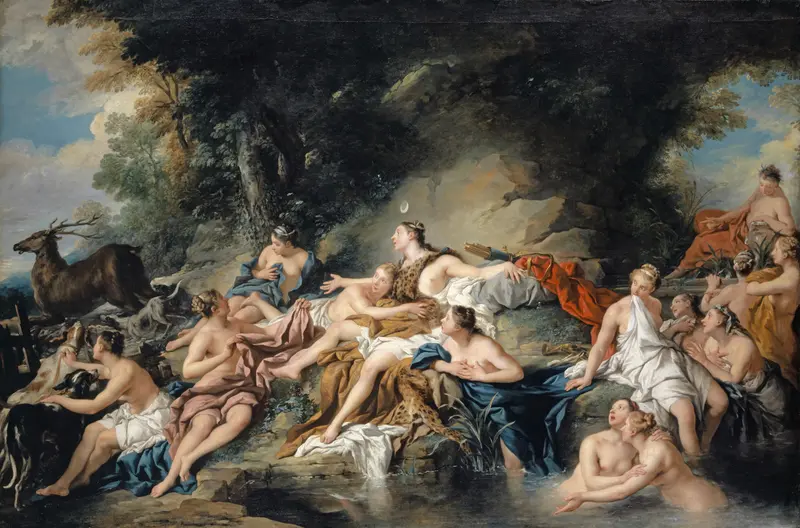
Diana and Actaeon
Jean-François de Troy
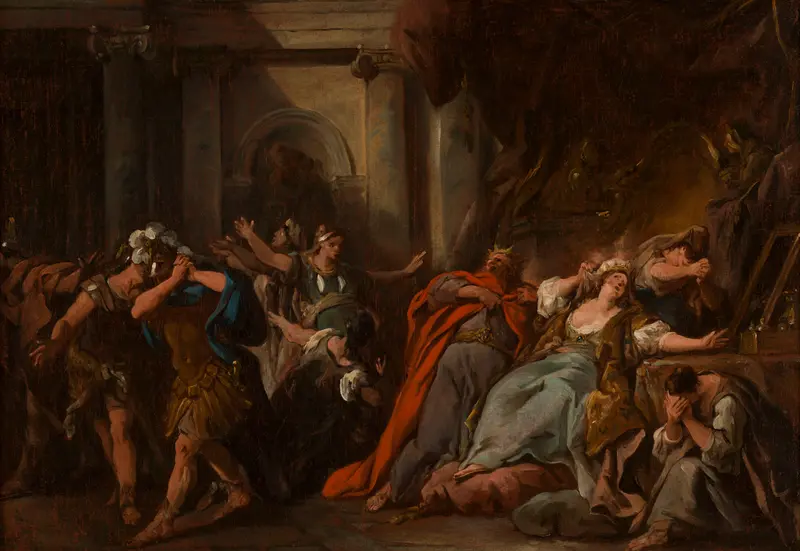
Créüse consumée par la robe empoisonnée
Jean-François de Troy
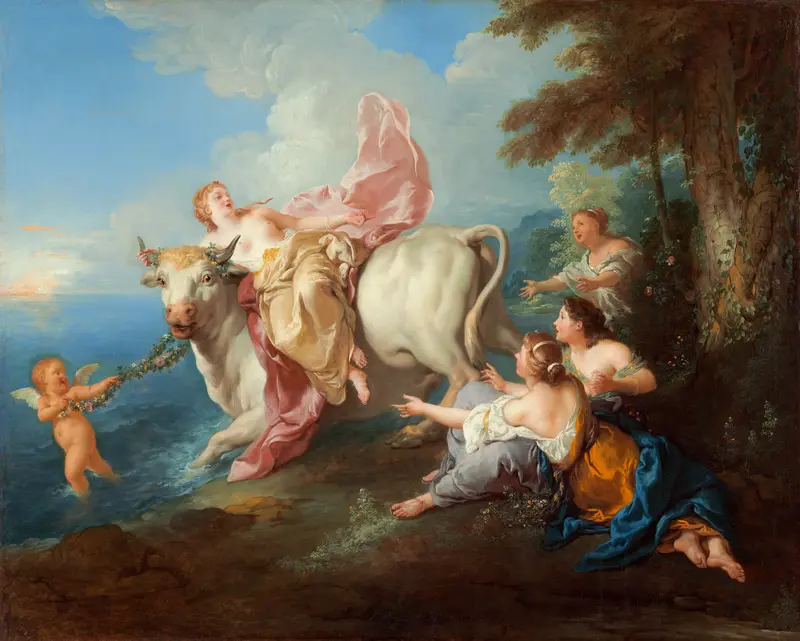
The Abduction of Europa
Jean-François de Troy
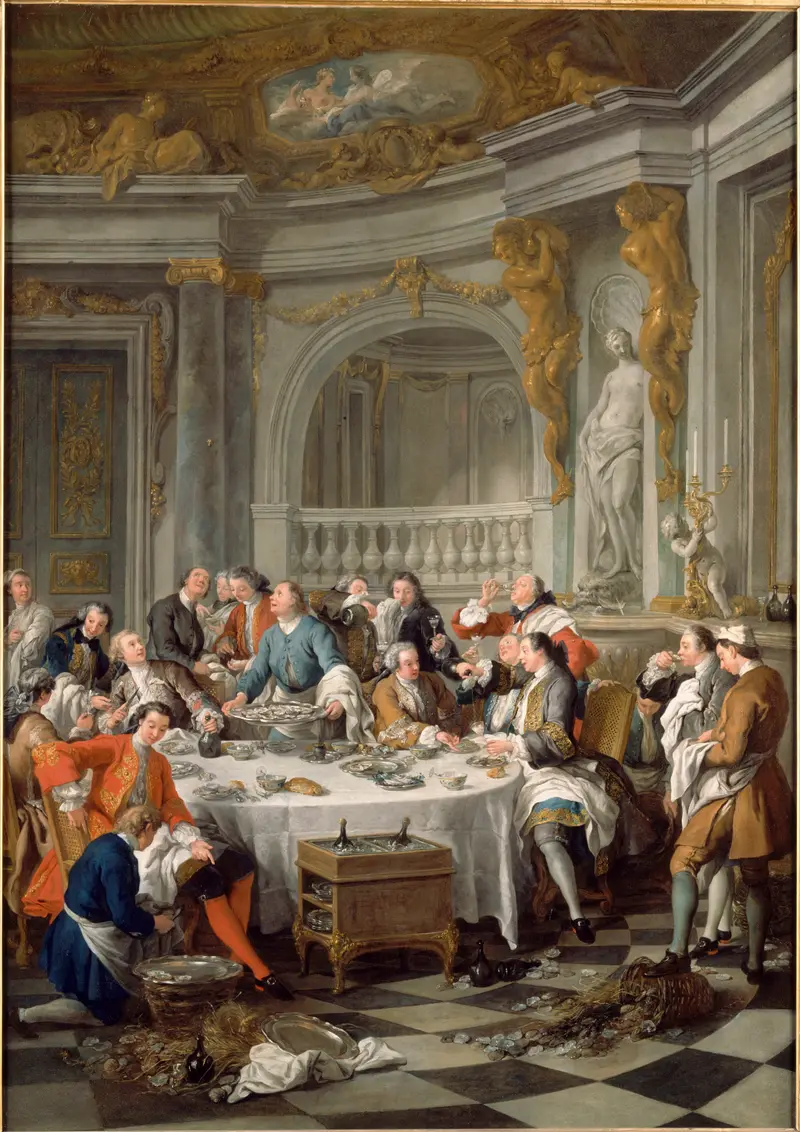
The Lunch of Oysters
Jean-François de Troy
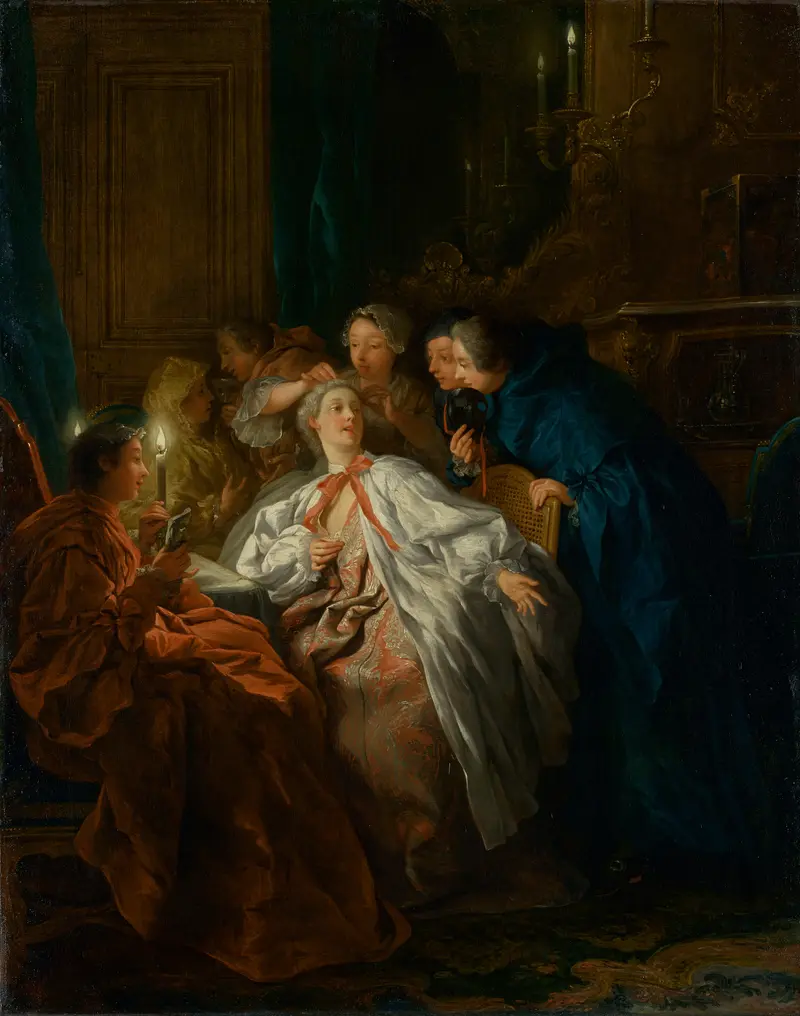
Before the Ball
Jean-François de Troy
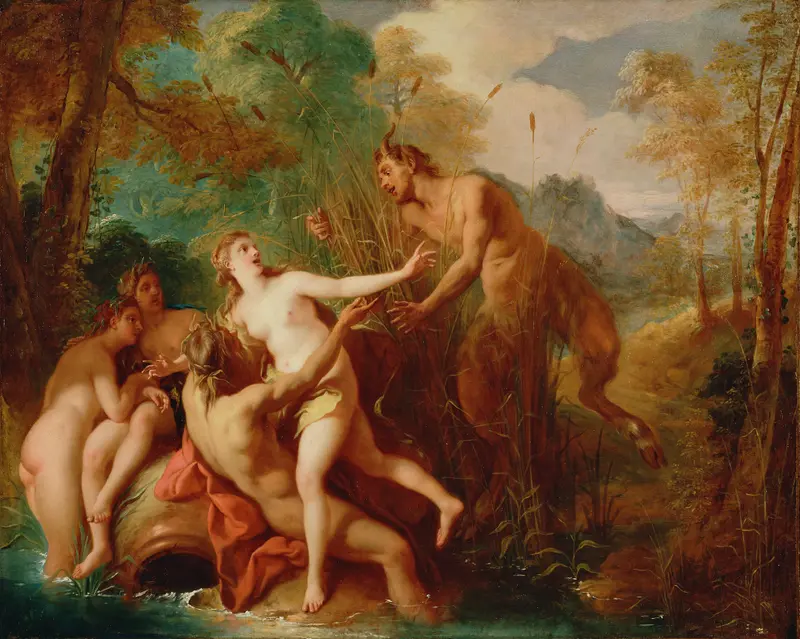
Pan and Syrinx
Jean-François de Troy

Le Combat des soldats nés des dents du serpent
Jean-François de Troy
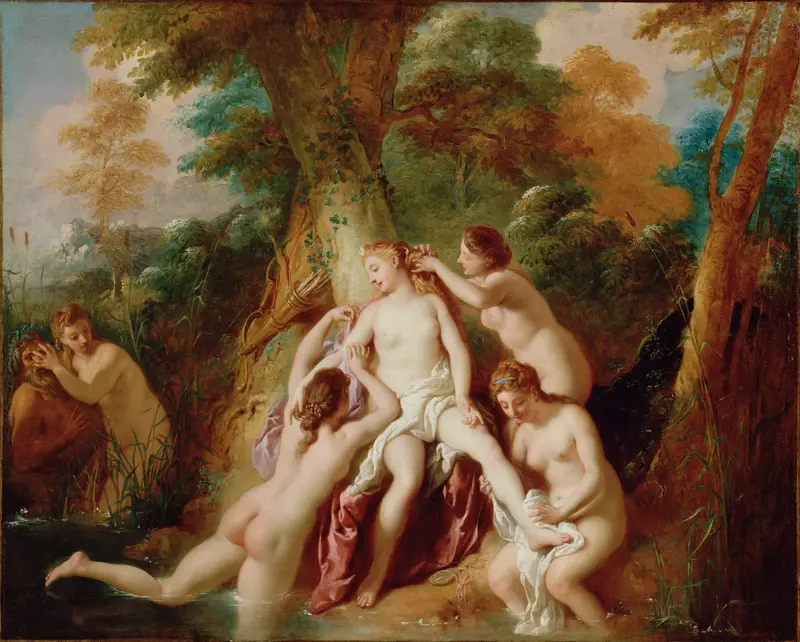
Diana and Her Nymphs Bathing
Jean-François de Troy
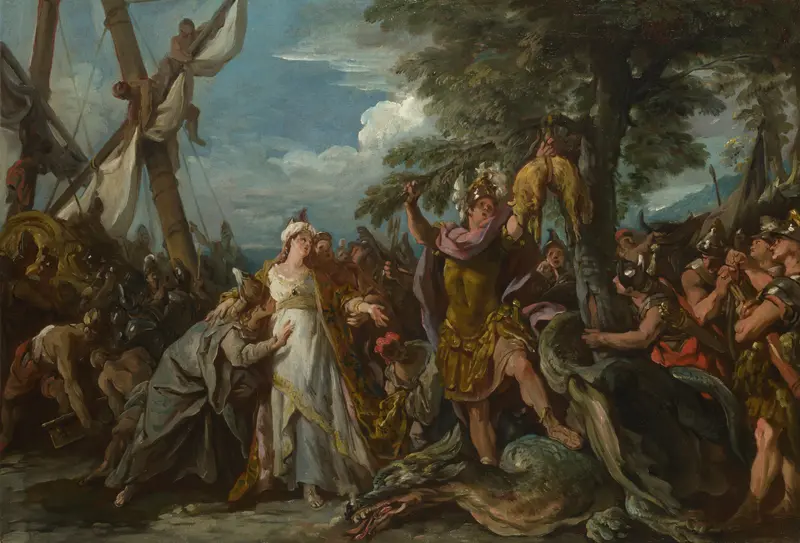
The Capture of the Golden Fleece
Jean-François de Troy

The Triumph of Mordecai
Jean-François de Troy
More Genre Scene Art

Banquet of the Officers of the St George Civic Guard
Frans Hals

Rembrandt and Saskia in the Scene of the Prodigal Son
Rembrandt van Rijn

Bal du moulin de la Galette
Pierre-Auguste Renoir

Quadrille at the Moulin Rouge
Henri de Toulouse-Lautrec

A Burial at Ornans
Gustave Courbet

When Will You Marry?
Paul Gauguin