
The Love Letter — History & Facts
When The Love Letter emerged from the studio of Jean-Honoré Fragonard around 1770, it was immediately recognized as a daring celebration of private desire at a time when the French aristocracy delighted in the art of flirtation. The painting belongs to a celebrated series of intimate, playful works Fragonard created for Madame du Barry, the last mistress of Louis XV, whose lavish commissions transformed the Rococo style into a language of seduction. Unlike the grand history paintings of the era, these canvases whispered secrets, and The Love Letter became a symbol of the clandestine exchanges that shaped the social world of Versailles. At the heart of the scene, a young woman in a sumptuous gown sits poised at her writing table, caught in the act of reading a freshly delivered note.
Her cheeks are flushed, her lips parted in a private smile; the small dog at her feet, a traditional emblem of fidelity, looks up expectantly. Sunlight pours across the silk and lace, illuminating the delicate paper in her hand—a visual cue to the thrill of secret communication. The scattered flowers and the gilt-edged furniture evoke a world of luxury and fleeting pleasures, while the gentle swirl of brushwork gives the moment a sense of breathless immediacy.
Compared to Vermeer’s more restrained The Love Letter, Fragonard’s version is exuberant, almost conspiratorial, inviting the viewer to share in the delight of the message. The precise early history of The Love Letter is not fully documented, but it is widely believed to have been part of a private commission for a Parisian salon, reflecting the taste for intimate, genre scenes among the French elite. Over time, the painting passed through the hands of several collectors, surviving the upheavals of the Revolution and the dispersal of aristocratic treasures. Today, it stands as a quintessential example of Fragonard’s Rococo style, celebrated for its wit and sensuality, and is housed in the collection of the Metropolitan Museum of Art in New York.
The painting marks a high point in Fragonard’s career, just before the tides of fashion turned and the seriousness of Neoclassicism swept away the playful spirit of the Rococo.
More Artworks by Jean-Honoré Fragonard

The Swing
Jean-Honoré Fragonard

The Swing
Jean-Honoré Fragonard

A Young Girl Reading
Jean-Honoré Fragonard

The Lock
Jean-Honoré Fragonard

The Triumph of Venus
Jean-Honoré Fragonard

A Game of Hot Cockles
Jean-Honoré Fragonard
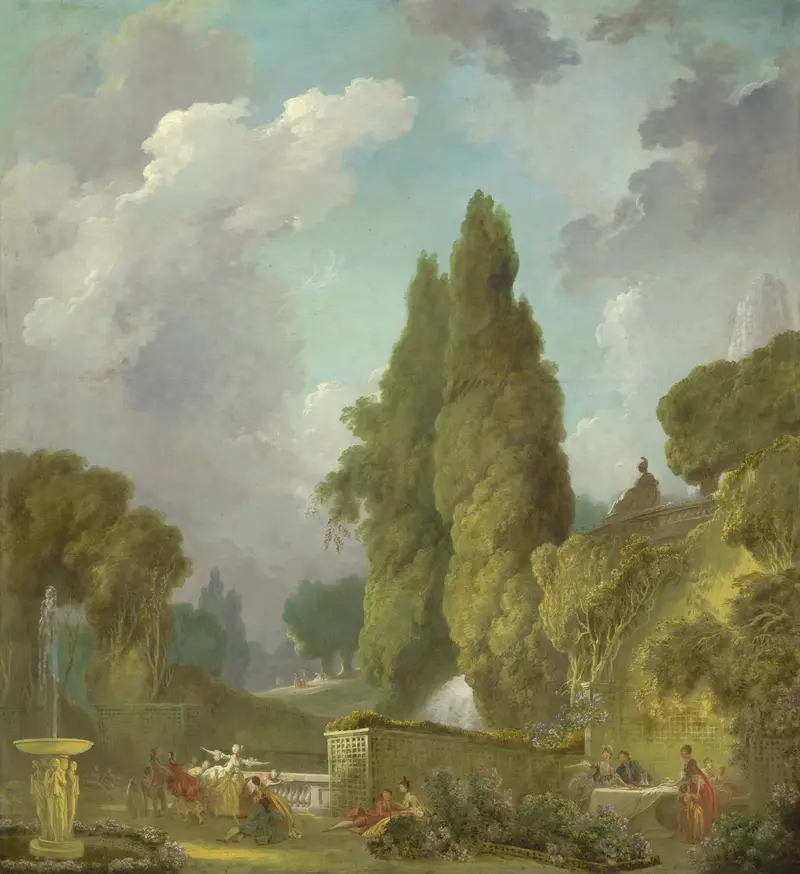
Blindman’s Buff
Jean-Honoré Fragonard
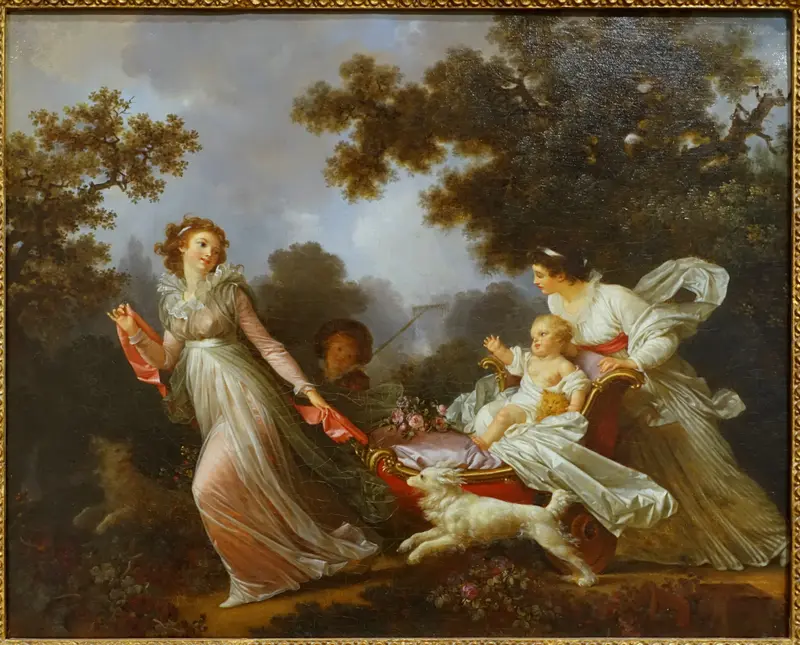
The Beloved Child
Jean-Honoré Fragonard
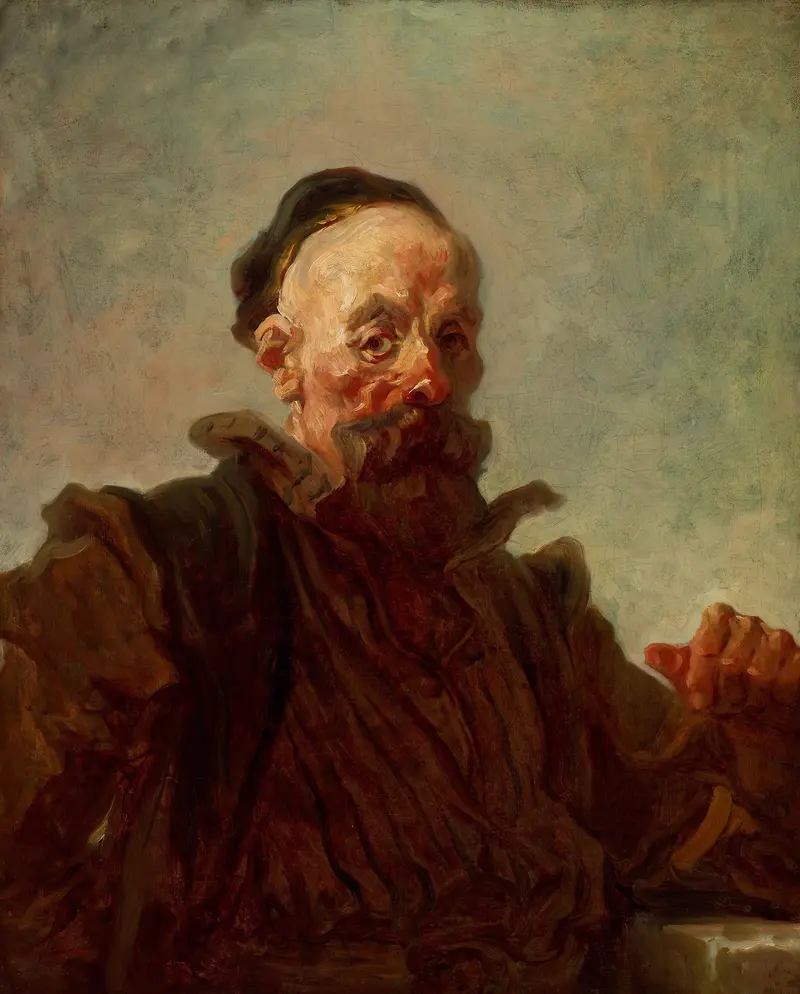
Portrait of a Man in Costume
Jean-Honoré Fragonard
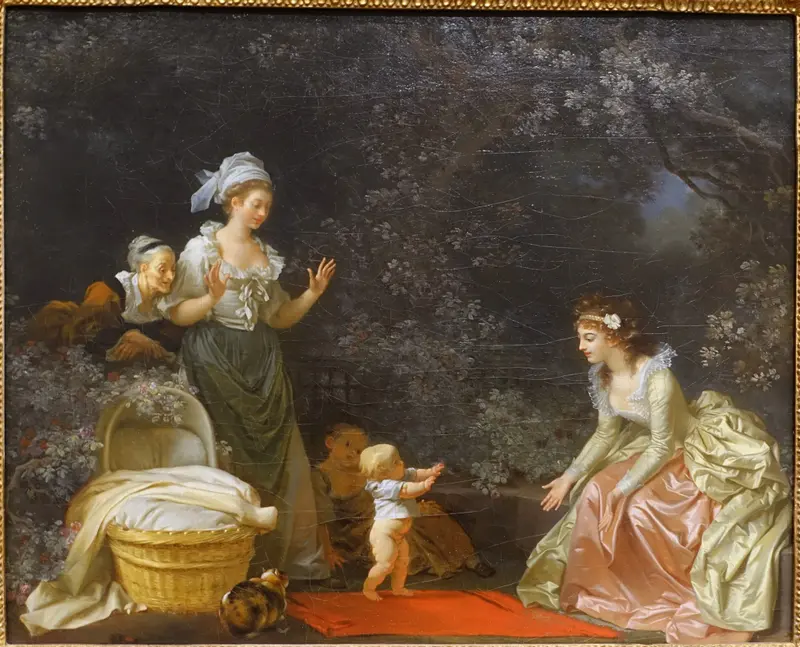
The First Steps
Jean-Honoré Fragonard
More Genre Scene Art

Banquet of the Officers of the St George Civic Guard
Frans Hals

Rembrandt and Saskia in the Scene of the Prodigal Son
Rembrandt van Rijn

Bal du moulin de la Galette
Pierre-Auguste Renoir

Quadrille at the Moulin Rouge
Henri de Toulouse-Lautrec

A Burial at Ornans
Gustave Courbet

When Will You Marry?
Paul Gauguin