
The Seven Works of Mercy — History & Facts
When Caravaggio arrived in Naples in 1606, fleeing a murder charge in Rome, he was commissioned to paint The Seven Works of Mercy for the city’s charitable brotherhood, the Pio Monte della Misericordia. The painting was not destined for a grand altar, but for a side chapel in the brotherhood’s own church, where it would serve as a daily reminder of their mission. What makes this work remarkable is how Caravaggio compressed seven separate acts of mercy—traditionally depicted as distinct scenes—into a single, swirling street drama.
The result is a canvas that pulses with life, confusion, and hope, all unfolding under the Neapolitan night. At the center, a young man hoists an old beggar to his feet, enacting the act of sheltering the homeless, while to the right, a woman secretly nurses her imprisoned father—an ancient Roman tale of filial piety, here representing feeding the hungry. In the shadows, a gravedigger carries a corpse, recalling the burial of the dead, while other figures offer drink, comfort, and clothing. Caravaggio’s signature chiaroscuro carves the scene from darkness, guiding the eye from one act to another in a restless, almost cinematic movement.
Unlike earlier artists such as Pieter Bruegel the Elder, who treated the works of mercy as a series of orderly vignettes, Caravaggio plunges them all into a single, chaotic moment, the confusion itself a metaphor for the unpredictability of charity in daily life. The painting has remained in its original location in Naples since its completion in 1607, a rare case of an early Caravaggio never leaving its intended home. The Pio Monte della Misericordia still exists, and the painting continues to preside over their chapel, its surface darkened by centuries of candle smoke but its figures undimmed. Scholars note that this was Caravaggio’s first major work after his exile from Rome, marking a new phase in his career defined by even starker contrasts and more urgent realism.
The work’s daring composition and raw humanity influenced generations of Neapolitan painters, making it a cornerstone of the city’s artistic identity.
More Artworks by Caravaggio
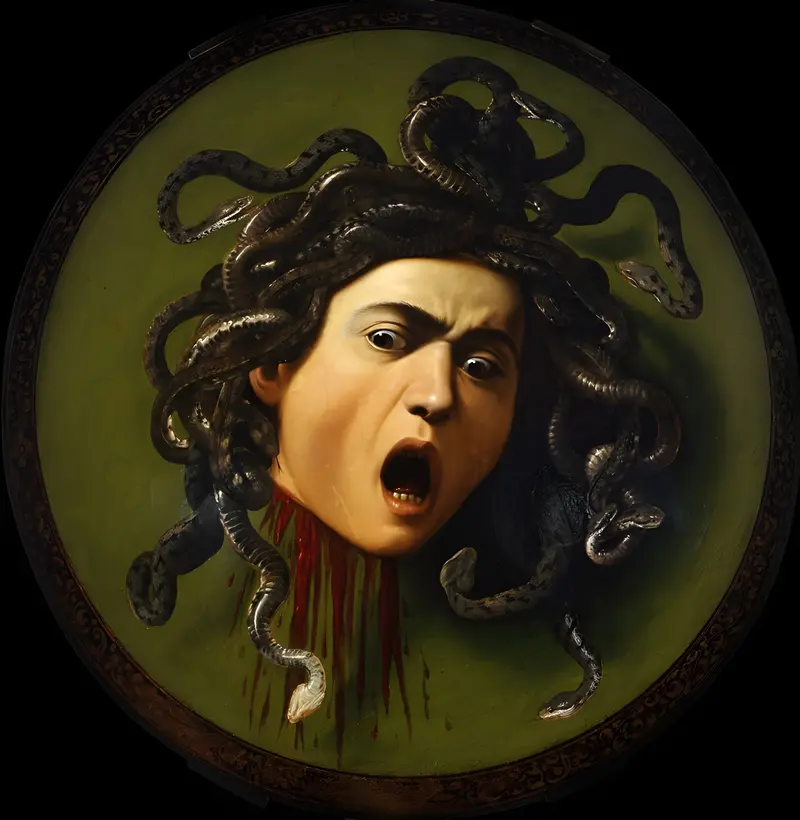
Medusa
Caravaggio
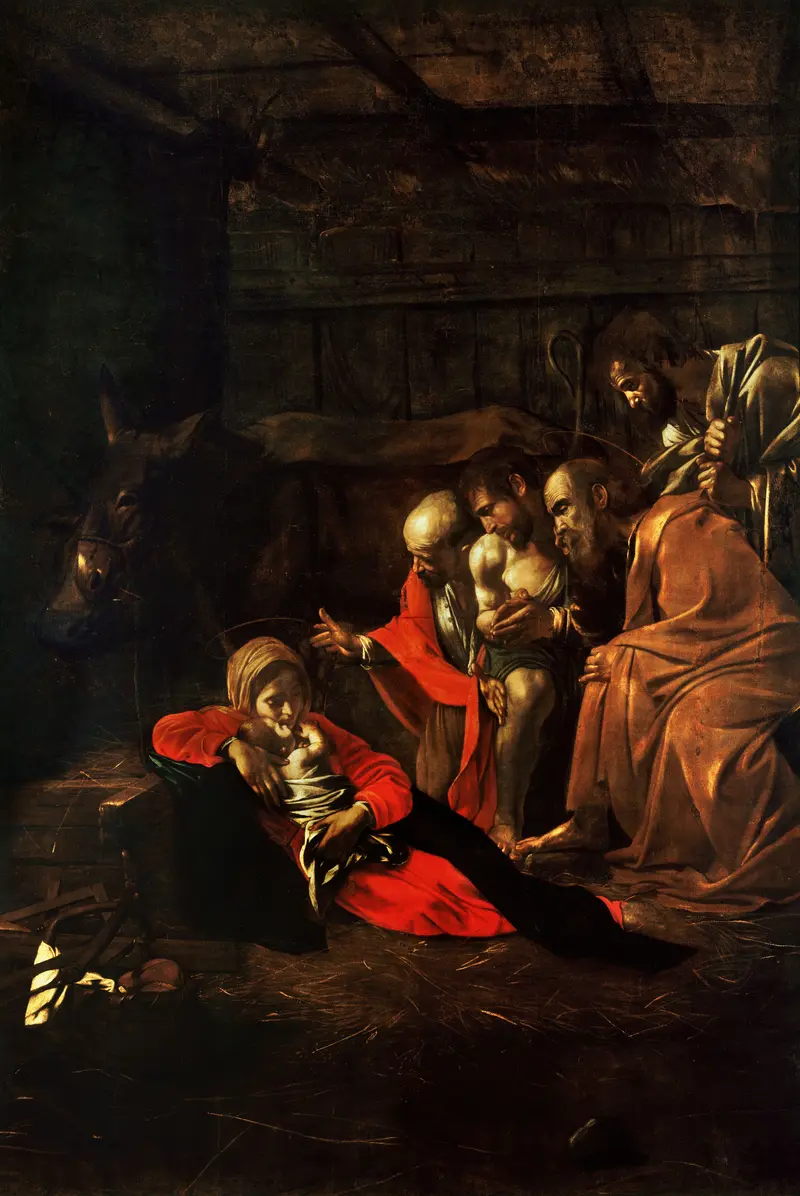
Adoration of the Shepherds
Caravaggio
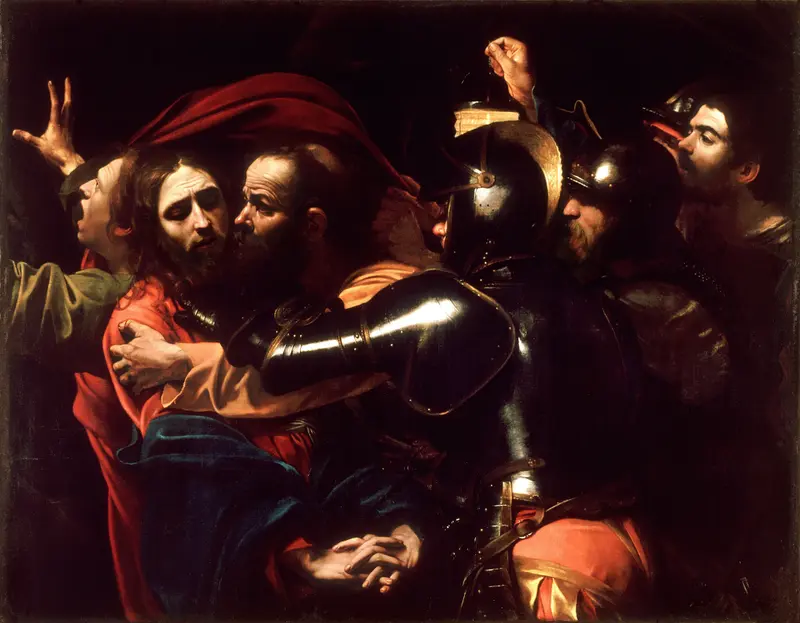
The Taking of Christ
Caravaggio
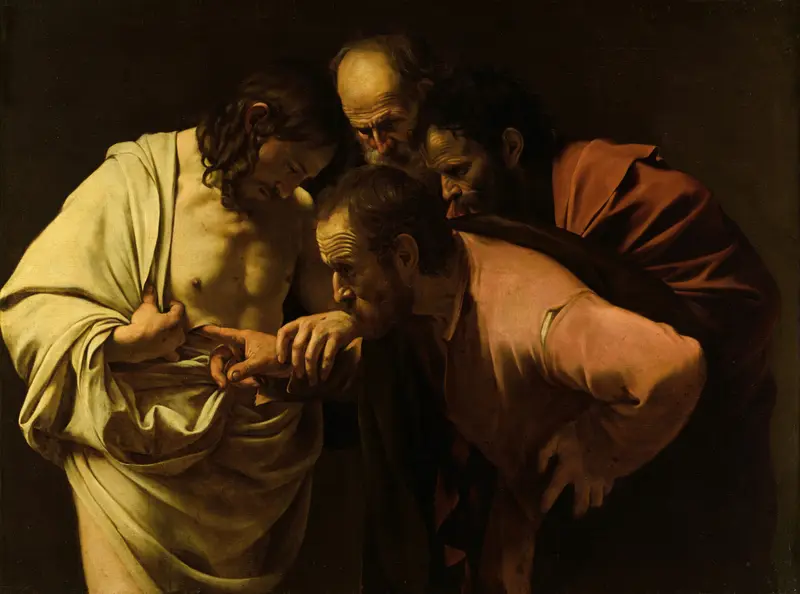
The Incredulity of Saint Thomas
Caravaggio
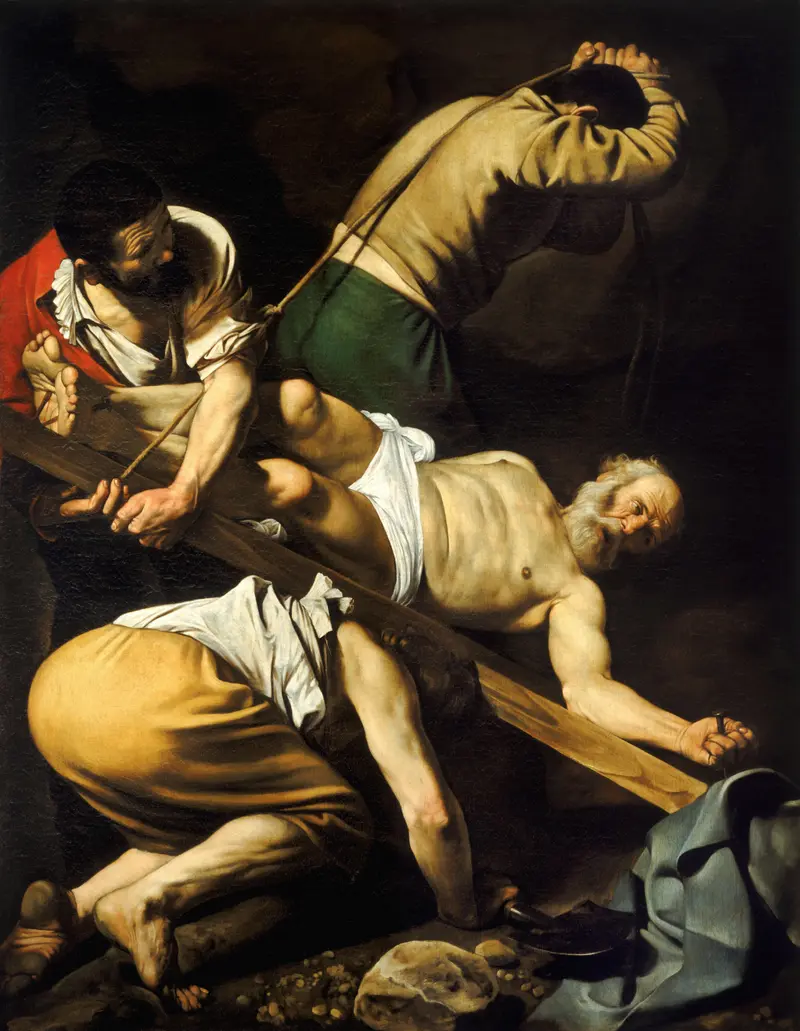
Crucifixion of Saint Peter
Caravaggio
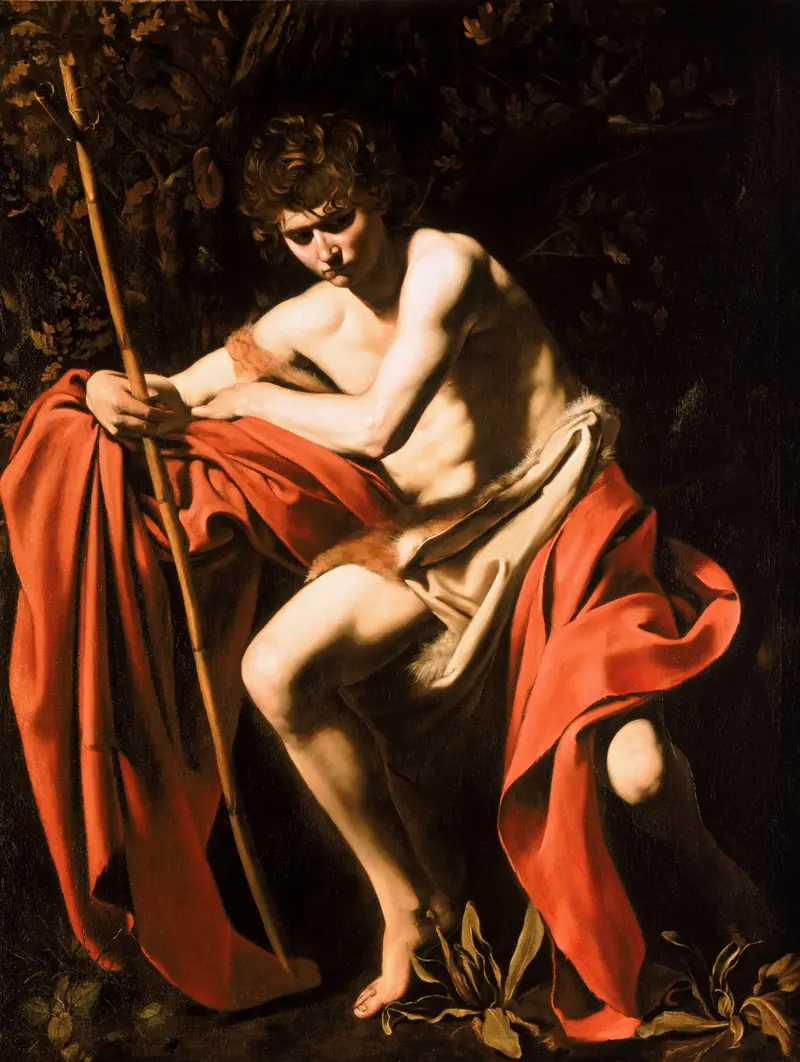
Saint John The Baptist In The Wilderness
Caravaggio

Saint Matthew and the angel
Caravaggio
The Inspiration of Saint Matthew
Caravaggio

Conversion on the Way to Damascus
Caravaggio
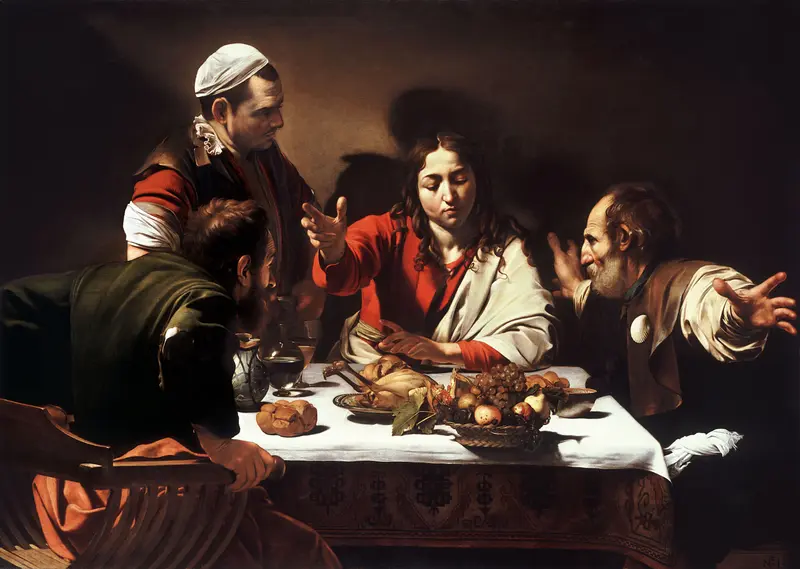
Supper at Emmaus
Caravaggio





