
The Story of Nastagio Degli Onesti, part one — History & Facts
A wedding commission lies at the heart of The Story of Nastagio Degli Onesti, part one, one of four panels painted by Sandro Botticelli in 1483 for the marriage of Giannozzo Pucci and Lucrezia Bini in Florence. The panels were designed not just as decoration, but as a narrative cycle to instruct and entertain the couple and their guests, drawing from the tales of Giovanni Boccaccio’s Decameron. Botticelli’s series is among the earliest surviving examples of secular storytelling in Renaissance art, and the panels were originally set into the walls of the bride’s family palace.
The fact that Botticelli and his workshop produced four detailed scenes for a single domestic setting speaks to the importance of marriage alliances among Florence’s elite. The painting captures the chilling moment when Nastagio, a young nobleman, witnesses a supernatural hunt in a pine forest outside Ravenna. In the foreground, a naked woman flees in terror from a mounted knight and his hounds—her long hair and desperate gesture signaling her torment. The knight, armored and relentless, is revealed to be a ghost condemned to pursue his former beloved, who spurned him in life, for eternity.
Botticelli’s composition guides the eye from Nastagio’s astonished figure at the left, through the drama unfolding beneath the trees, to the distant city walls. The meticulously rendered pine trunks and gleaming armor root the scene in the real world, yet the subject is pure fable—a blend of the everyday and the uncanny, not unlike the dreamlike storytelling of Piero di Cosimo, who would later paint similarly haunted landscapes. After centuries in private Florentine hands, the four Nastagio panels were eventually separated and dispersed. Today, The Story of Nastagio Degli Onesti, part one resides in the Prado Museum, while its companions are in collections across Europe and the United States.
The panels are a testament to Botticelli’s versatility, painted at the height of his career, just after his work on the Sistine Chapel frescoes and before the visionary mythologies of Primavera and The Birth of Venus. Though the original context of the wedding chamber is lost, the series remains a rare window into Renaissance domestic life and the enduring power of storytelling in art.
More Artworks by Sandro Botticelli
Virgin and Child
Sandro Botticelli
Madonna and Child and the Young St John the Baptist
Sandro Botticelli
Madonna and Child with six angels and Saint John the Baptist as Child
Sandro Botticelli
Adoration of the Magi
Sandro Botticelli

Virgin and Child with the Young Saint John the Baptist
Sandro Botticelli
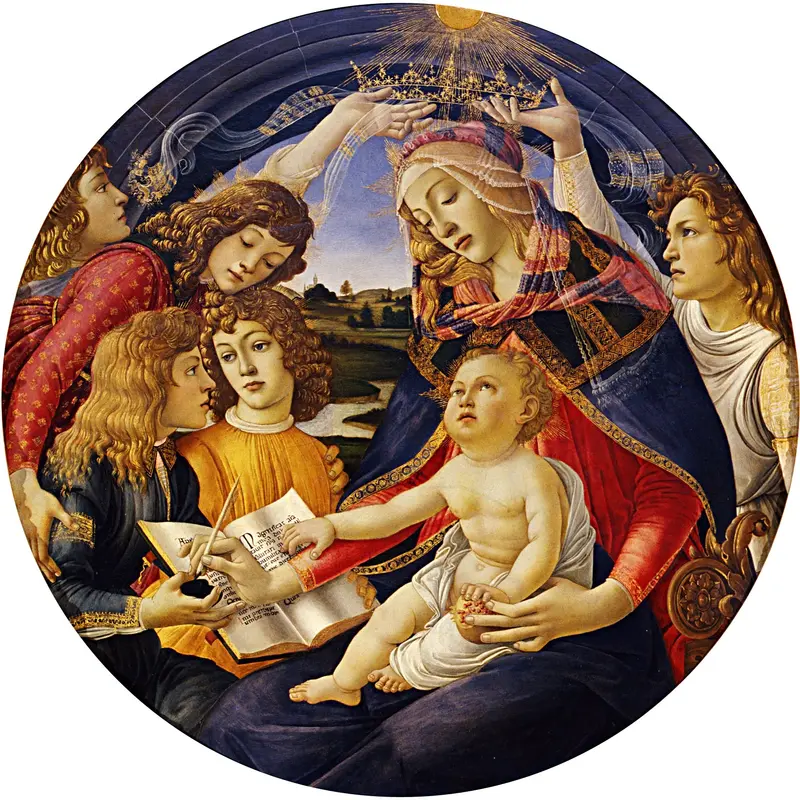
Madonna of the Magnificat
Sandro Botticelli
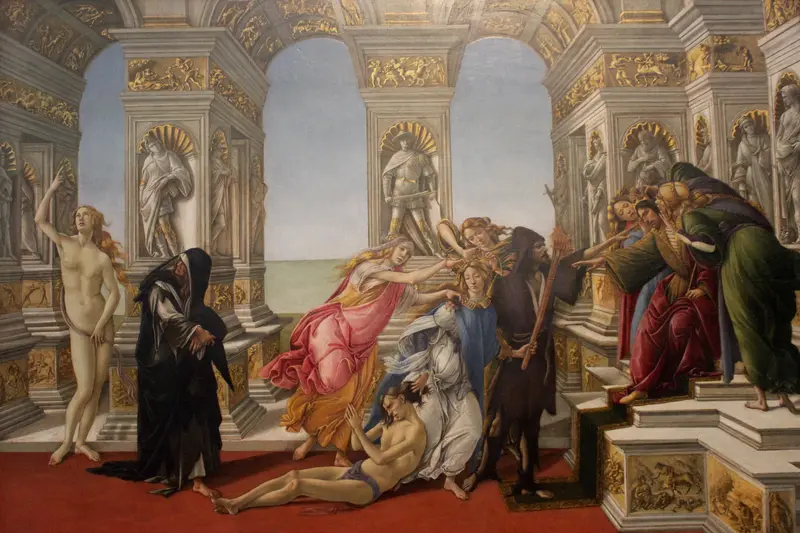
Calumny of Apelles
Sandro Botticelli
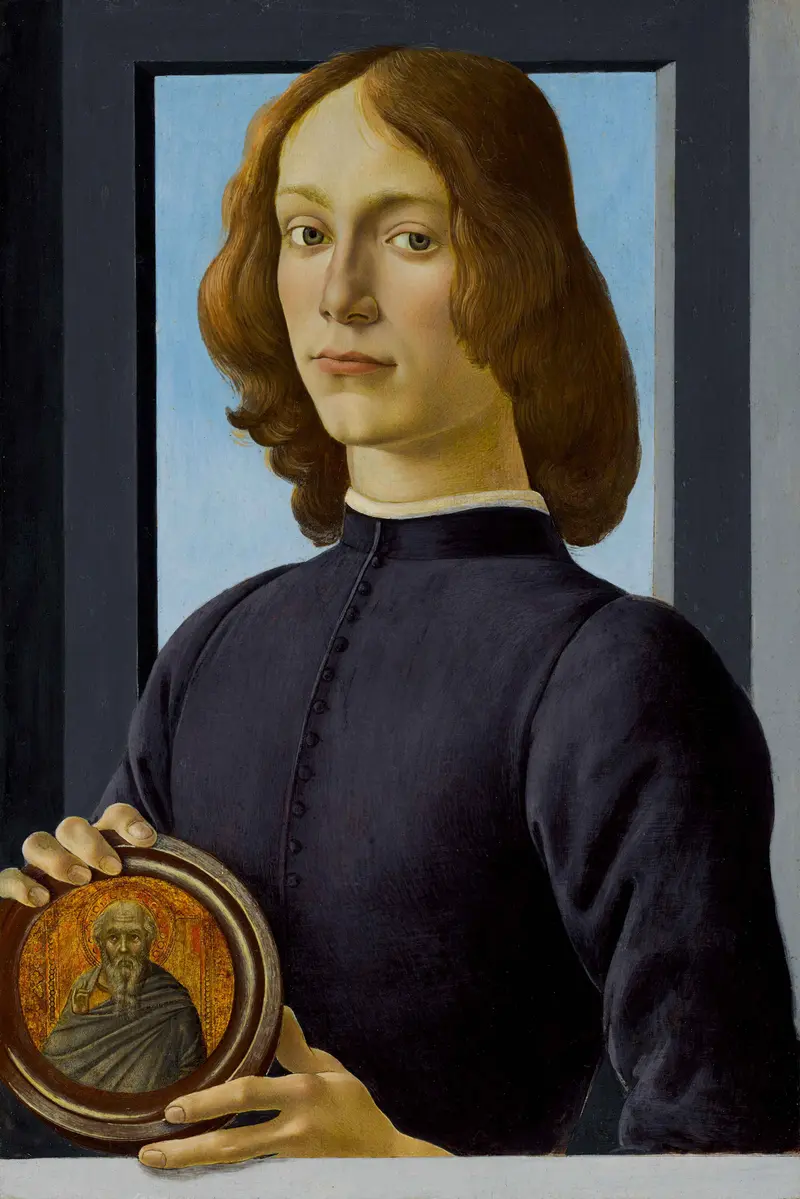
Portrait of a young man holding a roundel
Sandro Botticelli

The Trinity with Saint Mary Magdalene and Saint John the Baptist, the Archangel Raphael and Tobias
Sandro Botticelli
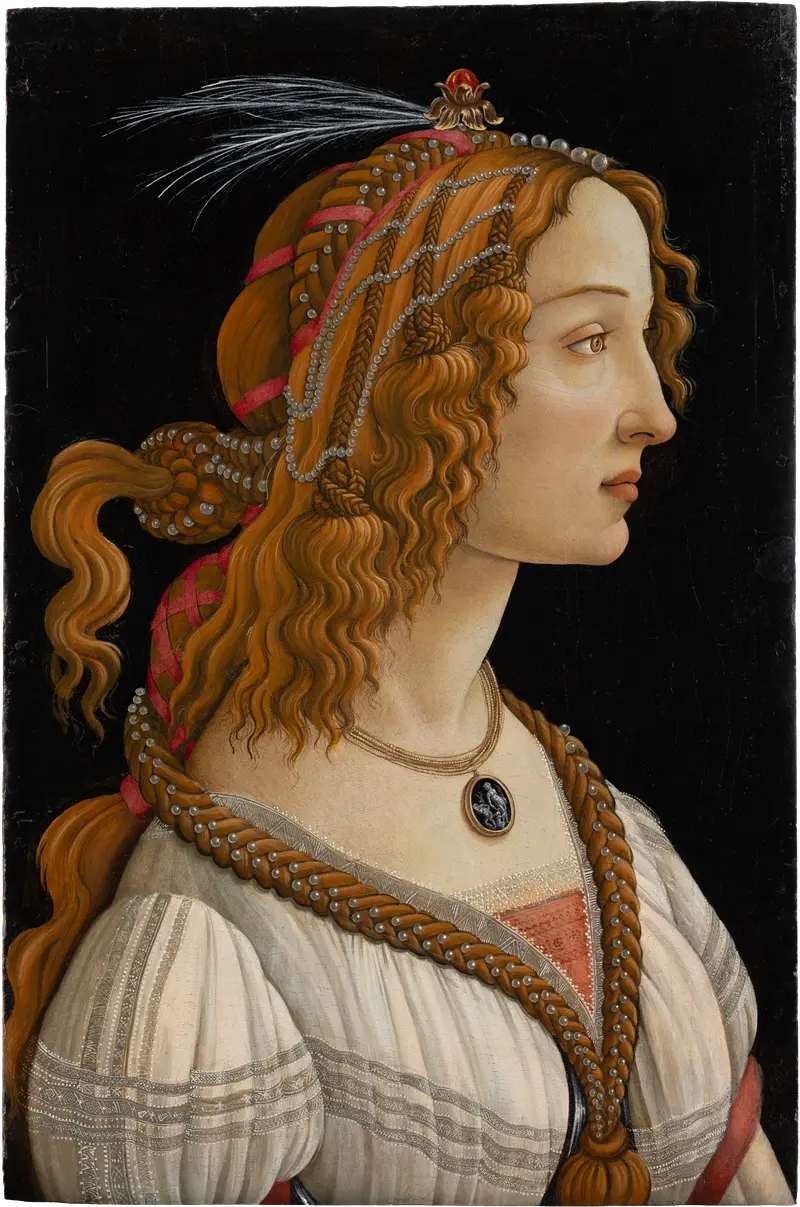
Idealized Portrait of a Lady (Portrait of Simonetta Vespucci as Nymph)
Sandro Botticelli





