
Torquato Tasso (1544–1595) — History & Facts
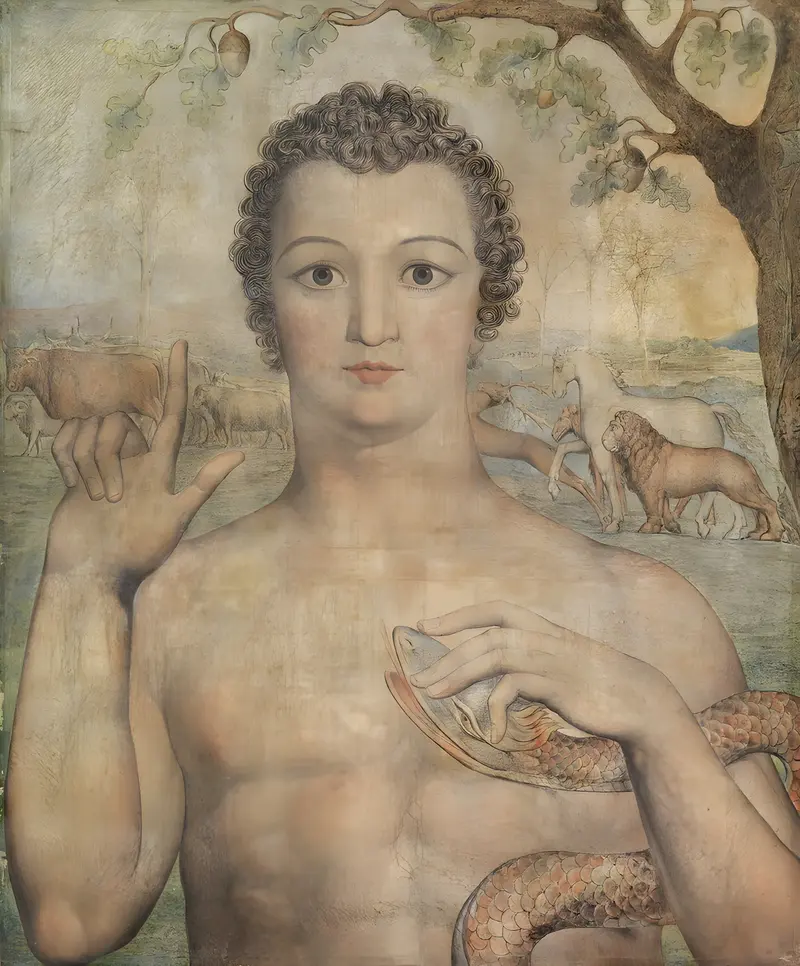
Few works by William Blake are as enigmatic as his portrait of Torquato Tasso, painted in 1800, at a moment when Blake himself was struggling with isolation and misunderstanding. The choice of Tasso—a Renaissance poet famed for his genius and madness—mirrors Blake’s own sense of alienation. Blake’s fascination with Tasso was not unique; the Italian’s tragic life had become a symbol for the suffering artist by the late 18th century, inspiring operas, poems, and paintings across Europe.
Yet, Blake’s vision stands apart for its psychological intensity, capturing not just the likeness but the inner turmoil of the poet who, in 1579, was confined to an asylum in Ferrara. Blake fixes Tasso at the edge of despair: the poet’s eyes are wide, his brow furrowed, his hands clenched as if wrestling with invisible tormentors. The background is spare, drawing attention to Tasso’s haunted expression and the dramatic play of light across his face—an effect that seems to isolate him from the world, much as Tasso was isolated in life. The absence of grand literary props or classical trappings, so common in other portraits of Tasso (such as Delacroix’s later, more theatrical treatments), marks Blake’s focus on the mind rather than the myth.
The chains, if present, are subtle—suggesting not physical but psychological imprisonment. The medium of this work remains uncertain, a point that continues to puzzle scholars, as does its early provenance. It likely originated as part of a series of visionary portraits Blake created around 1800, during his years in Felpham, when he was under the patronage of the poet William Hayley. Unlike his illuminated books, this portrait was not widely exhibited or reproduced in Blake’s lifetime, and its whereabouts were obscure for many years.
Today, the painting is recognized as a rare insight into Blake’s engagement with literary history and the theme of creative suffering—a subject that would haunt his art and poetry throughout his career.
More Artworks by William Blake
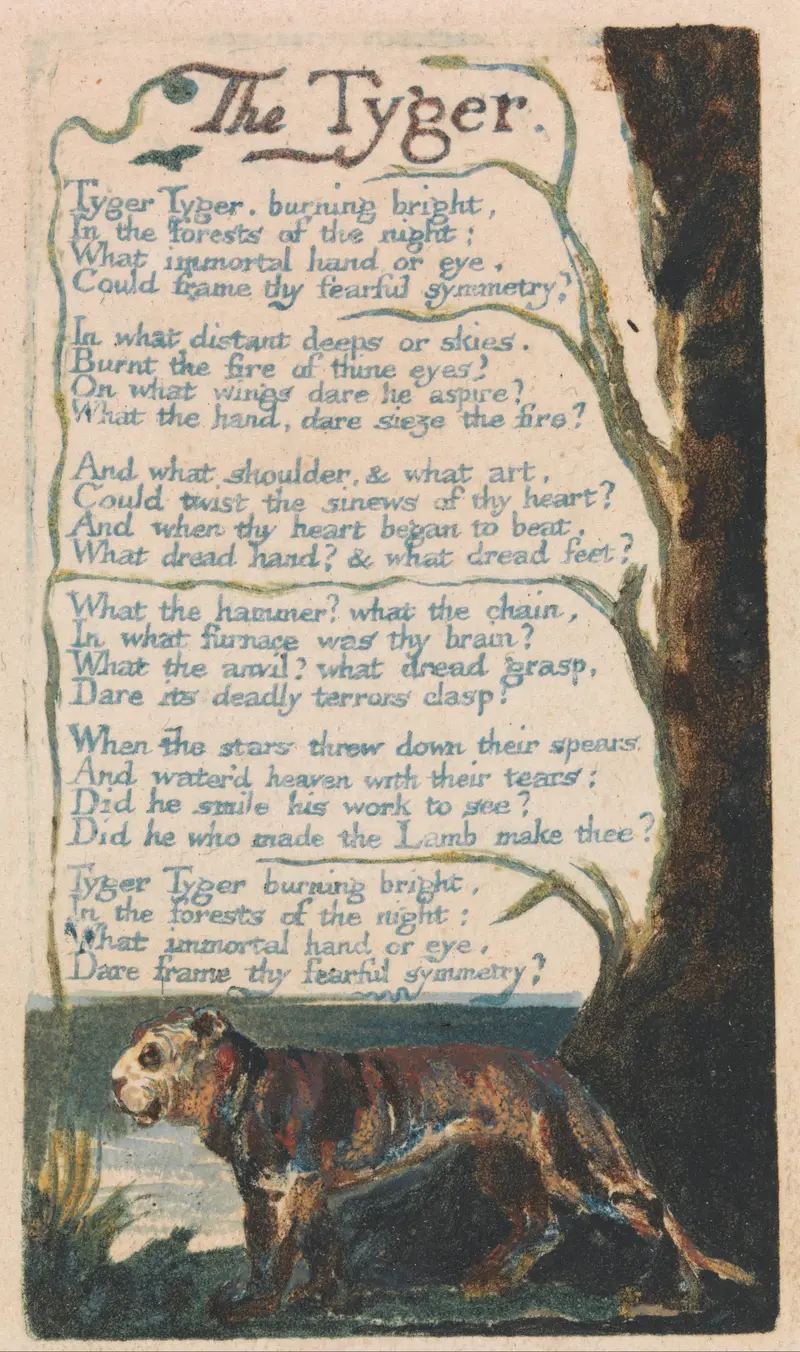
The Tyger
William Blake

Christ Blessing
William Blake
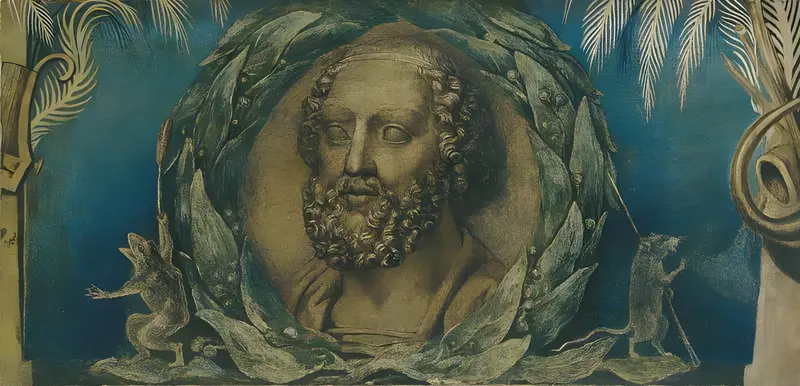
Homer
William Blake
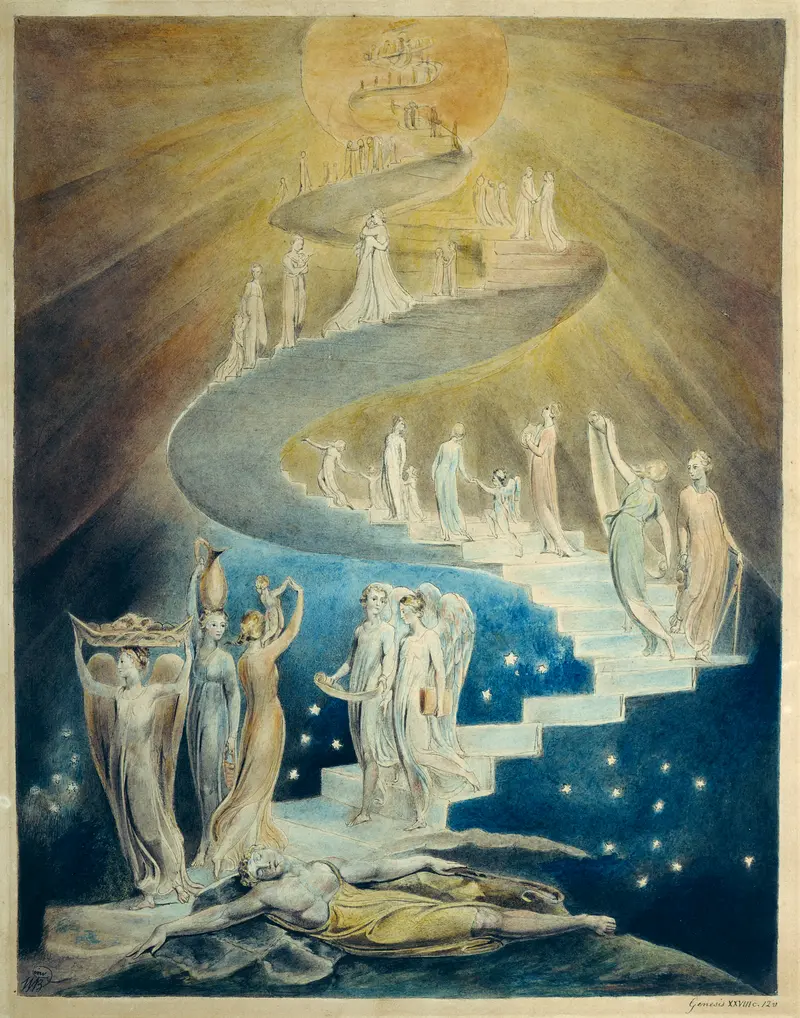
Jacob's Ladder
William Blake
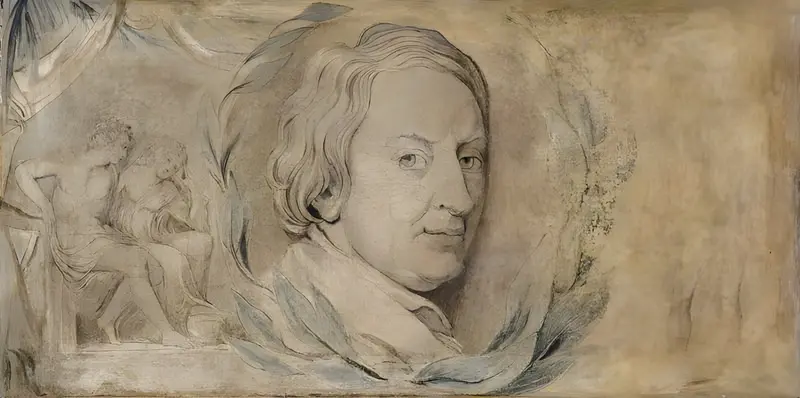
John Dryden (1631–1700)
William Blake
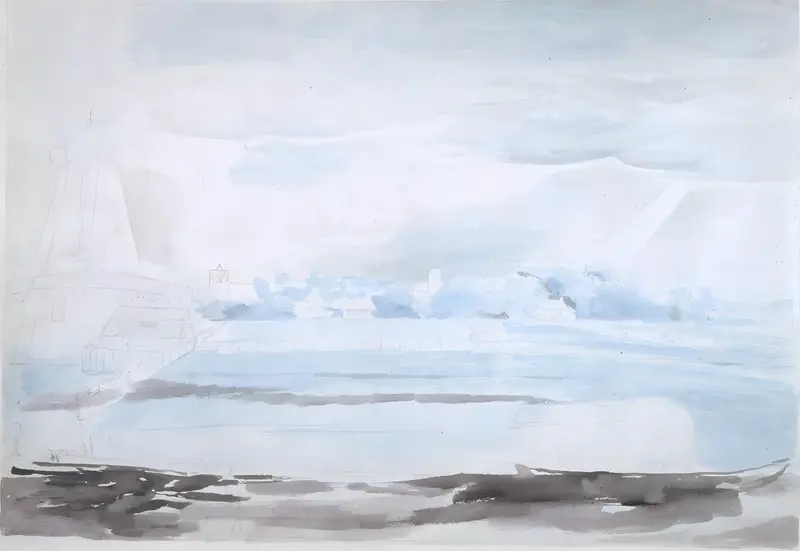
Landscape near Felpham
William Blake
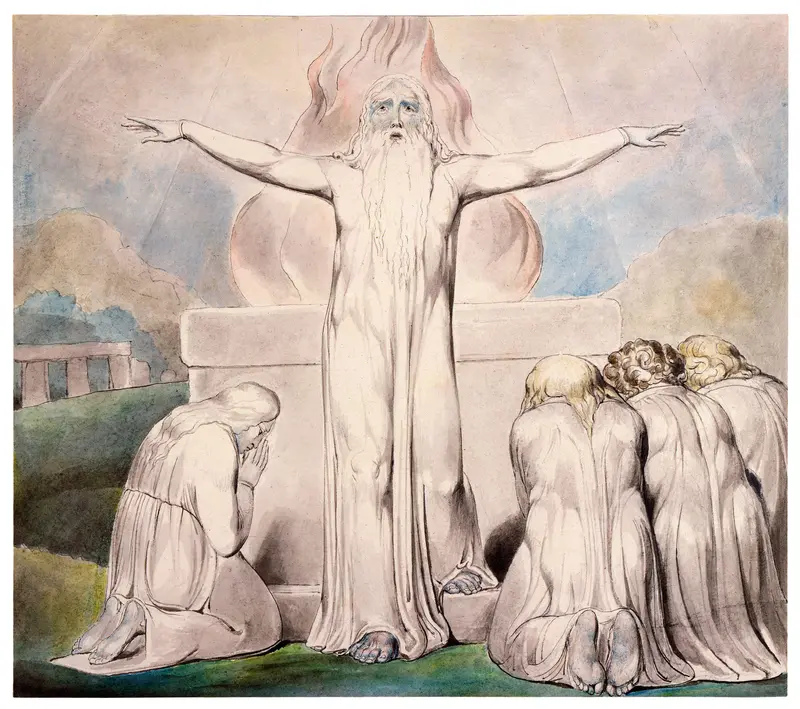
Sacrifice of Job
William Blake
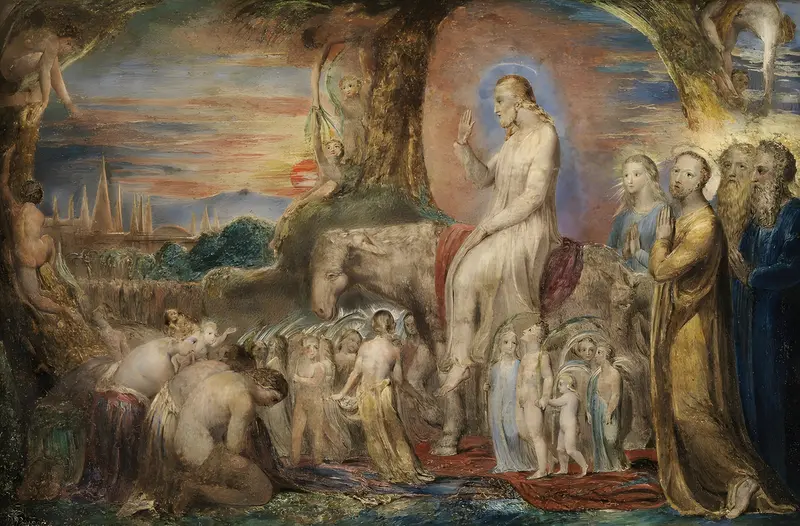
Christ's Entry into Jerusalem
William Blake
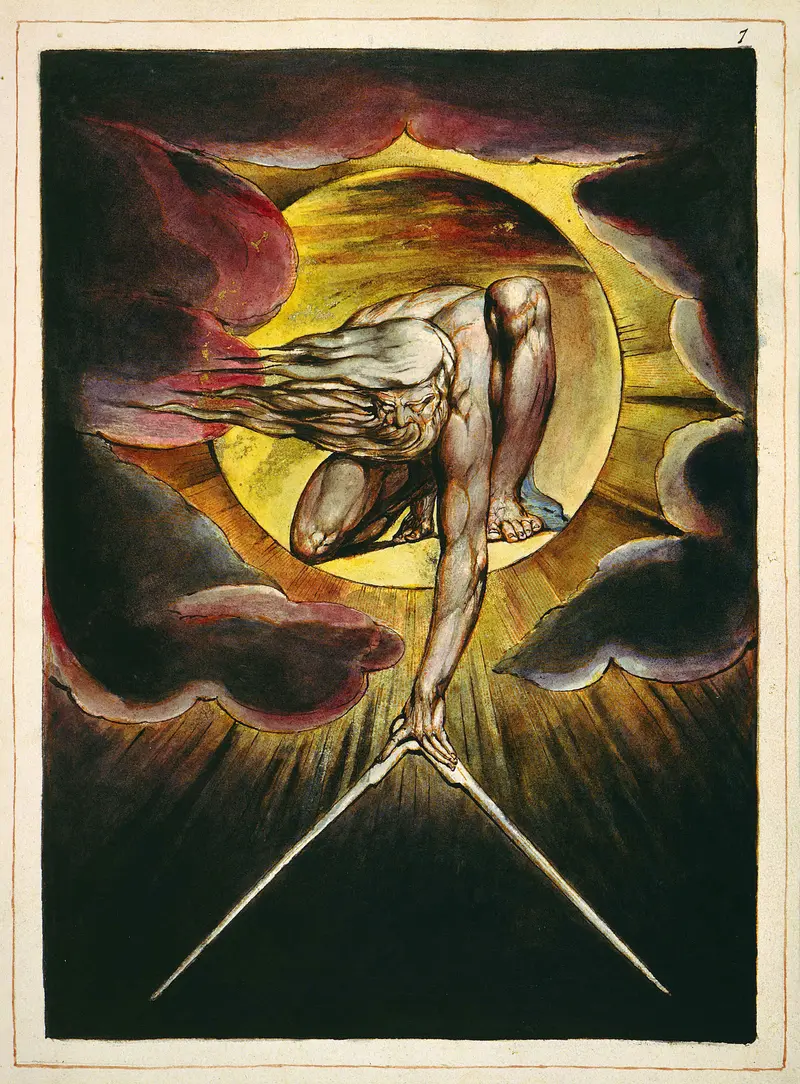
The Ancient of Days
William Blake
Adam Naming the Beasts
William Blake





