
Trois femmes sous les arbres — History & Facts
The eye is first caught by the thick, almost sculptural brushwork that gathers three women beneath a canopy of foliage, their forms emerging from a swirl of color and light. Faces and fabrics dissolve into strokes of ochre, cream, and mossy green, yet the intimacy of their gathering is unmistakable—shoulders nearly touching, heads inclined as if sharing a secret. The central figure, dressed in pale tones, acts as an anchor, her lightness drawing the gaze before it drifts outward to the more shadowed companions.
The background is no mere setting; it presses close, blurring the boundary between figure and nature, as if the women themselves are blooming from the earth. This is not a scene of narrative action, but of atmosphere—a fleeting moment suspended in paint. Painted in the 1870s, Trois femmes sous les arbres belongs to a world on the brink of Impressionism, when artists like Adolphe Joseph Thomas Monticelli were pushing the boundaries of what paint could do. In Paris, where this work now resides in the Paris Musées collection, such paintings were often made for private collectors eager for scenes of leisure and beauty, yet Monticelli’s approach is more daring than decorative.
His rapid, impasto technique and lush palette set him apart from his contemporaries, anticipating the experiments of younger painters who would soon transform French art. Little is recorded about the specific history of this painting, but its bold surface invites viewers to linger, searching for forms and stories in the flicker of color and light.
More Artworks by Adolphe Monticelli

Portrait of a Lady
Adolphe Monticelli
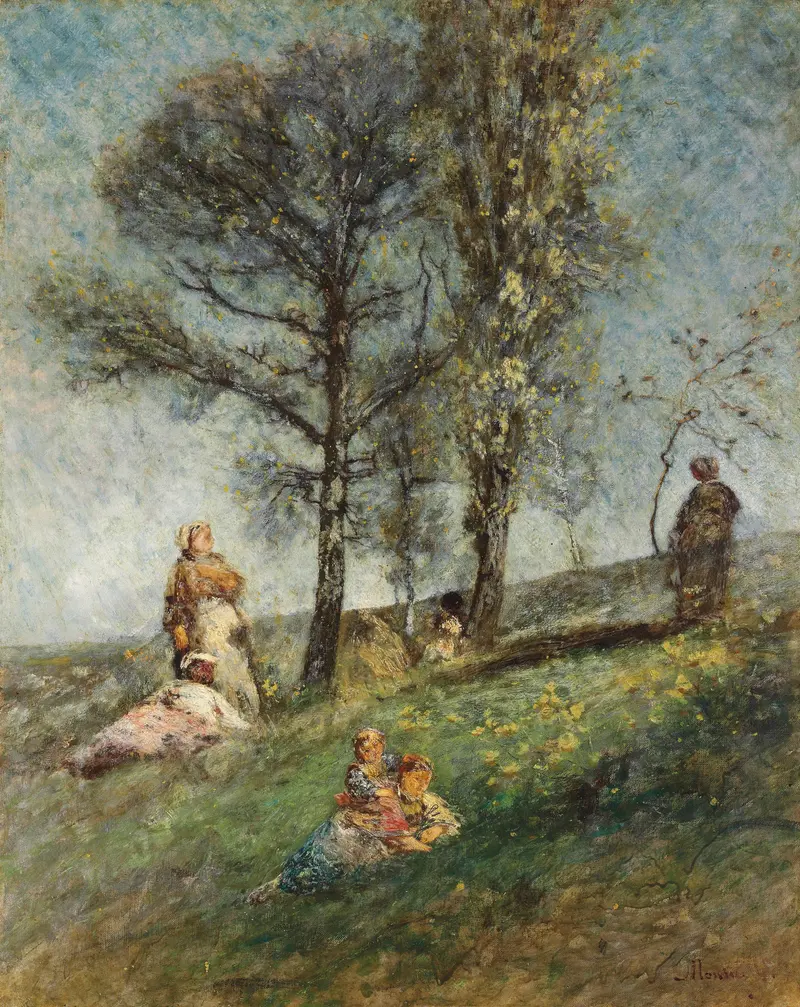
A Young Family Under Trees On A Hill
Adolphe Monticelli

Fête d'Après-Midi
Adolphe Monticelli
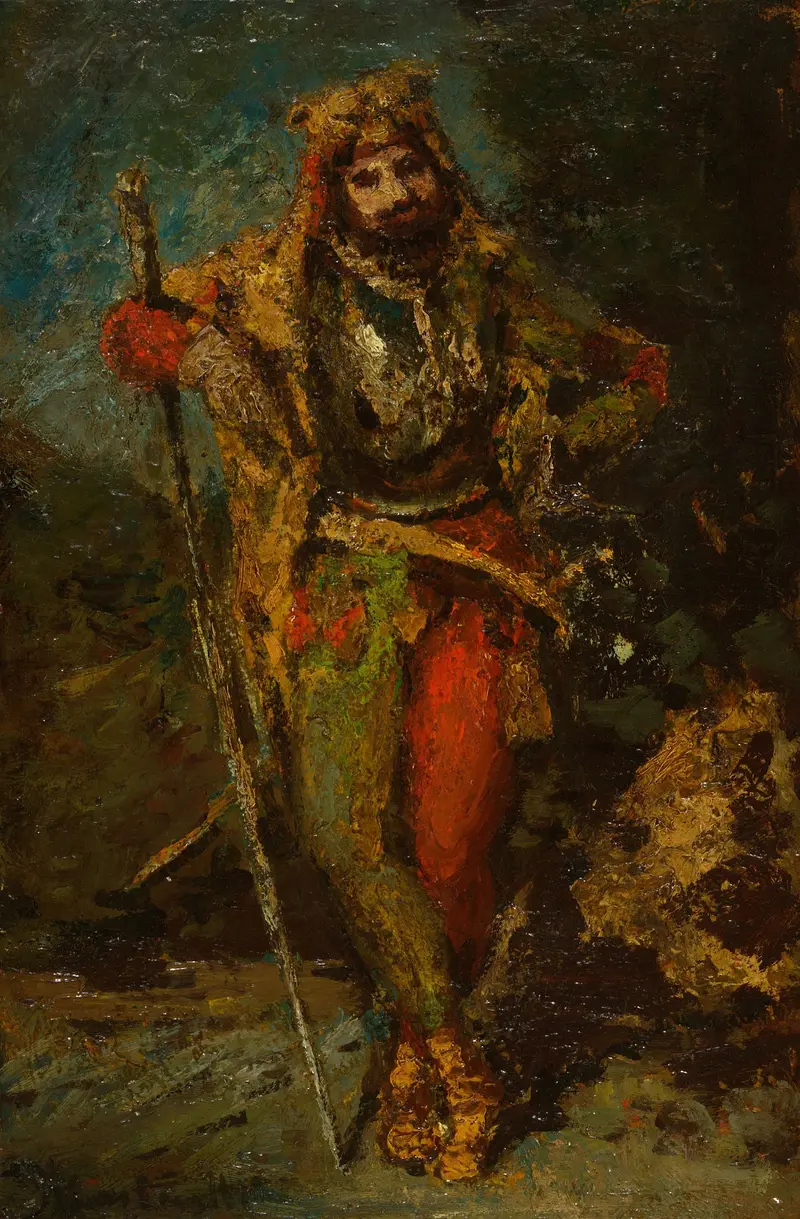
Mephisto from the Opera Faust
Adolphe Monticelli
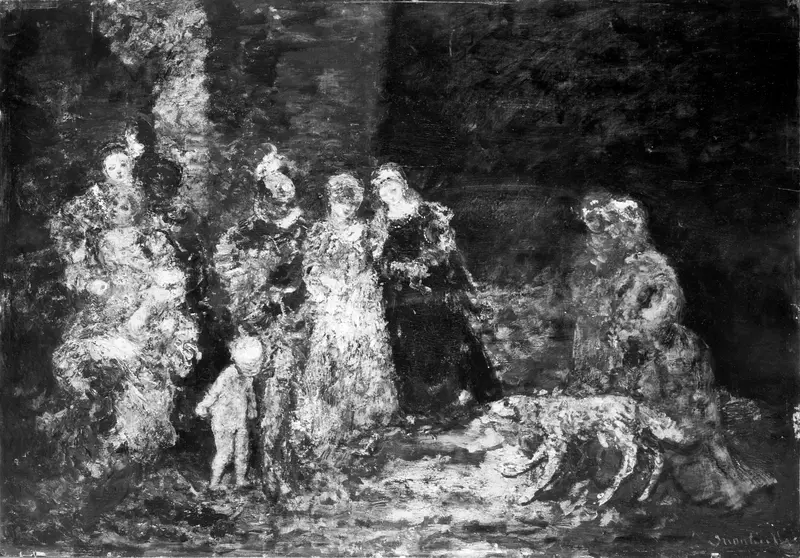
The Fairies
Adolphe Monticelli
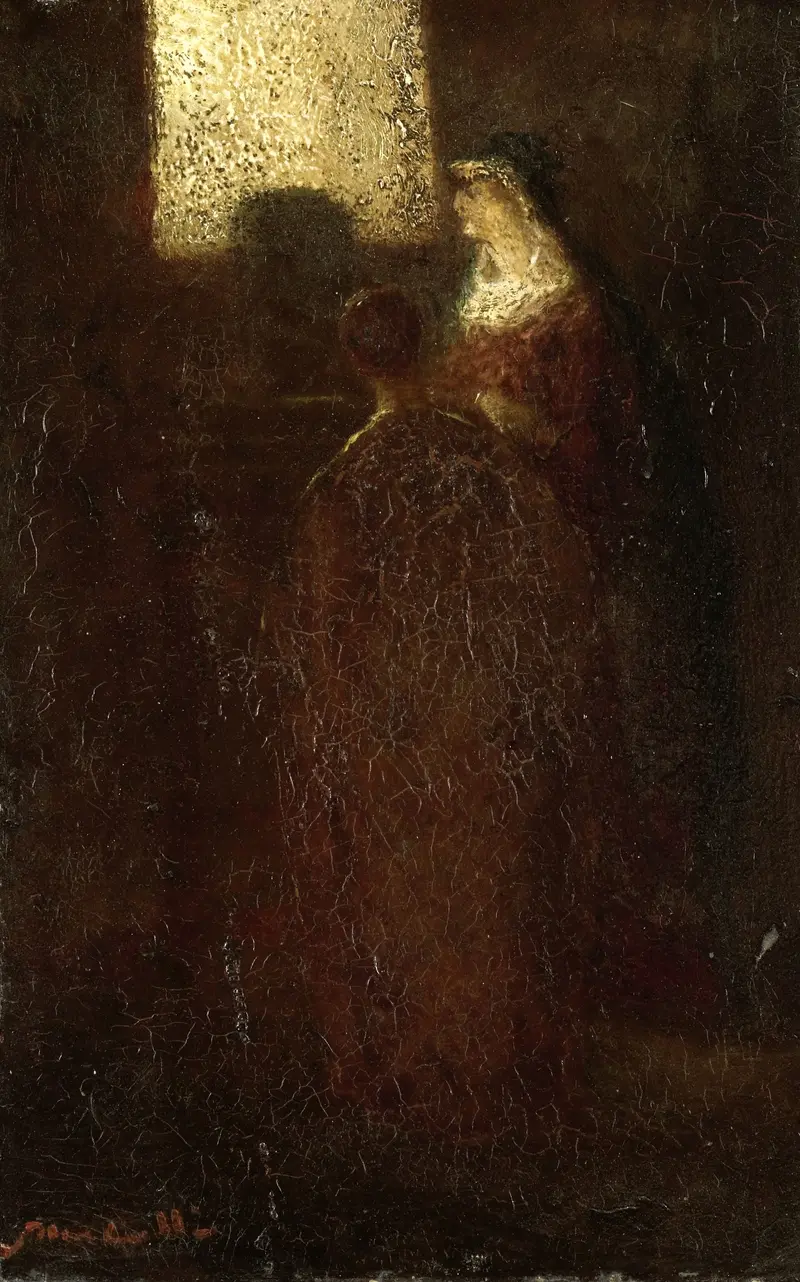
Aan het altaar
Adolphe Monticelli
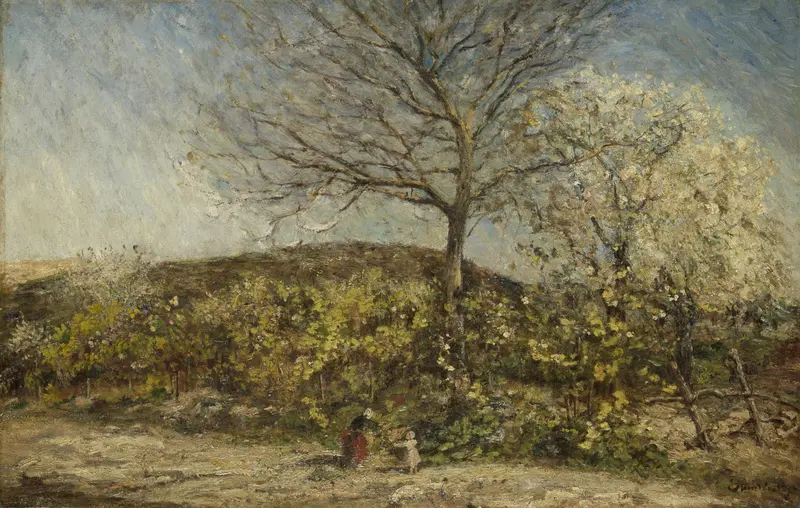
Landschap met bloeiende boomgaard
Adolphe Monticelli
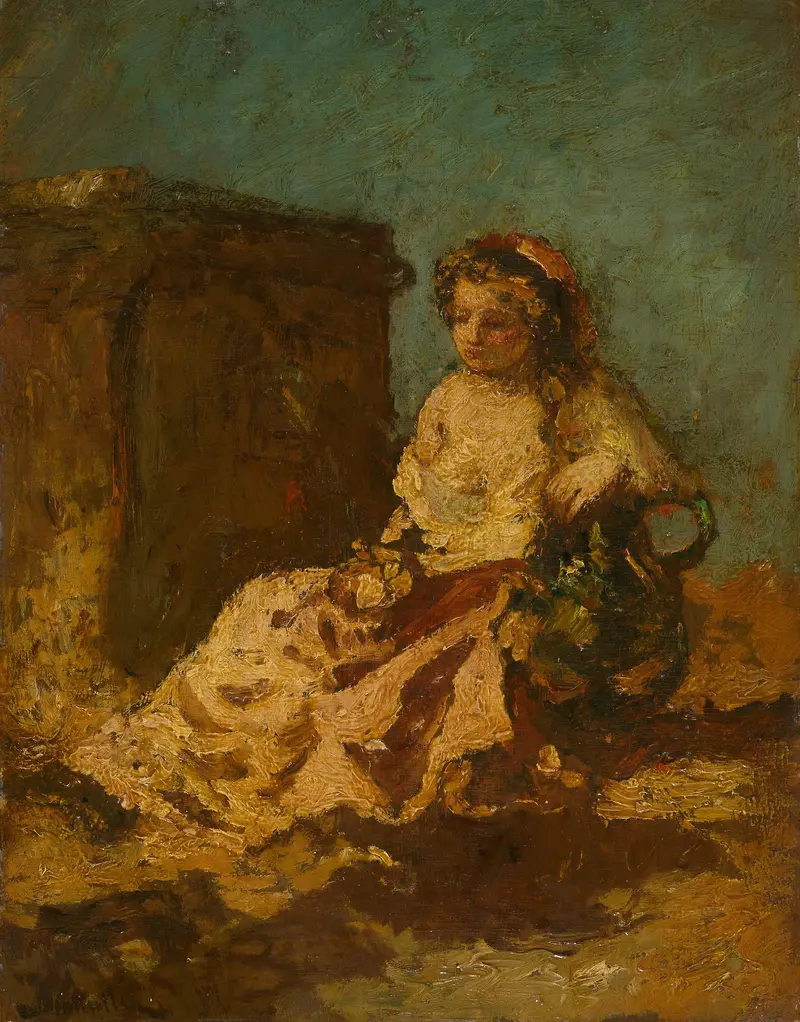
Meditation (Seated Woman)
Adolphe Monticelli
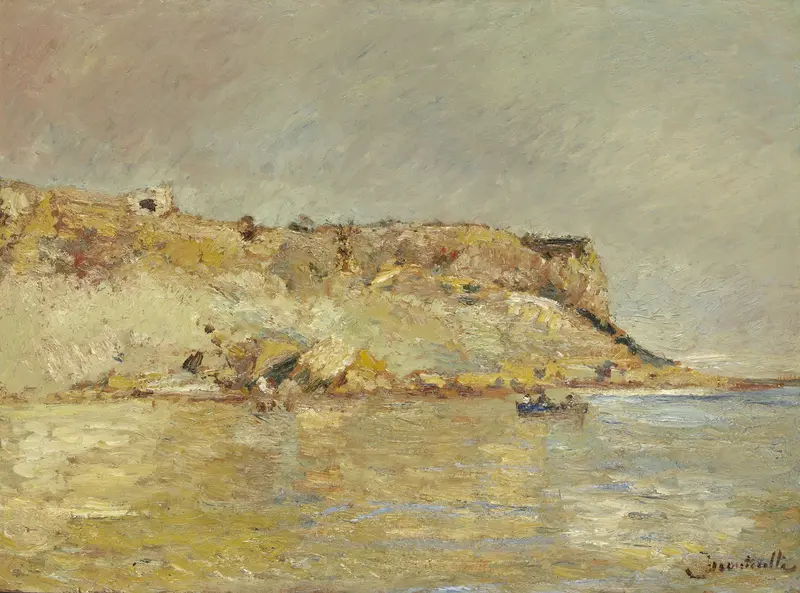
Coastal Mountains
Adolphe Monticelli
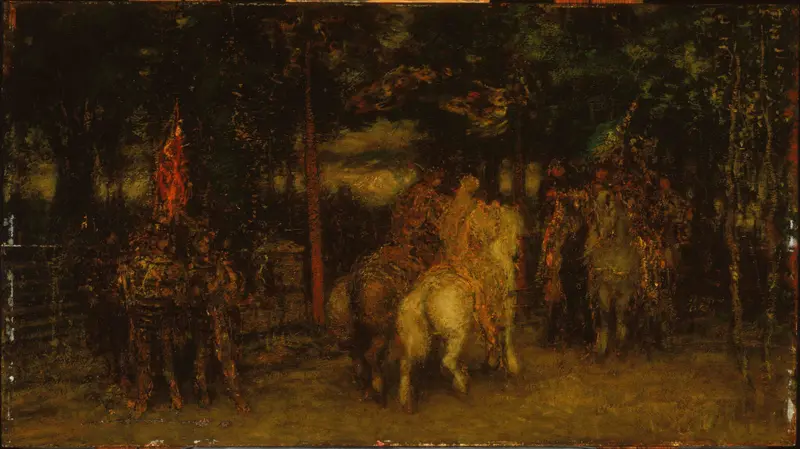
Landscape with Figures
Adolphe Monticelli
More Genre Scene Art

Banquet of the Officers of the St George Civic Guard
Frans Hals

Rembrandt and Saskia in the Scene of the Prodigal Son
Rembrandt van Rijn

Bal du moulin de la Galette
Pierre-Auguste Renoir

Quadrille at the Moulin Rouge
Henri de Toulouse-Lautrec

A Burial at Ornans
Gustave Courbet

When Will You Marry?
Paul Gauguin