
Väinämöinen playing — History & Facts
What first catches the eye in Väinämöinen playing is the sense of a story unfolding across four panels, each one a window into a different moment, yet all bound together by the rhythm of the painter’s hand. The central figure, a white-bearded man in a loose robe, sits on a rock with a kantele—his posture intent, his gaze lowered, as if conjuring music from the landscape itself. Around him, the world responds: ethereal figures half-formed in paint, nymph-like women startled at the water’s edge, and swans gliding serenely into the blue.
The unfinished edges and visible sketches are not a flaw but a revelation, inviting us to witness the act of creation as much as the mythic tale. Painted in 1886, this work by Akseli Gallen-Kallela belongs to a moment when Finnish artists were searching for a national voice, often turning to the epic poetry of the Kalevala for inspiration. The palette is fresh and northern—cool blues, pale flesh, the green-black of dense forests—anchoring the myth in a real, recognizable landscape. The division into panels echoes the structure of a saga: each scene distinct, yet flowing into the next, with the music of Väinämöinen as the invisible thread.
This kind of narrative painting was popular among artists who wanted to elevate local legends to the level of grand history painting, and Gallen-Kallela’s approach—half-finished, exploratory—reminds us that the search for identity, both personal and national, is always a work in progress. The Didrichsen collection preserves this fragment of a larger vision, and the unfinished figures urge us to imagine the music that might have filled the silence between brushstrokes.
More Artworks by Akseli Gallen-Kallela
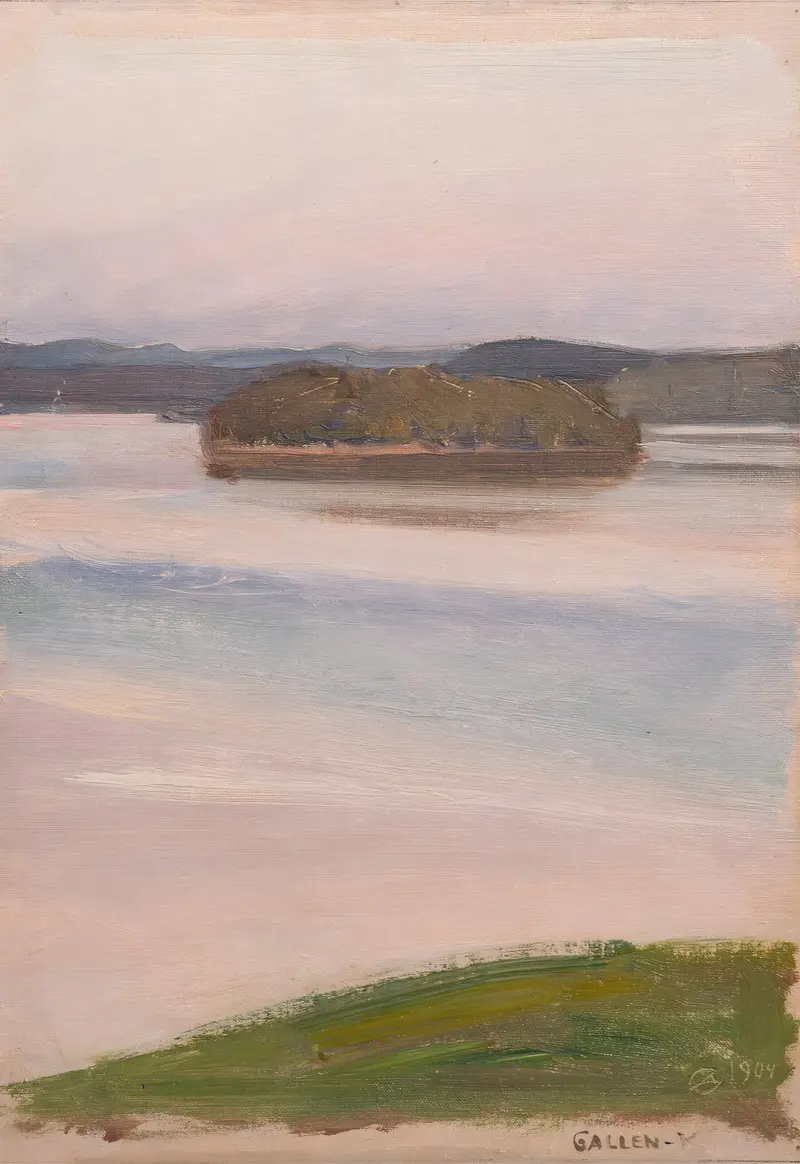
Lake Keitele
Akseli Gallen-Kallela
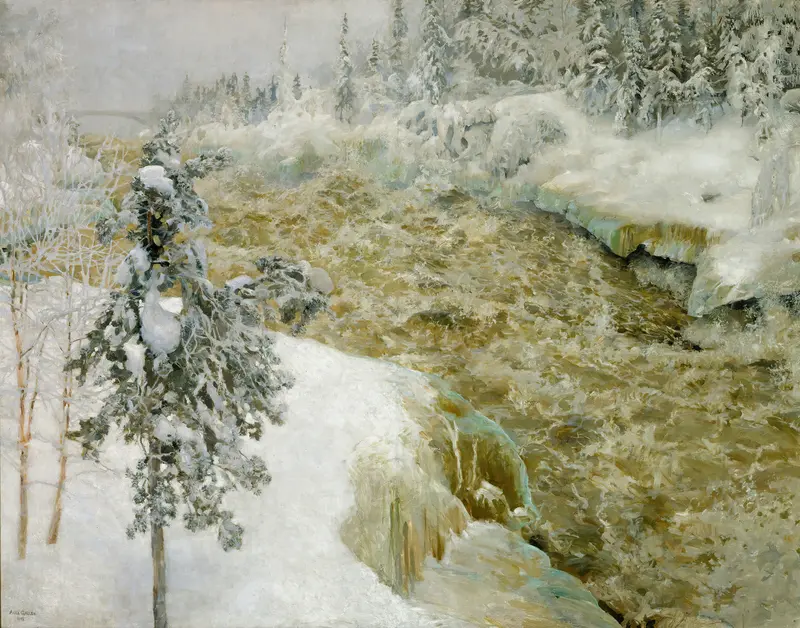
Imatra Falls in Snow ; Imatra in Winter
Akseli Gallen-Kallela
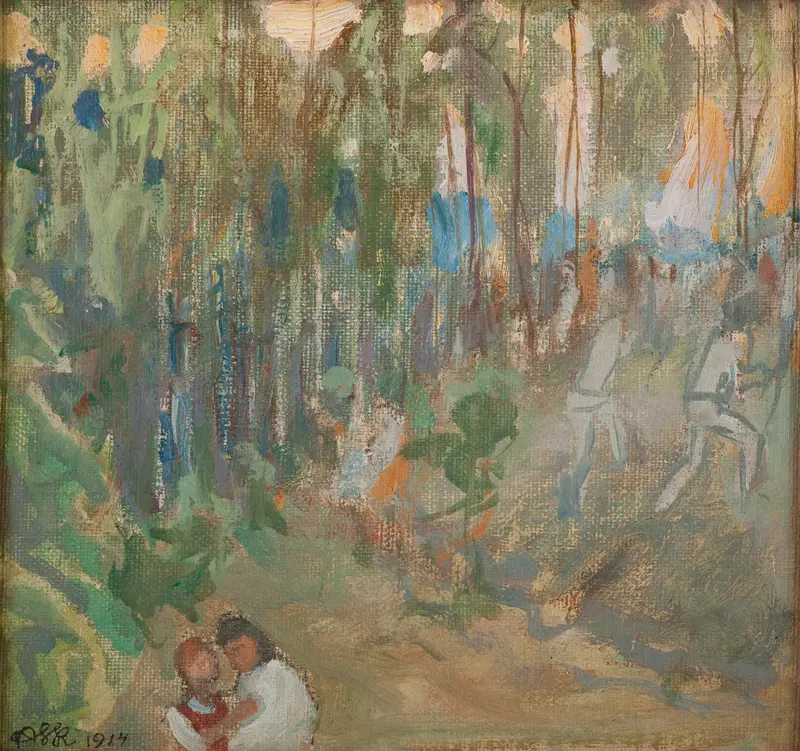
Vainovalkeat
Akseli Gallen-Kallela
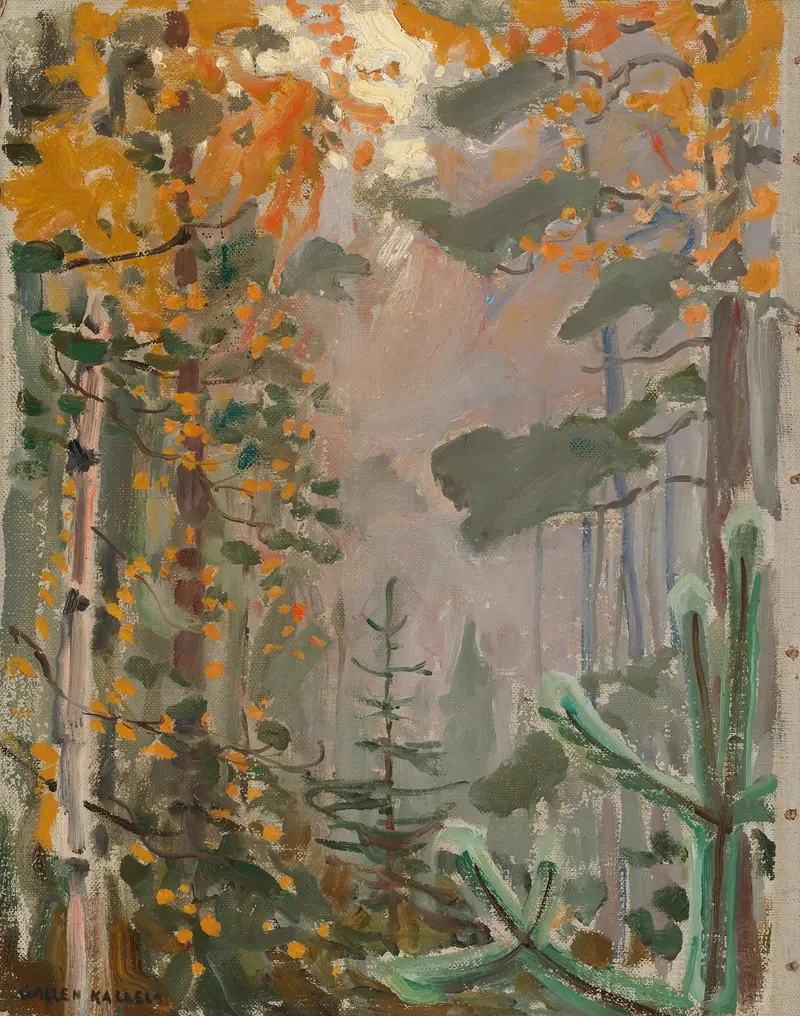
Autumn Landscape
Akseli Gallen-Kallela
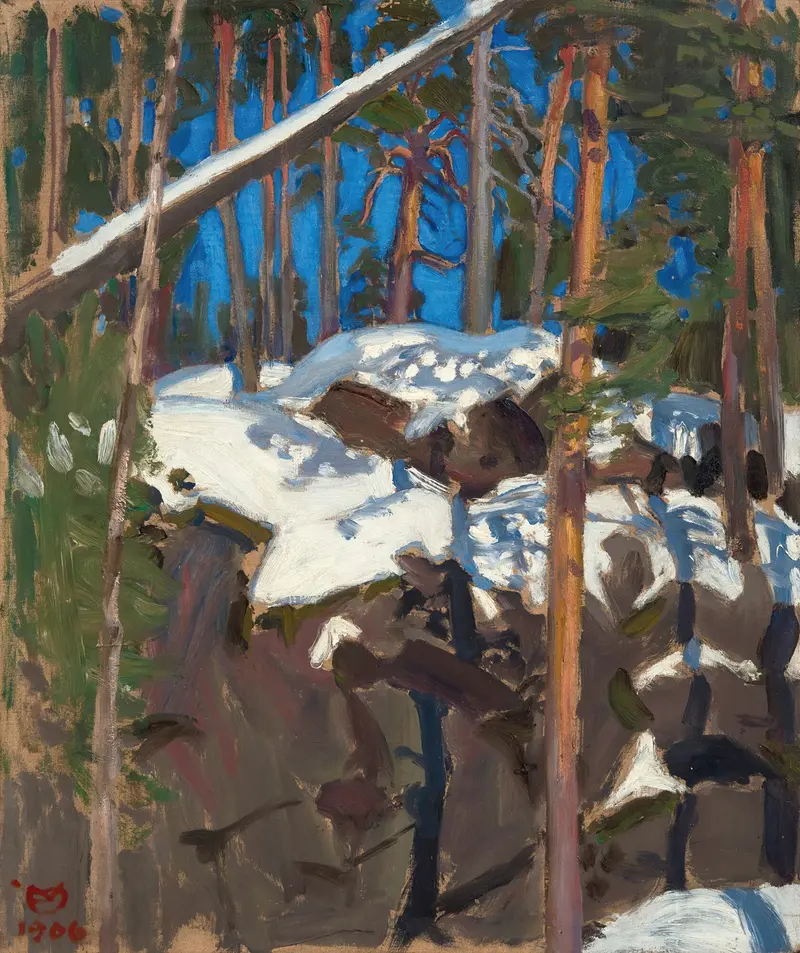
Spring Sun At Konginkangas
Akseli Gallen-Kallela
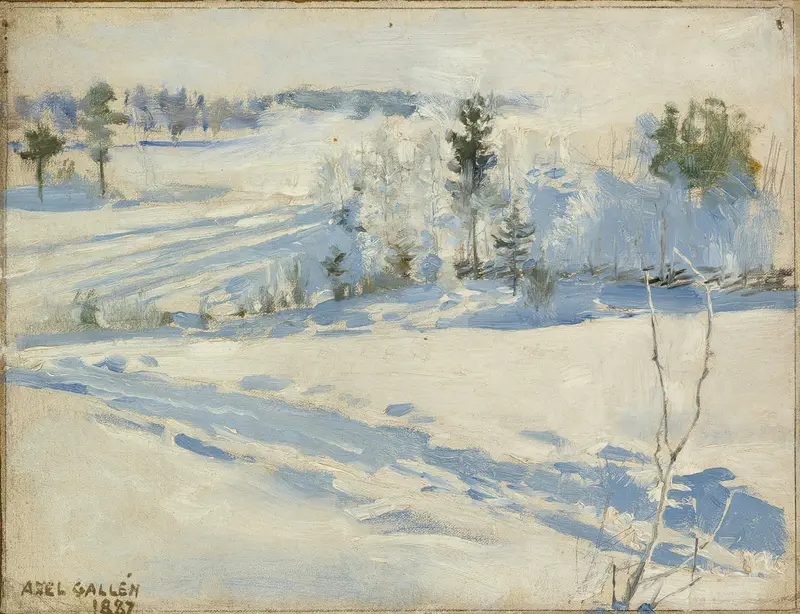
Winter Landscape
Akseli Gallen-Kallela

First Snow
Akseli Gallen-Kallela
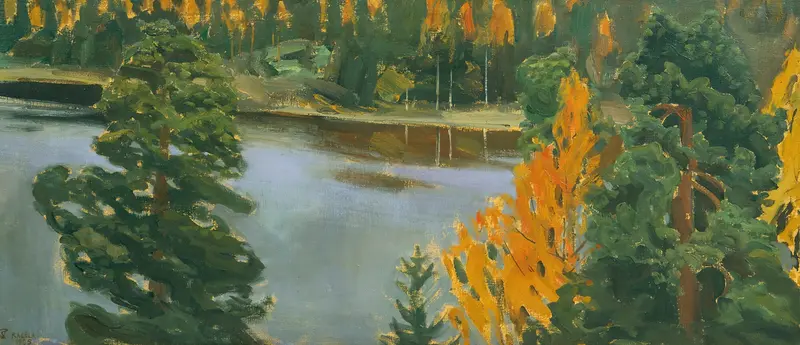
Lake View In Autumn
Akseli Gallen-Kallela
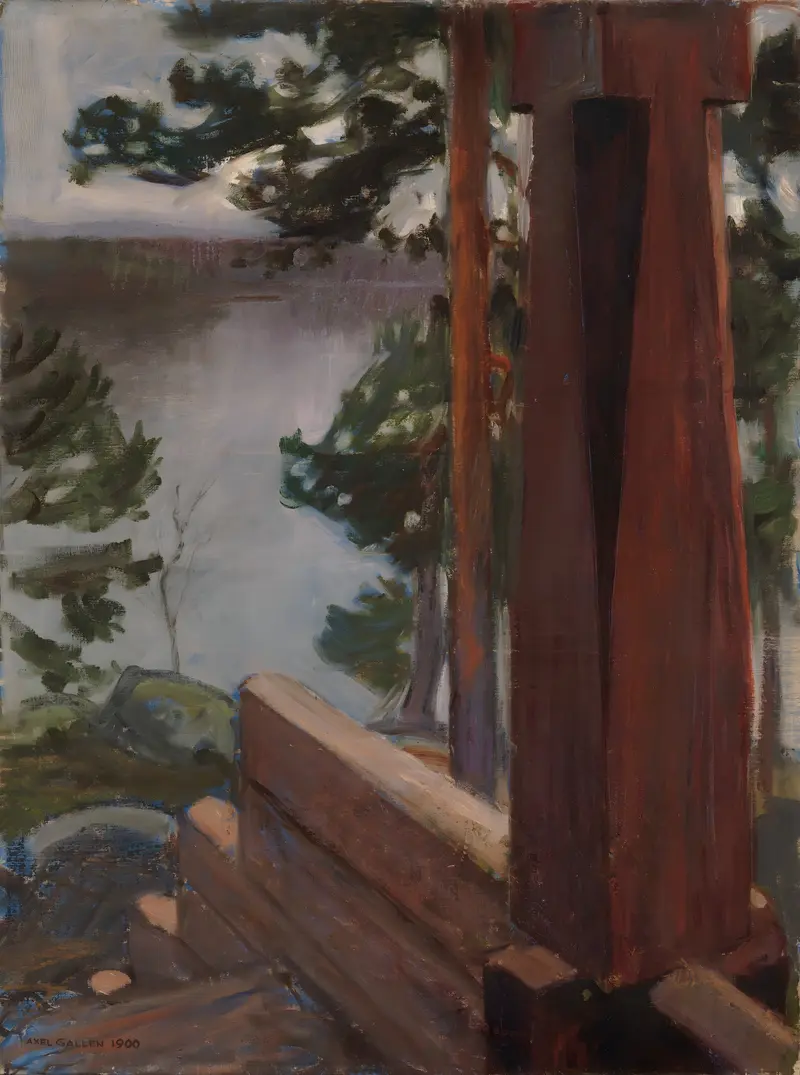
The Kalela Porch
Akseli Gallen-Kallela

Light Behind The Clouds
Akseli Gallen-Kallela





