
Apollo und die Musen — History & Facts
When Tintoretto received the commission for Apollo und die Musen in 1597, it was intended as part of a grand decorative scheme for the Palazzo Ducale in Venice, celebrating the arts as a cornerstone of civic pride. The painting stands out as one of the artist’s late mythological works, created in the final years of his life when his brushwork grew ever more energetic and his compositions more daring. Unlike many mythological canvases of the period, this work was not destined for a private studiolo but for a public space, signaling the Republic’s alignment with the ideals of harmony, music, and poetry embodied by Apollo and his retinue.
The commission itself reflects the Venetian elite’s desire to associate their city with the wisdom and creativity of the ancient world. At the heart of the painting, Apollo, crowned with laurel, strikes his lyre, surrounded by the nine Muses, each representing a different art or science. Tintoretto chooses the moment when the god inspires his companions, their faces turned toward him in rapt attention, their gestures animated—one Muse holds a scroll, another a theatrical mask, a third lifts a celestial globe. The swirling arrangement and dramatic lighting draw the eye in a spiral, echoing the music’s imagined movement through the air.
The artist’s signature loose brushwork and theatrical contrasts of light and shadow recall his earlier Paradise in the same palace, yet here the mythological subject allows for more playful color and lively interaction, distinct from the more static, harmonious depictions by Raphael or Poussin. The precise medium of Apollo und die Musen remains uncertain, though it is likely oil on canvas, the preferred support for large-scale Venetian works of the era. After its installation in the Palazzo Ducale, the painting survived the devastating fire of 1577 that had earlier destroyed much of the palace’s decoration, a testament to the resilience of Venetian art. Over the centuries, the attribution to Tintoretto has never been seriously challenged, and the painting is now considered a key example of his late style.
Today, it remains in Venice, offering viewers a glimpse into the city’s Renaissance aspirations and the enduring power of myth to inspire civic identity.
More Artworks by Tintoretto
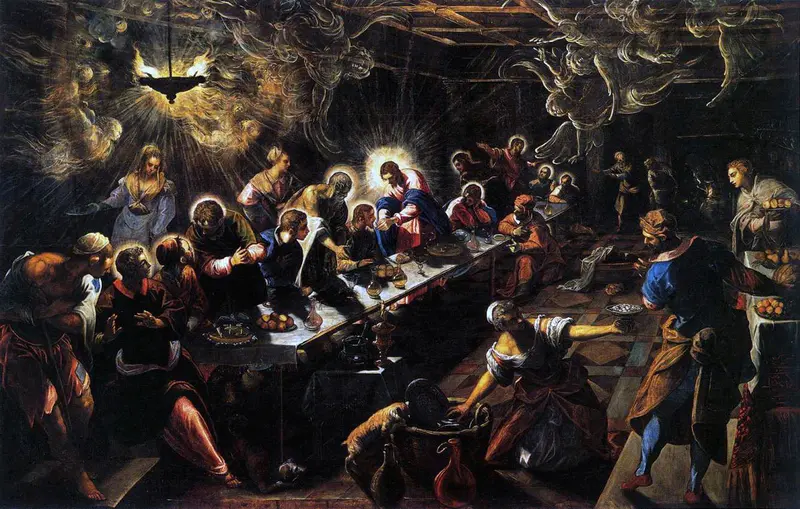
The Last Supper
Tintoretto
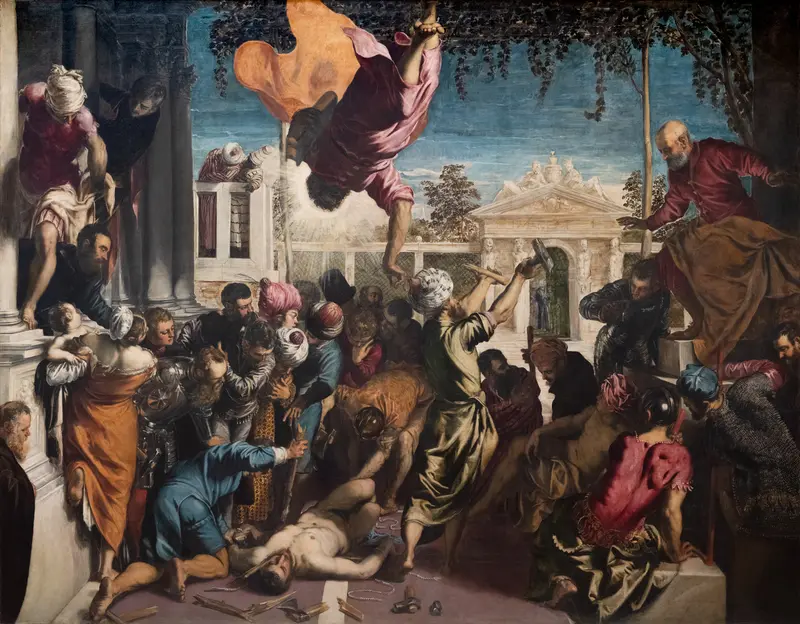
The Miracle of the Slave
Tintoretto
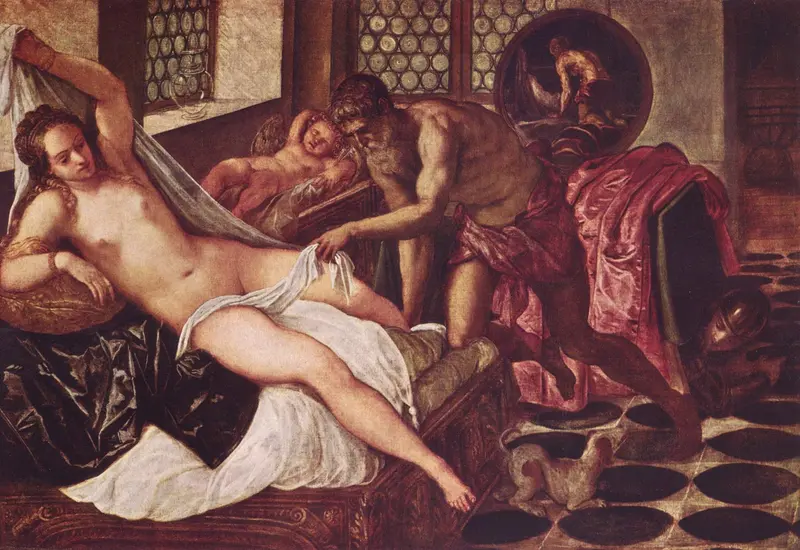
Venus and Mars Surprised by Vulcan
Tintoretto

Adoration of the Shepherds
Tintoretto
Adoration of the Magi
Tintoretto
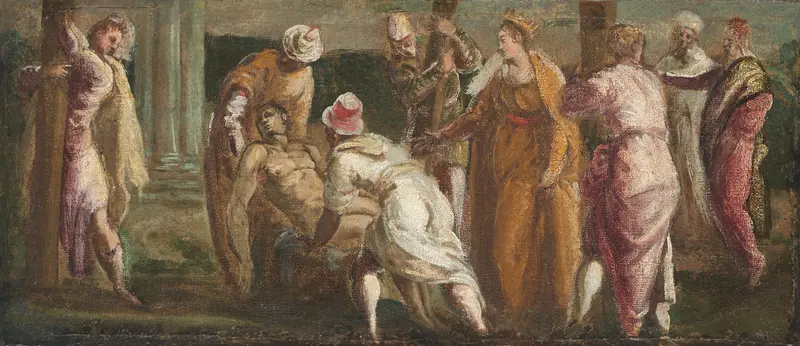
Saint Helen Testing the True Cross
Tintoretto
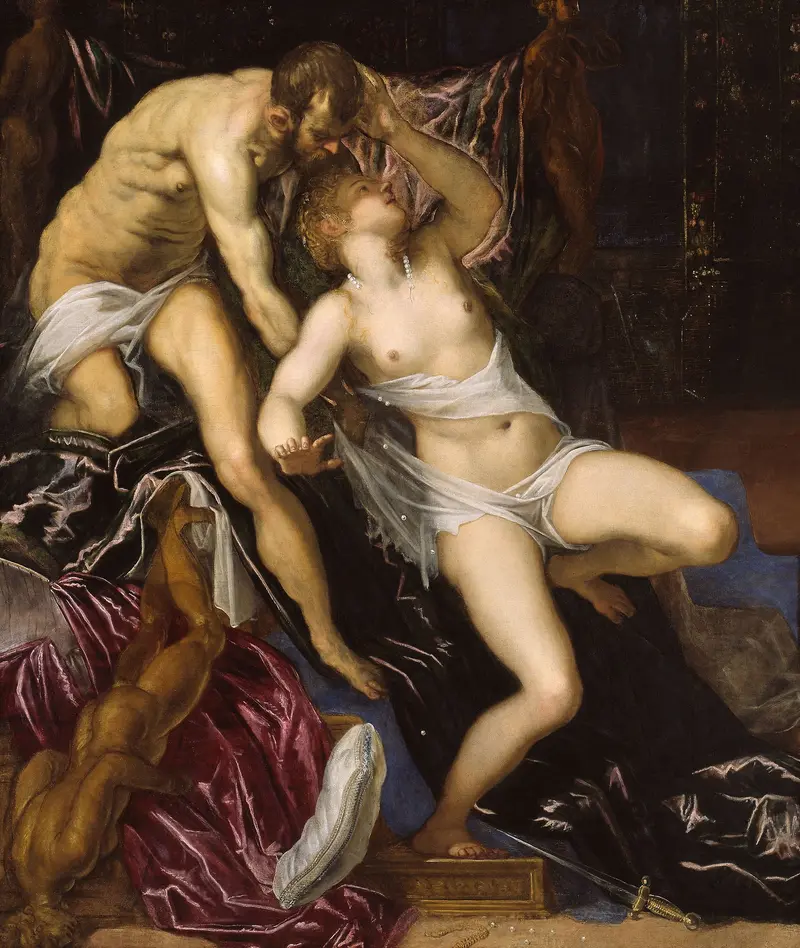
Tarquin and Lucretia
Tintoretto
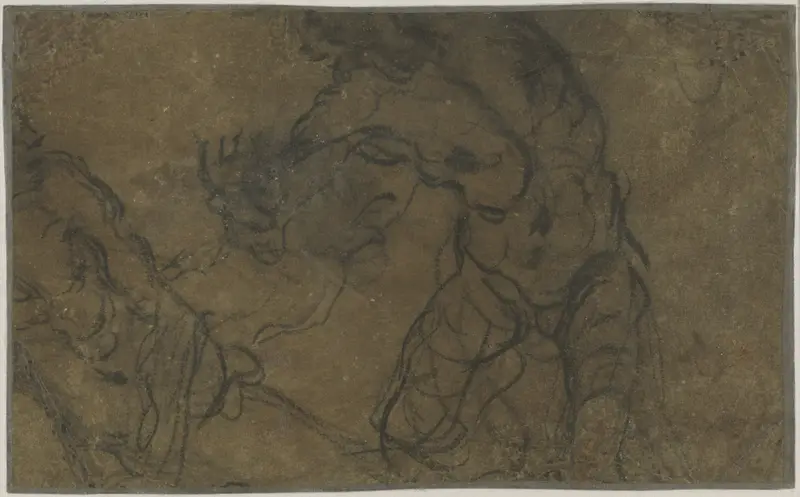
Two Male Figures in Motion (verso)
Tintoretto
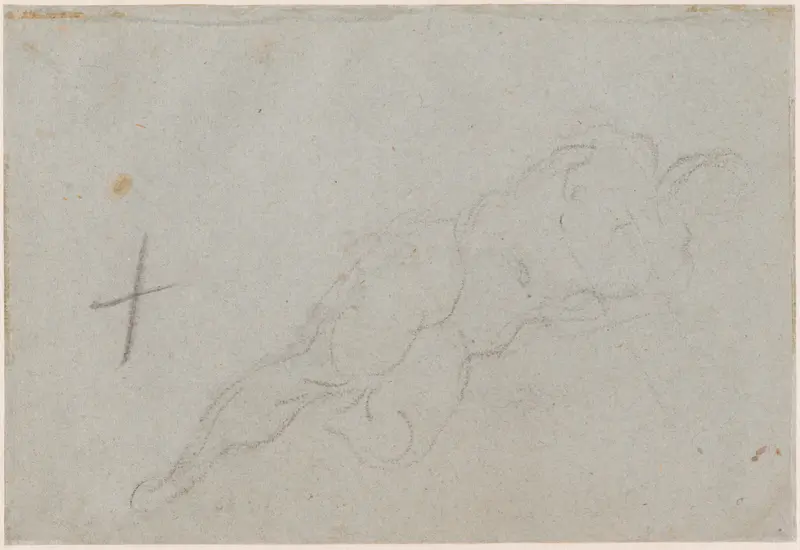
A Female Nude [verso]
Tintoretto
Veduta Kopra
Tintoretto





