
Count Ugolino and his Sons in Prison — History & Facts
When William Blake first exhibited Count Ugolino and his Sons in Prison in 1826, viewers were both fascinated and unsettled by his interpretation of one of Dante’s darkest tales. The story comes from Inferno, where Dante meets Count Ugolino della Gherardesca, a real 13th-century nobleman who was imprisoned with his sons and grandsons in Pisa’s Tower of Hunger, condemned to starve by his political enemies. Blake’s vision, created just a year before his death, stands as one of the most haunting images from his late period, capturing the moment of absolute despair that had haunted readers for centuries. Blake chooses the instant when Ugolino, gaunt and hollow-eyed, sits among his dying children, their bodies entwined in a desperate tangle of hunger and affection.
The father’s hands are clenched, his gaze lost in inward torment, while the boys cling to him or slump in exhaustion. The stark, almost skeletal forms and the claustrophobic composition echo the psychological horror of Dante’s lines, while the absence of overt violence heightens the sense of agony. Unlike Jean-Baptiste Carpeaux’s later sculpture of the same subject, which emphasizes muscular struggle, Blake’s work is all inward collapse, the emotional weight pressing down like the prison walls themselves. The medium Blake used for this work is uncertain—some sources suggest watercolor, others point to ink and graphite—but its ghostly palette and expressive lines are unmistakably his.
Created during his final years, it forms part of a series of Dante illustrations commissioned by his patron John Linnell, though Blake did not live to complete the set. The original drawing now resides in the collection of the National Gallery of Victoria, Melbourne, a testament to the international journey of Blake’s art. Today, Count Ugolino and his Sons in Prison is recognized as a key example of Romanticism’s fascination with psychological torment and moral ambiguity, and a late, personal meditation by Blake on suffering and the limits of endurance.
More Artworks by William Blake
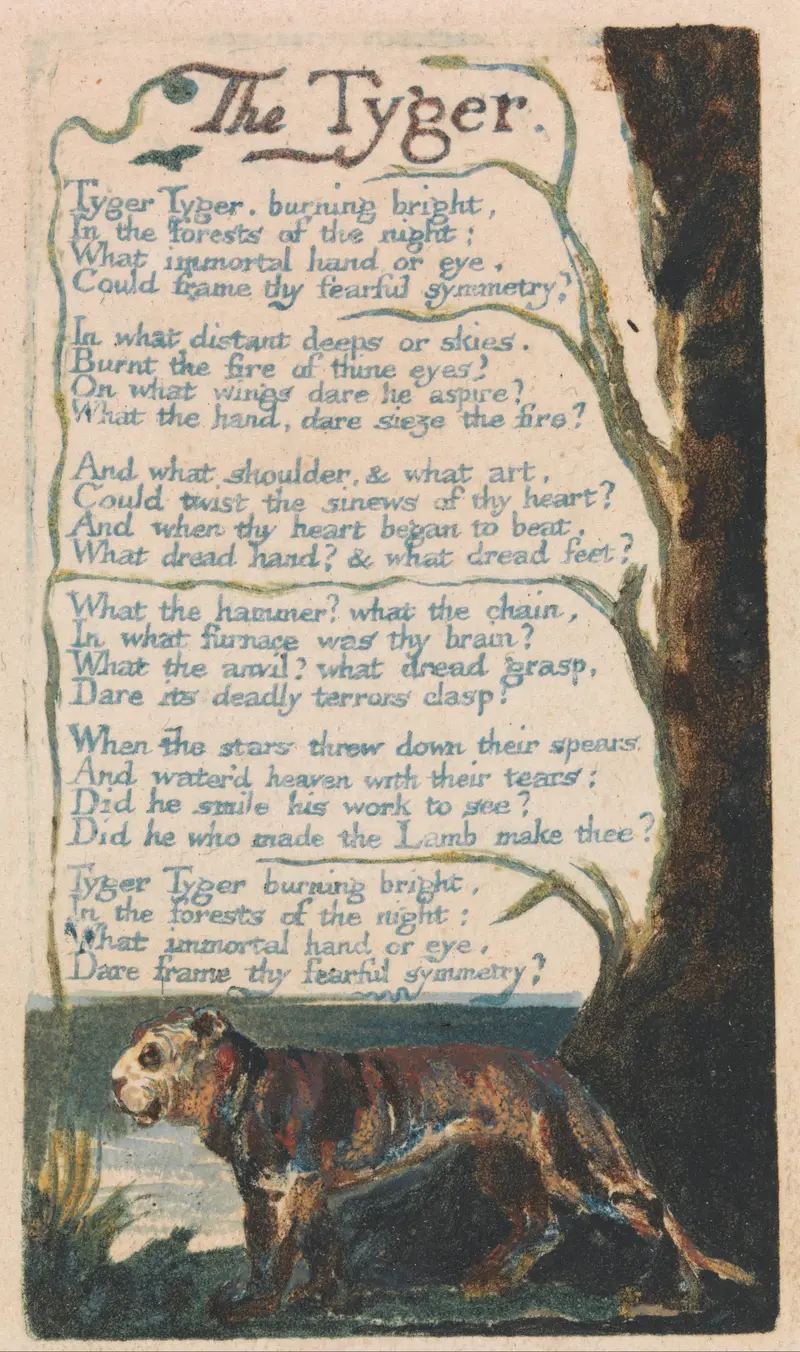
The Tyger
William Blake

Christ Blessing
William Blake
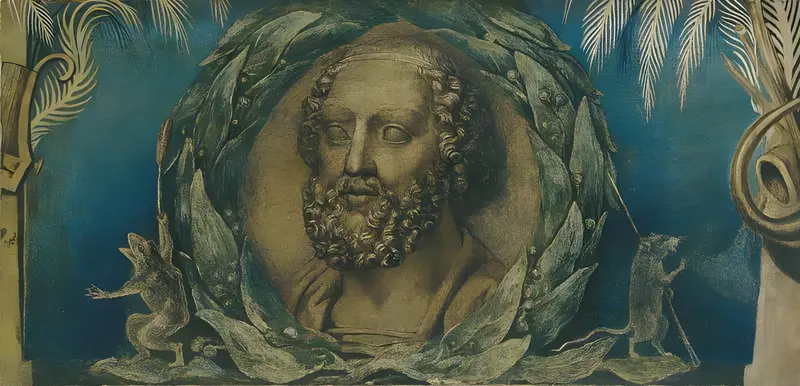
Homer
William Blake
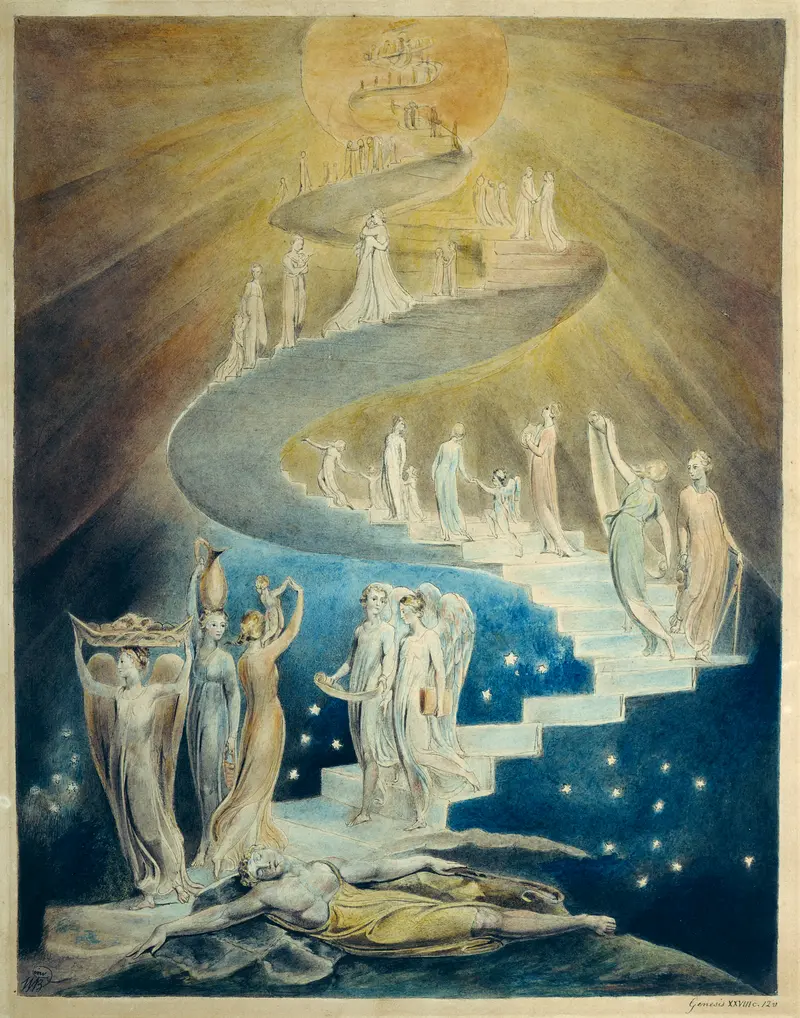
Jacob's Ladder
William Blake
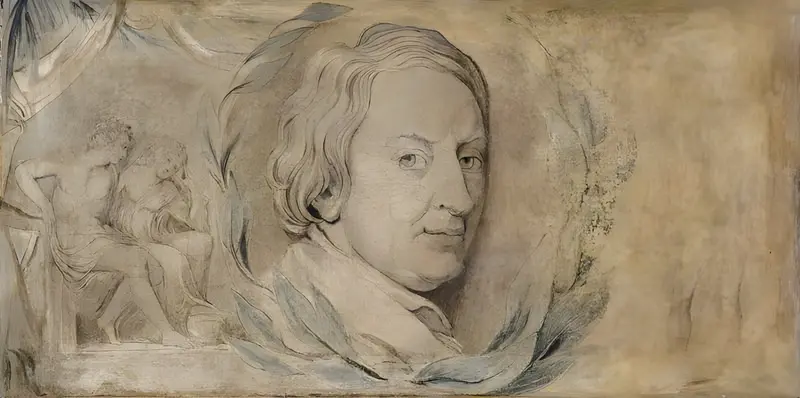
John Dryden (1631–1700)
William Blake
Landscape near Felpham
William Blake
Sacrifice of Job
William Blake
Christ's Entry into Jerusalem
William Blake
The Ancient of Days
William Blake
Adam Naming the Beasts
William Blake



