
Edmund Spenser (c.1552–1599) — History & Facts
When William Blake painted Edmund Spenser (c.1552–1599) in 1800, he was living in the village of Felpham, Sussex, under the patronage of the poet William Hayley. This portrait is one of a remarkable series in which Blake sought to conjure the spirits of England’s literary giants—an act he described as “visionary heads.” There is no known life portrait of Spenser, and Blake claimed to have painted him from a vision, not from any existing likeness. The work thus stands at the intersection of biography and imagination, a tribute by one poet-artist to another whose epic The Faerie Queene had shaped English literature. Blake presents Spenser in an otherworldly calm, his gaze directed away from the viewer, as if listening to a voice only he can hear.
The poet’s features are rendered with a gentle, almost spectral softness, the eyes deep-set and thoughtful, the hair and beard flowing in loose, dreamlike curls. There are no books or quills to anchor him in the material world; instead, the focus is on the luminous face, bathed in a pale glow that seems to emanate from within. This approach contrasts with the more formal, emblematic portraits of writers by contemporaries like Thomas Lawrence, who would emphasize status and intellect through costume and props.
Here, Blake invites us to see Spenser as a visionary, a conduit for inspiration rather than a figure of worldly achievement. The exact medium of this work remains uncertain—some sources suggest tempera, others chalk or watercolor—but its delicate surface and ethereal effect are characteristic of Blake’s portrait series from this period. The painting was likely created for Hayley or for Blake’s own circle of admirers, and it reflects his deep engagement with the English poetic tradition. Today, Edmund Spenser (c.1552–1599) is held in the National Portrait Gallery, London, where it stands as a rare testament to Blake’s dual identity as both painter and poet, and to his lifelong fascination with the creative spirit.
More Artworks by William Blake
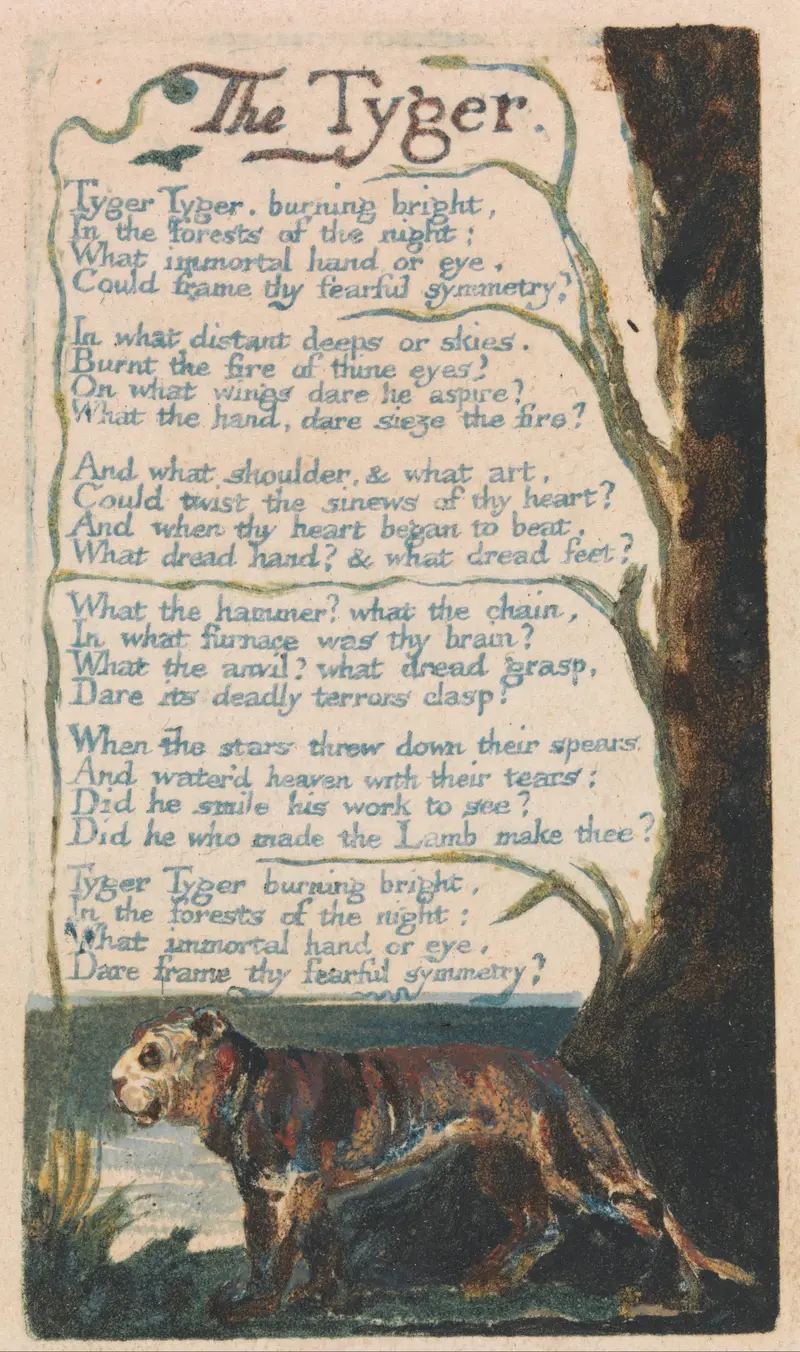
The Tyger
William Blake

Christ Blessing
William Blake
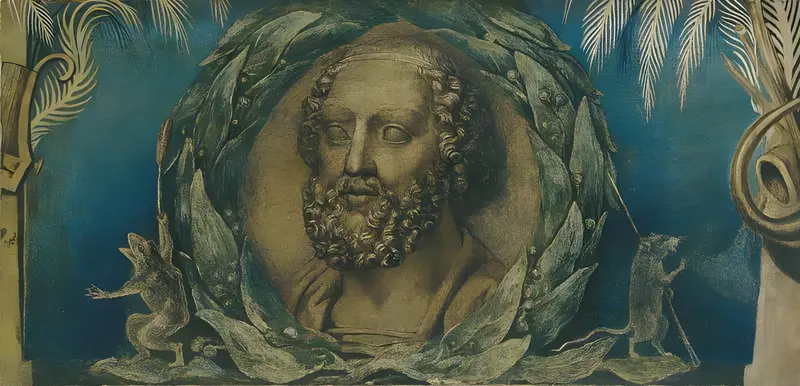
Homer
William Blake
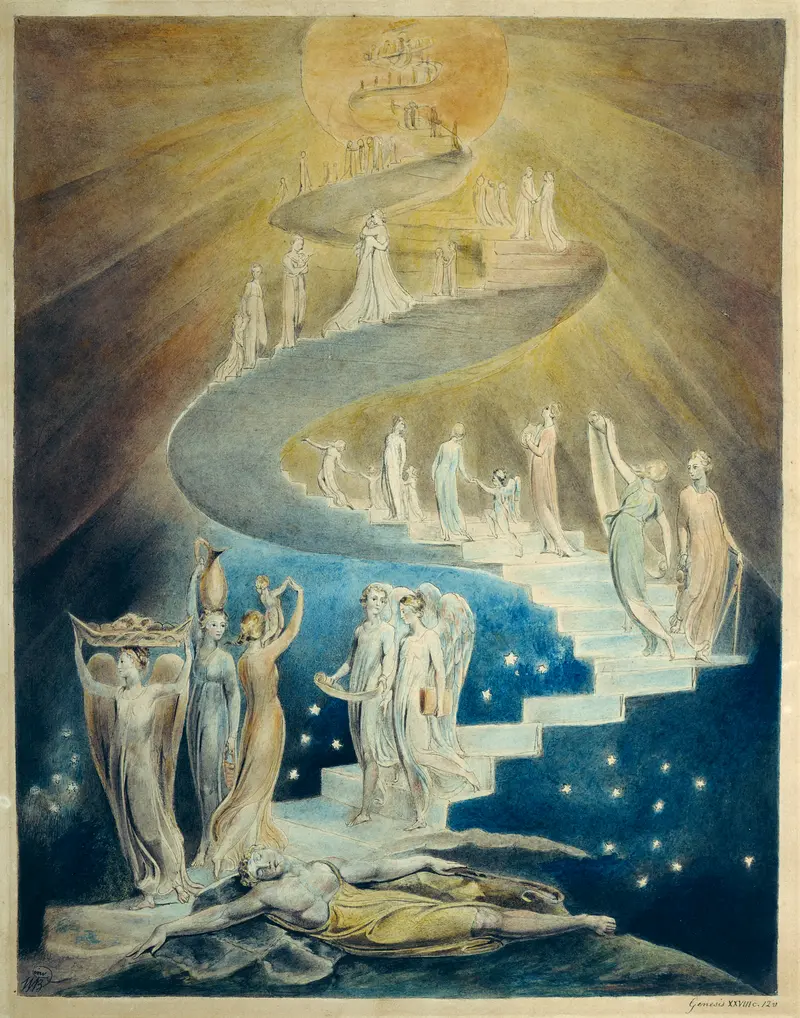
Jacob's Ladder
William Blake
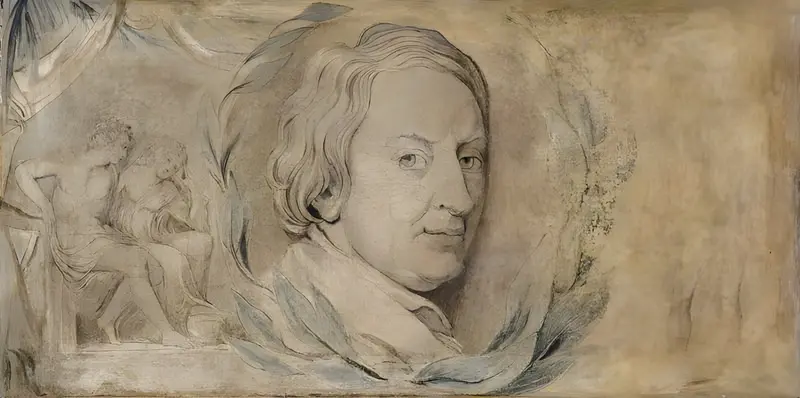
John Dryden (1631–1700)
William Blake
Landscape near Felpham
William Blake
Sacrifice of Job
William Blake
Christ's Entry into Jerusalem
William Blake
The Ancient of Days
William Blake
Adam Naming the Beasts
William Blake





