
Narcissuss — History & Facts
Caravaggio’s Narcissus is the only known painting by the artist to directly treat a mythological subject, a rarity in a career otherwise dominated by saints, sinners, and street life. Painted around 1600, its subject matter was so unusual for Caravaggio that early inventories sometimes doubted the attribution, though today there is little dispute. The work’s earliest recorded mention comes from the collection of Cardinal Francesco Maria del Monte, Caravaggio’s influential patron in Rome, who may have commissioned it for his own private study.
The painting’s mysterious aura and the artist’s signature use of dramatic lighting have fueled centuries of fascination and scholarly debate. At the heart of the canvas, the youth Narcissus bends over a dark pool, spellbound by his own reflection, caught in the moment Ovid describes: “He falls in love with an empty hope, a shadow mistaken for substance.” Caravaggio captures the precise instant Narcissus, kneeling on the earth, reaches toward the water, his hand almost touching its surface—yet never quite able to grasp the image he desires. The doubled figure, both above and below, is encircled by shadow, isolating Narcissus in a world of self-absorption. Unlike earlier treatments, such as Narcissus at the Fountain by Poussin, Caravaggio strips away the landscape and mythic trappings, focusing solely on the boy and his reflection, heightening the psychological intensity. The painting’s journey through history is less documented than some of Caravaggio’s more famous works, but it is believed to have remained in private Roman collections for centuries before entering the Galleria Nazionale d’Arte Antica, where it hangs today.
Its attribution, once questioned, is now widely accepted, thanks to stylistic analysis and comparison with Caravaggio’s other works from the same period. Narcissus stands as a testament to Caravaggio’s ability to transform ancient myth into a scene of immediate human drama, and marks a rare foray into classical subject matter for an artist whose legacy would come to define the Baroque.
More Artworks by Caravaggio
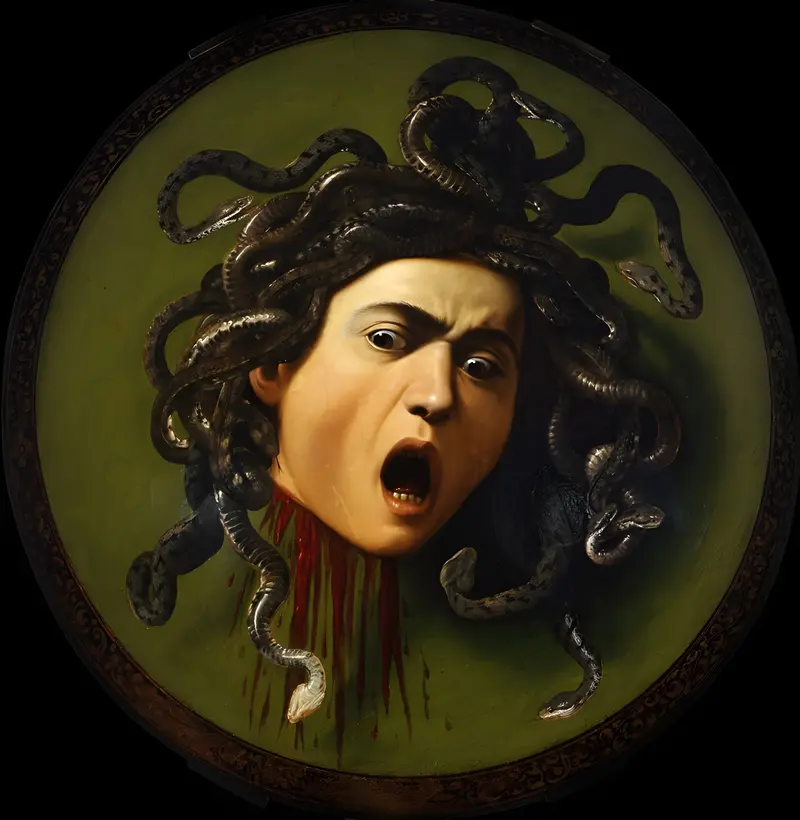
Medusa
Caravaggio
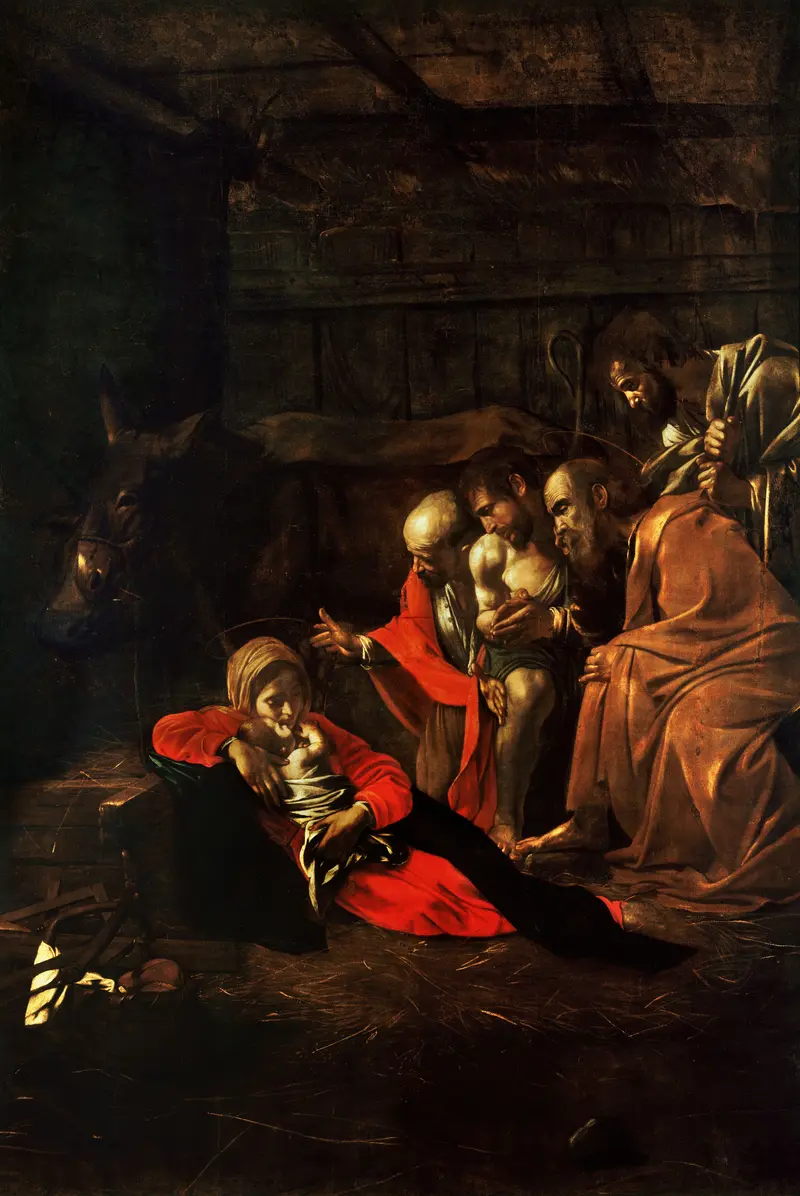
Adoration of the Shepherds
Caravaggio
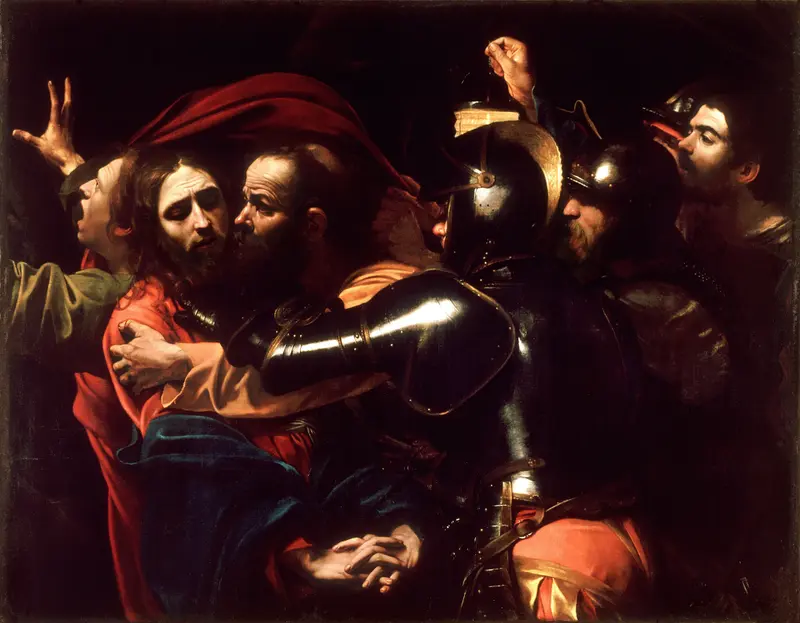
The Taking of Christ
Caravaggio
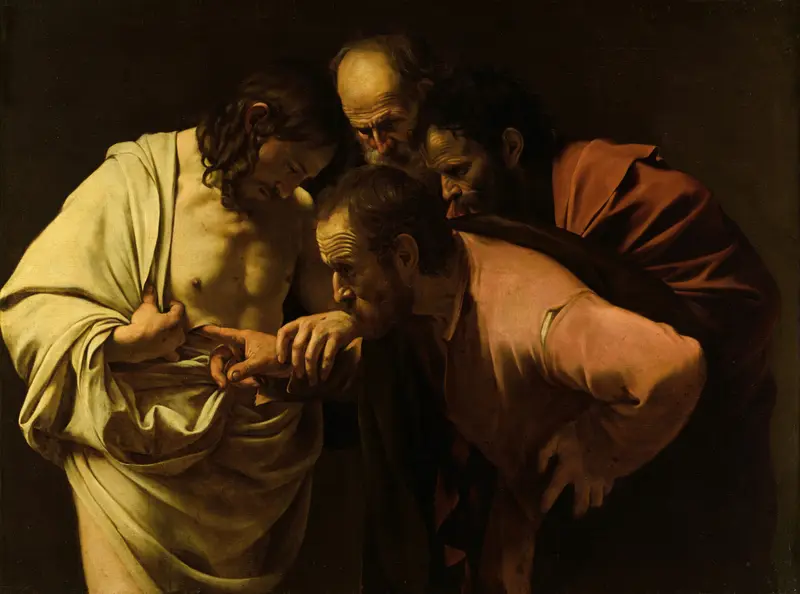
The Incredulity of Saint Thomas
Caravaggio
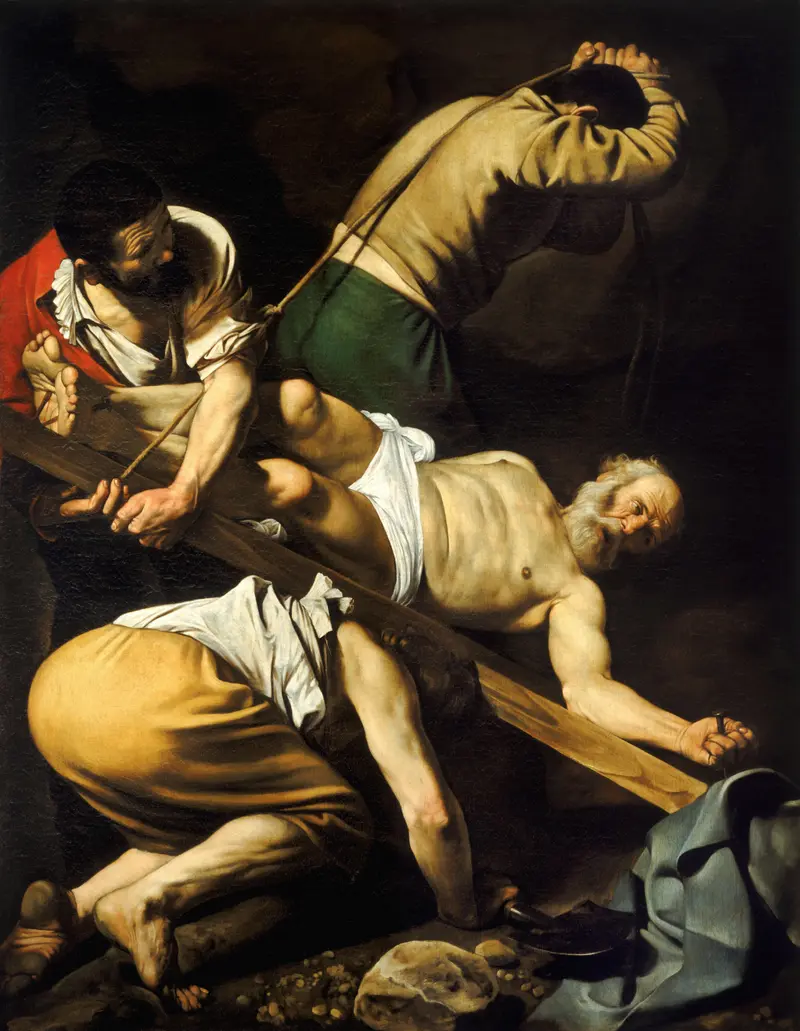
Crucifixion of Saint Peter
Caravaggio
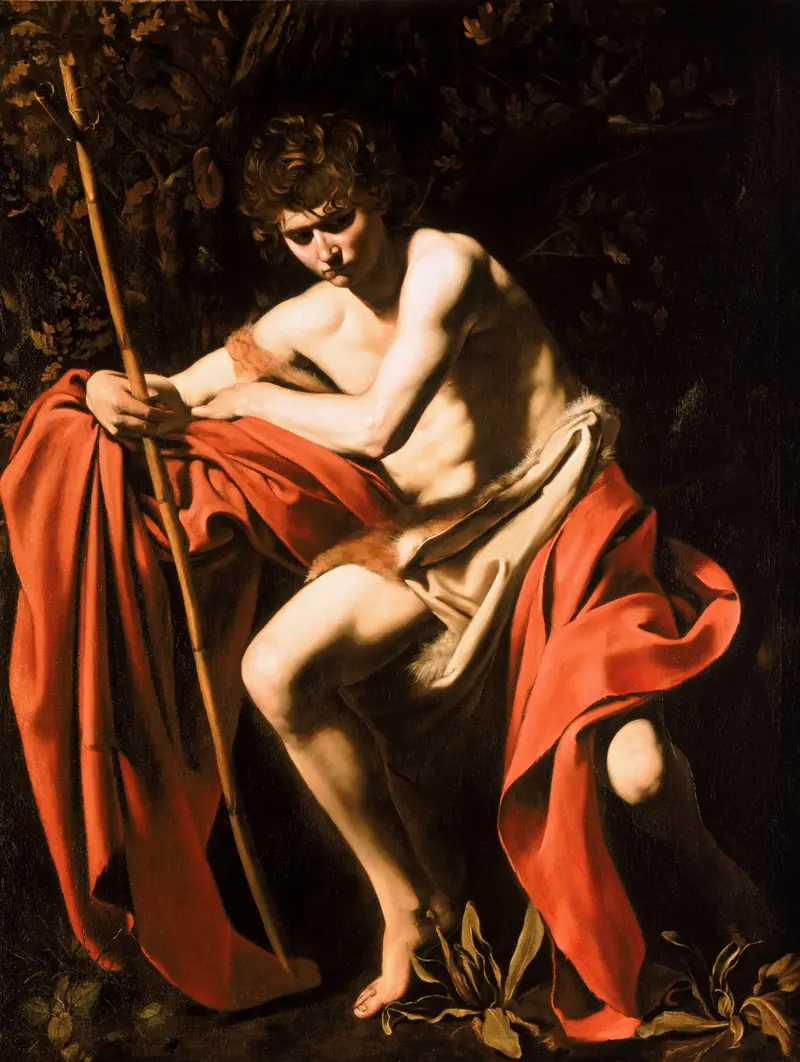
Saint John The Baptist In The Wilderness
Caravaggio

Saint Matthew and the angel
Caravaggio
The Inspiration of Saint Matthew
Caravaggio

Conversion on the Way to Damascus
Caravaggio
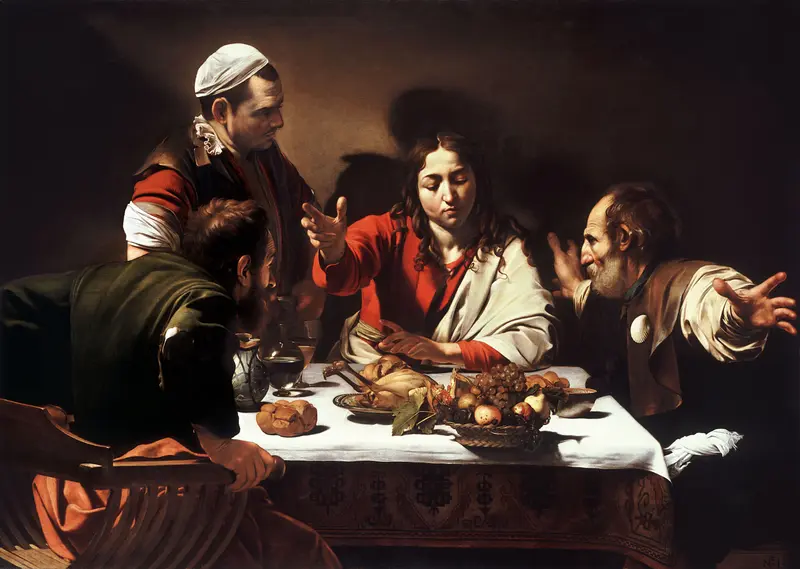
Supper at Emmaus
Caravaggio





