
Panel for a Screen: Children Frightened by a Rabbit — History & Facts
Panel for a Screen: Children Frightened by a Rabbit is one of the rare surviving decorative panels by Albert Pinkham Ryder, an artist better known for his later, moody seascapes and visionary landscapes. Created in 1876, this work stands out as an early example of Ryder’s experimentation with narrative and whimsy, painted at a time when he was still seeking his mature style. The panel was originally intended as part of a folding screen, a fashionable item in late 19th-century American parlors, though the full set has not survived.
Its playful subject matter and unusual function make it a curiosity among Ryder’s oeuvre, which would soon turn toward darker, more introspective themes. In this scene, Ryder captures a fleeting moment of childhood drama: a group of children, caught mid-motion, scatter in alarm as a small, white rabbit darts unexpectedly from the underbrush. The children’s faces are a study in comic terror, their limbs flung wide, bonnets askew, as the harmless animal becomes a source of chaos. The composition is lively, with the figures arranged in a loose arc that leads the viewer’s eye from the startled faces to the innocent culprit.
The palette is lighter and more cheerful than in Ryder’s later works, with soft greens and gentle sunlight dappling the grass. Unlike the moralizing tone of William Holman Hunt’s The Hireling Shepherd, which also features children and animals in the countryside, Ryder’s panel delights in the absurdity of the moment rather than offering a lesson. The precise provenance of Panel for a Screen: Children Frightened by a Rabbit is not fully documented, but it is believed to have been commissioned for a private home in New York during Ryder’s early career. Decorative panels such as this were often separated from their original screens as tastes changed, and this piece survived as a stand-alone work.
Its playful subject and early date have made it a favorite among collectors interested in American art of the Gilded Age. Today, the panel is preserved in a museum collection, valued both as a rare example of Ryder’s decorative work and as a glimpse into the lighter side of an artist better known for his brooding canvases.
More Artworks by Albert Pinkham Ryder

The Toilers of the Sea
Albert Pinkham Ryder
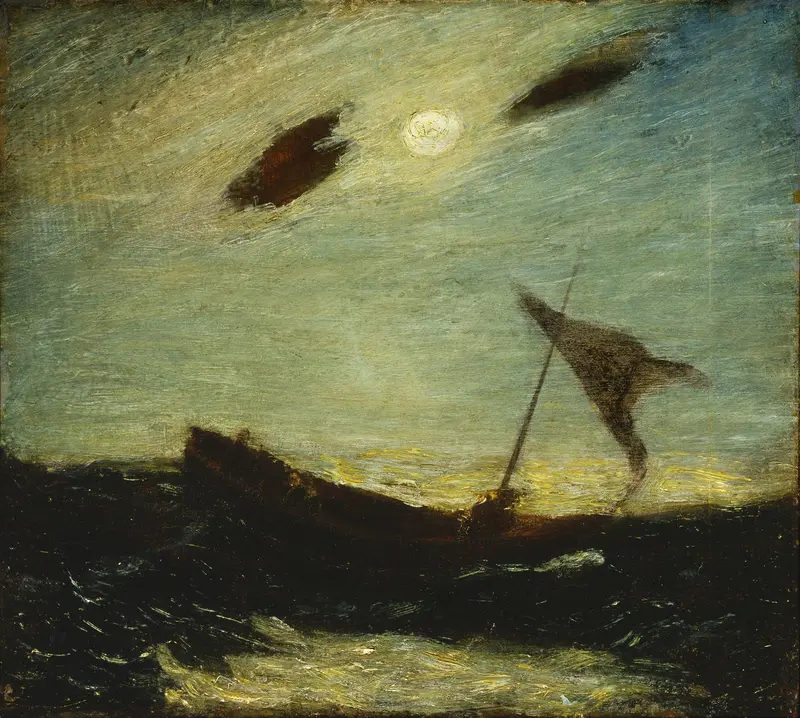
Moonlight
Albert Pinkham Ryder
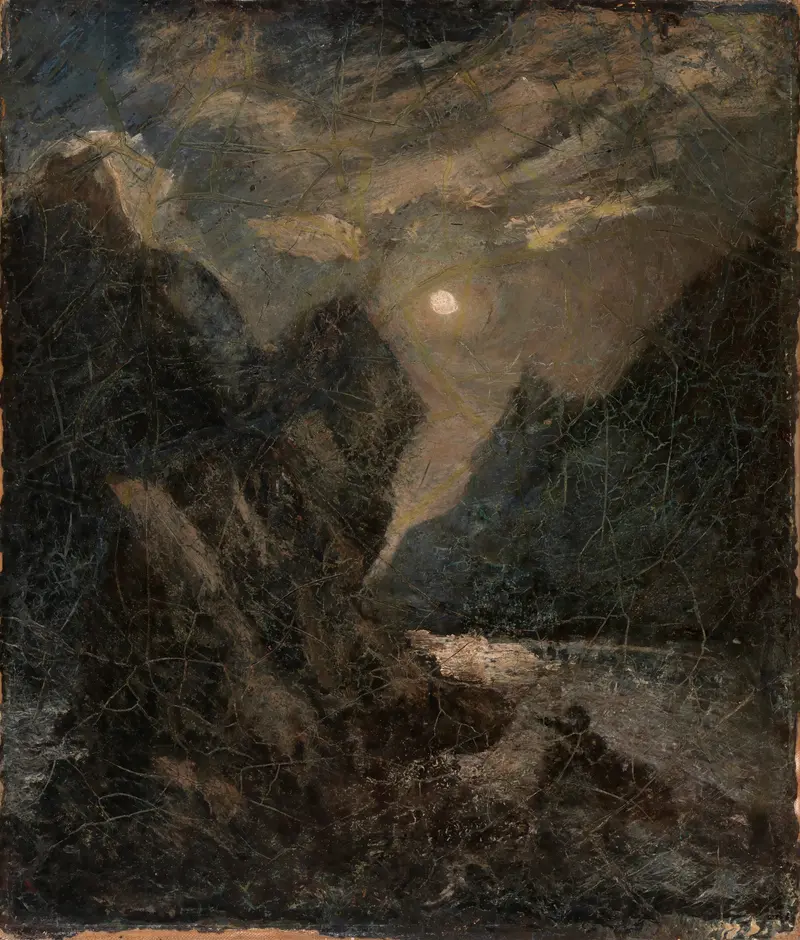
The Lorelei
Albert Pinkham Ryder
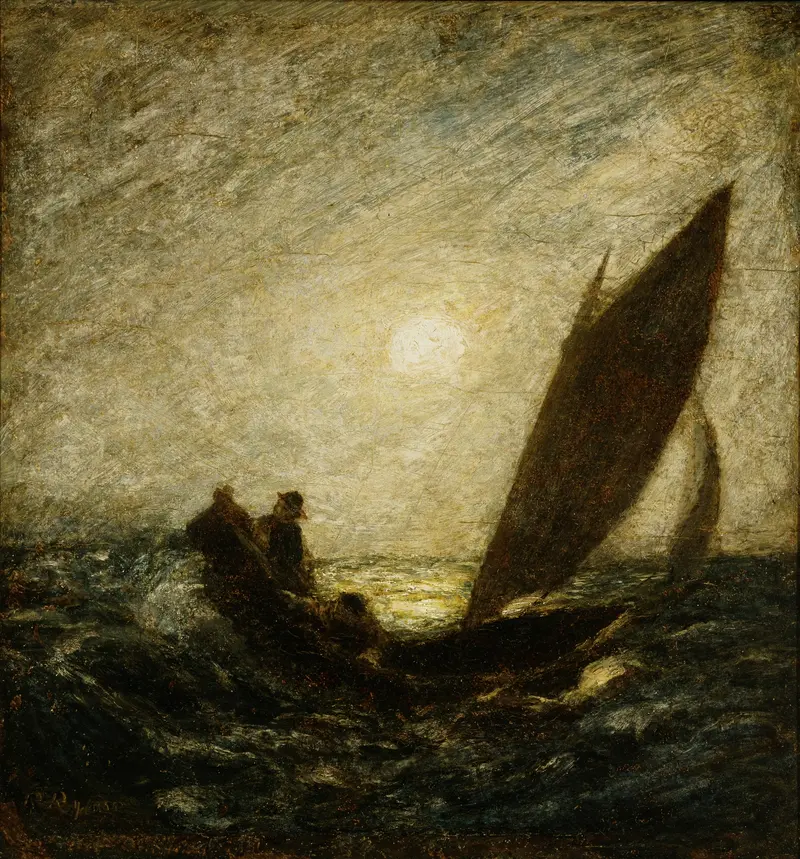
With Sloping Mast And Dipping Prow
Albert Pinkham Ryder
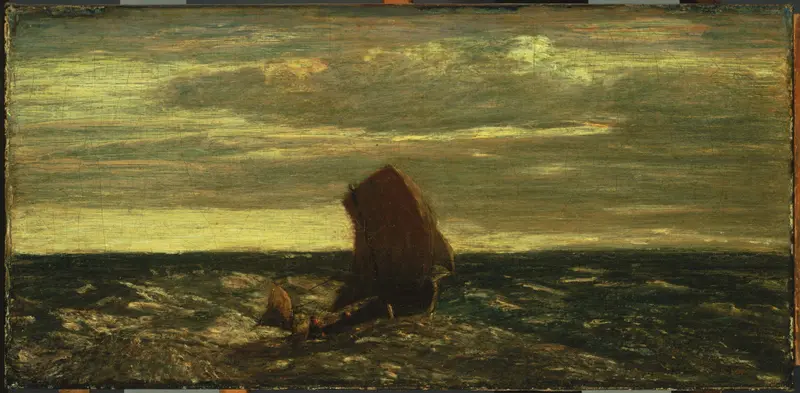
Homeward Bound
Albert Pinkham Ryder
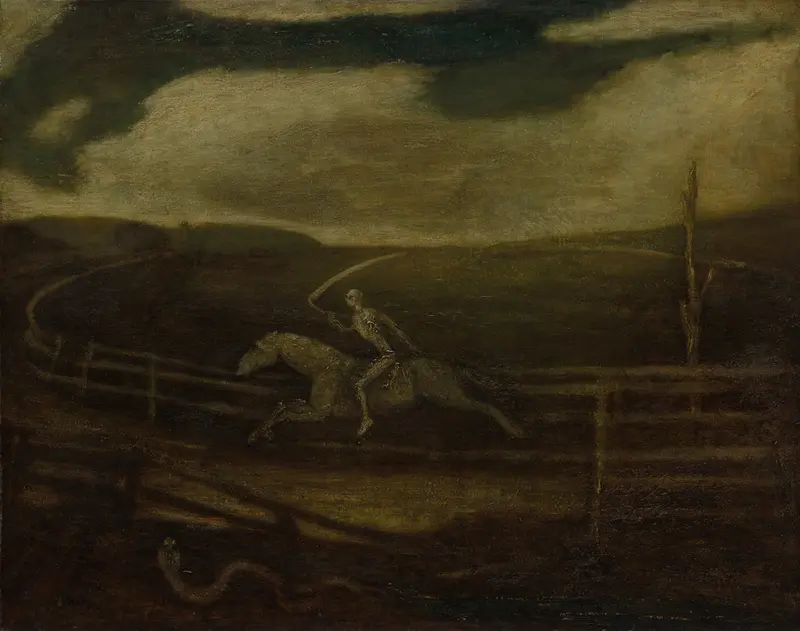
The Race Track (Death on a Pale Horse)
Albert Pinkham Ryder
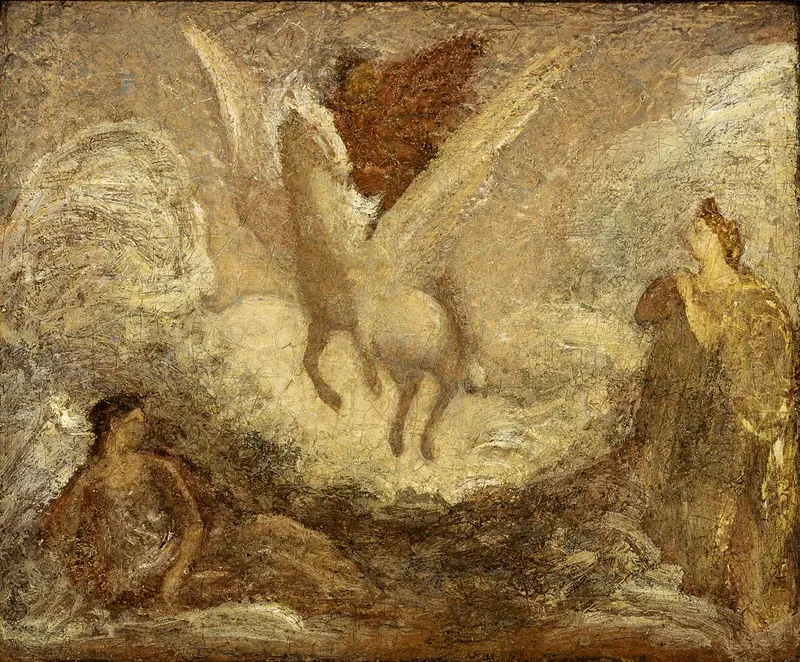
Pegasus Departing
Albert Pinkham Ryder
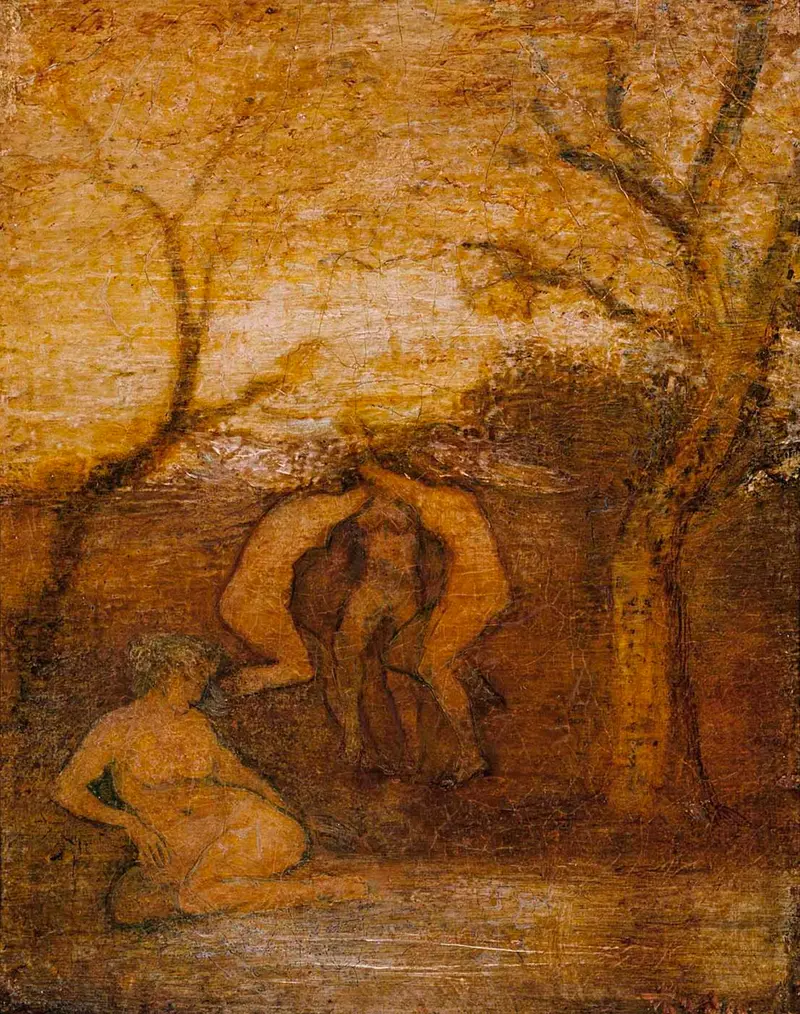
Dancing Dryads
Albert Pinkham Ryder
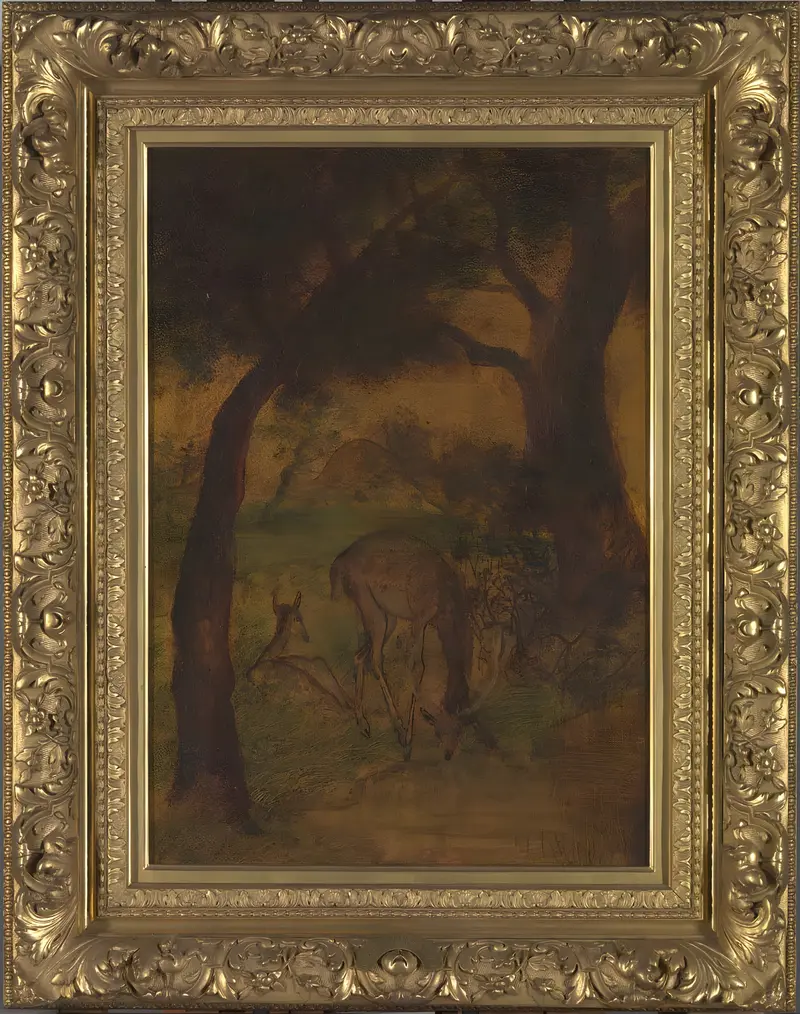
A Stag Drinking
Albert Pinkham Ryder
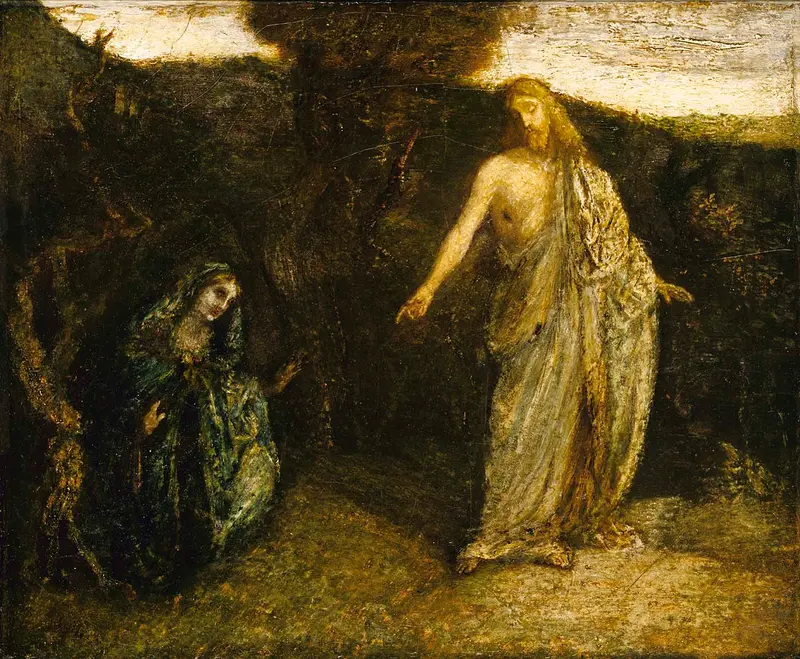
Christ Appearing to Mary
Albert Pinkham Ryder
More Genre Scene Art

Banquet of the Officers of the St George Civic Guard
Frans Hals

Rembrandt and Saskia in the Scene of the Prodigal Son
Rembrandt van Rijn

Bal du moulin de la Galette
Pierre-Auguste Renoir

Quadrille at the Moulin Rouge
Henri de Toulouse-Lautrec

A Burial at Ornans
Gustave Courbet

When Will You Marry?
Paul Gauguin