Persian Ornament No. 2 — History & Facts
A single page, yet it unfolds like a kaleidoscope: Persian Ornament No. 2 by Owen Jones is a feast of geometry and color, each pattern a window into a different logic of beauty. The eye is drawn first to the sharp contrast between the lush, interlacing floral motifs and the crisp, mathematical tessellations.
Some panels pulse with the energy of repeating stars and polygons, while others soften into curling vines and stylized petals, their rhythm almost musical. The palette is deliberate—reds and golds dominate, but are cooled by sage green and punctuated by black, giving the whole composition a sense of both unity and surprise. Here, every line is purposeful: a red triangle signals direction, a green hexagon anchors the eye, a delicate white star radiates calm at the heart of a complex web. This chromolithograph belongs to a world fascinated by the science of ornament, when Victorian designers like Owen Jones sought to catalog and revive the decorative arts of distant cultures.
Published in London in 1910, the page comes from a time when pattern books were both scholarly resources and sources of inspiration for architects, craftsmen, and manufacturers eager to break from the monotony of industrial design. Such works were not mere decoration; they were arguments in color and form, claiming that beauty could be systematic, that the arts of Persia held lessons for the modern world. History has kept few traces of the individual hands who once traced these motifs on tiles and textiles, but their legacy lives on in pages like this—inviting you to lose yourself in the logic and lyricism of ornament.
More Artworks by Owen Jones

Greek Ornament No. 1
Owen Jones
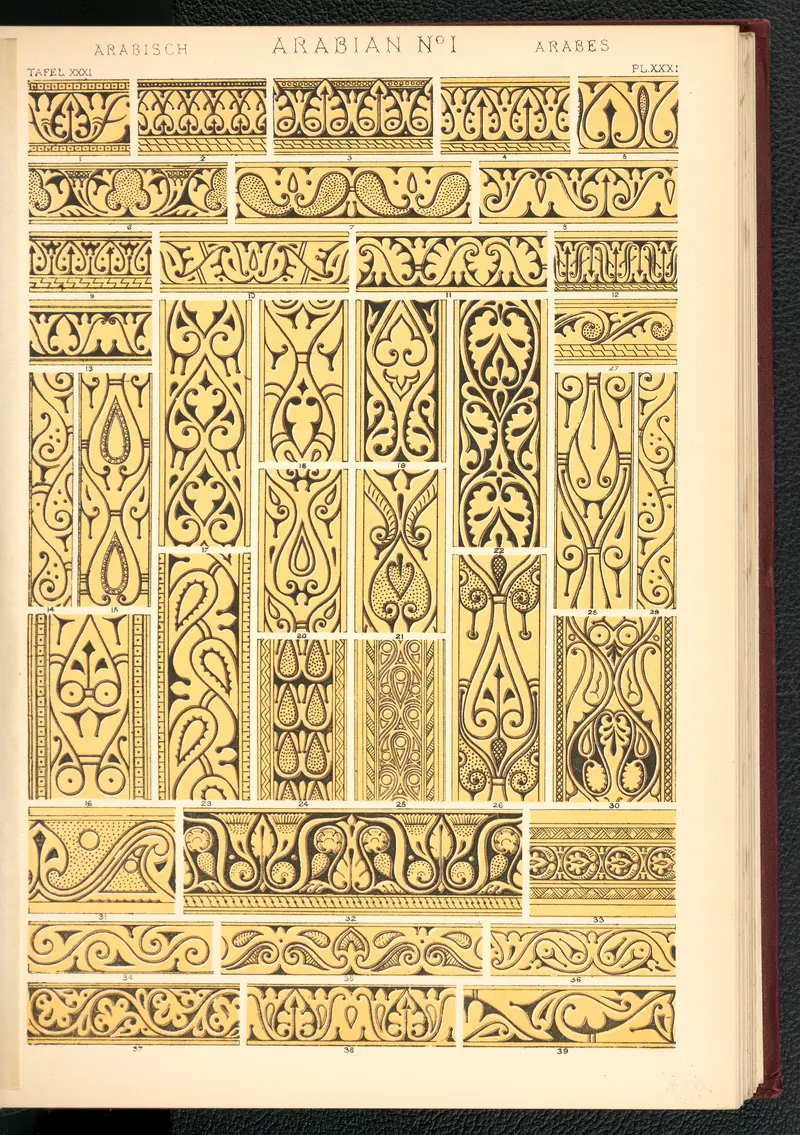
Arabian Ornament No. 1
Owen Jones
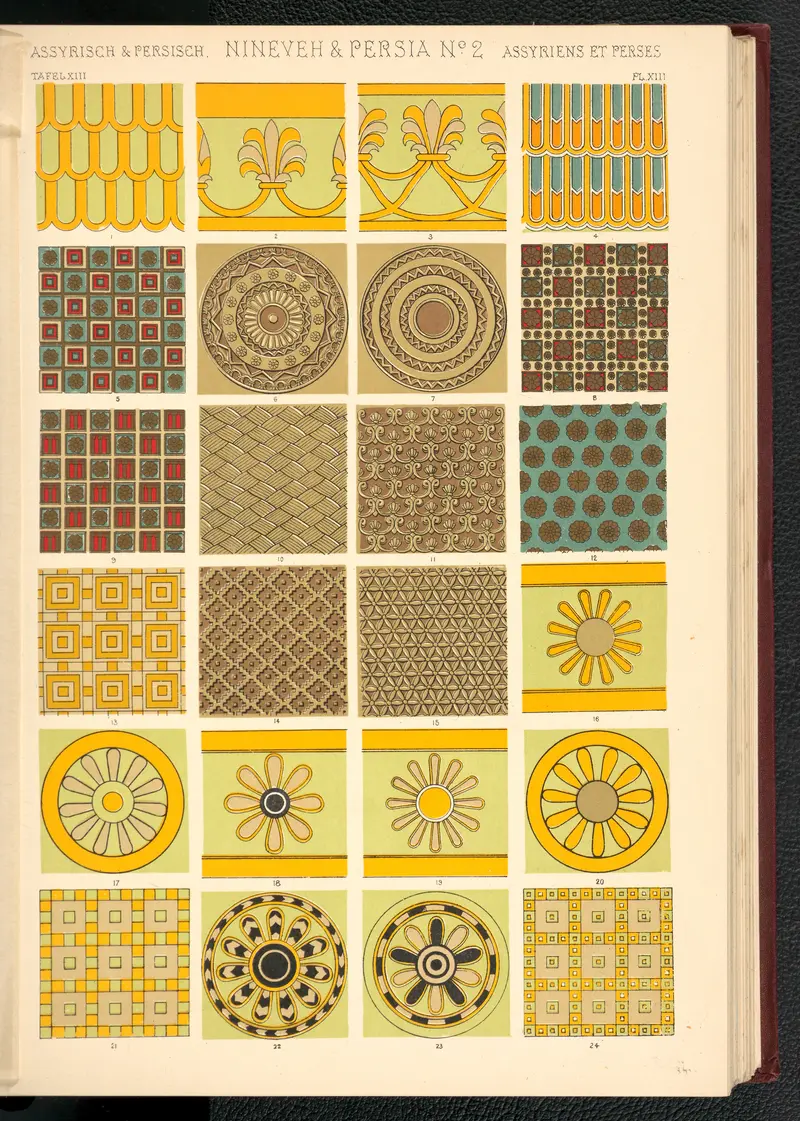
Assyrian Ornament No. 2
Owen Jones

Egyptian Ornament No. 3
Owen Jones
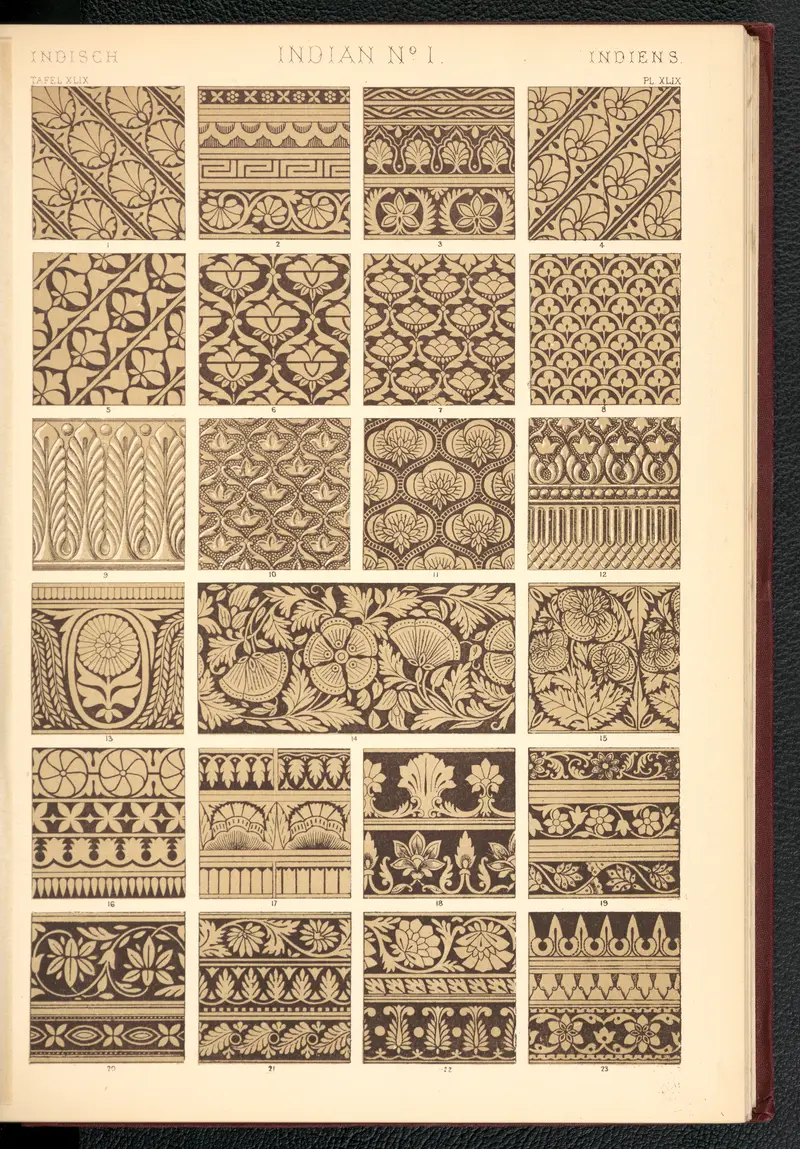
Indian Ornament No. 1
Owen Jones
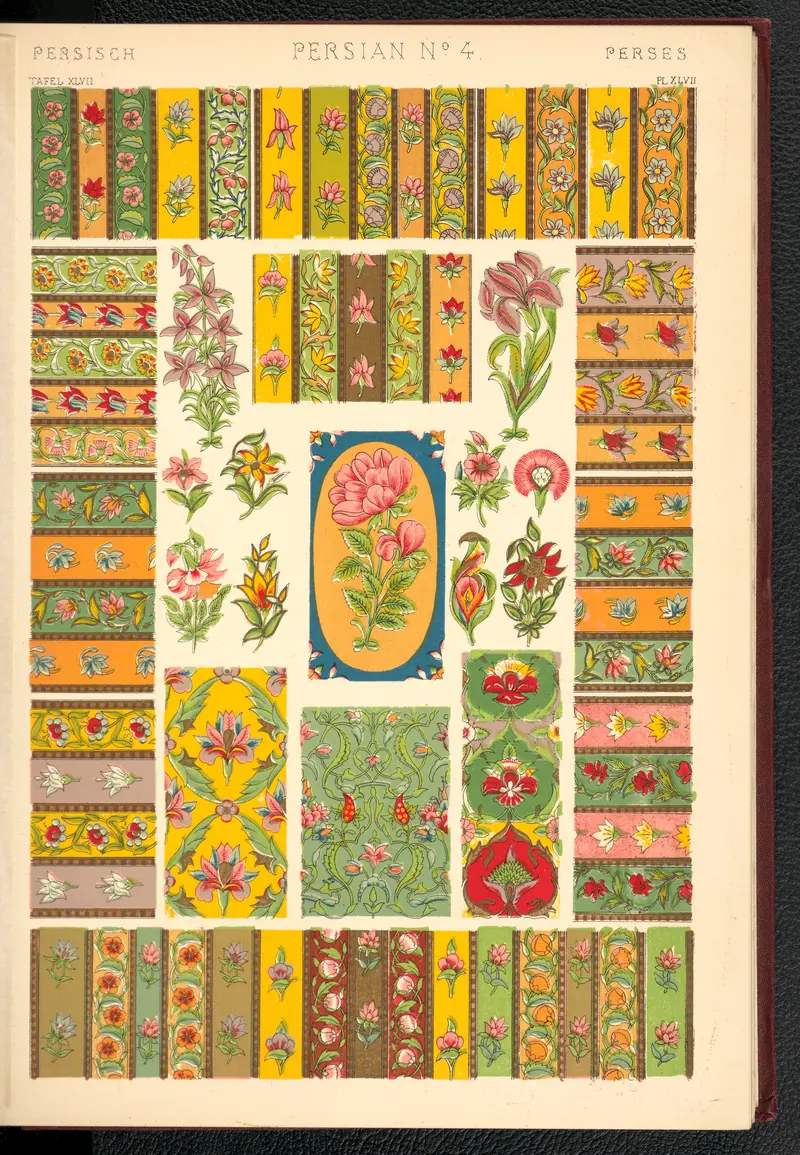
Persian Ornament No. 4
Owen Jones
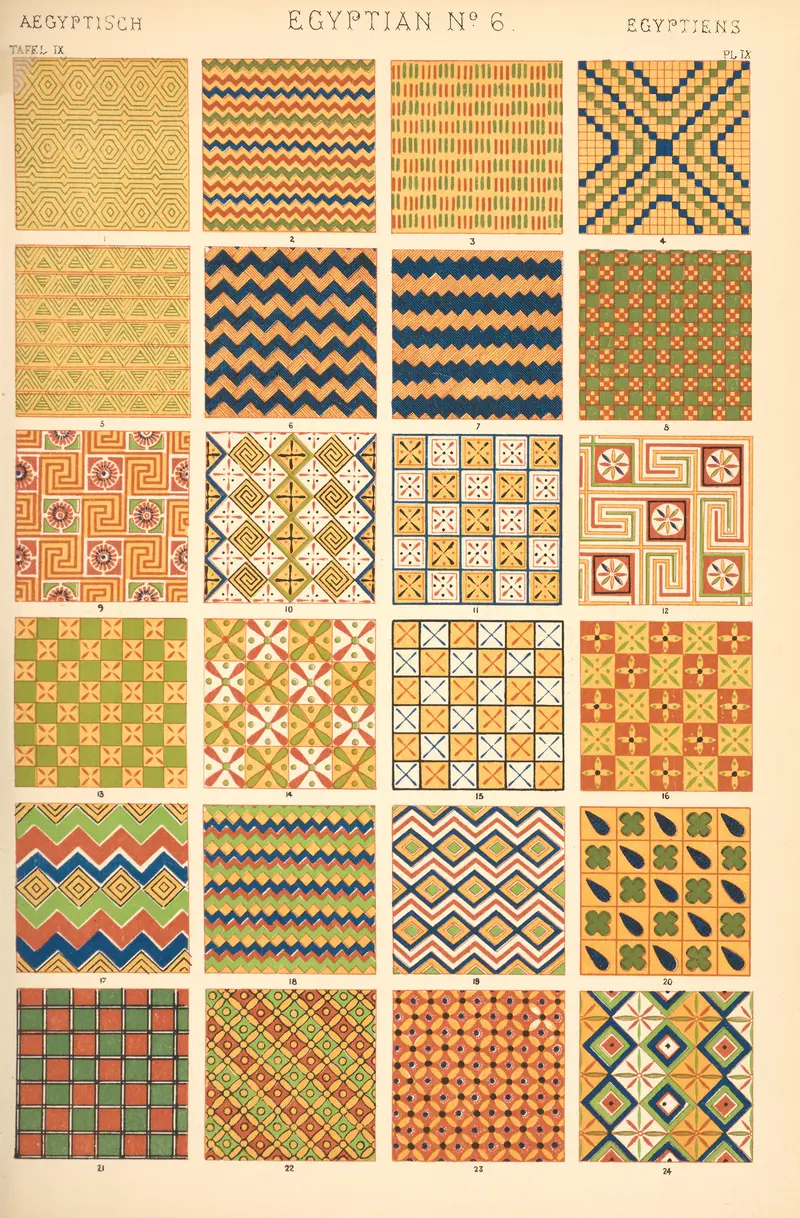
Egyptian Ornament No. 6
Owen Jones
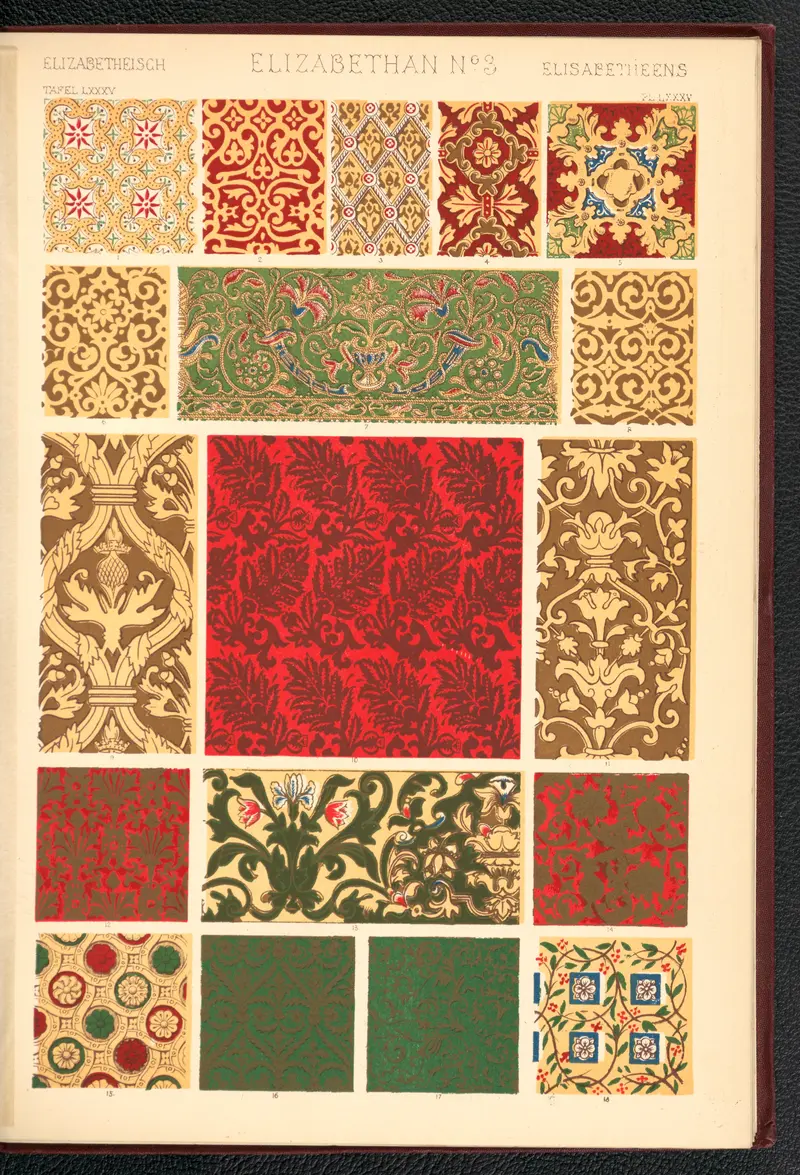
Elizabethan Ornament No. 3
Owen Jones
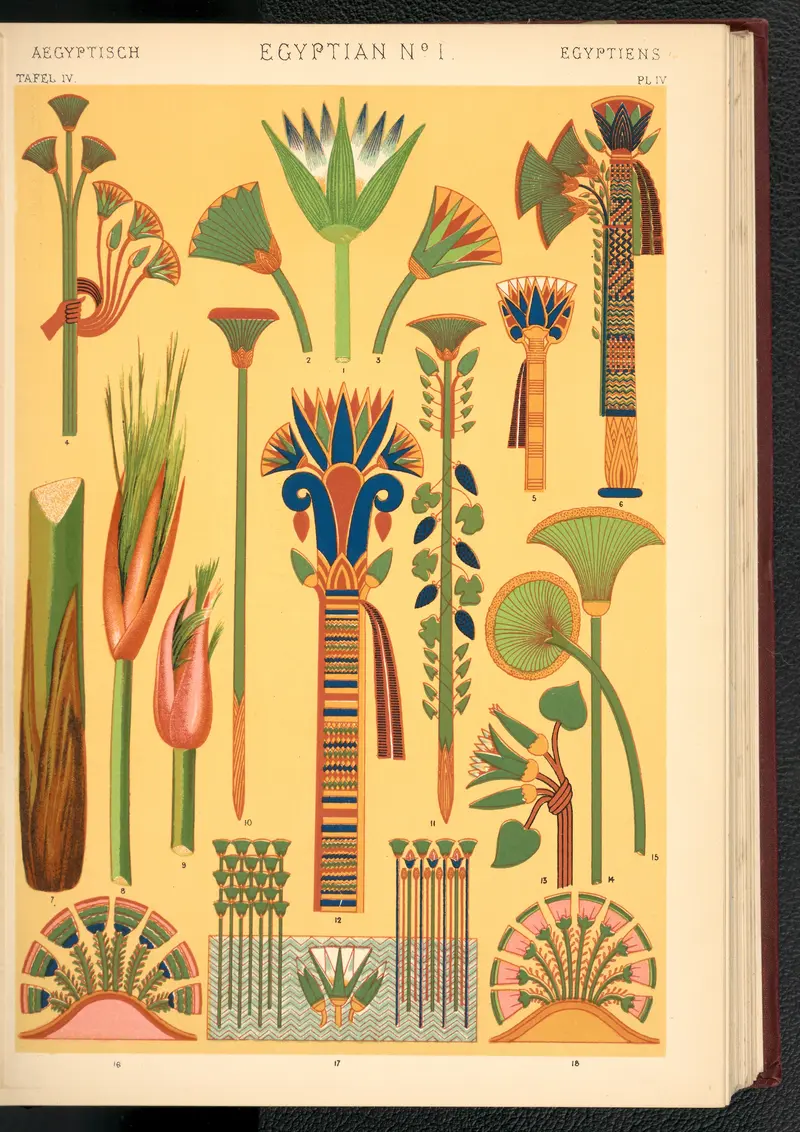
Egyptian Ornament No. 1
Owen Jones
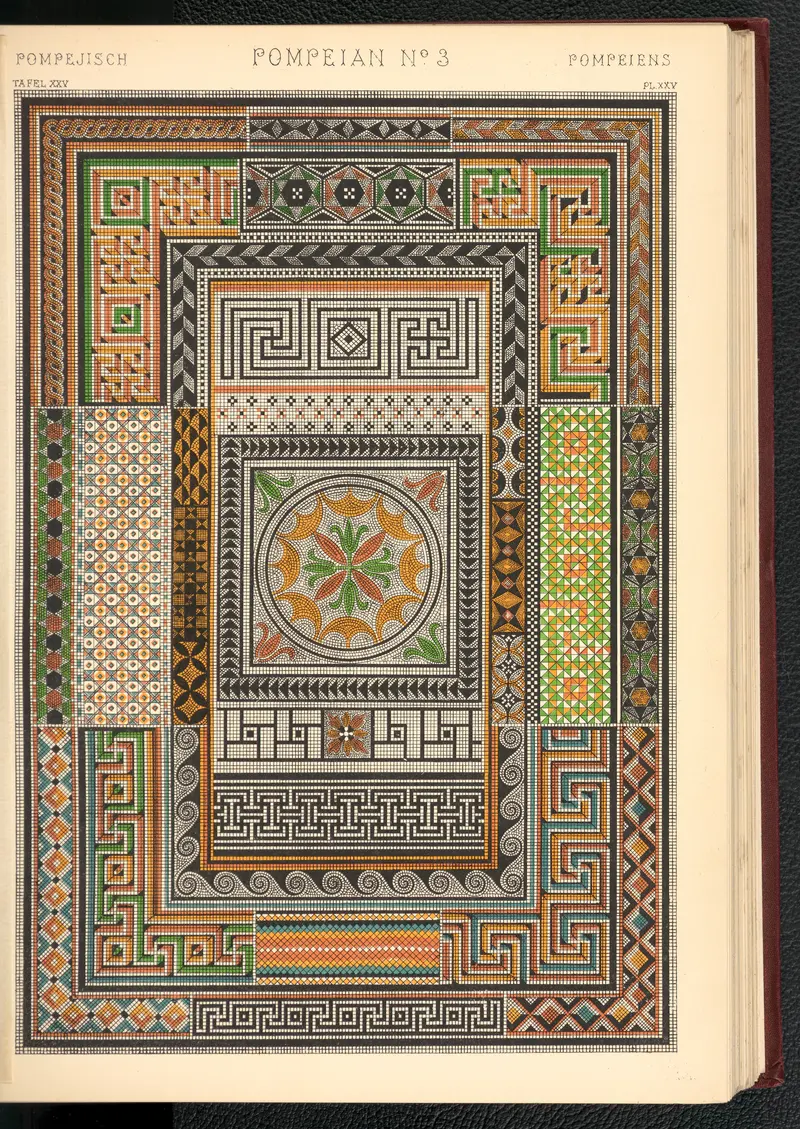
Pompeian Ornament No. 3
Owen Jones