
Portrait of Archbishop Fernando de Valdés — History & Facts
A man with a white beard and serious expression sits before a deep pink curtain, his head turned slightly to the left but his gaze meeting the viewer directly. He wears a black cap and a voluminous black robe that envelops his shoulders, the dark fabric painted with broad, fluid brushstrokes that catch the light along the folds. His pale face stands out against the darkness of his clothing, the skin rendered with subtle gradations of pinks and greys, and his features—arched brows, downturned mouth, and sharp nose—are described with precise, economical touches.
The sitter’s white beard is carefully modelled, with individual strokes suggesting its wiry texture, and the light falls most strongly across his forehead, nose, and beard, giving his face a sculptural presence. Behind him, the curtain is painted with loose, visible brushwork, its folds and highlights suggesting a rich, heavy fabric, and a narrow band of gold runs vertically along the left edge, adding a note of formality to the scene. No other objects or figures appear; the composition is tightly focused on the man’s upper body and face, filling the canvas and creating a sense of immediacy.
The man’s left ear is visible and rendered with a reddish hue, contrasting with the cooler tones of his face and beard. The curtain behind him is gathered into loose, irregular folds that create subtle vertical lines and areas of shadow. The background at the far left edge transitions to a muted grey, creating a sharp boundary with the pink curtain.
Light softly grazes the man’s right cheek and the edge of his ear, while his left side falls into deeper shadow. The edges of the black robe dissolve into the dark background at the lower left, with loose, almost unfinished brushwork. The upper right corner of the painting is dominated by a deep pink shadow that intensifies the sense of depth behind the figure. The title identifies the sitter as Fernando de Valdés y Llanos, an archbishop, and the painting was created by Diego Velázquez in the 1640s.
Sources: National Gallery, record NG6380 · Wikidata Q26707938 · Image source (Wikimedia Commons)
More Artworks by Diego Velázquez

Las Meninas
Diego Velázquez
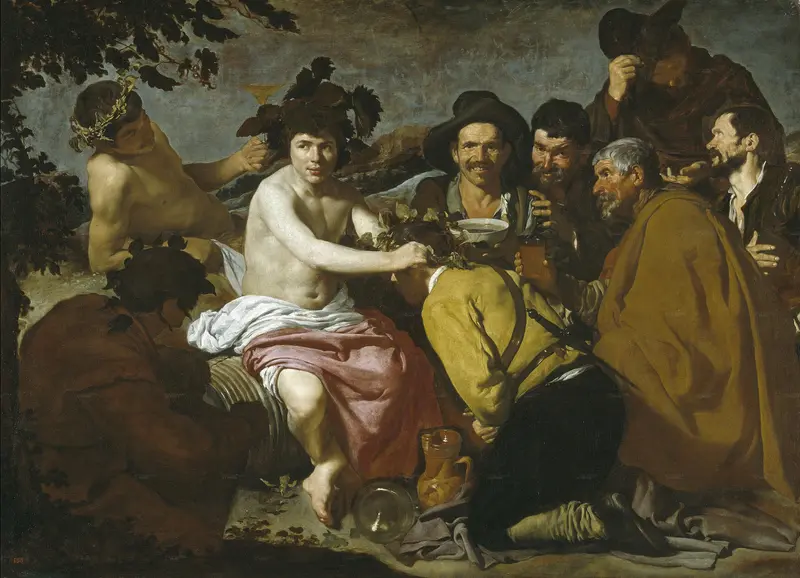
The Triumph of Bacchus
Diego Velázquez
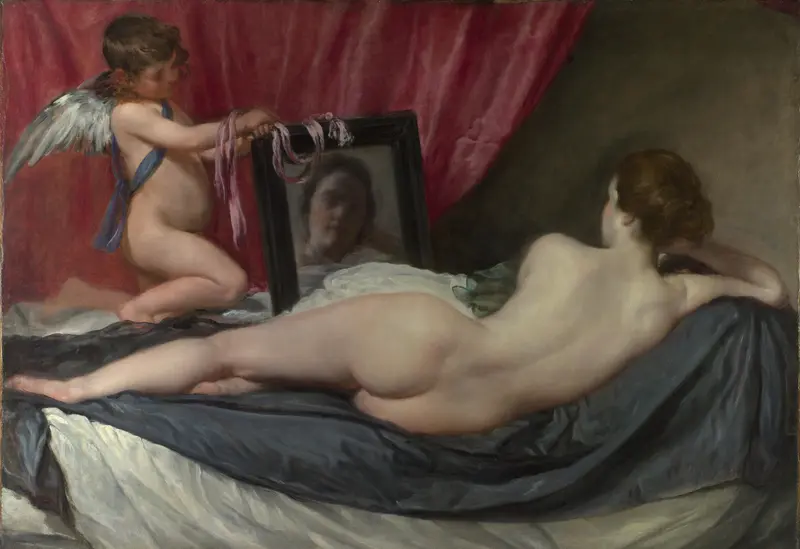
Rokeby Venus
Diego Velázquez
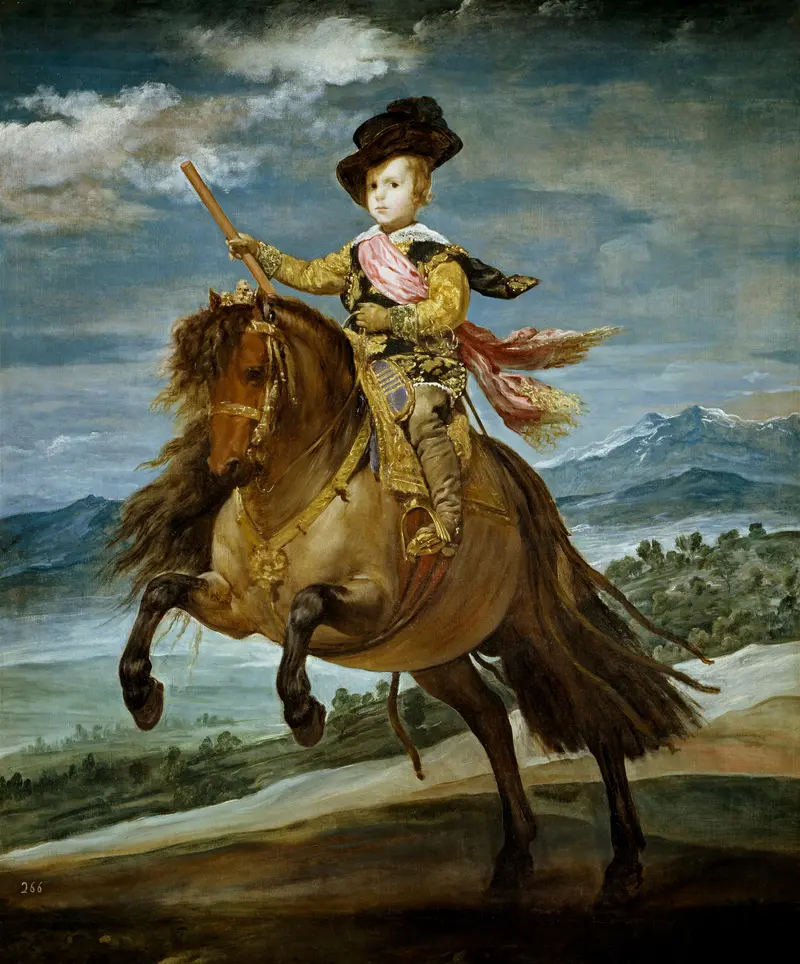
Equestrian Portrait of Prince Balthasar Charles
Diego Velázquez
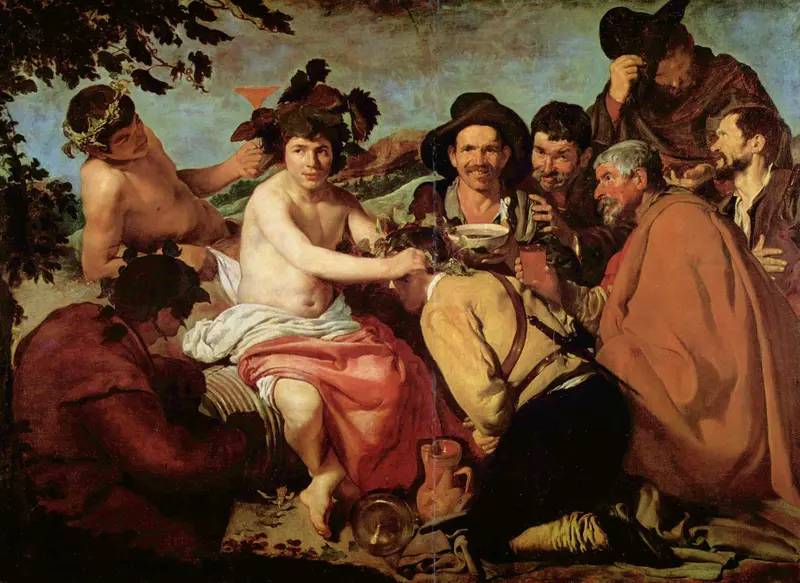
Bacchus
Diego Velázquez
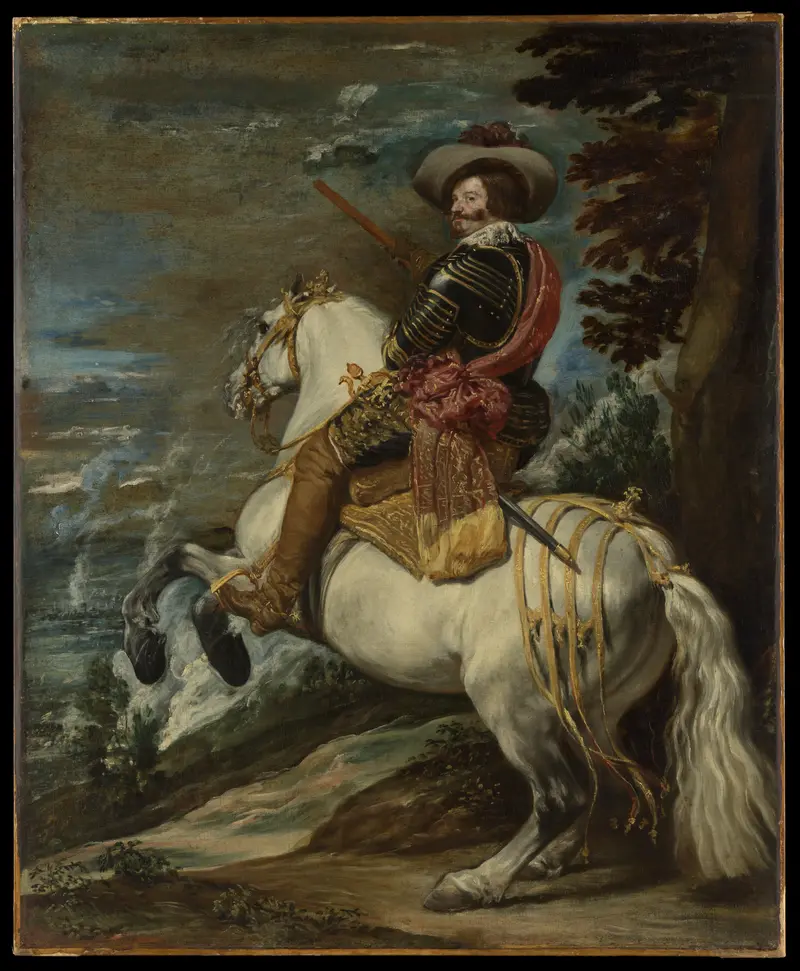
Don Gaspar de Guzmán (1587–1645), Count-Duke of Olivares
Diego Velázquez
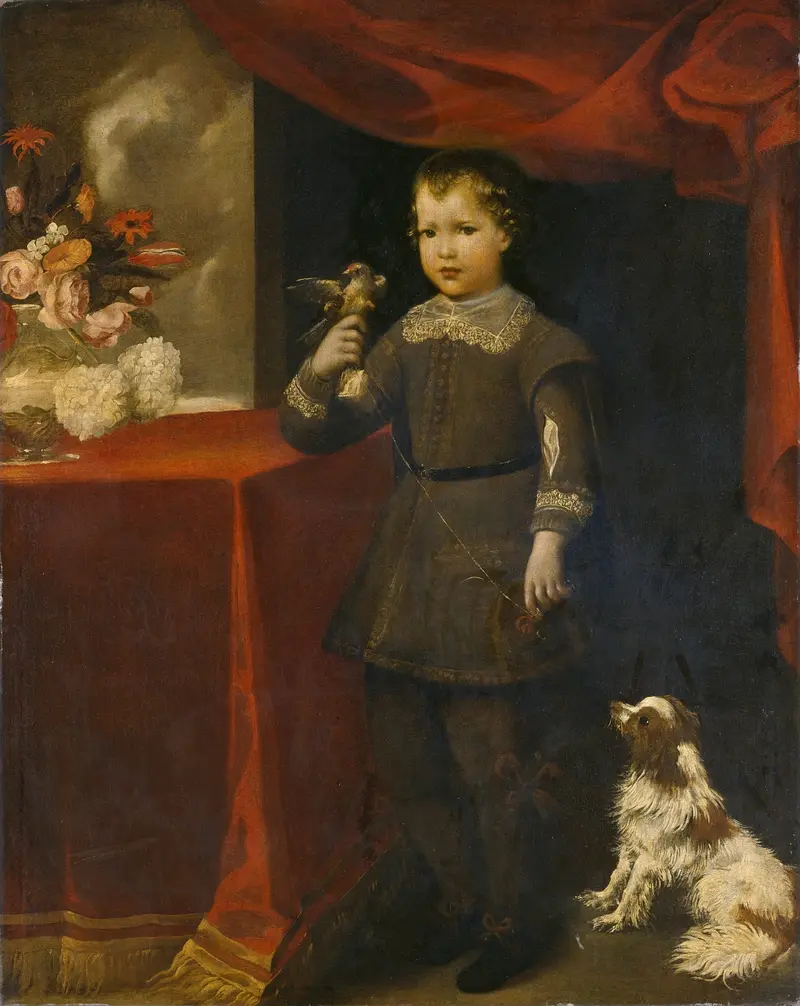
El príncipe Baltasar Carlos de Austria
Diego Velázquez
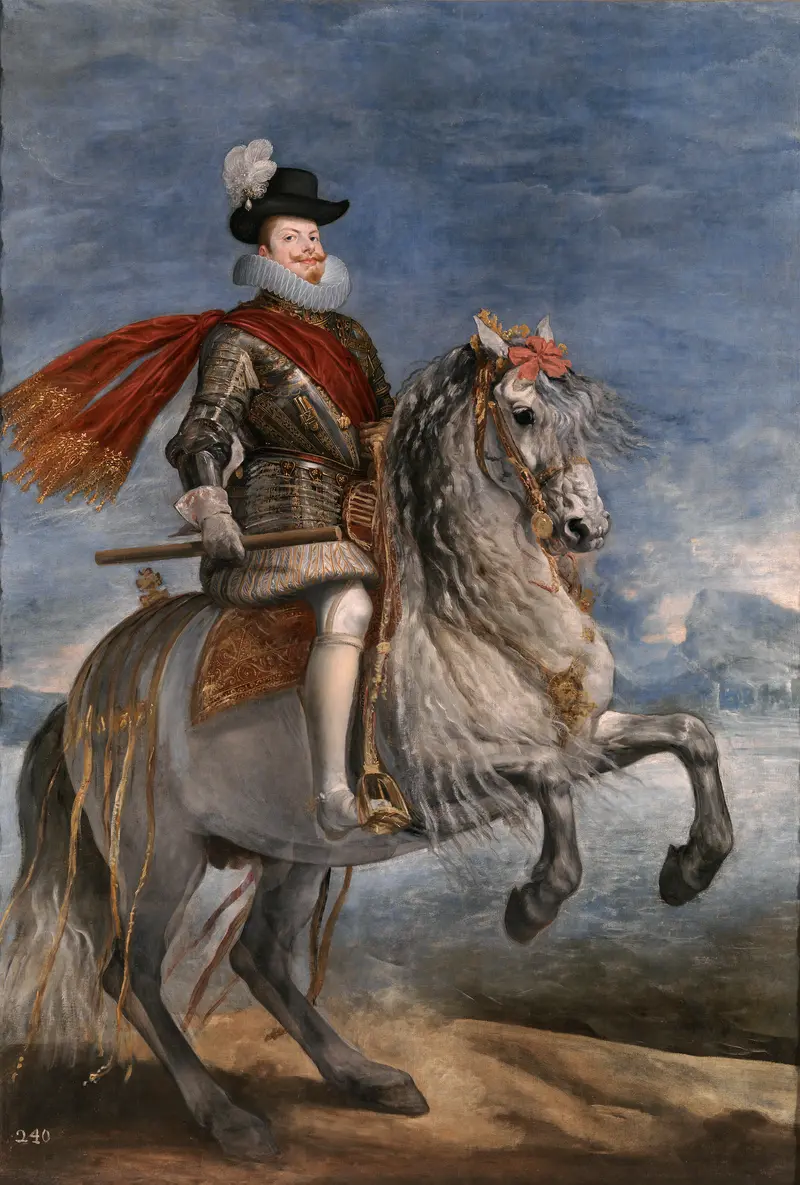
Equestrian Portrait of Philip III
Diego Velázquez
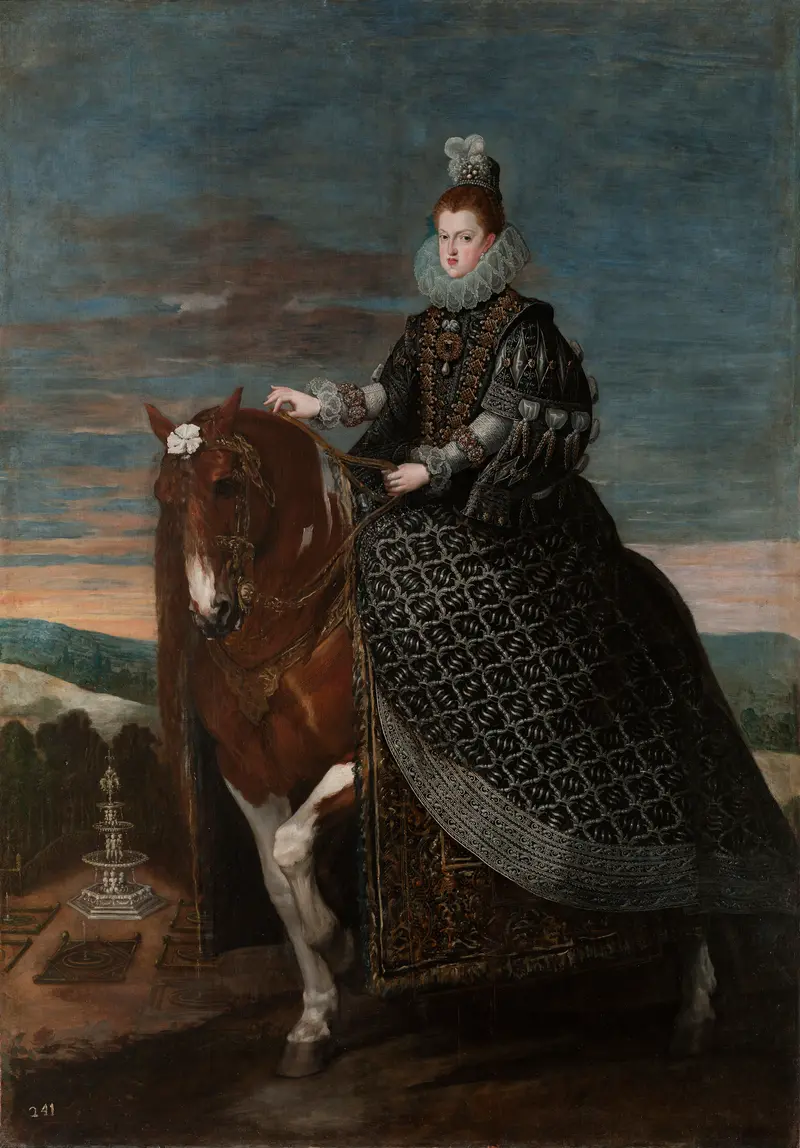
Equestrian Portrait of Margarita of Austria
Diego Velázquez
Las Hilanderas
Diego Velázquez




