
Santa Rufina — History & Facts
When Diego Velázquez painted Santa Rufina in 1622, he was just twenty-three and still living in his native Seville. This work is one of the earliest known depictions of the young martyr by Velázquez, and its attribution was debated for centuries—some even doubted it was his until technical analysis in the late 20th century confirmed his hand. The painting stands out for its rarity: few images of Santa Rufina exist from this period, and even fewer by artists of Velázquez’s stature.
The saint herself was a local Sevillian figure, making this painting a proud testament to the city’s spiritual heritage. At the moment Velázquez chose to capture, Santa Rufina stands quietly, her gaze direct yet gentle, holding a palm of martyrdom and a clay pitcher—her traditional attributes. According to legend, Rufina and her sister Justa were potters who refused to sell their wares for pagan rituals in Roman Seville and were martyred for their faith. The simple pitcher alludes to her humble profession, while the palm branch signals her sacrifice.
Unlike the dramatic martyrdom scenes painted by Zurbarán, Velázquez opts for restraint: the saint is rendered with a lifelike immediacy, her features echoing those of real Sevillian girls, the light falling softly across her face, inviting the viewer into quiet contemplation rather than spectacle. The painting’s early history is shrouded in some uncertainty, but it is believed to have been commissioned by a Sevillian religious institution or patron devoted to the city’s saints. Over the centuries, Santa Rufina changed hands several times, at one point being misattributed to later followers of Velázquez. Only after careful restoration and study did experts agree on its place in the artist’s early oeuvre.
Today, it hangs in the Fundación Focus-Abengoa in Seville, a rare survivor from Velázquez’s formative years, offering a glimpse into both the artist’s beginnings and the devotional life of 17th-century Spain.
More Artworks by Diego Velázquez

Las Meninas
Diego Velázquez

The Triumph of Bacchus
Diego Velázquez

Rokeby Venus
Diego Velázquez

Equestrian Portrait of Prince Balthasar Charles
Diego Velázquez

Bacchus
Diego Velázquez

Don Gaspar de Guzmán (1587–1645), Count-Duke of Olivares
Diego Velázquez
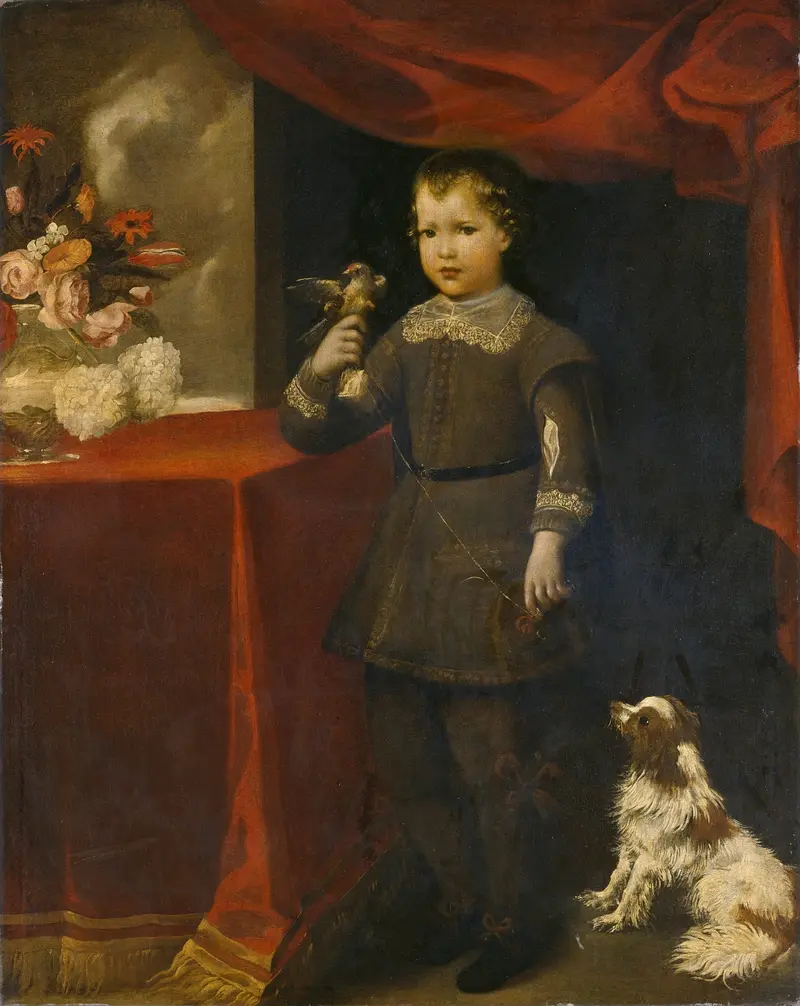
El príncipe Baltasar Carlos de Austria
Diego Velázquez

Equestrian Portrait of Philip III
Diego Velázquez

Equestrian Portrait of Margarita of Austria
Diego Velázquez
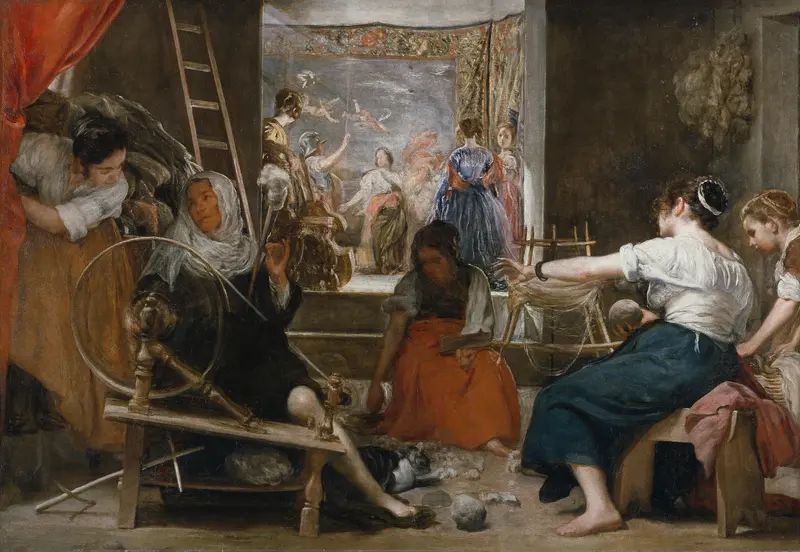
Las Hilanderas
Diego Velázquez





