
Self-Portrait as Bacchus — History & Facts
A young man sits turned toward the viewer, his bare shoulder and back exposed, clutching a cluster of pale grapes in his right hand. His head is crowned with a wreath of green vine leaves, which rest heavily on his dark, tousled hair and cast subtle shadows across his forehead. The figure is draped in a white cloth that slips off his left shoulder and is tied in a loose knot at the waist, the folds painted with careful attention to the play of light and shadow.
The background is a deep, nearly featureless brown, which throws the figure and the still life in the foreground into sharp relief. The artist uses smooth, blended brushwork to model the young man’s muscular back and arms, while the fruits and vine leaves are painted with crisp, precise edges. The composition is tightly framed, with the figure’s twisting pose filling most of the canvas and the table edge cutting across the lower foreground.
Small details, such as the translucency of the grapes and the subtle veins in the vine leaves, reveal a close observation of nature. On the stone ledge in the lower right foreground, there are two yellowish peaches and a cluster of dark purple grapes resting beside a green vine leaf. The background remains uniformly dark brown, with no discernible objects or architectural features, creating a stark contrast with the illuminated figure.
The light source falls from the upper left, casting strong highlights on the young man’s shoulder, upper arm, and the grapes he holds, while leaving his lower back and the right side of his face in shadow. The edges of the painting are sharply defined, with the figure’s elbow and the knot of the cloth nearly touching the left and lower borders. Fine cracks in the paint surface are visible throughout, especially in the lighter areas of skin and drapery, adding a subtle texture to the composition. This is Self-Portrait as Bacchus, created by Caravaggio in 1595. The work is recognized as an example of Italian Baroque painting, a movement known for its dramatic use of light and lifelike detail.
Sources: Wikidata Q2293936 · Wikipedia: Young Sick Bacchus · Image source (Wikimedia Commons)
More Artworks by Caravaggio
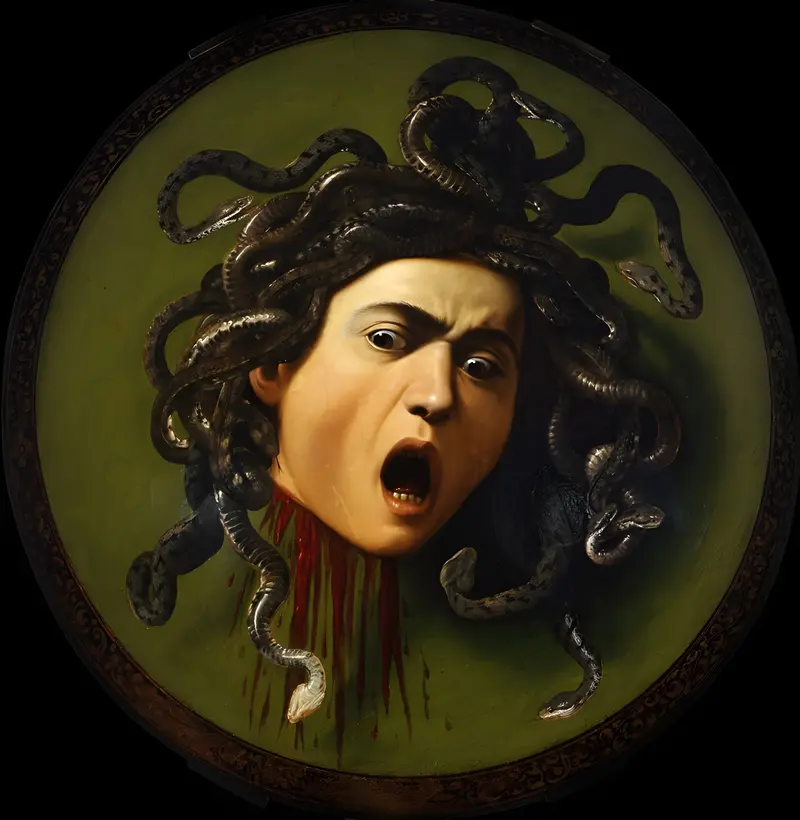
Medusa
Caravaggio
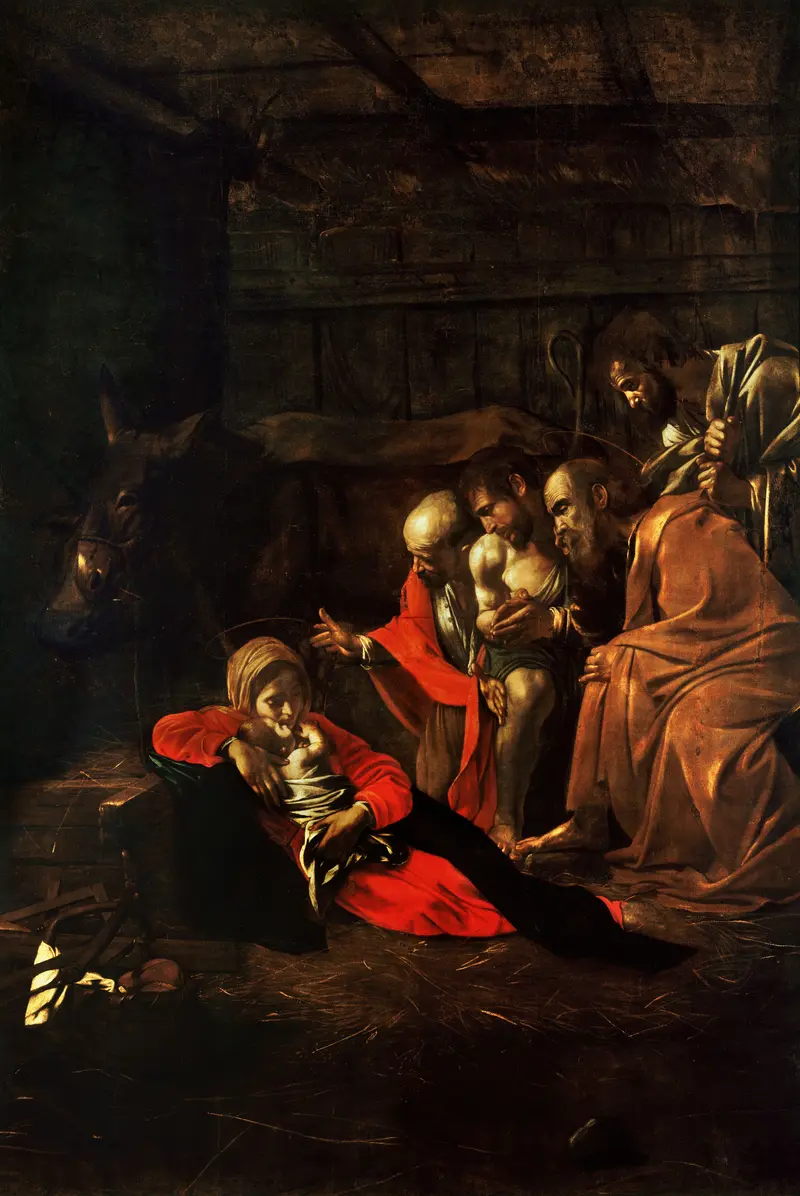
Adoration of the Shepherds
Caravaggio
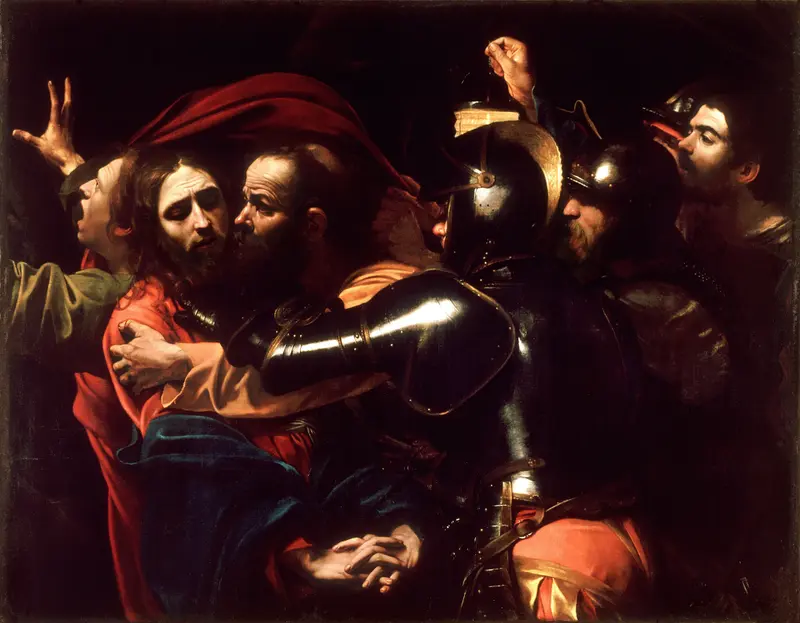
The Taking of Christ
Caravaggio
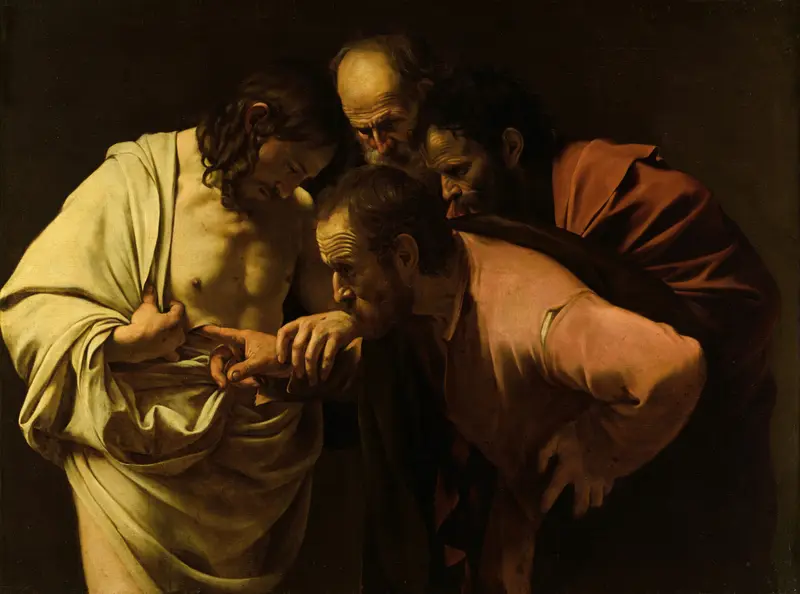
The Incredulity of Saint Thomas
Caravaggio
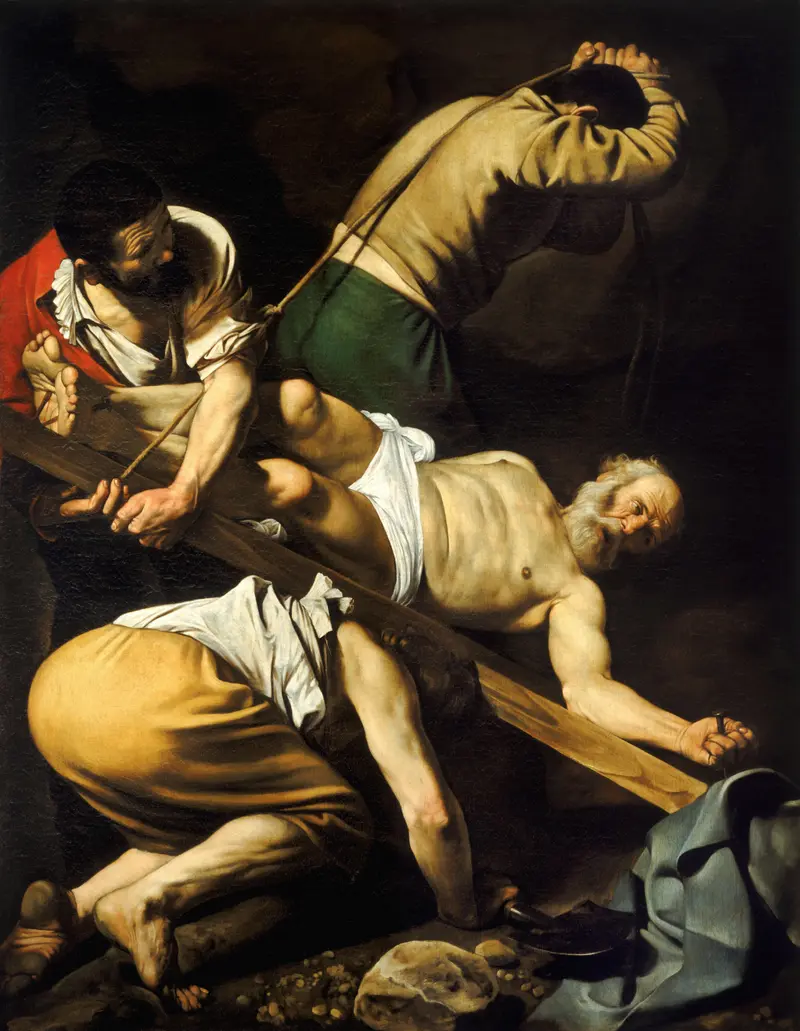
Crucifixion of Saint Peter
Caravaggio
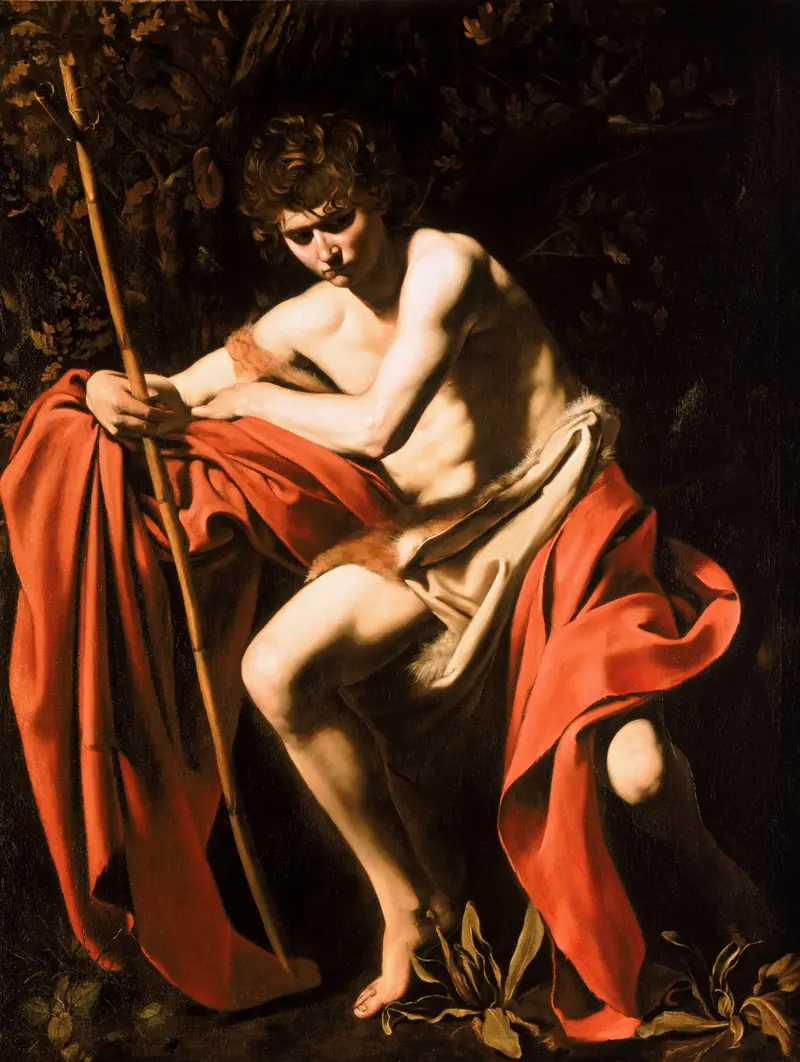
Saint John The Baptist In The Wilderness
Caravaggio

Saint Matthew and the angel
Caravaggio
The Inspiration of Saint Matthew
Caravaggio

Conversion on the Way to Damascus
Caravaggio
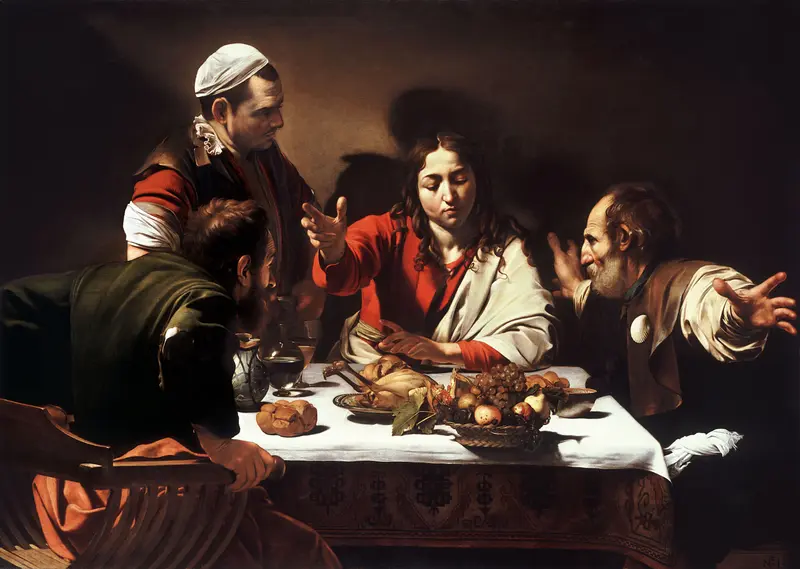
Supper at Emmaus
Caravaggio





