
St Vincent de Paul at the Deathbed of Louis XIII — History & Facts
It is the great golden canopy that first commands the eye, sweeping down in heavy folds to frame a scene of intimate gravity. Beneath its shadow, the dying king reclines, his pallor thrown into relief by the white linen and the gentle, almost theatrical, light that falls across his form. The painter draws us into the drama not with violence but with gestures: the king’s frail hand clutching a crucifix, the priest’s raised finger pointing heavenward, the woman’s face pressed to her hand in silent grief.
Each figure is caught in a web of gazes and gestures, their emotions as carefully arranged as the drapery above. The palette, rich in golds and browns, holds the moment in a hush, as if the world itself has paused to witness this passing. Painted in 1731, this work by Jean-François de Troy belongs to a world where history painting was the highest calling for an artist, and scenes of royal life and death were both public spectacle and private meditation. In the early eighteenth century, such canvases were often commissioned to instruct, to edify, and to remind viewers of the virtues of piety and loyalty—virtues embodied here by the presence of St Vincent de Paul at the royal deathbed.
The painting now resides in the collection documented at http://collection.smk.dk/#/en/detail/KMS7697, but history has kept few traces of its journey or its first audience. What remains is this carefully staged farewell, inviting us to read the gestures, the light, and the faces for clues to a vanished world’s ideals.
More Artworks by Jean-François de Troy

Diana and Actaeon
Jean-François de Troy

Créüse consumée par la robe empoisonnée
Jean-François de Troy

The Abduction of Europa
Jean-François de Troy
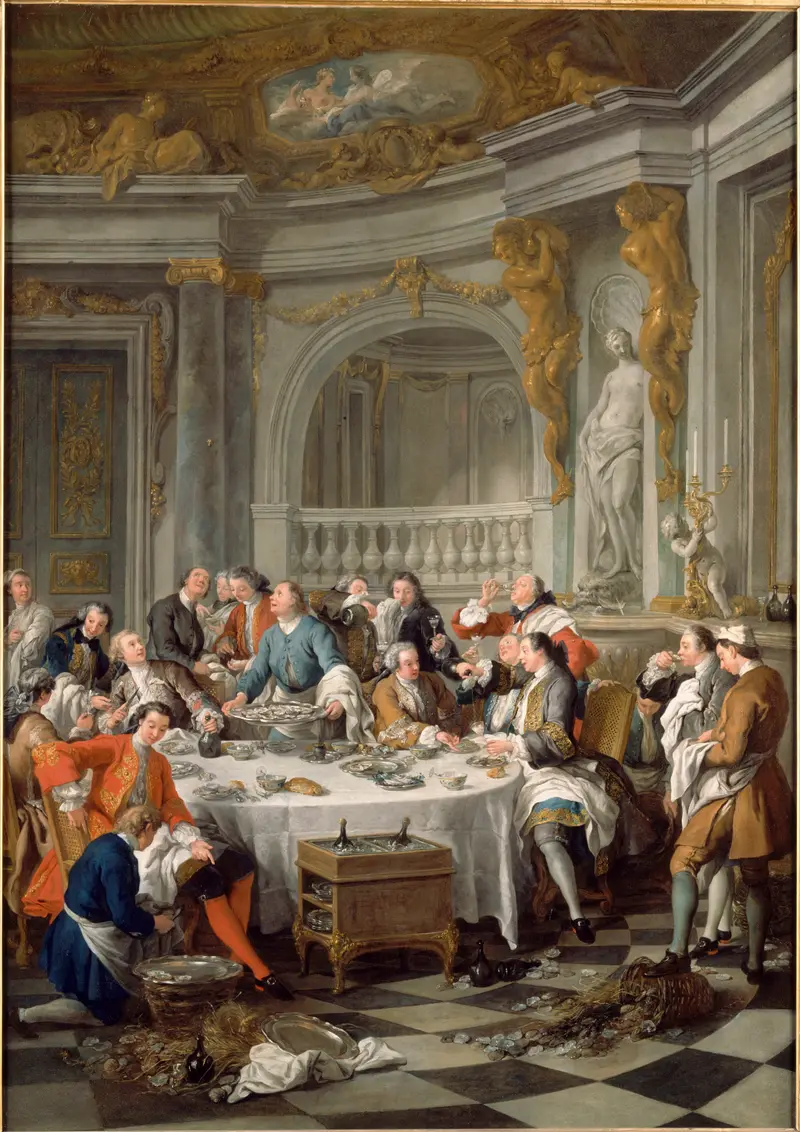
The Lunch of Oysters
Jean-François de Troy

Before the Ball
Jean-François de Troy

Pan and Syrinx
Jean-François de Troy

Le Combat des soldats nés des dents du serpent
Jean-François de Troy

Diana and Her Nymphs Bathing
Jean-François de Troy
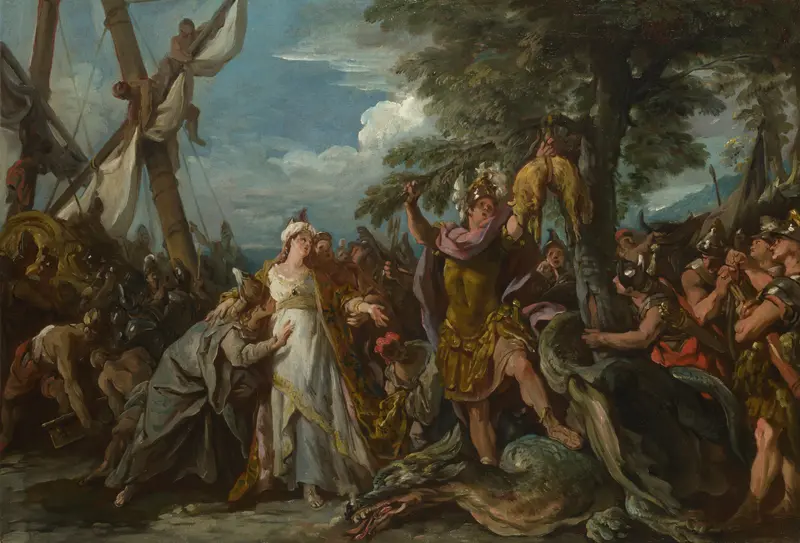
The Capture of the Golden Fleece
Jean-François de Troy

The Triumph of Mordecai
Jean-François de Troy





