
The Calling of Saint Matthew — History & Facts
A beam of light cuts across a darkened room, illuminating a group of five men gathered around a table, their faces and gestures animated in response to two figures who have just entered from the right. At the center of the group, a bearded man in shadow points to his own chest, his expression a mixture of surprise and disbelief as he looks toward the standing figure who extends an arm in his direction. The man beside him, older and bent, leans in to see what has caught his companion’s attention, while a younger man in a feathered hat turns in his seat, mouth open, caught mid-reaction.
Two other men remain focused on the coins and papers on the table, their faces partially hidden by the dramatic contrast of light and shadow. On the right, a figure in a loose robe, his face in shadow, gestures with an outstretched hand toward the group at the table, while another man stands just behind him, his arm also raised in a pointing gesture. The palette is dominated by deep browns, blacks, and ochres, with flashes of red, gold, and white in the clothing, and the brushwork is smooth but lively, especially in the rendering of fabrics and flesh.
The far left edge of the painting is crowded with the backs of two figures, one hunched over the table and another leaning in, their faces obscured by shadows and their bodies partially cropped by the frame. The table is cluttered with scattered coins, a ledger, and a quill, while a sword hilt juts out from beneath the seated man in the foreground, resting against his thigh. The light falls most strongly on the faces and hands of the central group, leaving the lower half of the scene and the rightmost standing figures in deep shadow.
The paint handling on the garments, especially the striped sleeves and gold-trimmed doublets, is precise and crisp, creating sharp lines that contrast with the softer, almost blurred treatment of the dark background. The depiction of the figures, their expressive gestures, and the dramatic use of light and shadow are characteristic of Caravaggio’s approach to religious narrative, emphasizing psychological intensity and realism.
Sources: Wikidata Q969377 · Wikipedia: The Calling of Saint Matthew · Image source (Wikimedia Commons)
More Artworks by Caravaggio
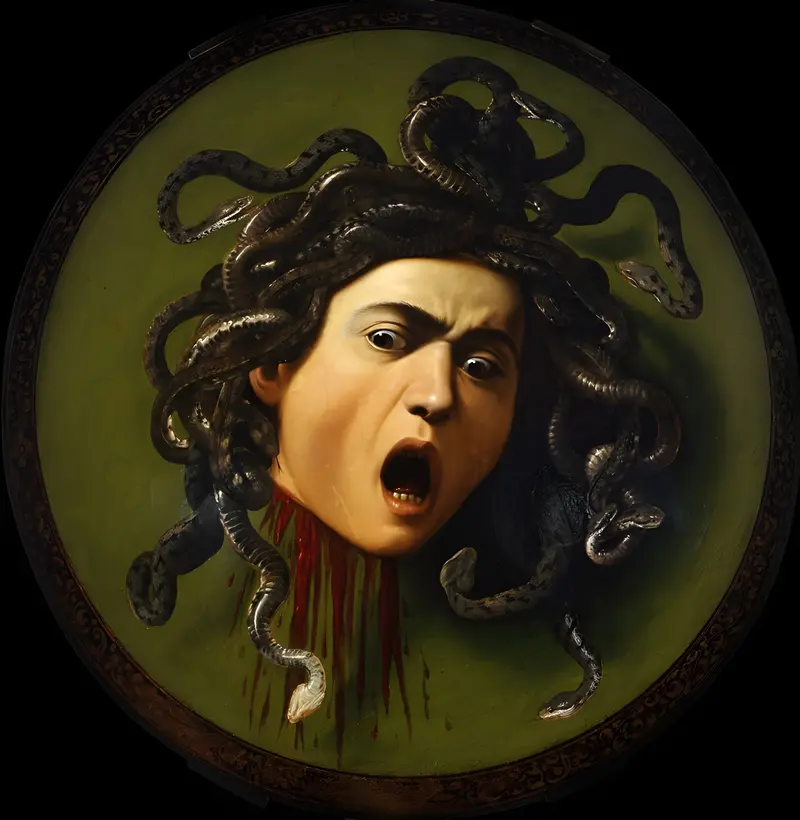
Medusa
Caravaggio
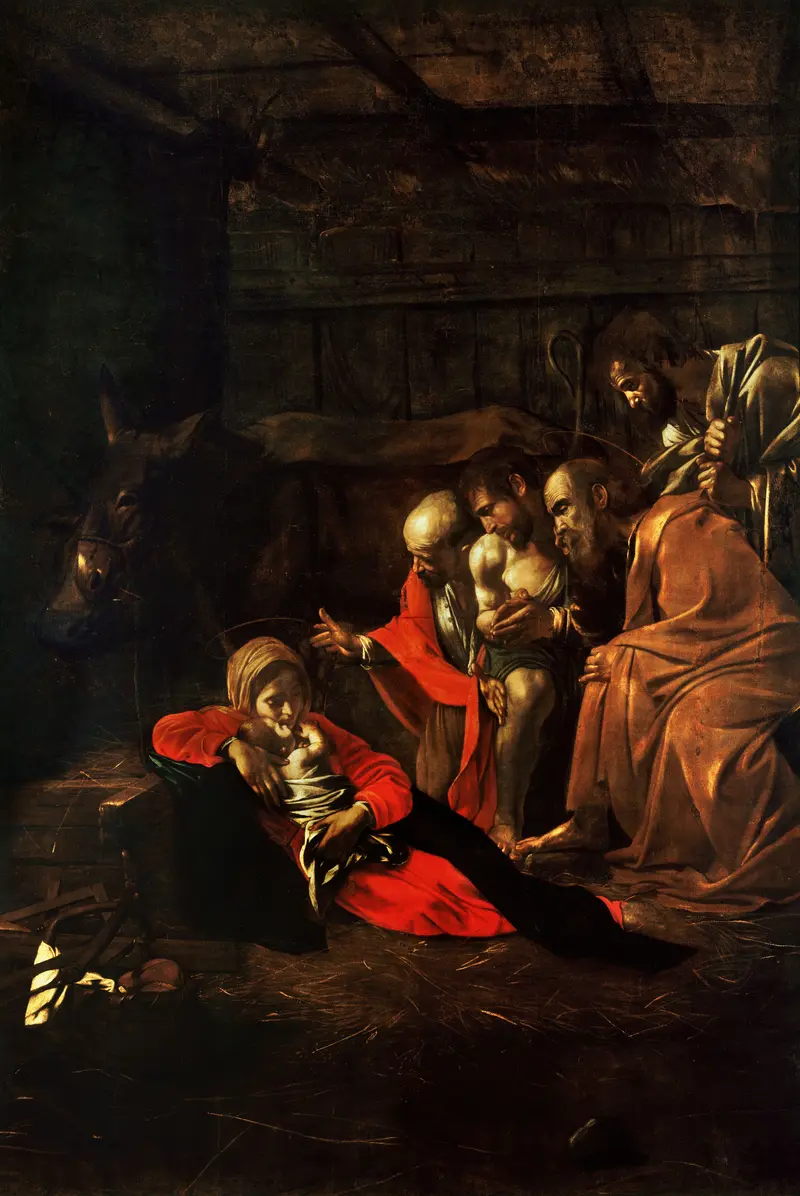
Adoration of the Shepherds
Caravaggio
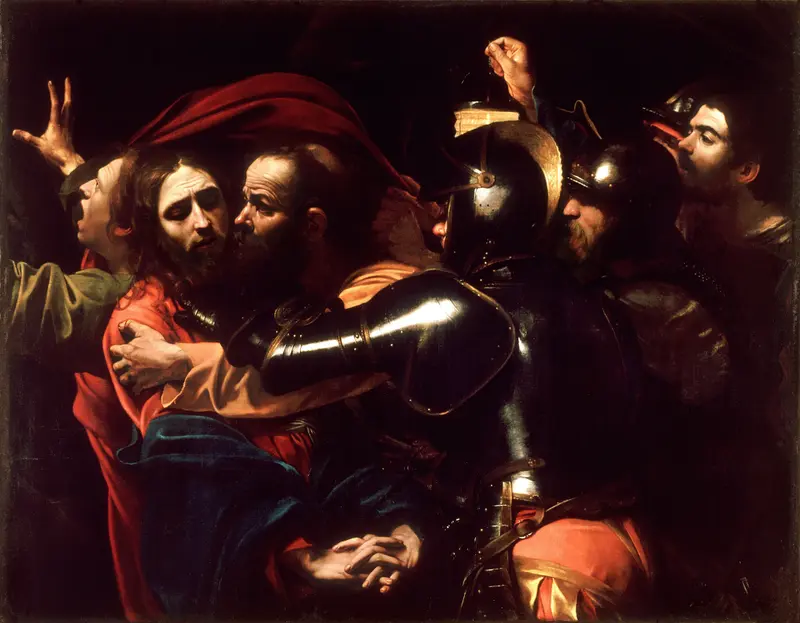
The Taking of Christ
Caravaggio
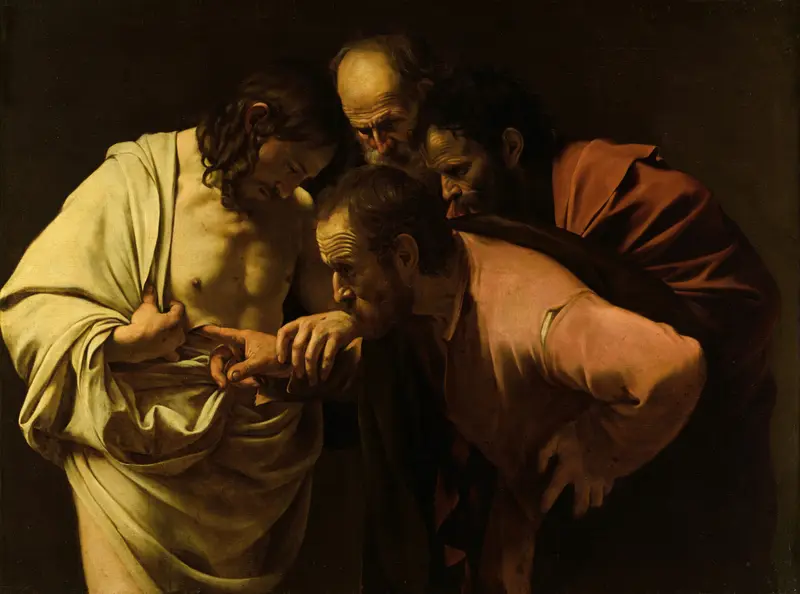
The Incredulity of Saint Thomas
Caravaggio
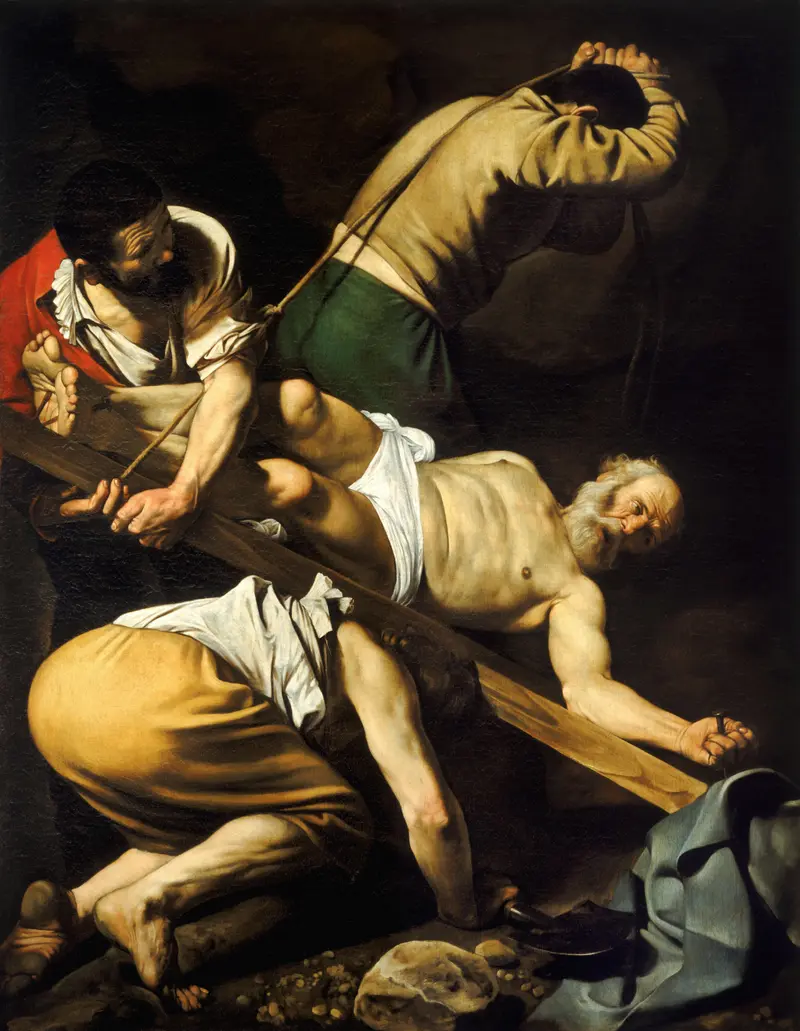
Crucifixion of Saint Peter
Caravaggio
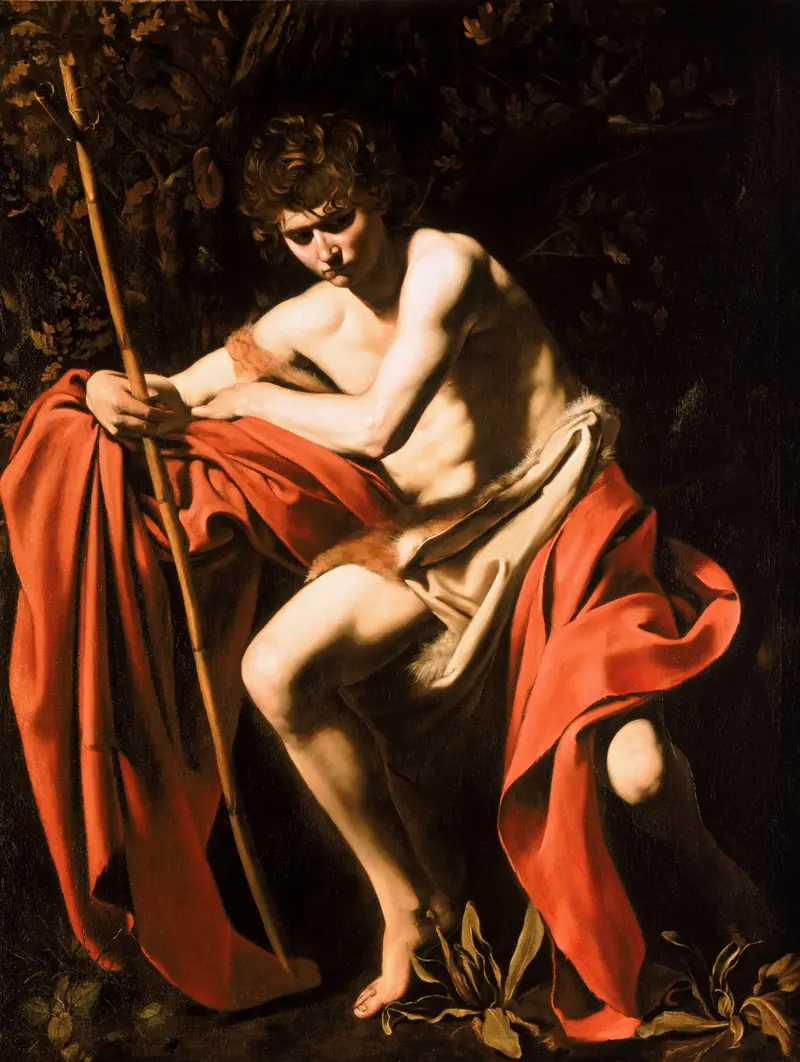
Saint John The Baptist In The Wilderness
Caravaggio

Saint Matthew and the angel
Caravaggio
The Inspiration of Saint Matthew
Caravaggio

Conversion on the Way to Damascus
Caravaggio
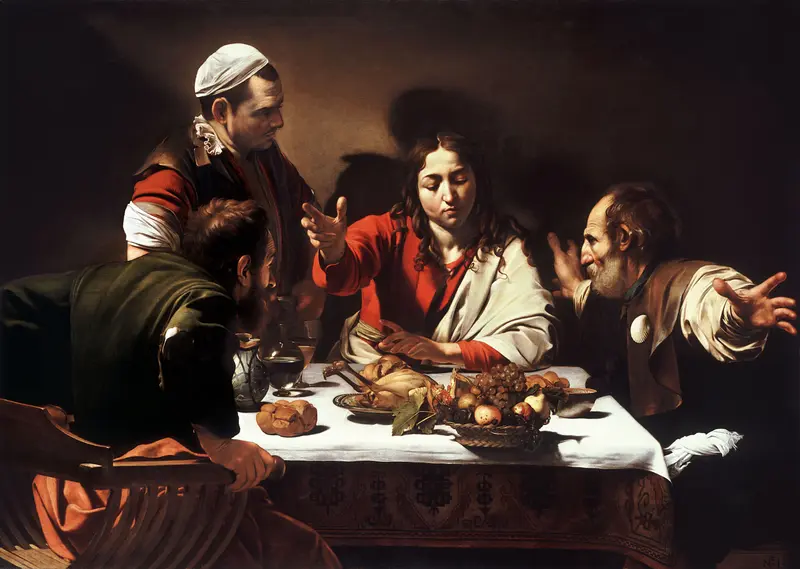
Supper at Emmaus
Caravaggio





