
The Dream of a Knight — History & Facts
When The Dream of a Knight left the hands of the young Raphael around 1504, it sparked immediate curiosity: what exactly does the sleeping youth dream? For centuries, scholars have debated whether this small, enigmatic panel—sometimes called Allegory—was painted as a moral lesson for a real person, perhaps a member of the powerful Della Rovere family. Its meaning has never been settled, and even its original purpose remains uncertain, adding to its allure. The painting’s compact size and jewel-like finish suggest it was meant for private reflection rather than public display. The scene unfolds at the moment of decision.
A knight—often identified as Scipio or the mythic Everyman—sleeps in armor beneath a laurel tree, his head resting on his shield. Two women stand before him: one offers a sword and a book, symbols of Virtue and duty; the other holds a sprig of flowers, representing Pleasure and the easy path. The composition is balanced, with the knight at the center, the women poised at either side, and a distant landscape opening behind them.
The laurel tree, splitting the background, hints at the forked road of life’s choices. Unlike Correggio’s later Allegory of Virtue, which teems with movement, Raphael chooses stillness, inviting the viewer to pause at the very threshold of action. Little is known for certain about the early journey of The Dream of a Knight. It is thought to have been painted in Urbino, where Raphael was still absorbing the lessons of Perugino and the Umbrian school.
The panel eventually made its way into the collection of the Marquess of Londonderry before entering the National Gallery in London, where it remains today. The painting is a rare surviving example of Raphael’s early allegorical work, and its delicate handling and subtle symbolism mark a turning point in his development, just before his move to Florence and the flowering of his mature style.
More Artworks by Raphael

Madonna of the Goldfinch
Raphael

Madonna with the Fish
Raphael
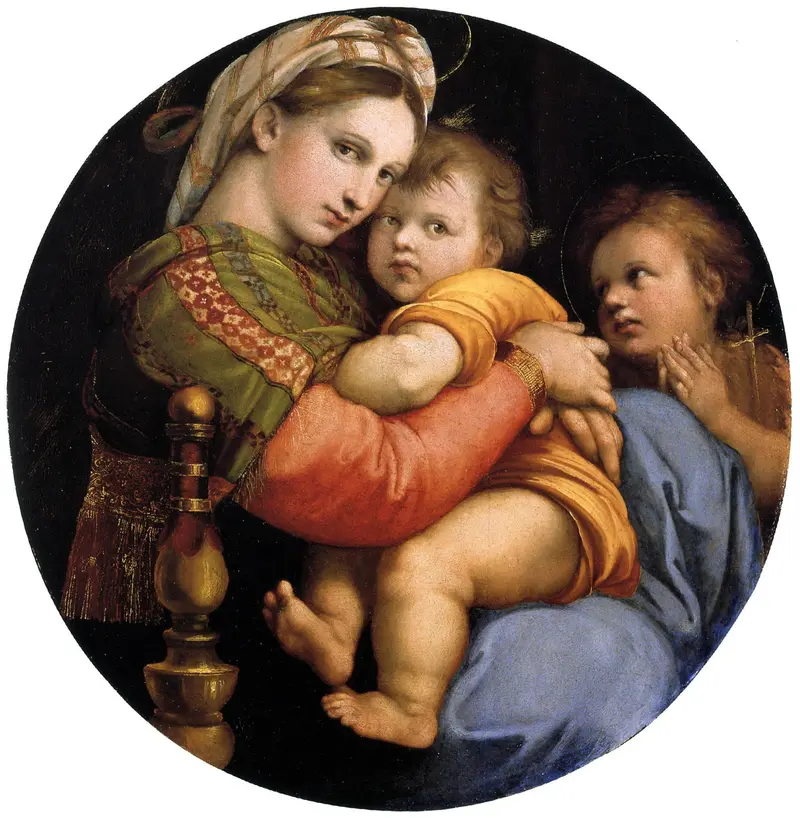
Madonna and Child (Madonna della Seggiola)
Raphael
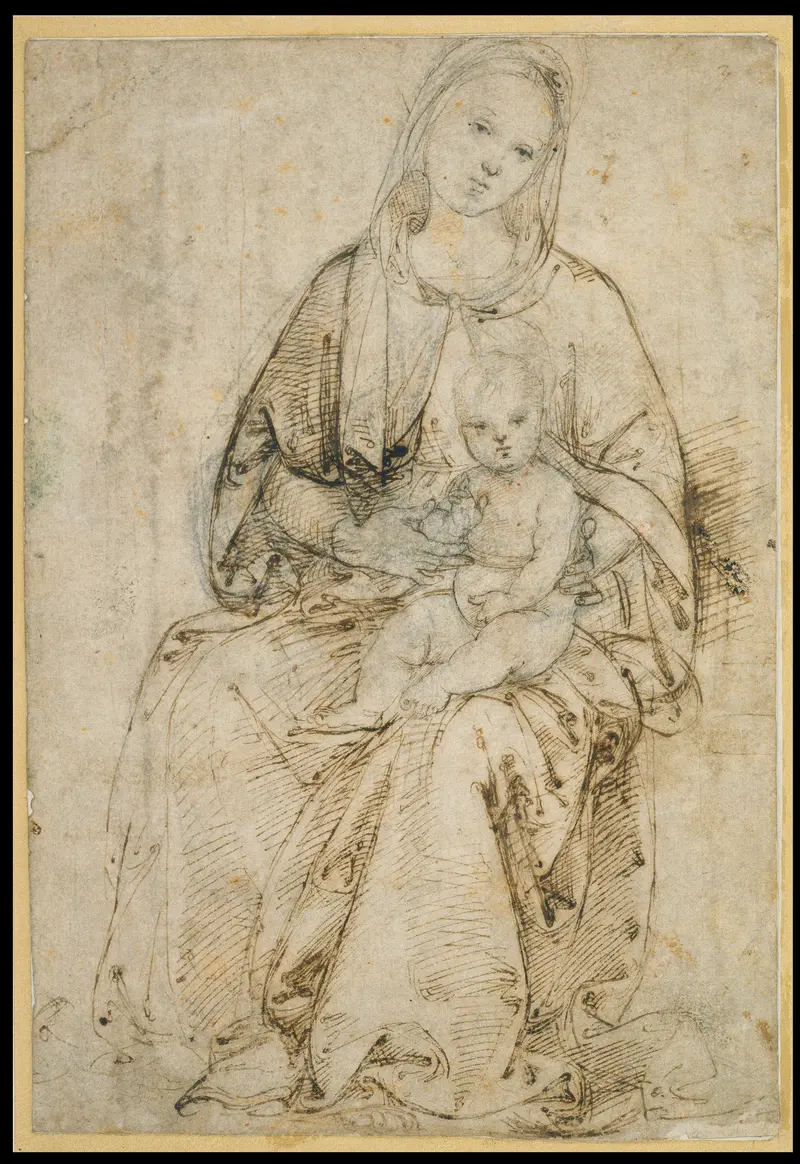
Seated Madonna and Child
Raphael
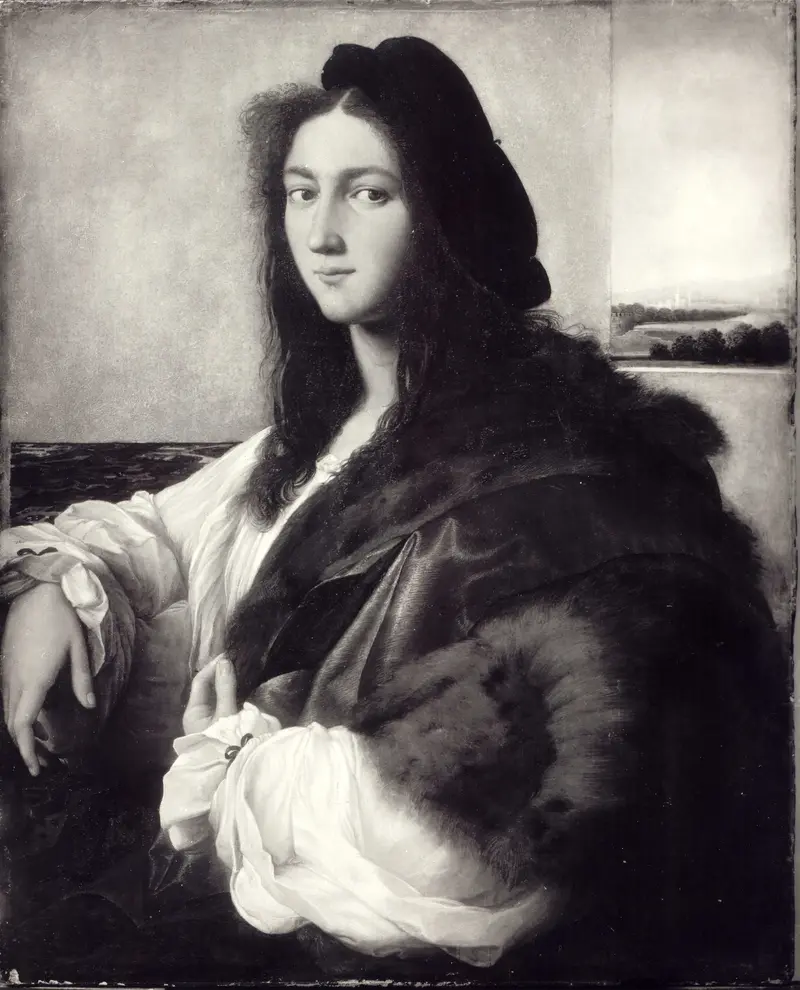
Portrait of a Young Man
Raphael
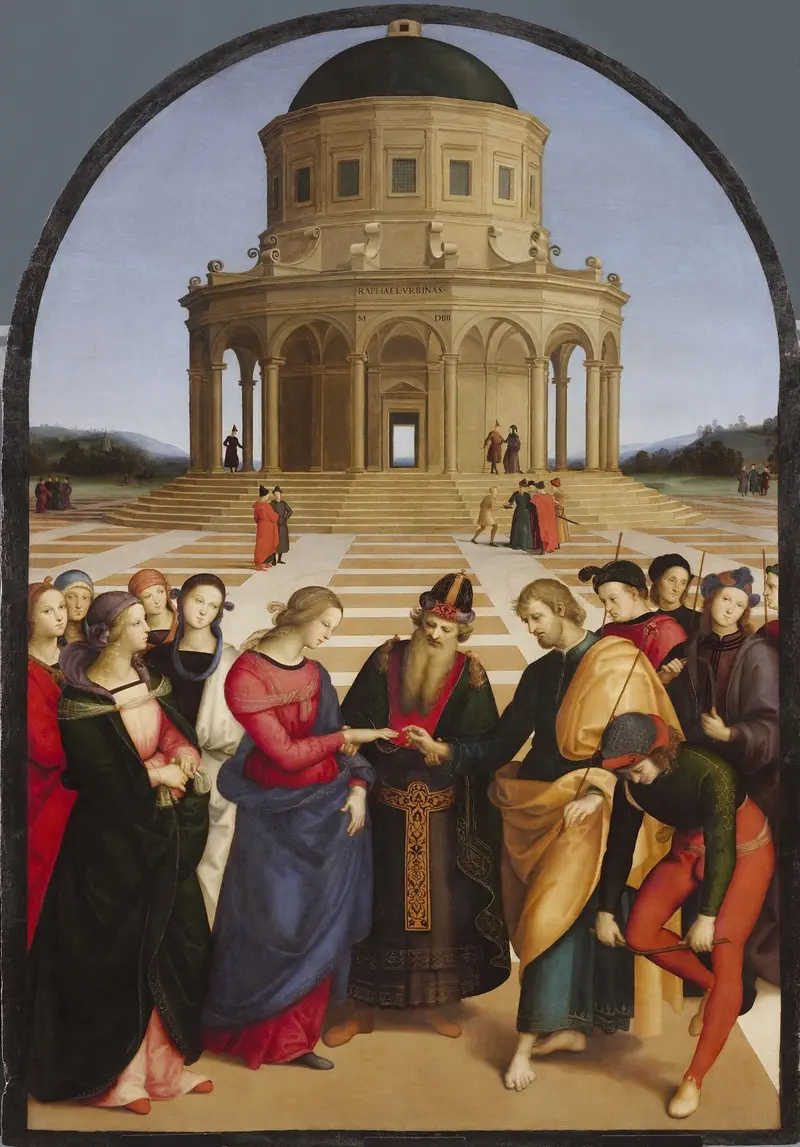
The Marriage of the Virgin
Raphael
The Triumph of Galatea (copy after Raphael)
Raphael
Poetry
Raphael
Sistine Madonna
Raphael
Madonna and Child Enthroned with Saints
Raphael





