
The Ecstasy of Saint Cecilia — History & Facts
A group of five standing figures is arranged in the lower half of the composition, gathered closely together in a shallow outdoor setting. At the center, a woman in a richly patterned golden robe looks upward, holding a small organ in her hands. To her left, another woman with long, loose hair and a white garment gazes in the same direction, her head tilted gently.
On the far left, a bearded man in a green tunic and red cloak rests his chin on his hand, a large sword at his side and a book under his arm. On the far right, a woman in a pale blue and pink garment stands slightly apart, turning her head to meet the viewer's gaze. At the feet of the figures, a collection of broken and discarded musical instruments, including a violin, pipes, and a tambourine, lies scattered across the ground.
Above the group, a cloud opens to reveal a choir of six angels, some singing and others playing musical instruments, surrounded by golden light. The sky behind the figures is a clear blue, with a distant landscape visible between their shoulders. Each figure is rendered with careful attention to the details of their faces, hands, and drapery, and the folds of their garments are described with subtle transitions of color and shadow.
The overall composition is balanced, with the central figure as the focal point and the surrounding figures forming a gentle arc around her. The Ecstasy of Saint Cecilia was created by Raphael in 1514. The painting is associated with the High Renaissance movement. The subject is religious, depicting Saint Cecilia in a state of ecstasy, accompanied by other saints and musical instruments.
Sources: Wikidata Q1103801 · Wikipedia: The Ecstasy of Saint Cecilia · Image source (Wikimedia Commons)
More Artworks by Raphael

Madonna of the Goldfinch
Raphael

Madonna with the Fish
Raphael
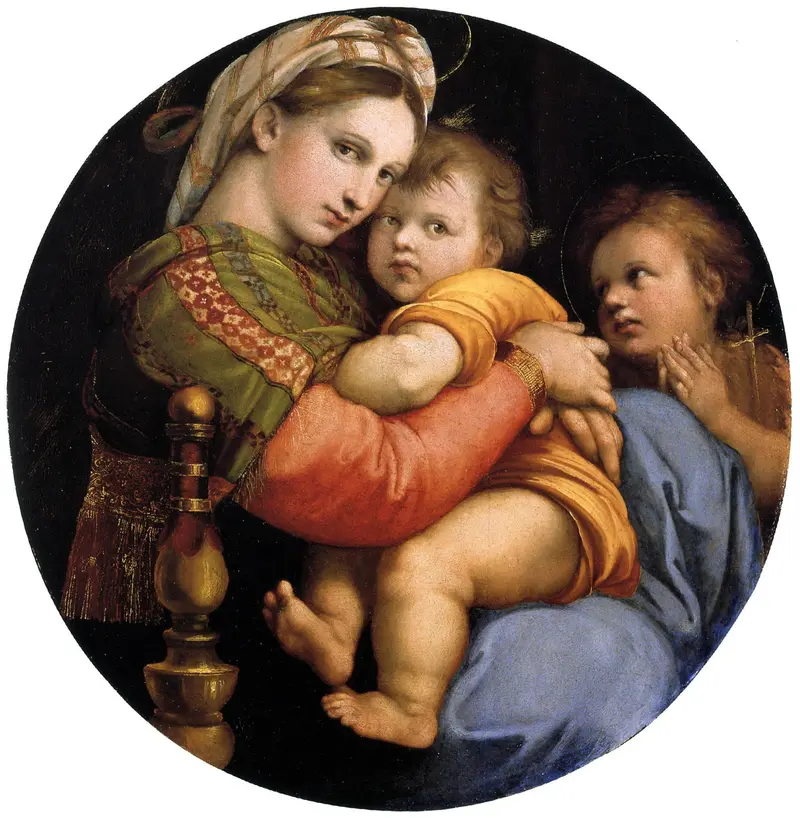
Madonna and Child (Madonna della Seggiola)
Raphael
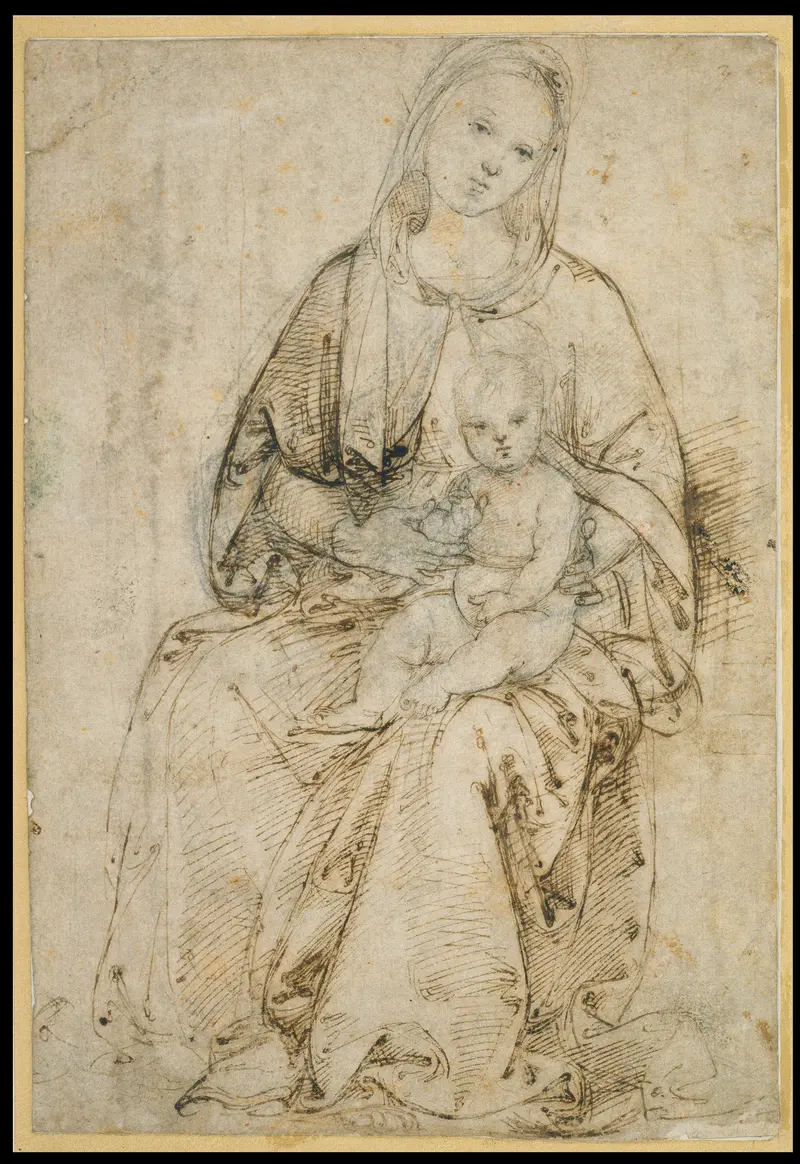
Seated Madonna and Child
Raphael
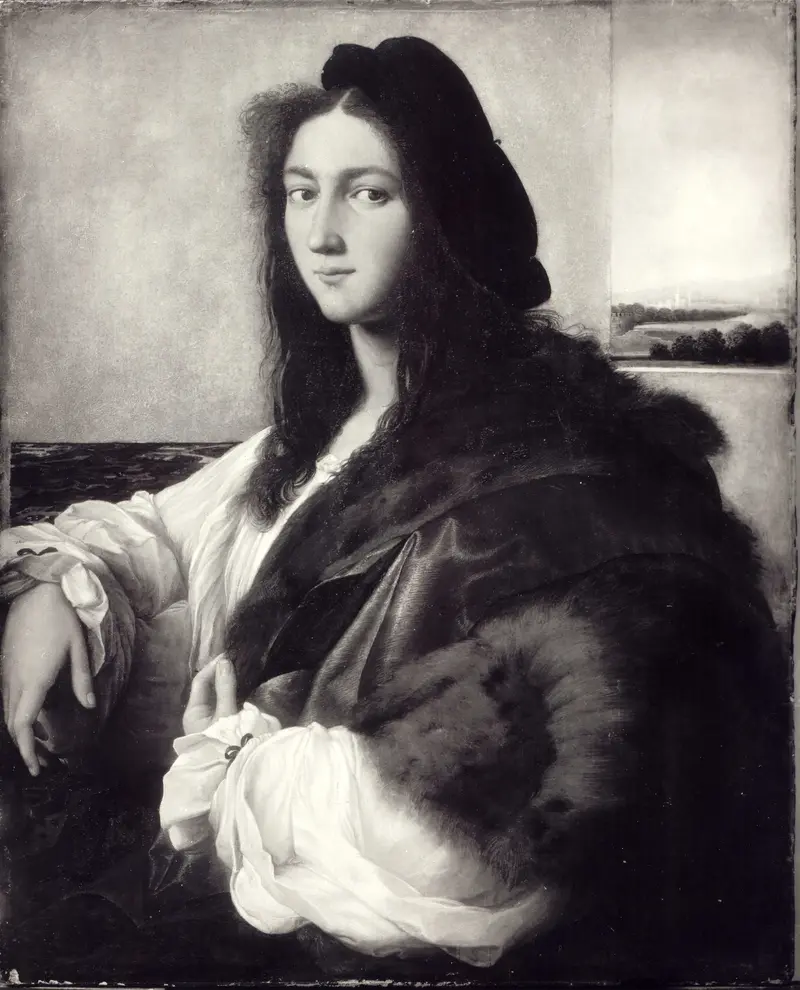
Portrait of a Young Man
Raphael
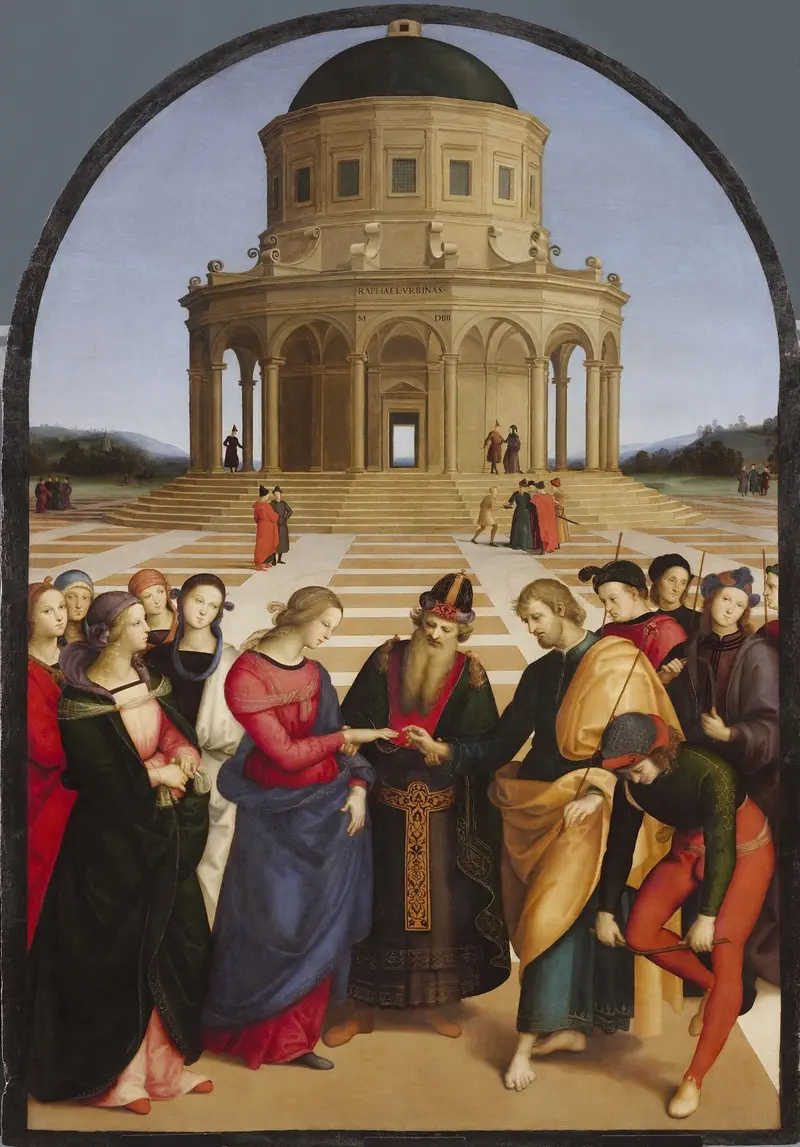
The Marriage of the Virgin
Raphael
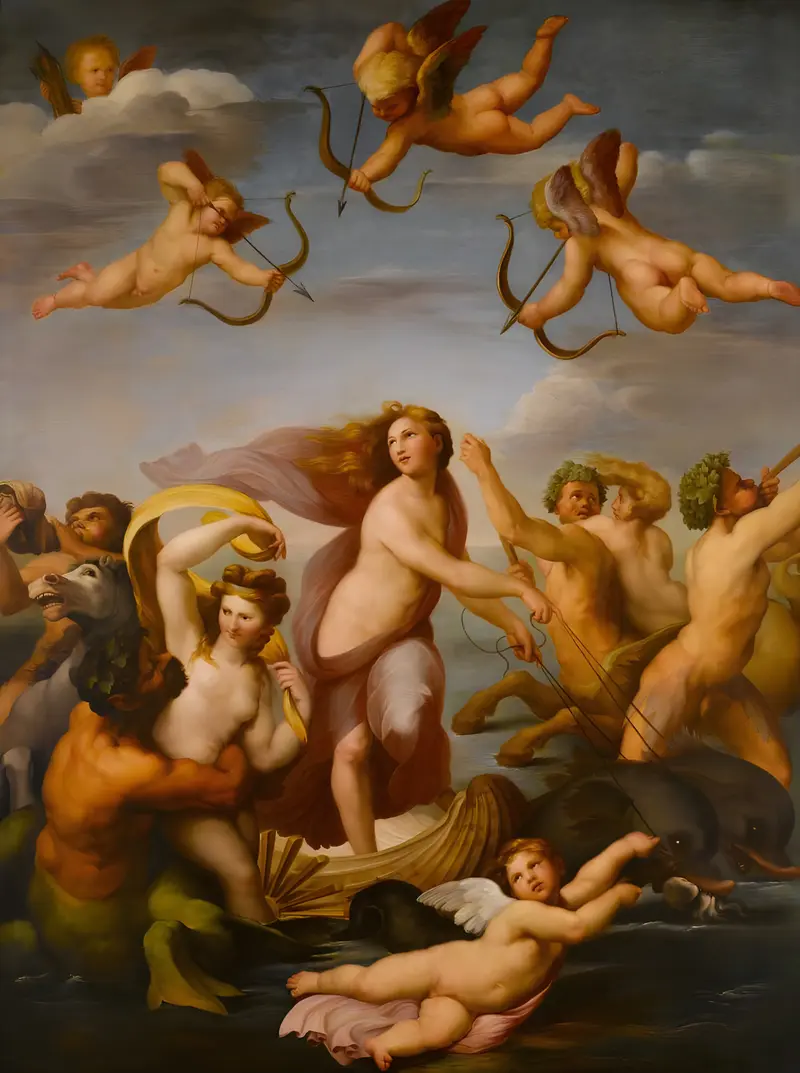
The Triumph of Galatea (copy after Raphael)
Raphael
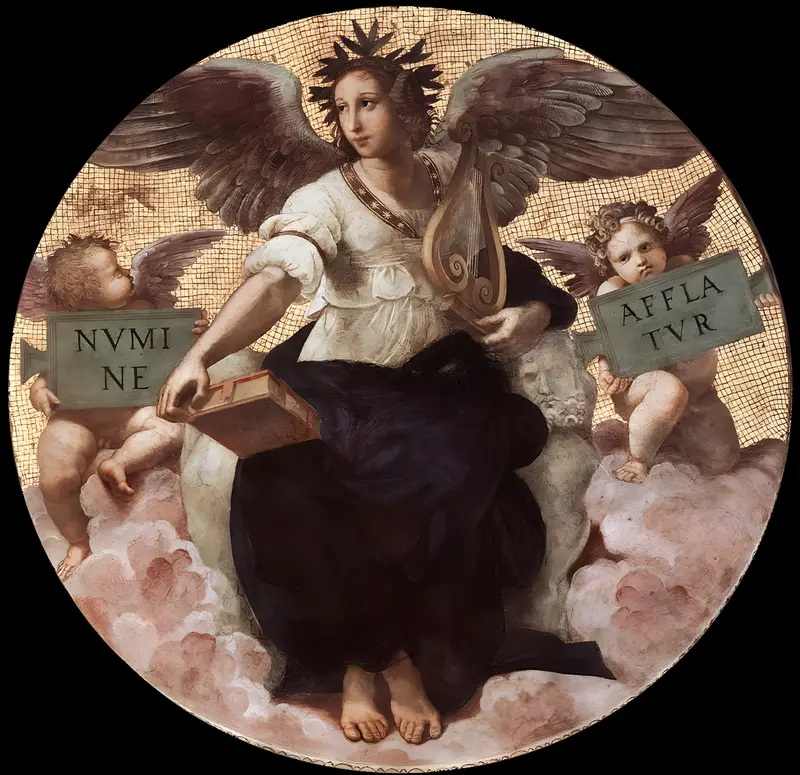
Poetry
Raphael
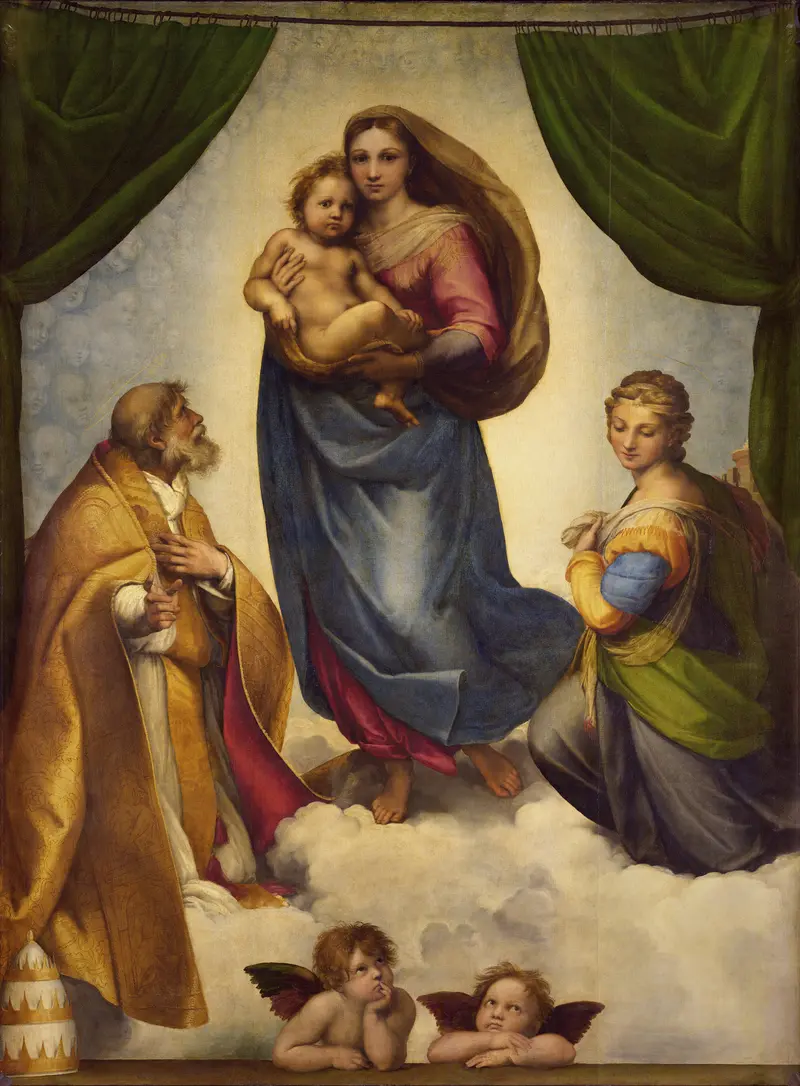
Sistine Madonna
Raphael
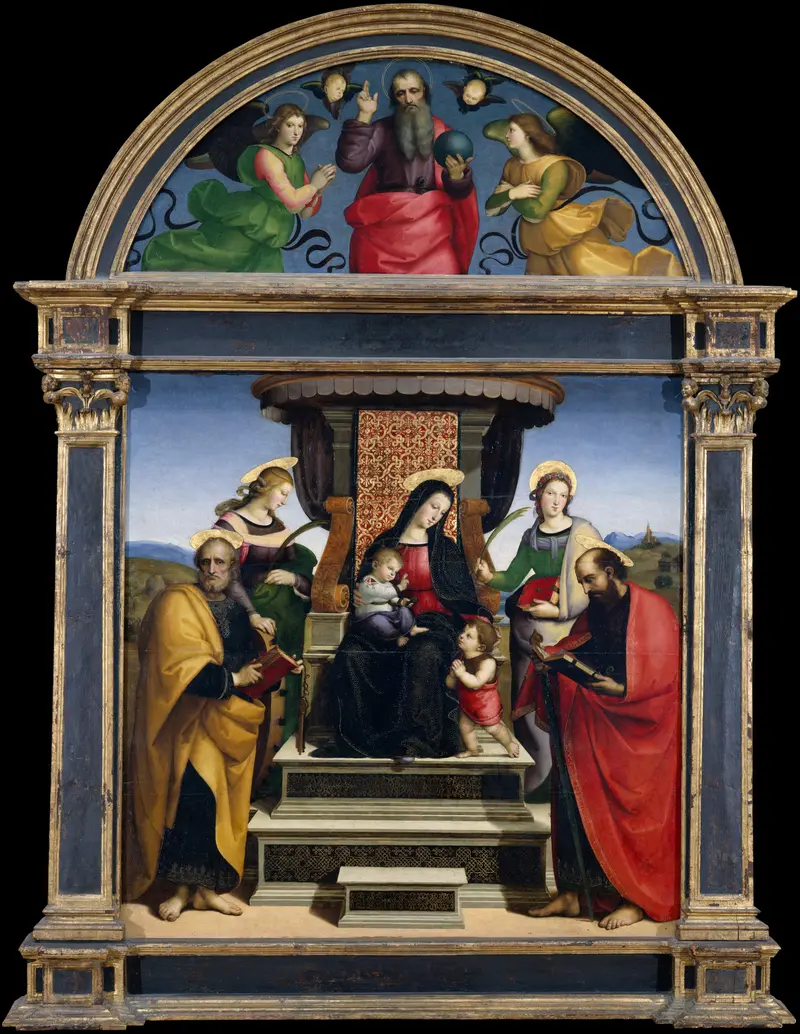
Madonna and Child Enthroned with Saints
Raphael




