
The number of the beast is 666 — History & Facts
When William Blake exhibited The number of the beast is 666 in 1806, he paired it with a handwritten inscription: “I have tried to make these figures as monstrous as possible, to show that they are not men, but horrible demons.” This sheet belongs to a remarkable series of watercolors commissioned by the civil servant Thomas Butts, who asked Blake to illustrate the Book of Revelation in the most vivid terms. The result was a set of images so strange and intense that even Blake’s admirers found them unsettling. Unlike most biblical illustrators, Blake did not shy away from the apocalyptic terror at the heart of the text. The scene captures the moment in Revelation when the beast rises from the abyss, marked by the infamous number 666, as Saint John recoils in horror.
In Blake’s vision, the beast is a writhing, many-headed creature, its scales and claws rendered with feverish energy, while a scarlet-clad woman rides upon its back, holding a golden cup. John, robed in white, shields his eyes from the monstrous spectacle, standing on a rocky outcrop bathed in unnatural light. The swirling flames and storm clouds intensify the sense of chaos.
Unlike Albrecht Dürer’s woodcut of the same subject, which is crowded with precise detail, Blake’s version is hallucinatory and dreamlike, collapsing narrative and symbol into a single, burning vision. The exact medium of this work remains uncertain, though it is likely a combination of watercolor and ink on paper, typical of Blake’s illustrations for Butts. After remaining in private hands for decades, the sheet was eventually acquired by the British Museum, where it is now part of the Prints and Drawings collection. These apocalyptic images mark a period when Blake, largely ignored by the public, worked for a handful of dedicated patrons, producing some of his most radical and personal art.
Today, The number of the beast is 666 stands as a testament to Blake’s ability to fuse poetry, prophecy, and painting into a single, unforgettable image.
More Artworks by William Blake
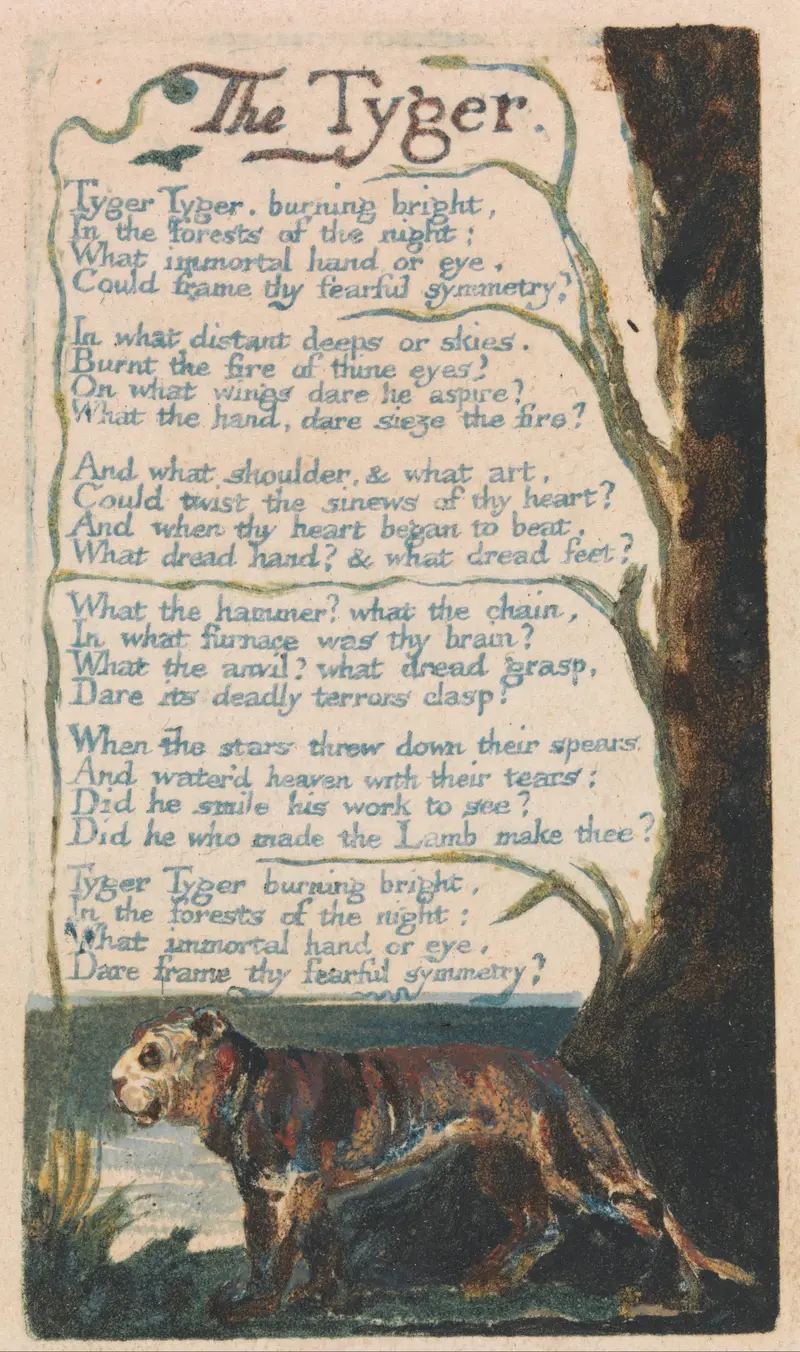
The Tyger
William Blake

Christ Blessing
William Blake
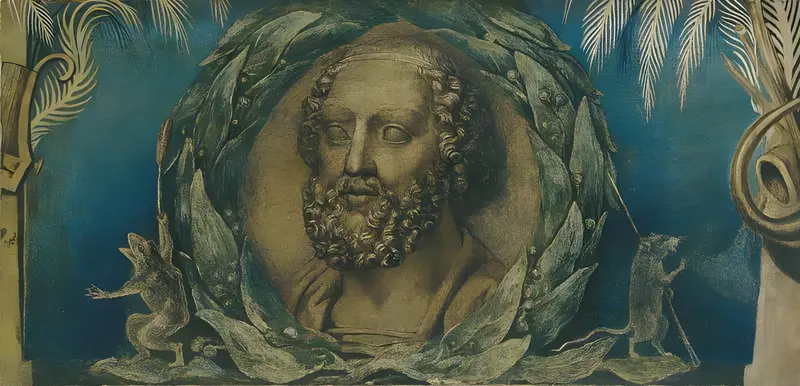
Homer
William Blake
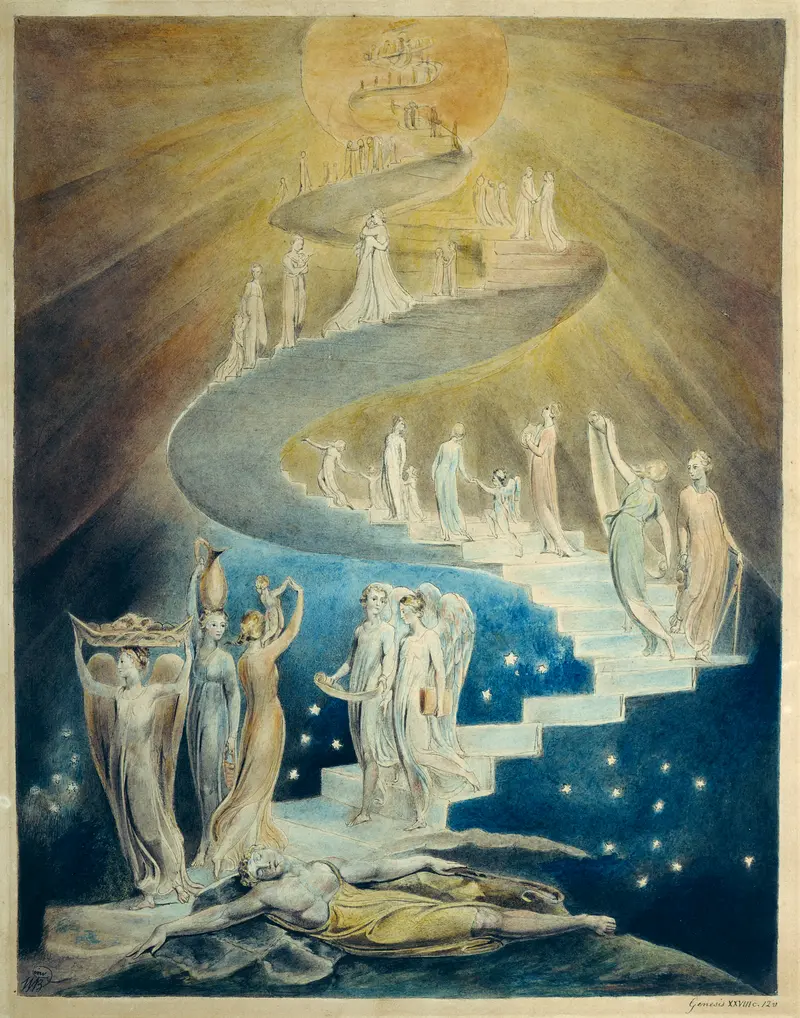
Jacob's Ladder
William Blake
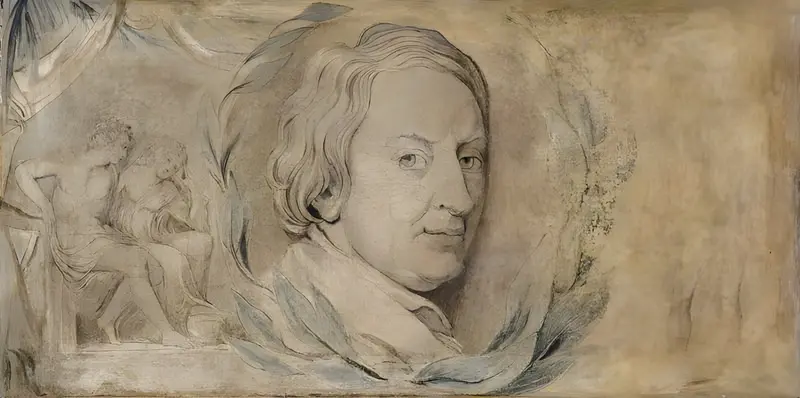
John Dryden (1631–1700)
William Blake
Landscape near Felpham
William Blake
Sacrifice of Job
William Blake
Christ's Entry into Jerusalem
William Blake
The Ancient of Days
William Blake
Adam Naming the Beasts
William Blake





