
The schismatics and sowers of discord- Mahomet — History & Facts
When William Blake was commissioned in 1824 to illustrate Dante’s Divine Comedy, he chose to confront one of the most controversial passages: Dante’s vision of the schismatics in Hell, where the poet places the Prophet Muhammad among the sowers of discord. This decision sparked immediate discomfort among some contemporaries, as Blake, a fiercely independent thinker, was well aware of the shock such imagery could provoke in a Christian England already wary of religious controversy. The commission, originally intended for the patron John Linnell, would be Blake’s final major project before his death, and he approached it with a mix of reverence and radical imagination. In this scene from the Eighth Circle of Hell, Dante and Virgil witness the punishment of those who, in life, divided faiths and communities.
Blake seizes the moment where Muhammad, his body gruesomely split from chin to groin, strides forward, holding open his wound as a warning and a symbol of the division he is accused of sowing. The composition is stark: the figures are elongated, their gestures theatrical, with Dante recoiling in horror while Virgil guides him onward. Chains and flames snake through the background, signifying torment and unending consequence.
Unlike Gustave Doré’s later, more literal rendering of the same episode, Blake’s approach is visionary—his figures seem to hover between material and spiritual realms, emphasizing the psychological torment as much as the physical. The medium of this work remains uncertain—possibly watercolor or ink on paper, as with many of Blake’s other Dante illustrations—but it is clear that it was never fully completed before Blake’s death in 1827. The set of Dante drawings and engravings, including The schismatics and sowers of discord- Mahomet, passed through several hands after Linnell, and today most are held in public collections such as the British Museum and Tate. These works mark the culmination of Blake’s lifelong engagement with visionary poetry and spiritual imagery, standing as a testament to his willingness to tackle the most difficult and provocative subjects of his time.
More Artworks by William Blake
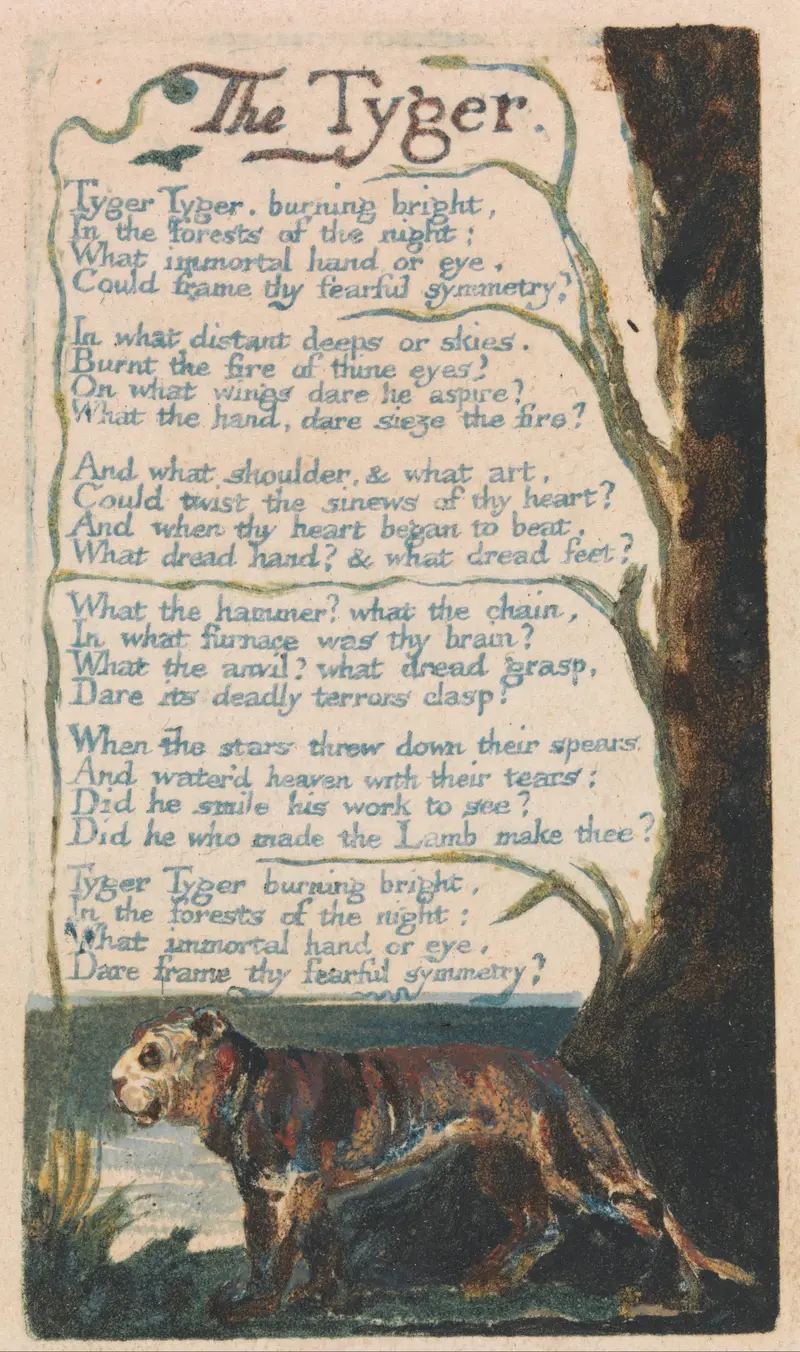
The Tyger
William Blake

Christ Blessing
William Blake
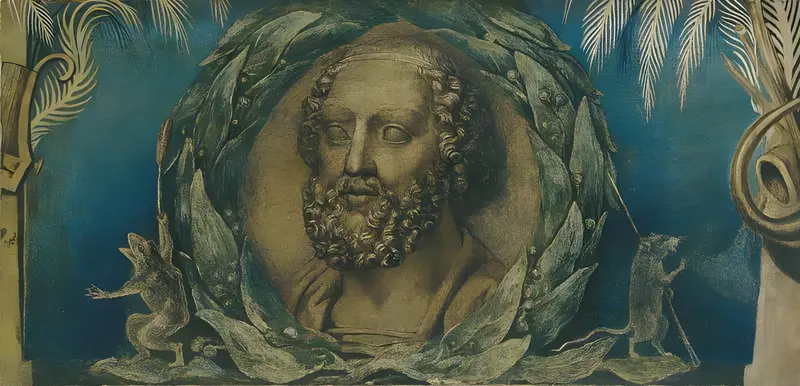
Homer
William Blake
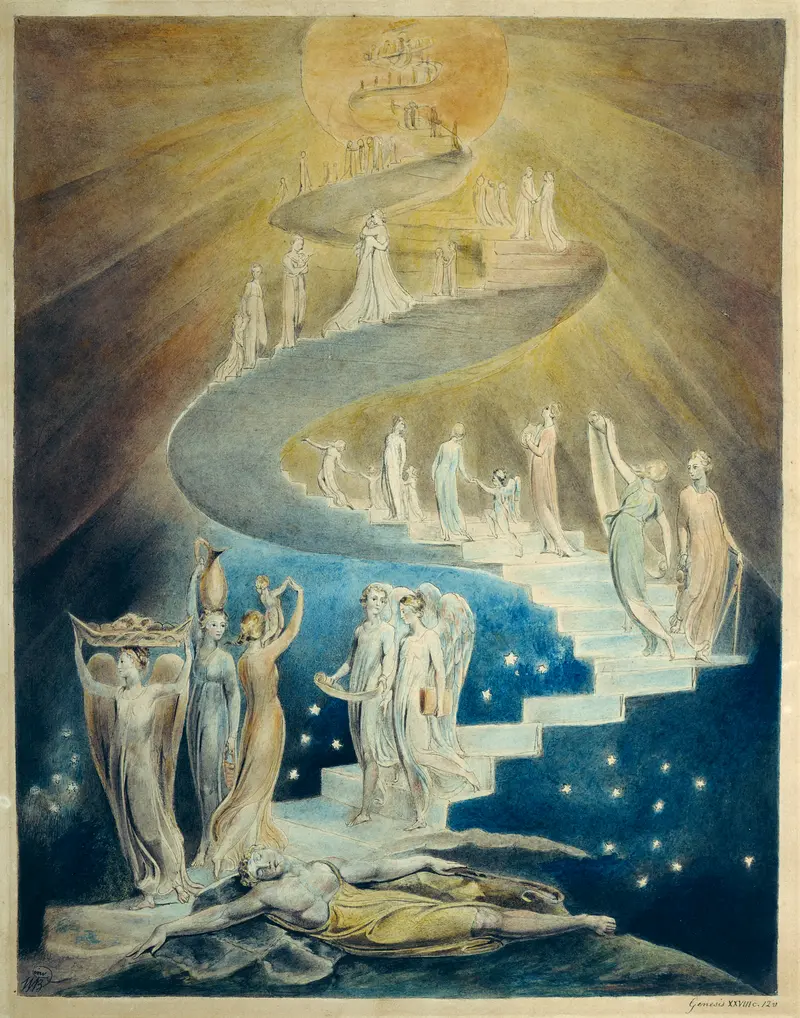
Jacob's Ladder
William Blake
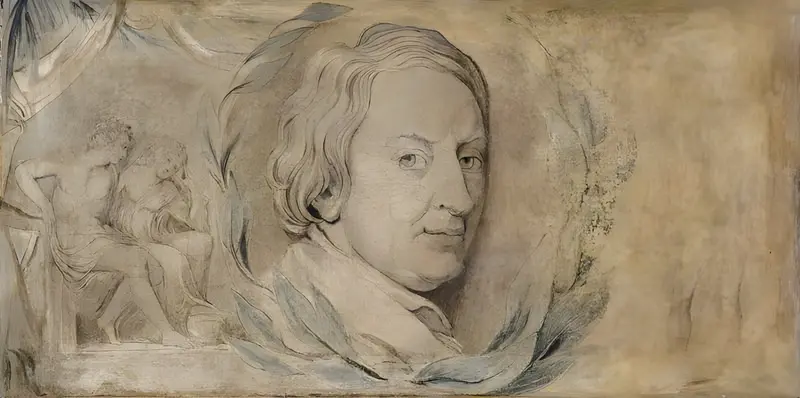
John Dryden (1631–1700)
William Blake
Landscape near Felpham
William Blake
Sacrifice of Job
William Blake
Christ's Entry into Jerusalem
William Blake
The Ancient of Days
William Blake
Adam Naming the Beasts
William Blake





