
The Spiritual Form of Nelson guiding Leviathan — History & Facts
In 1807, William Blake set out to capture the spirit of one of Britain’s greatest naval heroes, Lord Nelson, not as a man of war, but as a cosmic guide. This painting was created at a moment when the nation was still reeling from Nelson’s death at Trafalgar in 1805, and Blake’s vision is unlike any other tribute. Rather than a conventional portrait or battle scene, Blake transforms Nelson into a mythic force, steering the monstrous Leviathan.
The work stands as a rare example of Blake’s engagement with contemporary events, filtered through his unique, visionary lens. Blake chooses the instant when Nelson, now a spiritual being, commands the biblical sea monster Leviathan, a symbol of chaos and empire. Nelson’s outstretched arms and radiant form suggest both authority and sacrifice, while the coiling beast beneath him evokes the dangers and power of the sea. Chains and swirling waters surround the figures, hinting at themes of bondage and liberation—central to Blake’s art.
The painting’s luminous, swirling colors and dynamic composition recall Blake’s other spiritual works, such as The Spiritual Form of Pitt Guiding Behemoth, but here the focus is on the struggle between order and chaos. Unlike the heroic realism of Benjamin West or J.M.W. Turner, Blake’s Nelson is a visionary, not a general. The medium of The Spiritual Form of Nelson guiding Leviathan is not definitively recorded, but it is likely a tempera or mixed technique on canvas, consistent with Blake’s experimental approach.
The painting was probably created for exhibition rather than private commission, reflecting Blake’s desire to reach a wider public with his prophetic art. Today, the work is held by the Tate Britain, where it stands as a testament to Blake’s singular place in the Romantic movement—a painter, poet, and prophet whose images still challenge and intrigue. Its journey from the margins of Blake’s career to a celebrated position in the national collection mirrors the broader rediscovery of his genius in the twentieth century.
More Artworks by William Blake
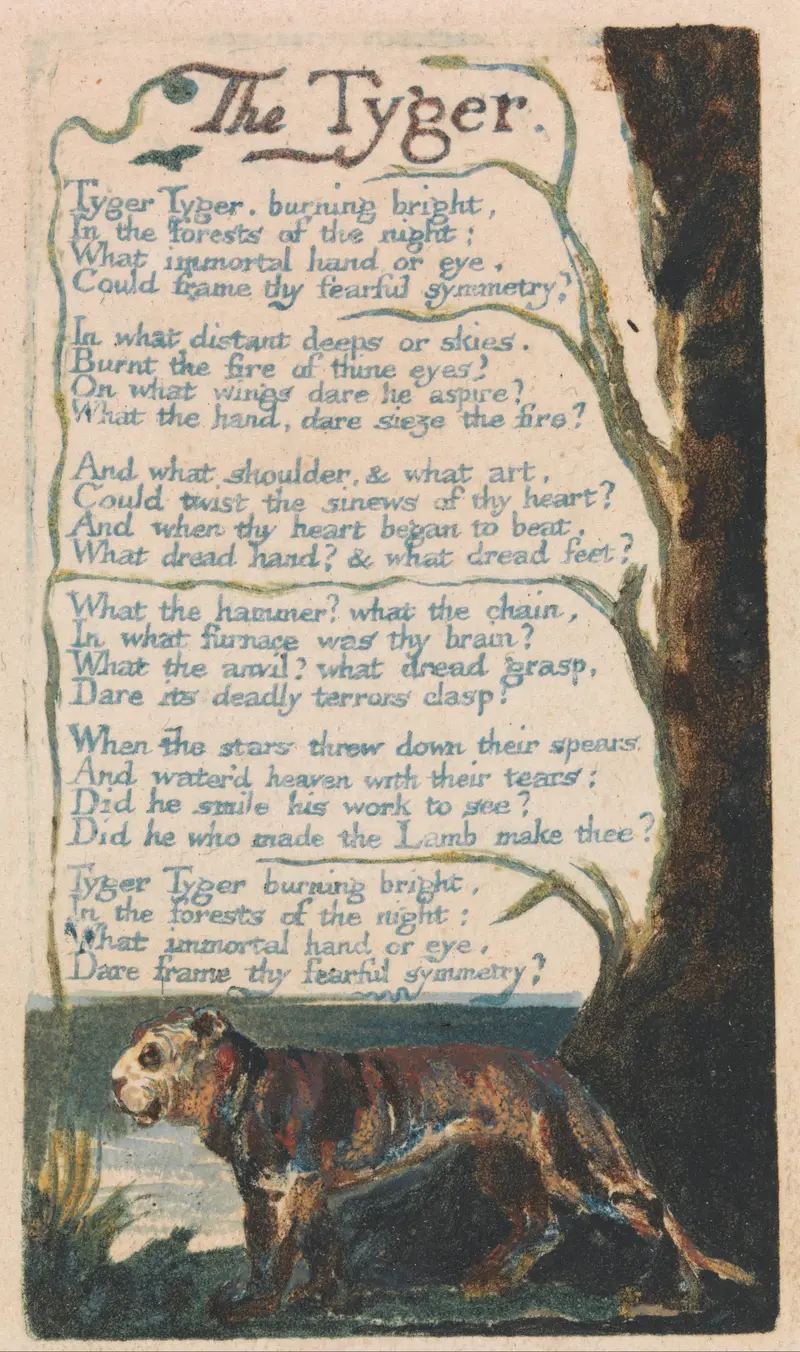
The Tyger
William Blake

Christ Blessing
William Blake
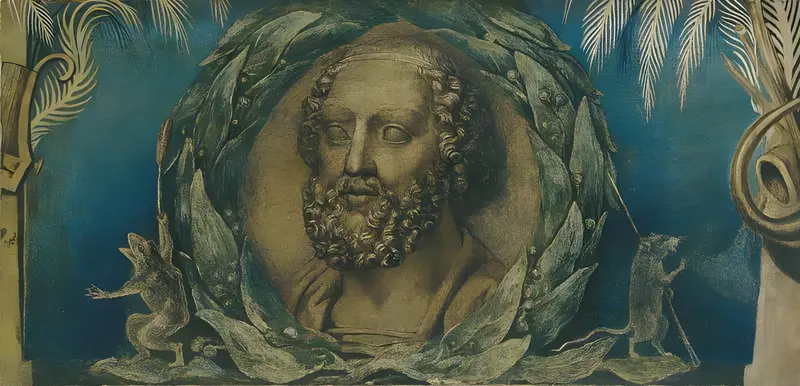
Homer
William Blake
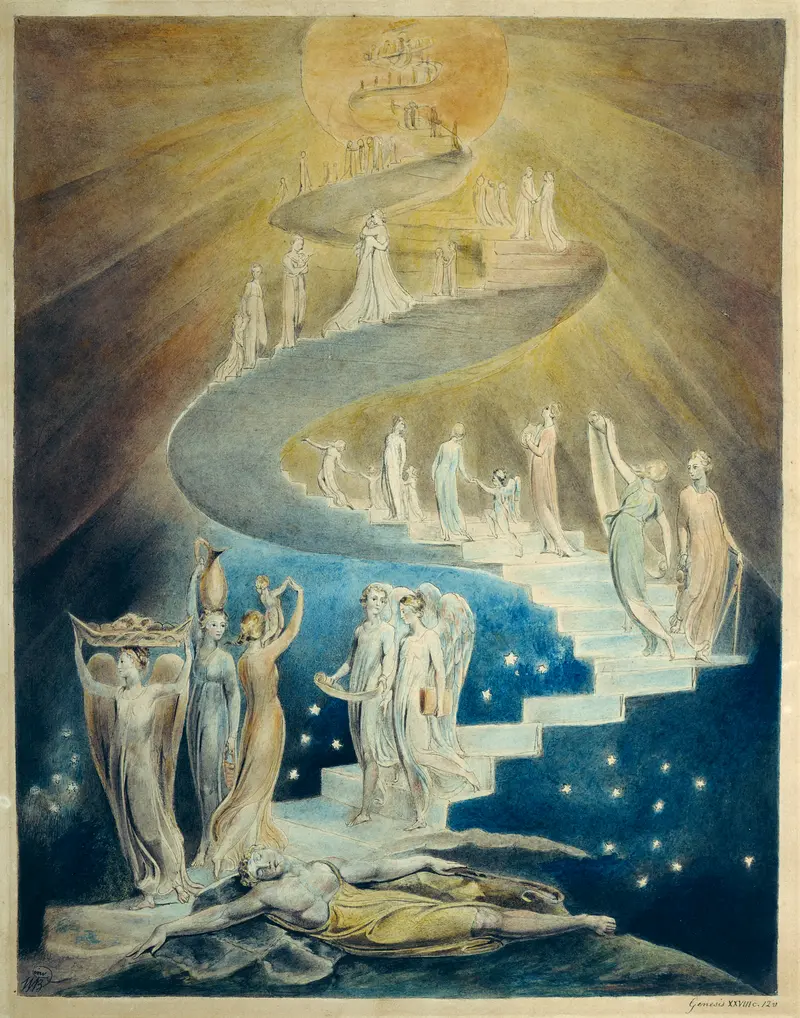
Jacob's Ladder
William Blake
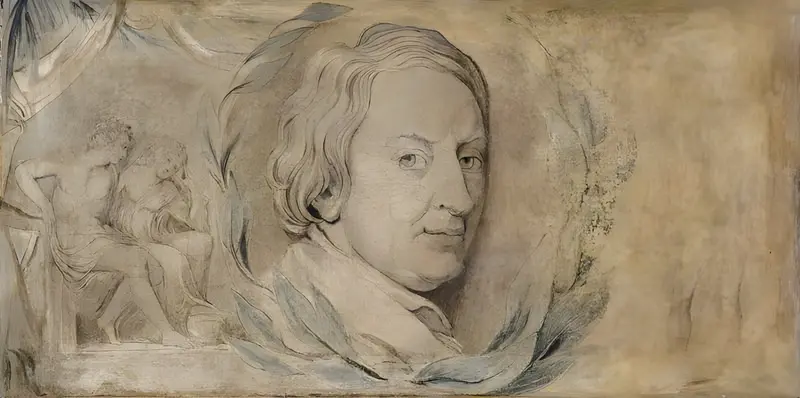
John Dryden (1631–1700)
William Blake
Landscape near Felpham
William Blake
Sacrifice of Job
William Blake
Christ's Entry into Jerusalem
William Blake
The Ancient of Days
William Blake
Adam Naming the Beasts
William Blake





