
The Whore of Babylon — History & Facts
When William Blake exhibited The Whore of Babylon in 1809 at his own private gallery in Soho, London, he paired it with a fiery pamphlet denouncing the Royal Academy and the commercial art world. The painting was part of a bold, self-styled "Exhibition of Paintings in Fresco," where Blake attempted to revive ancient techniques and declare himself a prophet-artist. Few visitors came, but those who did encountered a vision as radical as his words: The Whore of Babylon stands as one of the rare attempts by a British artist to render the apocalyptic imagery of the Book of Revelation in such personal, visionary terms. The scene bursts from the last book of the Bible: the scarlet-clad Whore, crowned and radiant, astride a many-headed beast, holding a golden cup aloft.
Blake captures the moment of her triumph, surrounded by tumult and flames, as kings and nations fall under her sway. The seven heads of the beast are inscribed with blasphemies, while the woman's jewels and cup allude to the corrupting allure of earthly power. Unlike the sensual, classical versions painted by Albrecht Dürer or Gustave Doré, Blake's Whore is angular and spectral, her grandeur tinged with menace, the palette burning with reds and golds that seem to prophesy ruin as much as glory. The exact medium of The Whore of Babylon remains uncertain—Blake described his works as "fresco," but modern scholars suspect a mix of tempera and glue on canvas or panel.
The painting's whereabouts are unknown today; it may have been lost or destroyed, like several other works from Blake's ill-fated 1809 exhibition. Despite this, the image survives in preparatory sketches and descriptions, and it remains a touchstone for understanding Blake's career-long obsession with prophecy and spiritual revolution. In his own time, ignored or dismissed, Blake's apocalyptic vision now stands as a testament to the wild independence of his art and mind.
More Artworks by William Blake
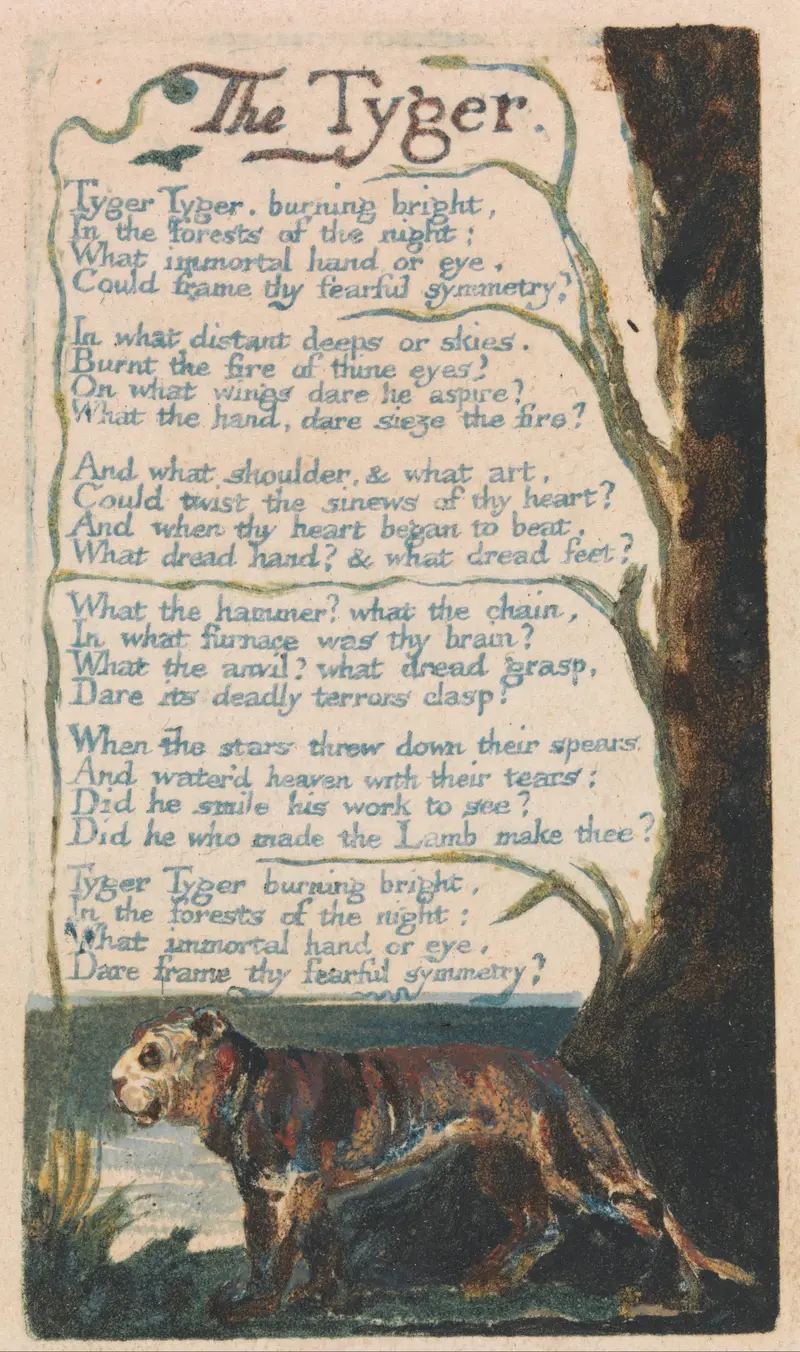
The Tyger
William Blake

Christ Blessing
William Blake
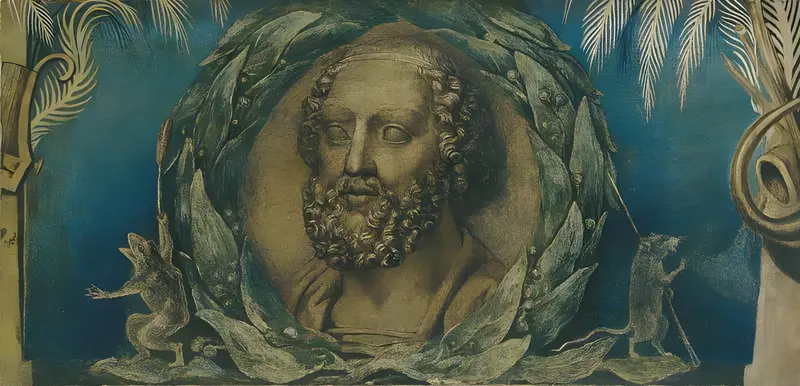
Homer
William Blake
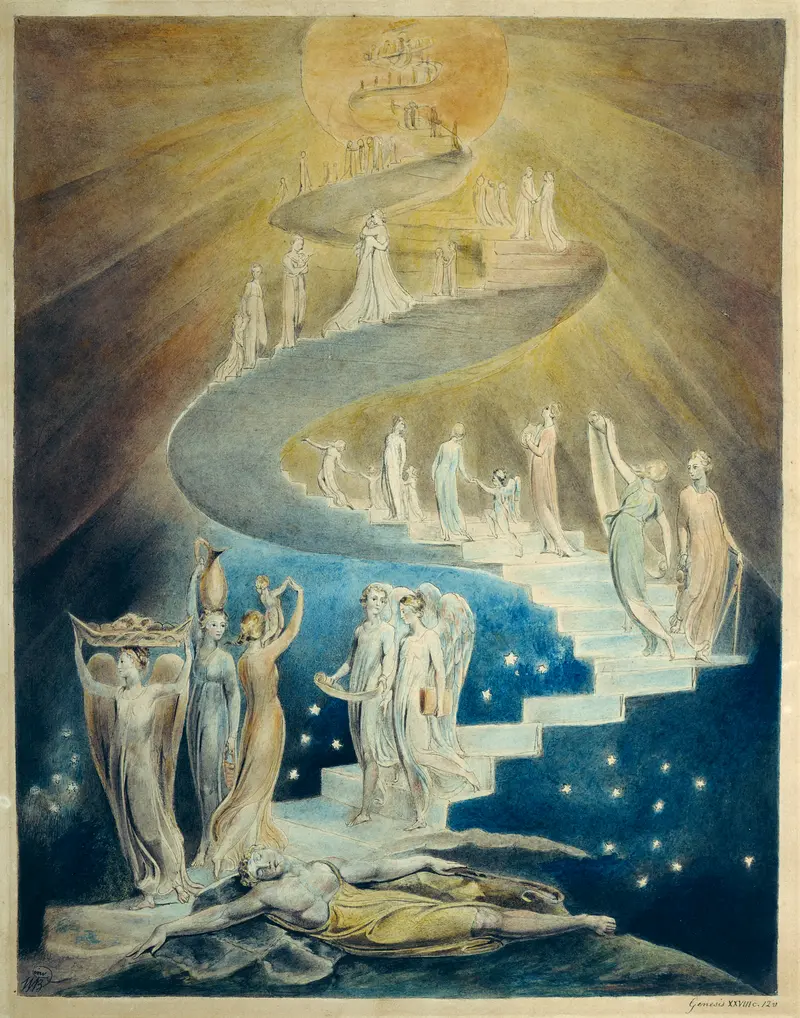
Jacob's Ladder
William Blake
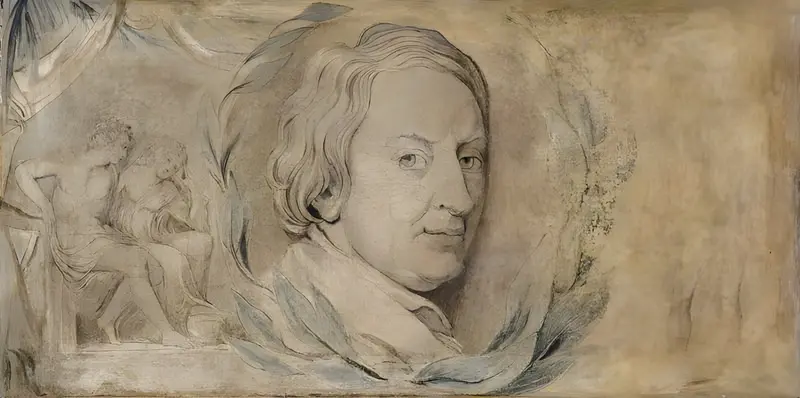
John Dryden (1631–1700)
William Blake
Landscape near Felpham
William Blake
Sacrifice of Job
William Blake
Christ's Entry into Jerusalem
William Blake
The Ancient of Days
William Blake
Adam Naming the Beasts
William Blake





