
Wreath of Laurel, Palm, and Juniper with a Scroll inscribed Virtutem Forma Decorat [reverse] — History & Facts
Leonardo da Vinci’s Wreath of Laurel, Palm, and Juniper with a Scroll inscribed Virtutem Forma Decorat is remarkable for being one of the few surviving works from his early years in Florence, and for the tantalizing mystery of its intended recipient. Scholars have long debated whether this delicate composition was created for Ginevra de’ Benci, a young Florentine noblewoman celebrated for her wit and learning, or if it was a more general emblem of virtue for a member of the city’s elite. The Latin inscription, “Virtutem Forma Decorat” (“Beauty adorns virtue”), links the work to Renaissance ideals of character and appearance, but the precise occasion and patron remain unknown. The image itself is a study in coded symbolism.
Leonardo arranges three plants—laurel for triumph, palm for moral victory, and juniper for chastity—into a wreath, each leaf meticulously rendered to capture its distinct character. At the center, a scroll unfurls with the motto, as if inviting the viewer to reflect on the relationship between inner worth and outward beauty. The juniper, or “ginepro” in Italian, is often read as a punning reference to Ginevra de’ Benci, just as in Leonardo’s later Portrait of Ginevra de’ Benci, where a juniper bush forms the background.
This subtle play of symbols and words marks a departure from the more literal allegories of Leonardo’s contemporaries, such as Botticelli, whose Primavera uses similar botanical motifs but with a more narrative approach. The physical history of Wreath of Laurel, Palm, and Juniper is as enigmatic as its meaning. The medium remains uncertain—some suggest it is a drawing in silverpoint or ink, others propose tempera on parchment—reflecting the experimental spirit of Leonardo’s youth. Its early provenance is undocumented, and it is not listed in the inventories of major Florentine families, fueling speculation about its original context.
Today, it is preserved in the National Gallery of Art in Washington, D.C., paired with the Portrait of Ginevra de’ Benci, where it offers a rare glimpse into Leonardo’s early exploration of emblematic portraiture and the intellectual circles of Renaissance Florence.
More Artworks by Leonardo da Vinci

Sheet of Studies
Leonardo da Vinci
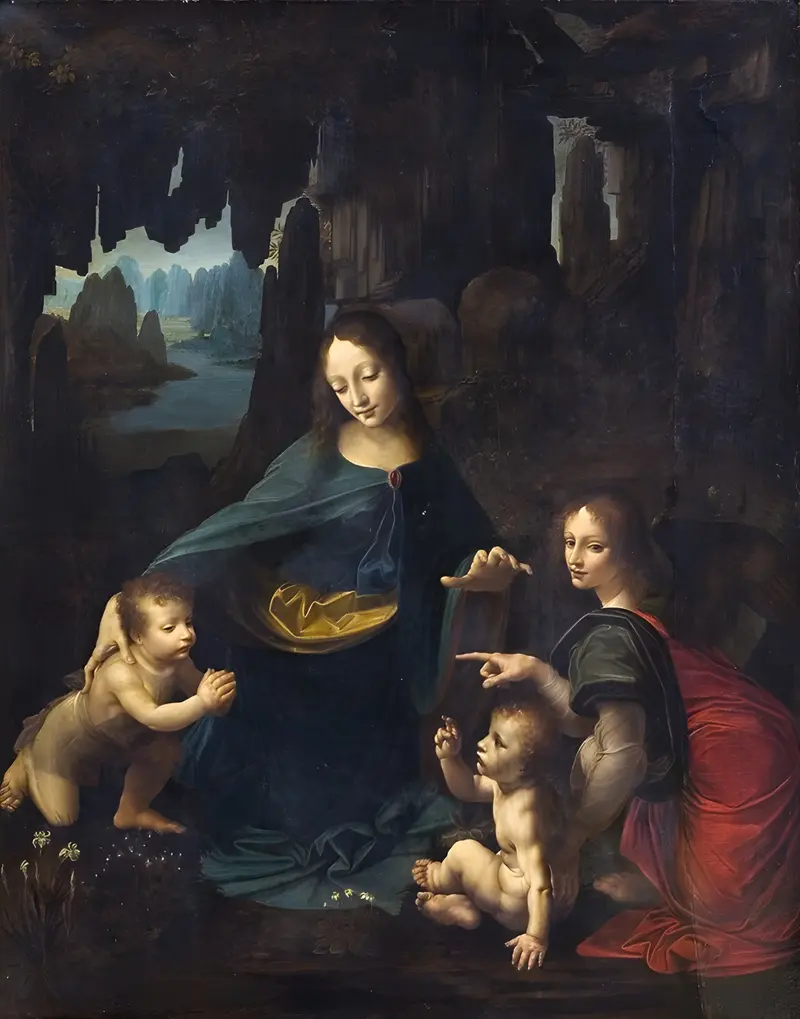
The Virgin of the Rocks
Leonardo da Vinci
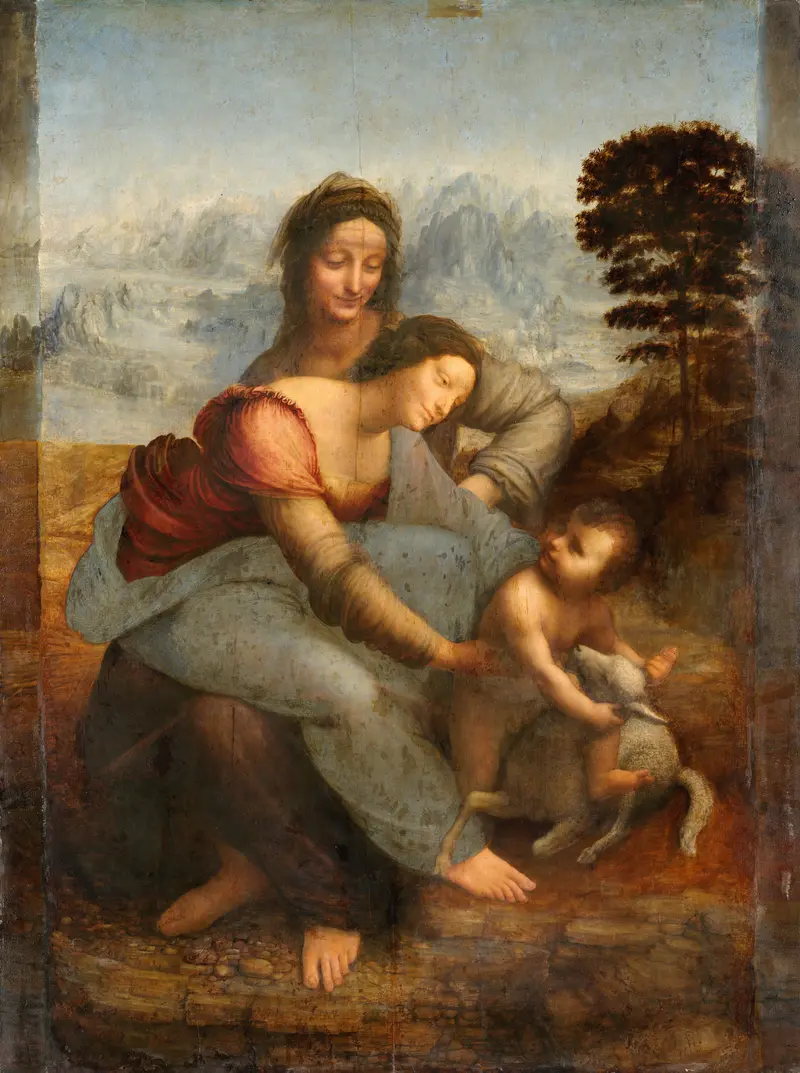
The Virgin and Child with St. Anne
Leonardo da Vinci
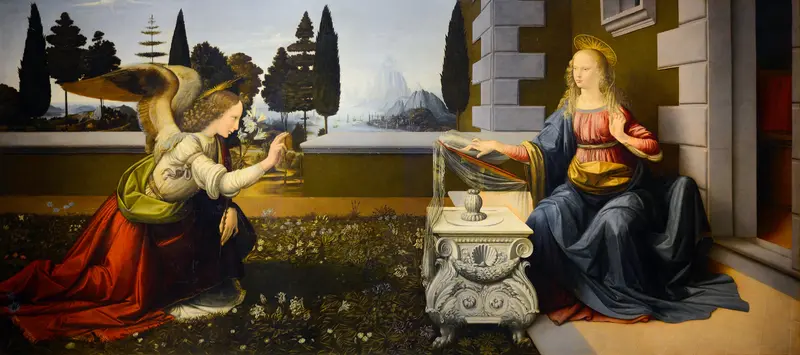
Annunciation
Leonardo da Vinci
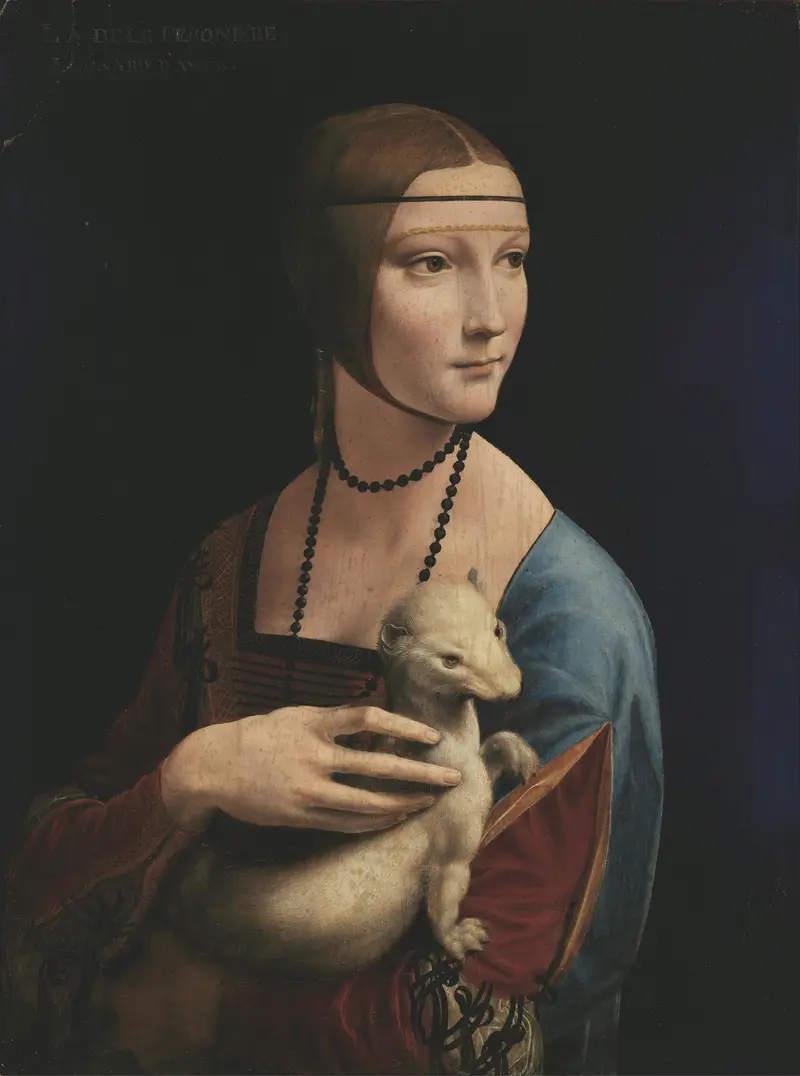
Lady with an Ermine
Leonardo da Vinci
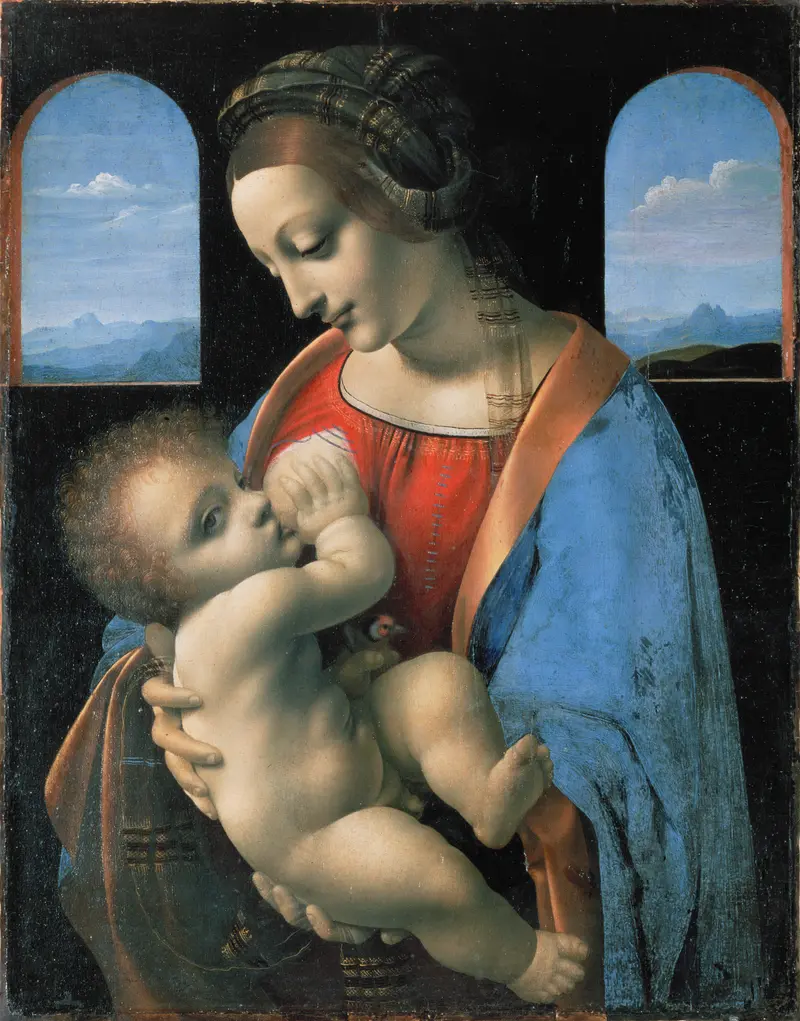
Madonna Litta
Leonardo da Vinci
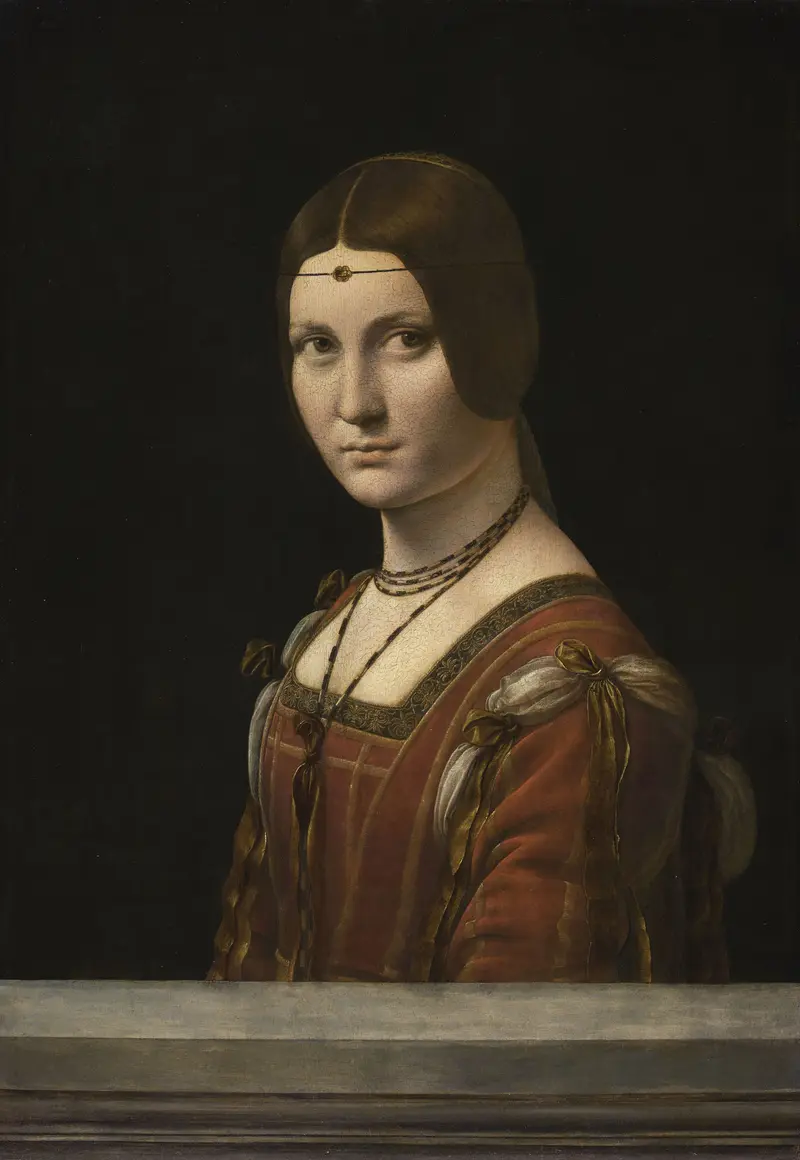
La Belle Ferronnière
Leonardo da Vinci
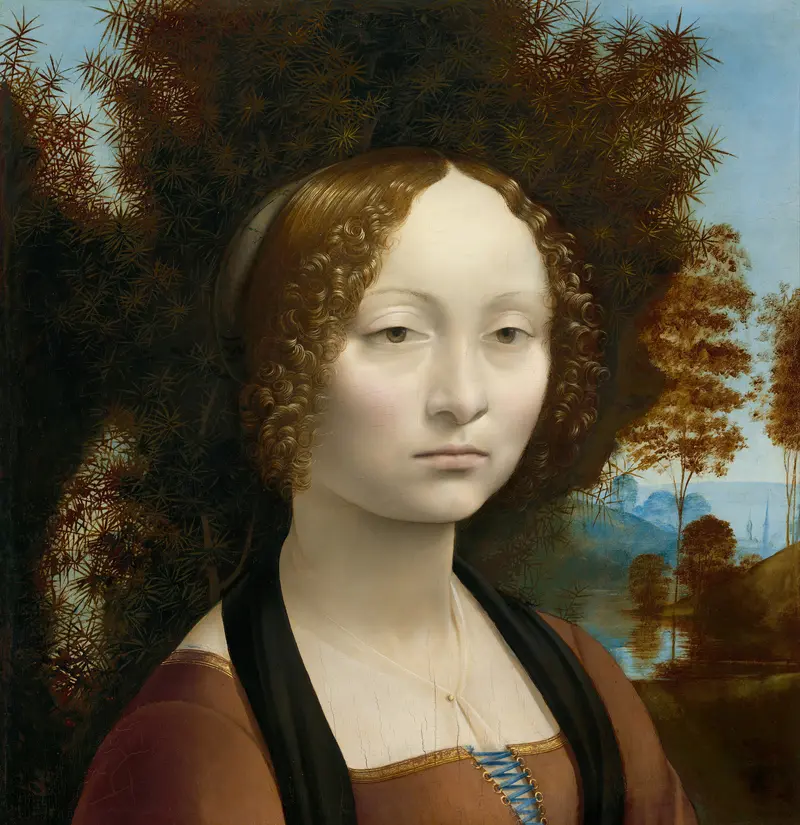
Ginevra de' Benci
Leonardo da Vinci
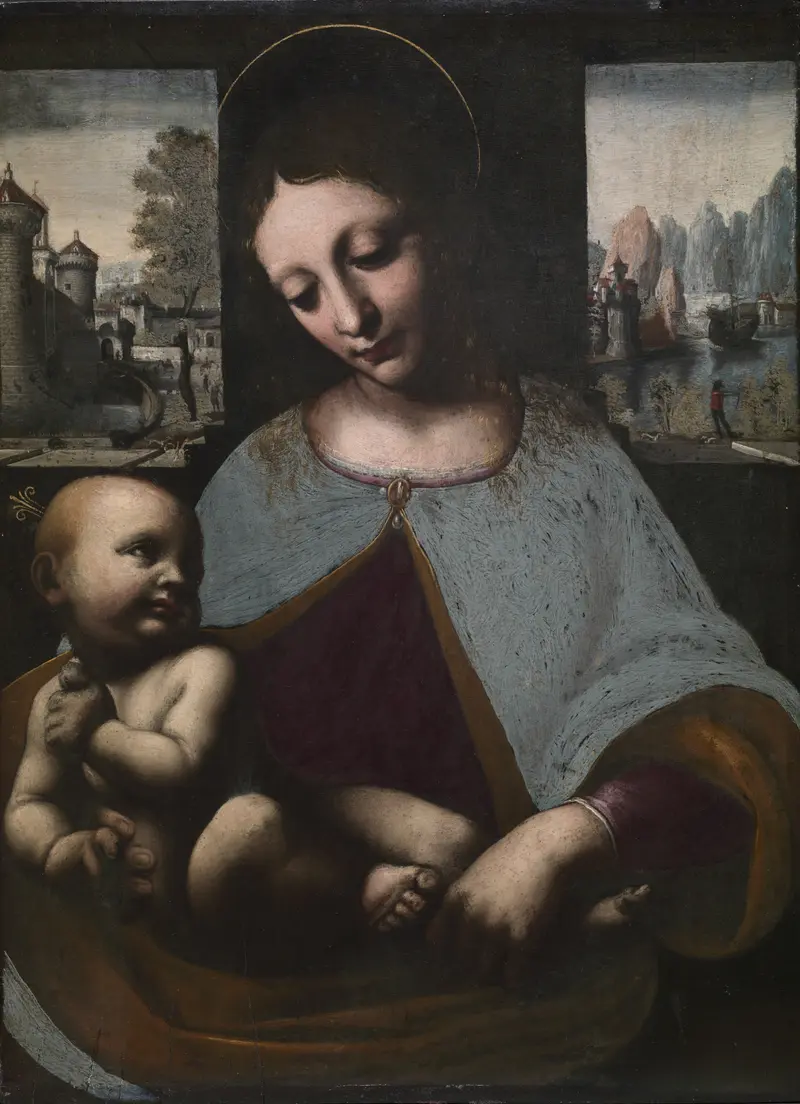
Virgin and Child
Leonardo da Vinci

Head of an Old Man, and Studies of Machinery
Leonardo da Vinci





