
A Young Woman Standing at a Virginal — History & Facts
No one can say for certain who the young woman in Vermeer’s A Young Woman Standing at a Virginal is, but the painting’s calm surface hides a lively scholarly debate: does she appear in other Vermeer works, and was she someone close to the artist? Some believe she is the same model seen in “The Music Lesson,” while others argue she might be Vermeer’s eldest daughter, Maria. The painting’s exact date, around 1670, places it among the last works Vermeer completed before his death in 1675, at a time when the artist was facing financial hardship and personal turmoil. This uncertainty about the sitter’s identity has only added to the painting’s allure, inviting viewers to search for clues in every detail. The young woman stands poised before a virginal, her gaze meeting the viewer’s with a gentle directness unusual in Dutch genre scenes.
The painting captures a moment of quiet anticipation: her left hand rests on the keys, ready to play, while her right hand lightly touches the instrument’s edge. The virginal itself is decorated with a pastoral scene, echoing the idea of harmony between music and nature. A viola da gamba leans against a chair, suggesting the presence of another musician or the promise of a duet.
The light, streaming in from the left, caresses her pale blue gown and illuminates the room’s fine details, much as in Vermeer’s “Lady Seated at a Virginal,” but here the standing pose and open gaze create a more immediate connection with the viewer. Unlike many of Vermeer’s paintings, the early history of A Young Woman Standing at a Virginal is not well documented. It likely remained in Dutch private collections for centuries before surfacing in the 19th century, when Vermeer’s reputation was being rediscovered and reassessed. Today, the painting is housed in the National Gallery, London, where it is often displayed alongside its companion piece, “A Young Woman Seated at a Virginal.” Its luminous surface and quiet intimacy mark it as a late work, and its subtle play of music, light, and gaze continues to inspire new questions about Vermeer’s models, methods, and the world he painted.
More Artworks by Johannes Vermeer

View of Delft
Johannes Vermeer

Girl with a Pearl Earring
Johannes Vermeer
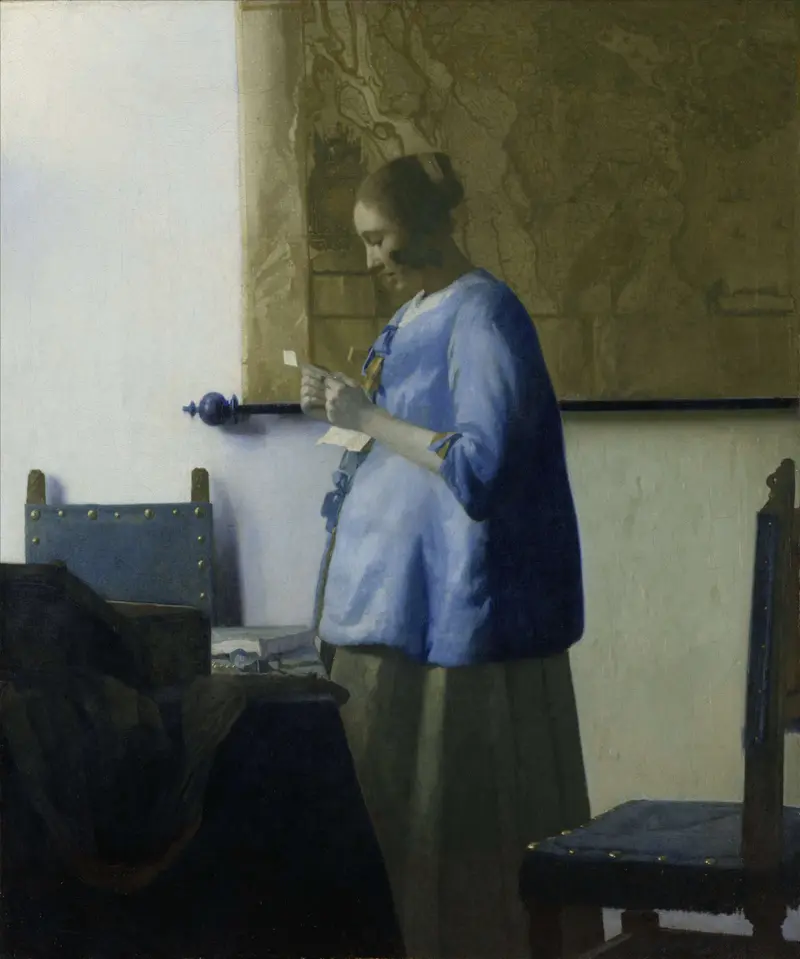
Woman in Blue Reading a Letter
Johannes Vermeer
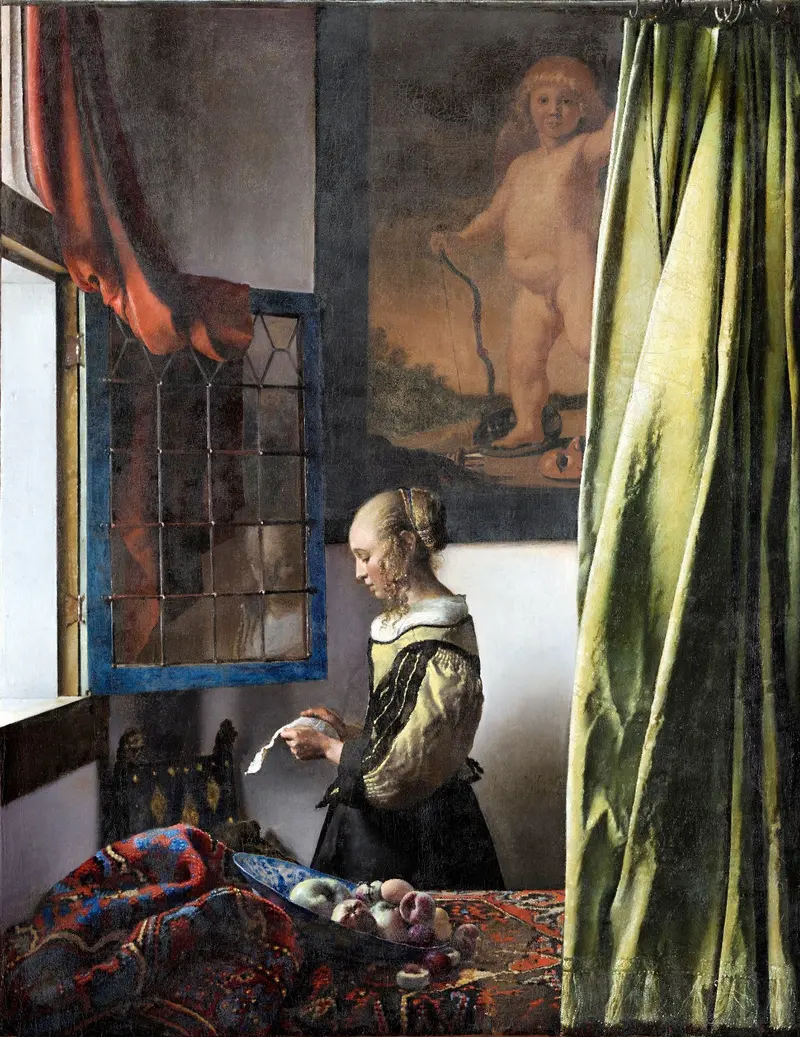
Girl Reading a Letter at an Open Window
Johannes Vermeer
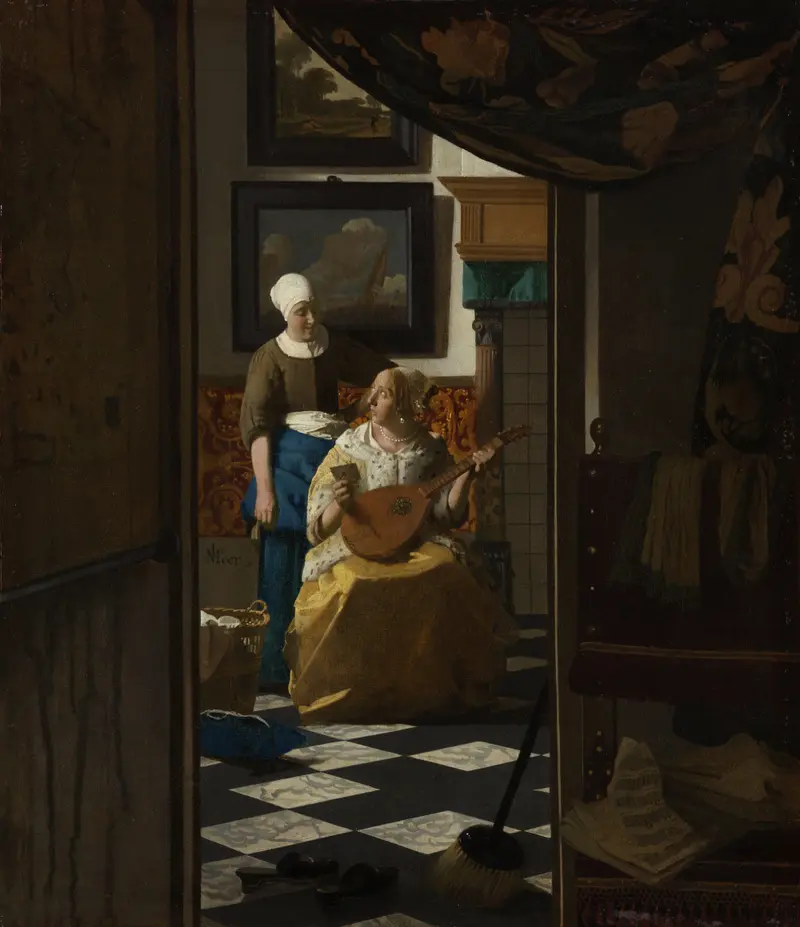
The Love Letter
Johannes Vermeer

The Music Lesson
Johannes Vermeer

A Girl Asleep
Johannes Vermeer
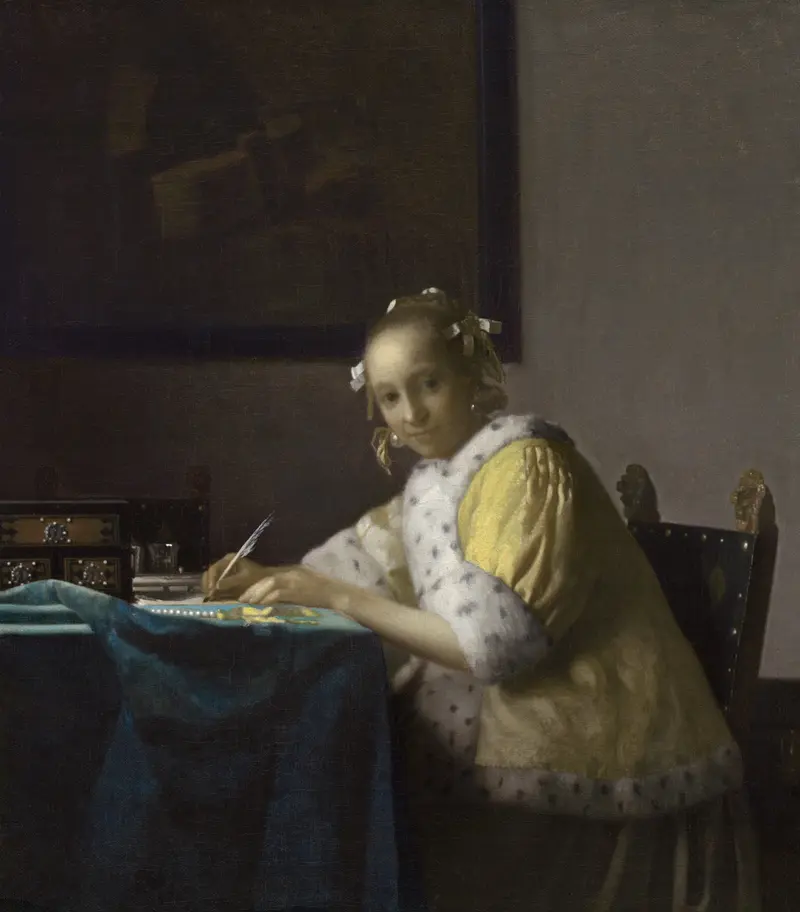
A Lady Writing a Letter
Johannes Vermeer
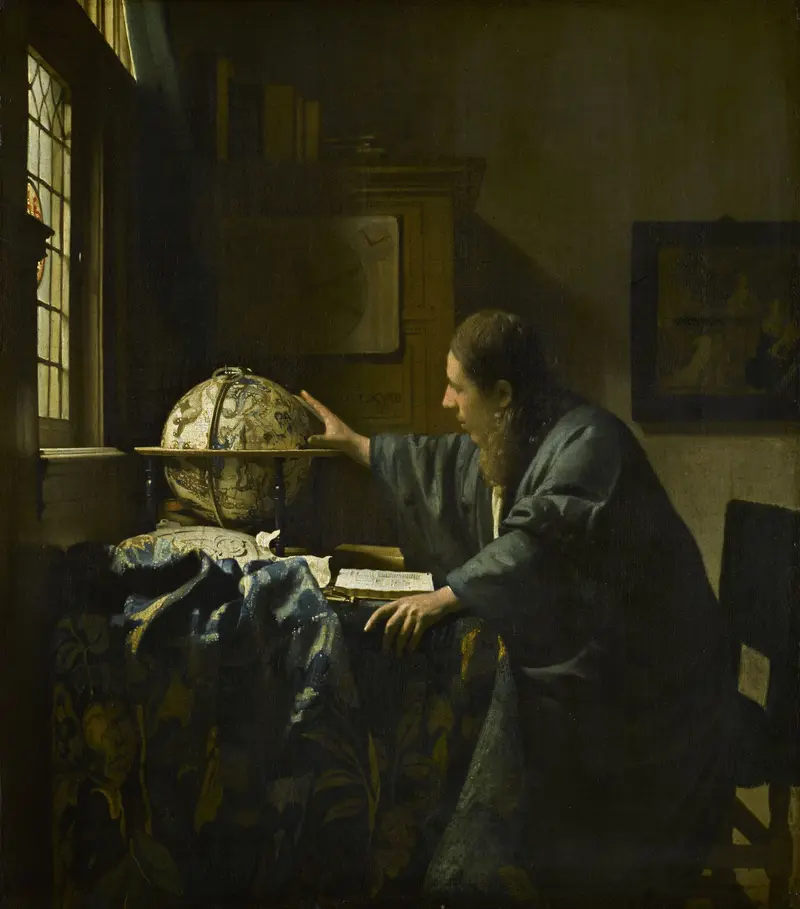
The Astronomer
Johannes Vermeer
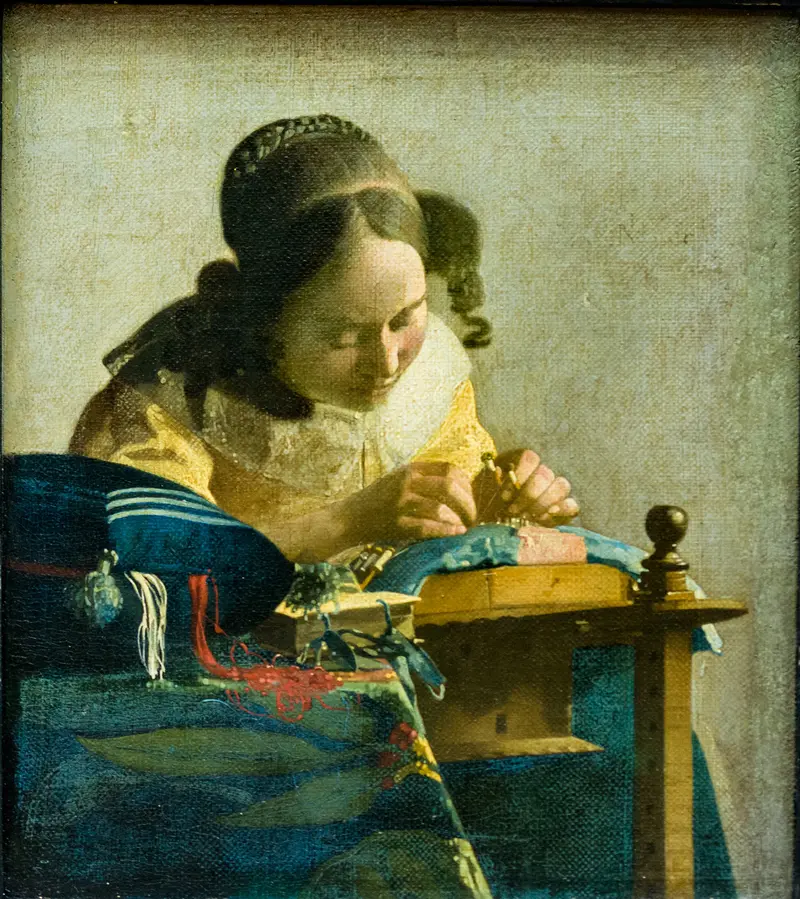
The Lacemaker
Johannes Vermeer
More Genre Scene Art

Banquet of the Officers of the St George Civic Guard
Frans Hals

Rembrandt and Saskia in the Scene of the Prodigal Son
Rembrandt van Rijn

Bal du moulin de la Galette
Pierre-Auguste Renoir

Quadrille at the Moulin Rouge
Henri de Toulouse-Lautrec

A Burial at Ornans
Gustave Courbet

When Will You Marry?
Paul Gauguin