
Apollo and the Muses — History & Facts
In the late 1570s, the Venetian patrician and collector Jacopo Soranzo commissioned a series of mythological canvases from Tintoretto, seeking to rival the grandeur of the Medici collections in Florence. Among these, Apollo and the Muses stands out, not only for its scale but for the fact that it was conceived as part of a decorative cycle for Soranzo’s private studiolo—a space dedicated to learning and the arts. The painting’s original context, surrounded by books and scientific instruments, made it a visual manifesto for the union of poetry, music, and knowledge, reflecting the intellectual ambitions of its patron. At the heart of the scene, Tintoretto captures the moment when Apollo, lyre in hand, presides over the nine Muses as they gather on Mount Helicon.
The god’s sweeping gesture calls the Muses to order, each identifiable by her attribute: a globe for Urania, a scroll for Calliope, a mask for Thalia. The composition bursts with movement—draperies swirl, arms reach, glances dart—while a golden light rakes across the figures, uniting them in a shared radiance. Unlike the serene harmony of Raphael’s Parnassus, Tintoretto’s vision is restless and theatrical, emphasizing the energy of inspiration rather than its calm. The precise medium of Apollo and the Muses remains uncertain, though oil on canvas is likely, in keeping with Venetian practice of the period.
After Soranzo’s death, the painting’s whereabouts were lost for a time, typical of many private commissions in late Renaissance Venice. It resurfaced in the nineteenth century, attributed variously to Tintoretto and his workshop, before scholarly consensus affirmed the master’s hand in its design and execution. Today, the painting is recognized as a late work, created when Tintoretto was at the height of his fame, and it continues to be studied for its daring composition and its place within the artist’s late mythological output.
More Artworks by Tintoretto
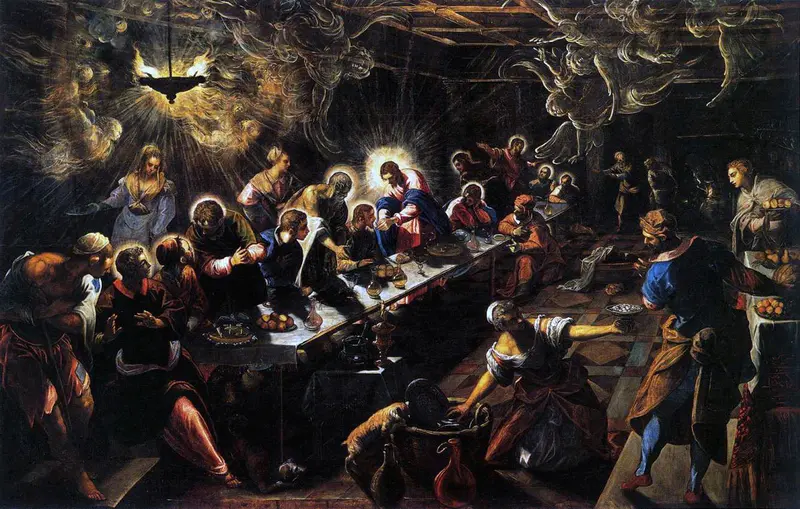
The Last Supper
Tintoretto
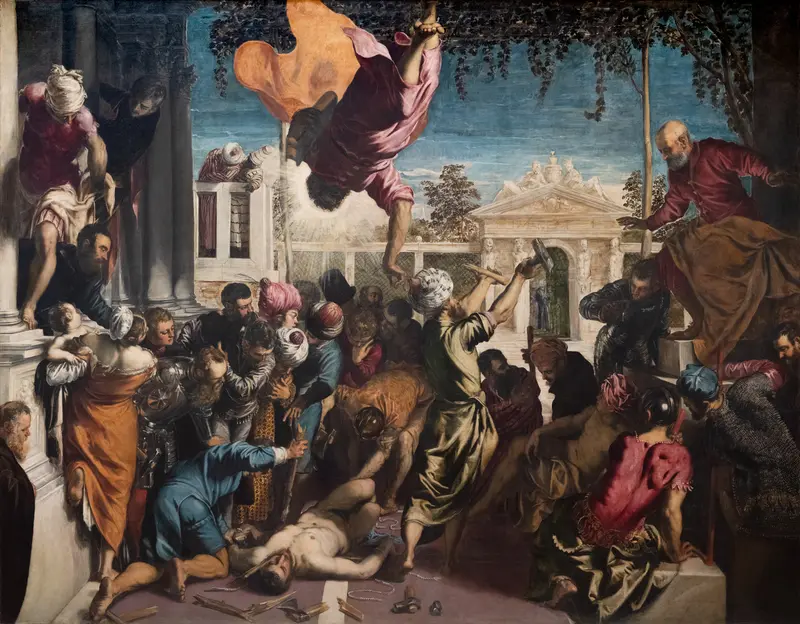
The Miracle of the Slave
Tintoretto
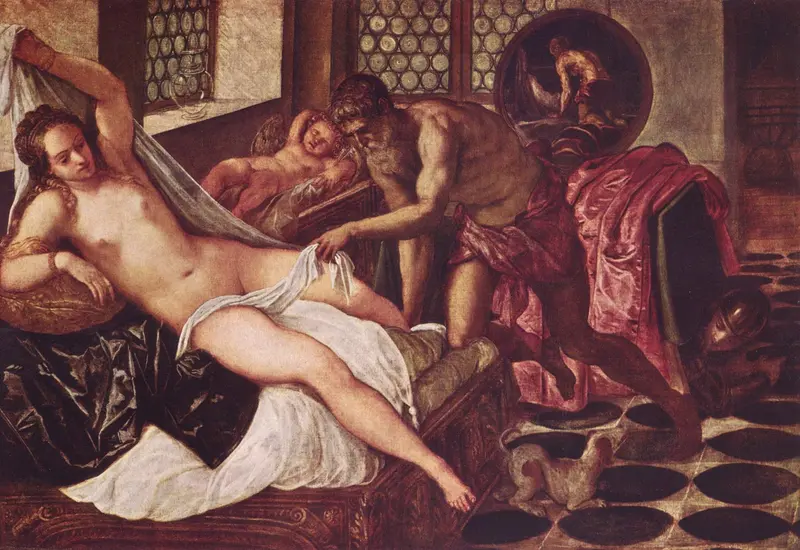
Venus and Mars Surprised by Vulcan
Tintoretto

Adoration of the Shepherds
Tintoretto
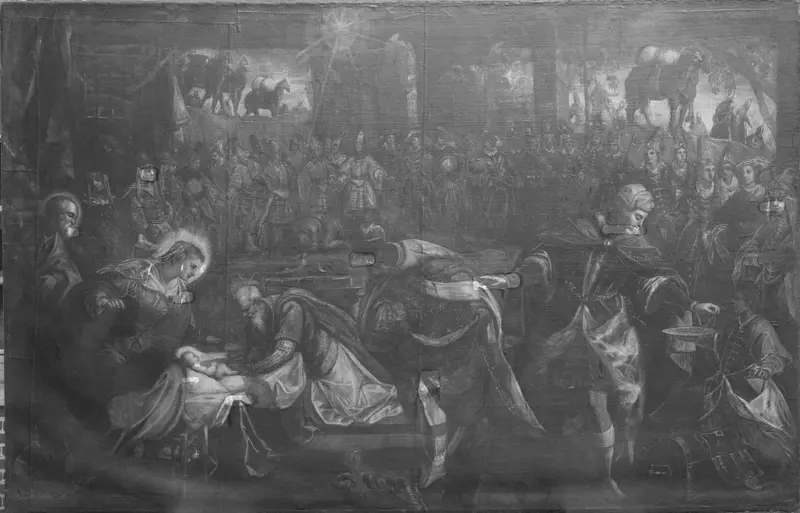
Adoration of the Magi
Tintoretto
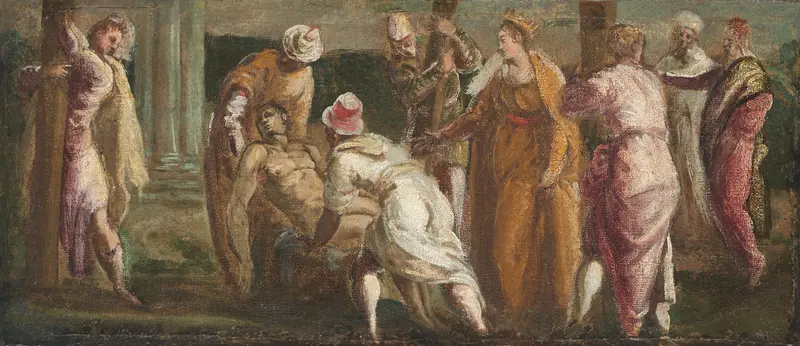
Saint Helen Testing the True Cross
Tintoretto
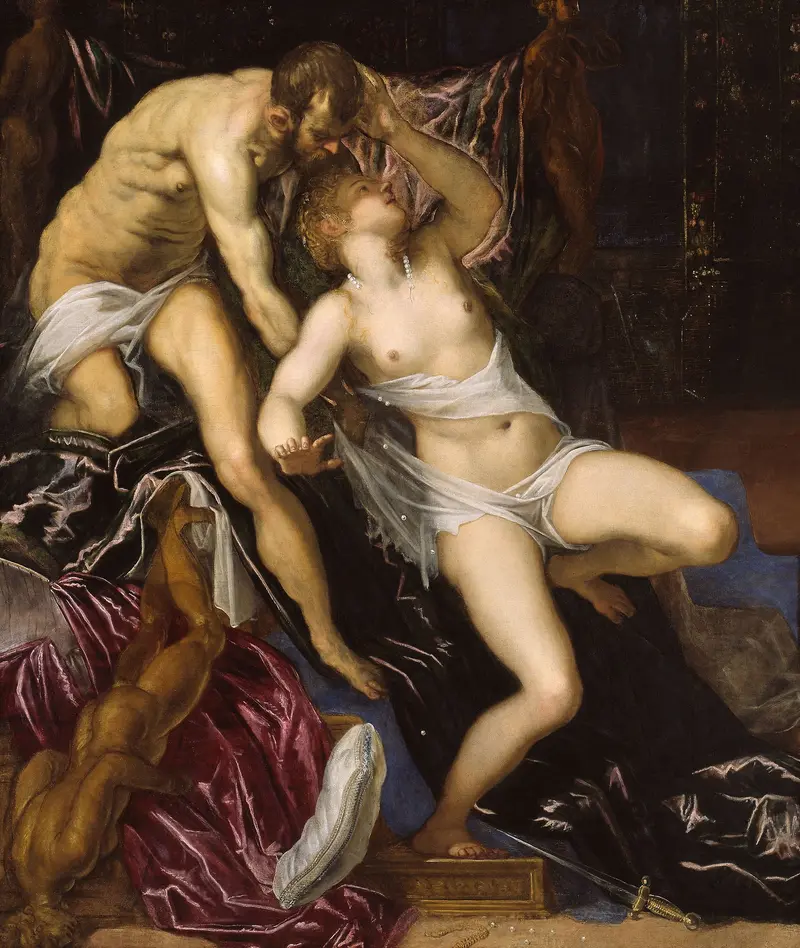
Tarquin and Lucretia
Tintoretto
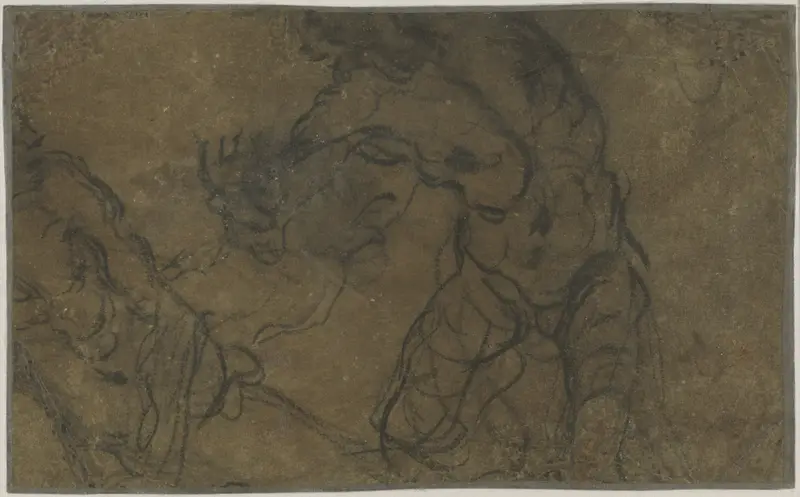
Two Male Figures in Motion (verso)
Tintoretto
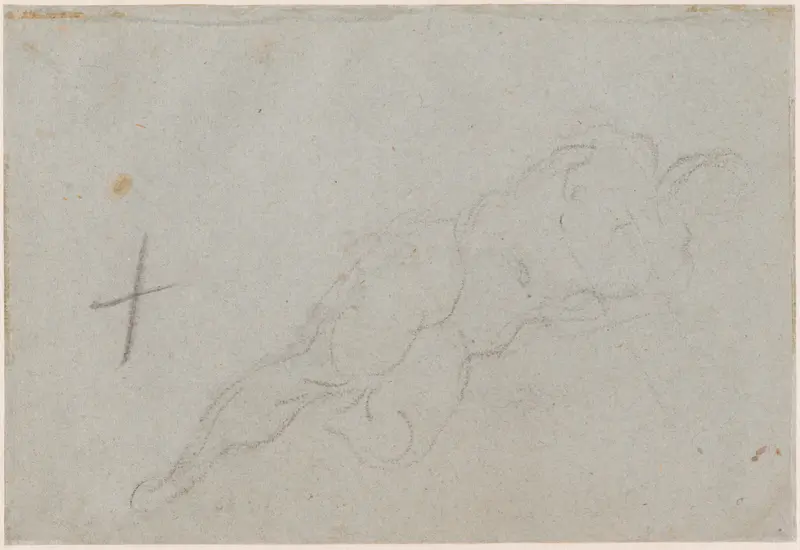
A Female Nude [verso]
Tintoretto
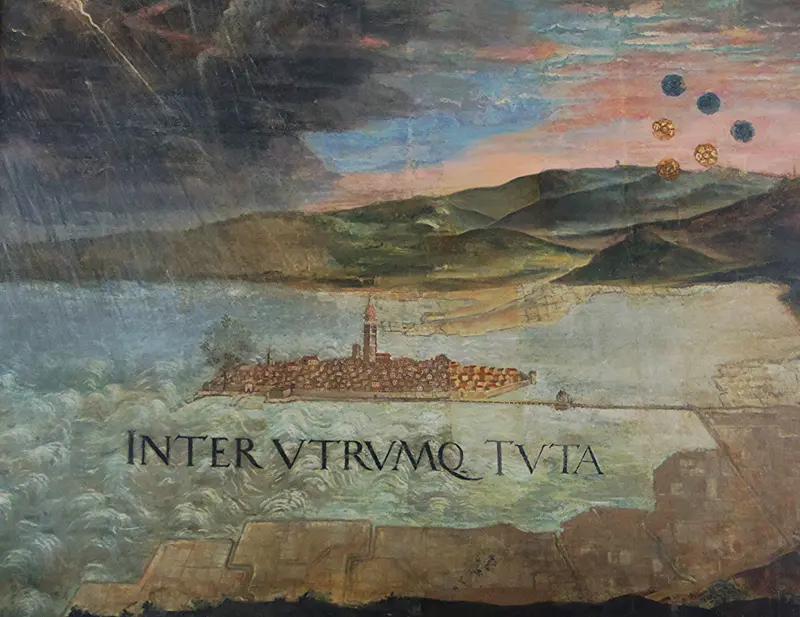
Veduta Kopra
Tintoretto





