
Giotto e bottega - Polittico di Santa Reparata B — History & Facts
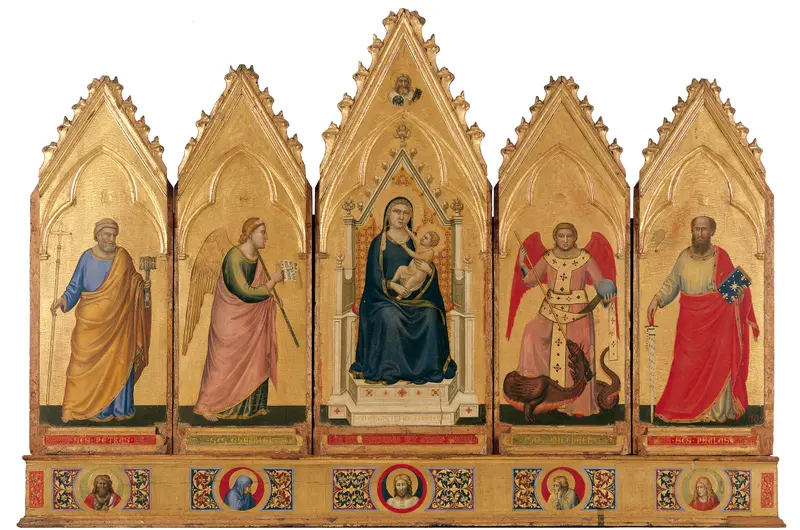
Few works have sparked as much scholarly debate as Polittico di Santa Reparata B, attributed to Giotto di Bondone and his workshop. For centuries, art historians have argued over which panels truly bear the hand of Giotto and which are the product of his assistants—an uncertainty heightened by the lack of documentation about its original commission. The polyptych’s fragments, now scattered across various collections, have become a puzzle for experts trying to reconstruct both its original appearance and its place in Giotto's career.
This ongoing mystery has turned the altarpiece into a touchstone for discussions about authorship and collaboration in early Trecento painting. At the heart of the composition stands Saint Reparata, the young martyr and patroness of Florence, depicted at the moment of her triumph over death. She is flanked by saints and angels, their golden halos gleaming against a backdrop of burnished gold leaf—a symbol of divine presence. The delicate gestures and individualized faces signal Giotto's break from the rigid hierarchies of earlier Byzantine art, inviting viewers to connect emotionally with the figures.
Unlike the static saints of Cimabue, Giotto imbues his characters with a gentle humanity: a slight tilt of the head, a hand raised in blessing, the subtle play of light across drapery. The polyptych’s narrative power lies in these details, which draw the eye from panel to panel in an unfolding sacred drama. Though the exact origins of Polittico di Santa Reparata B remain uncertain, it was likely created for the Florentine Cathedral of Santa Reparata, the predecessor of today’s Santa Maria del Fiore. Over the centuries, the altarpiece was dismantled, its panels dispersed and sometimes misattributed, a fate common to many multi-paneled works of the period.
The debates over attribution have only deepened its intrigue, with some panels confidently assigned to Giotto, others to his workshop. Today, surviving fragments are held in museums and private collections, each piece a testament to the collaborative nature of early Italian painting and the enduring influence of Giotto’s vision.
More Artworks by Giotto di Bondone
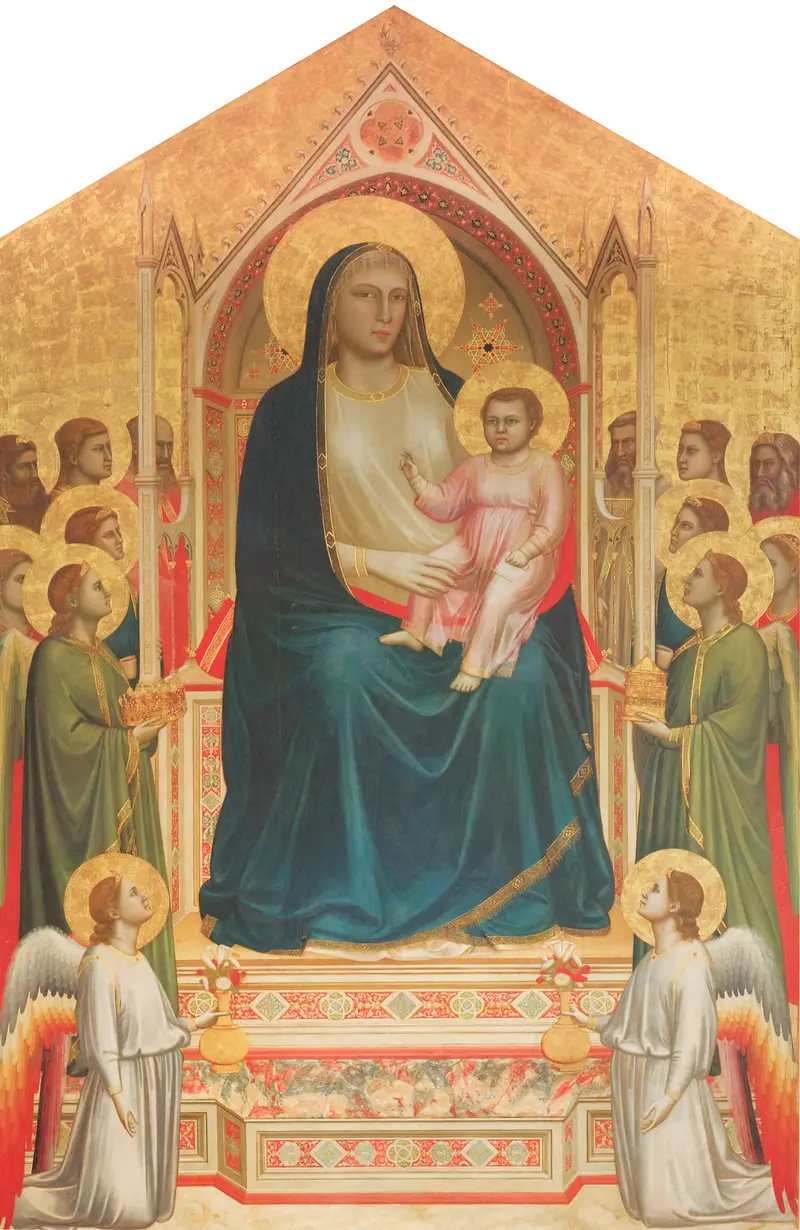
Ognissanti Madonna
Giotto di Bondone
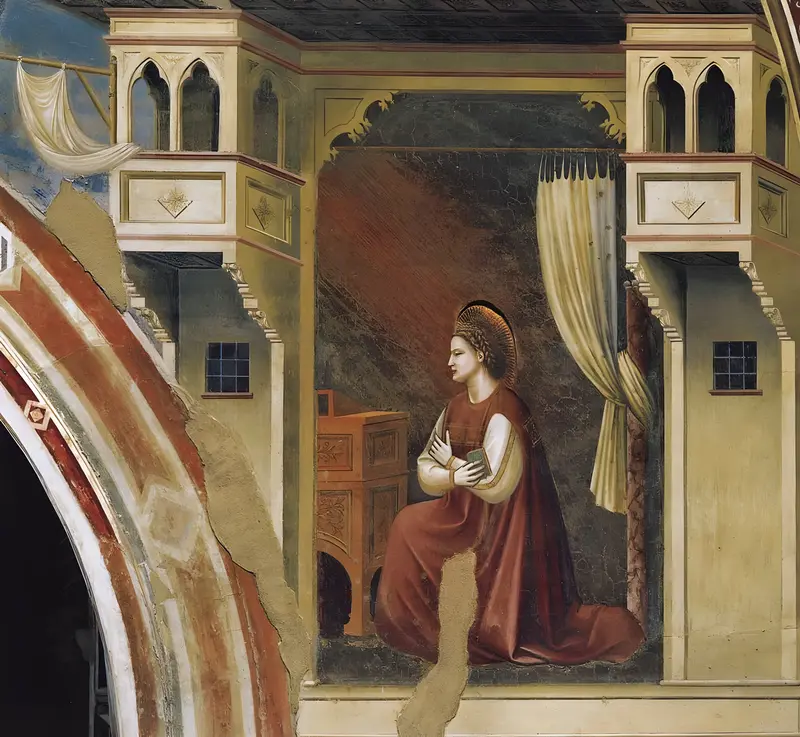
The Virgin of the Annunciation
Giotto di Bondone
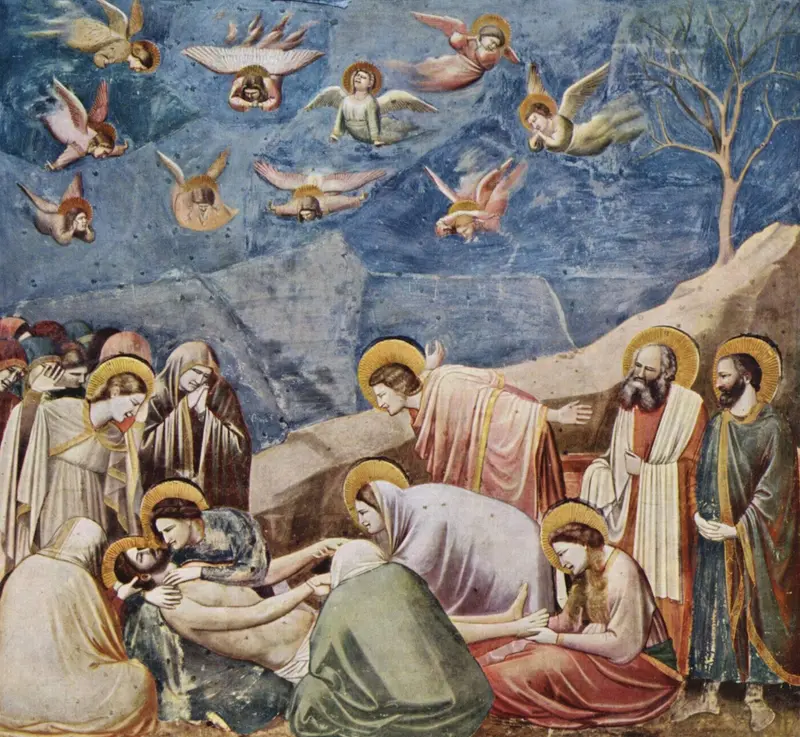
Lamentation (The Mourning of Christ)
Giotto di Bondone
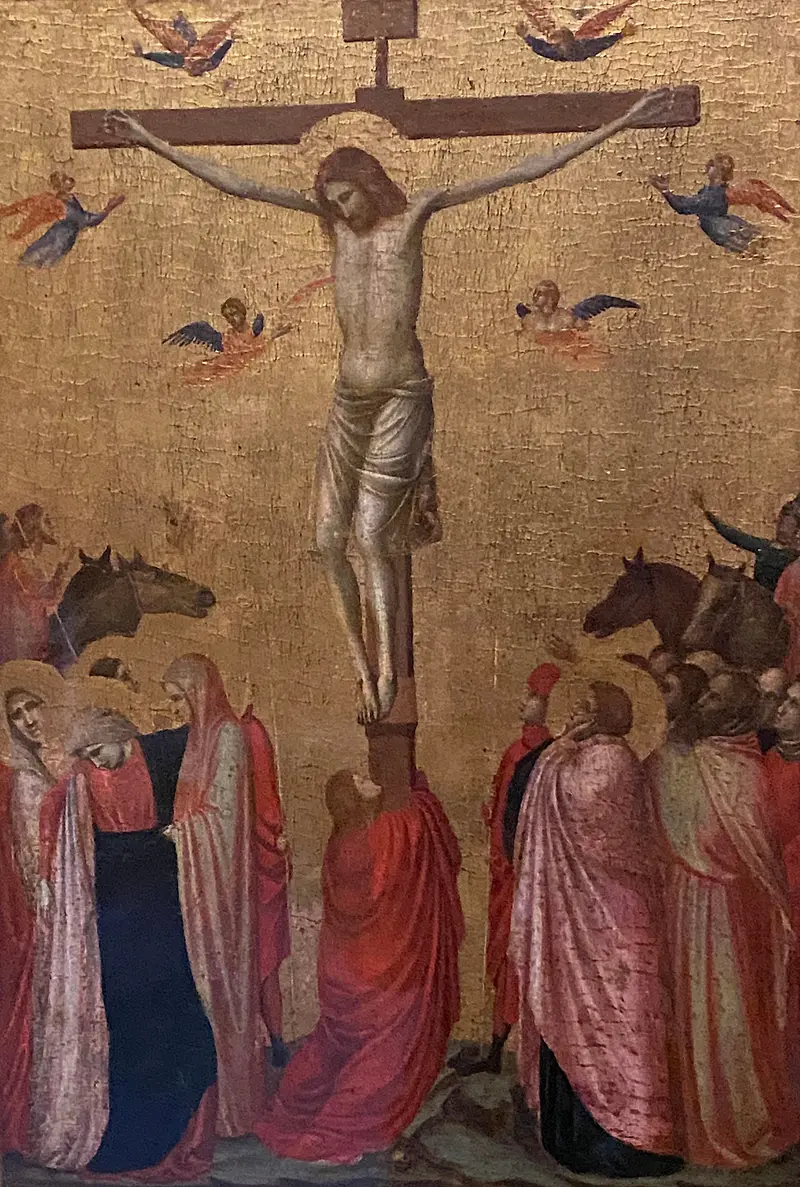
Crucifixion of Strasbourg
Giotto di Bondone
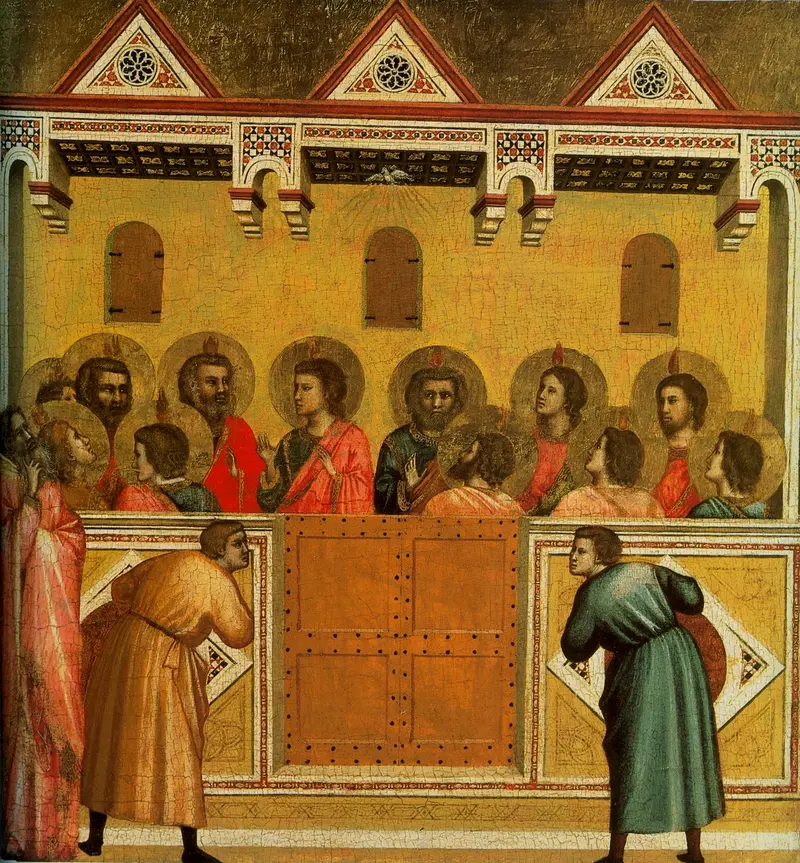
Pentecost
Giotto di Bondone
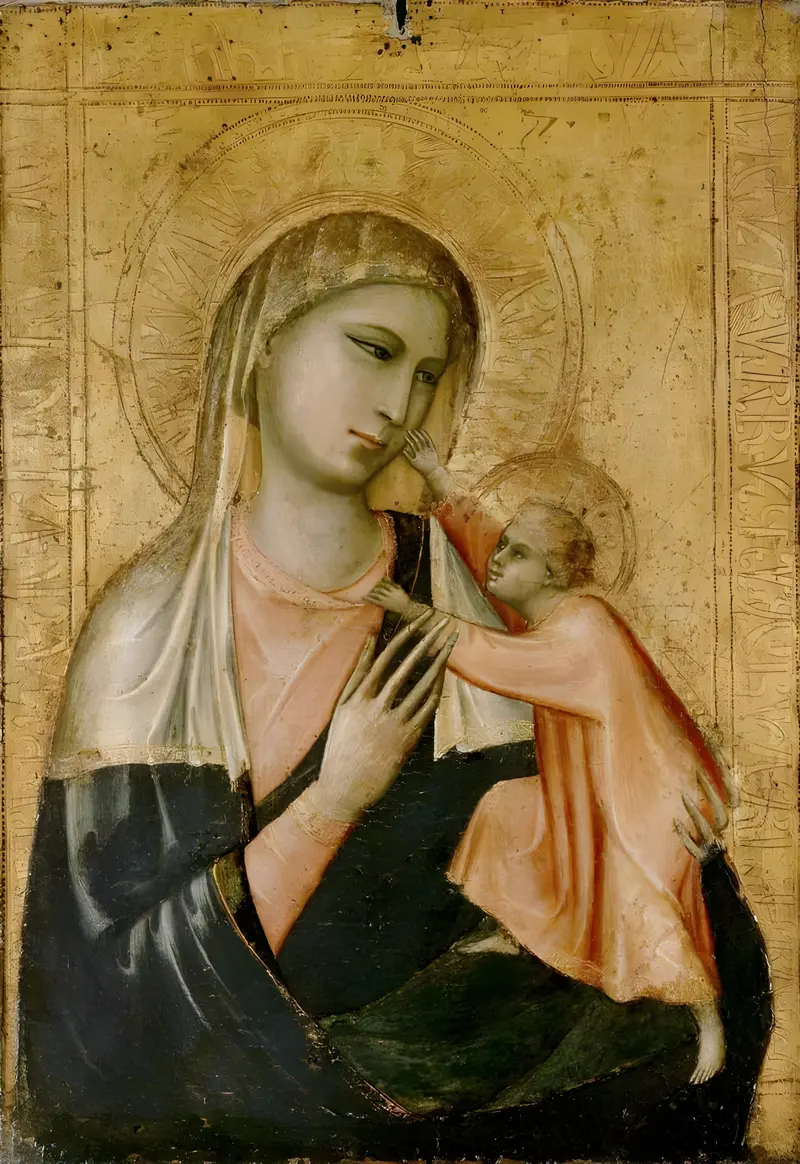
The Virgin and Child
Giotto di Bondone
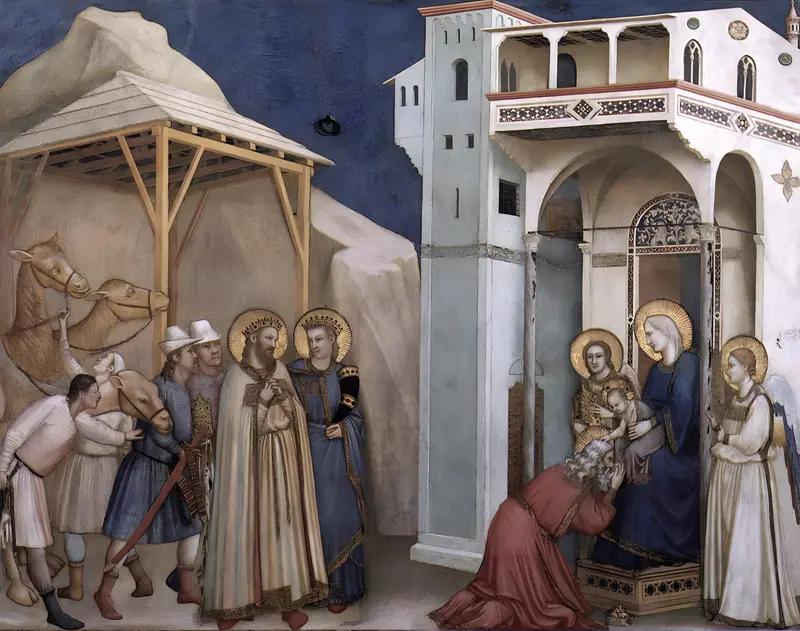
Anbetung der Könige
Giotto di Bondone
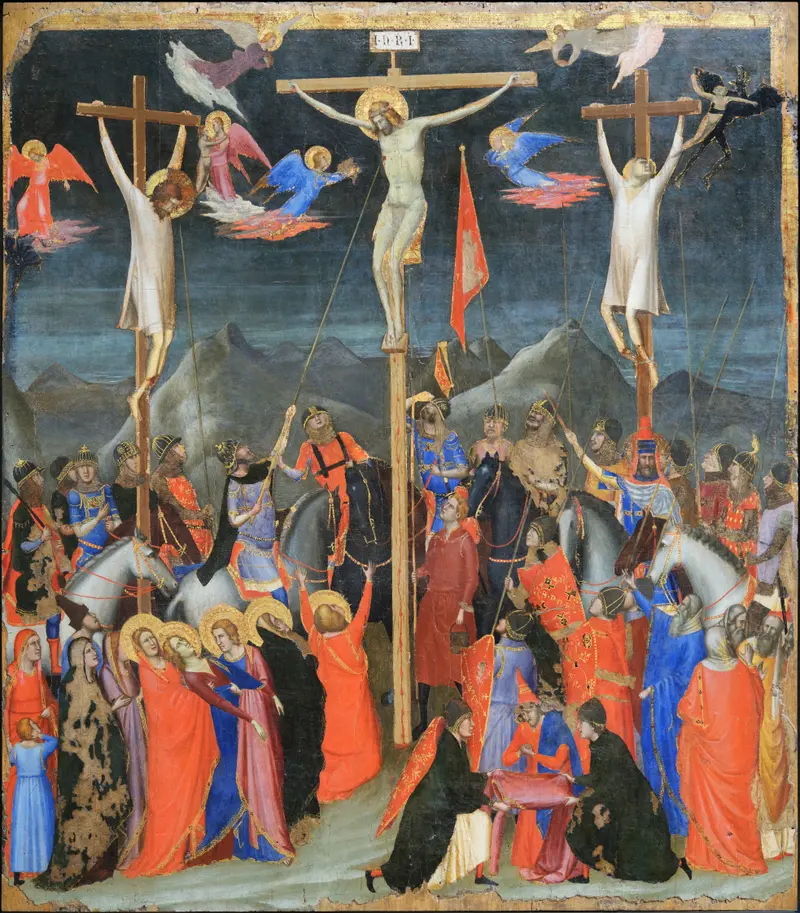
Crucifixion
Giotto di Bondone
The Visitation
Giotto di Bondone
Bologna Polyptych
Giotto di Bondone





