
Girl with a Red Hat — History & Facts
No one knows for certain what medium Johannes Vermeer used to create Girl with a Red Hat, a fact that continues to puzzle scholars. Unlike his other works on canvas, this small painting is executed on a wooden panel, and technical analysis has not been able to definitively identify the pigments or binding agents. The painting’s uncertain technique, combined with its unusual support, has led to lively debate about whether it is a finished work or a study.
Some even question whether it should be attributed to Vermeer at all, though most experts now agree it is his. A young woman, her lips parted as if about to speak, turns toward the viewer from the shadows. She wears an extravagant red hat—almost theatrical in its size and color—set off by a blue robe and a luminous white collar. The light falls dramatically across her face, making her expression seem both intimate and mysterious.
The feathered hat, a fashionable but rare accessory in Dutch portraiture, draws the eye and suggests a sense of play or masquerade. Unlike the formal, reserved sitters in Vermeer’s other portraits, this girl’s direct gaze and informal pose feel unusually immediate, recalling the lively character studies of Frans Hals. Girl with a Red Hat was not recorded in any known inventory during Vermeer’s lifetime, and its early history remains obscure. It surfaced in the 19th century, by which time its authorship was already disputed, but careful study of its technique and style has since confirmed its place among Vermeer’s late works.
Today, it is housed in the National Gallery of Art in Washington, D.C., where its small scale and jewel-like colors continue to attract close attention. The painting stands out in Vermeer’s oeuvre for its spontaneity and experimental spirit, offering a rare glimpse of the artist working with unusual freedom.
More Artworks by Johannes Vermeer

View of Delft
Johannes Vermeer

Girl with a Pearl Earring
Johannes Vermeer
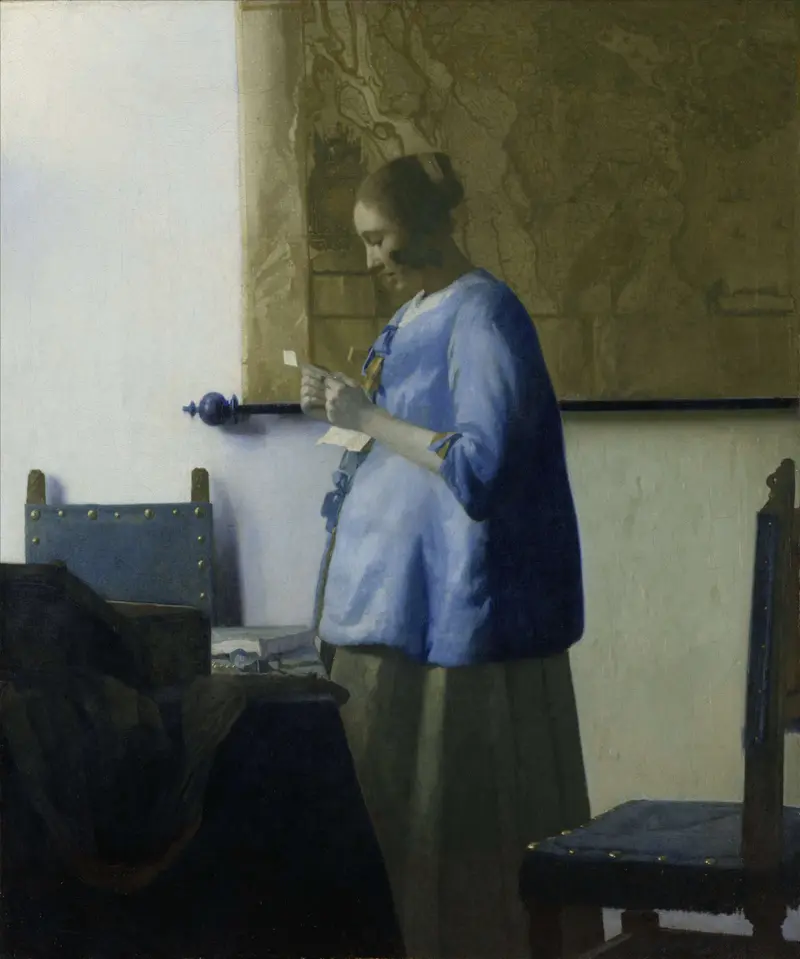
Woman in Blue Reading a Letter
Johannes Vermeer
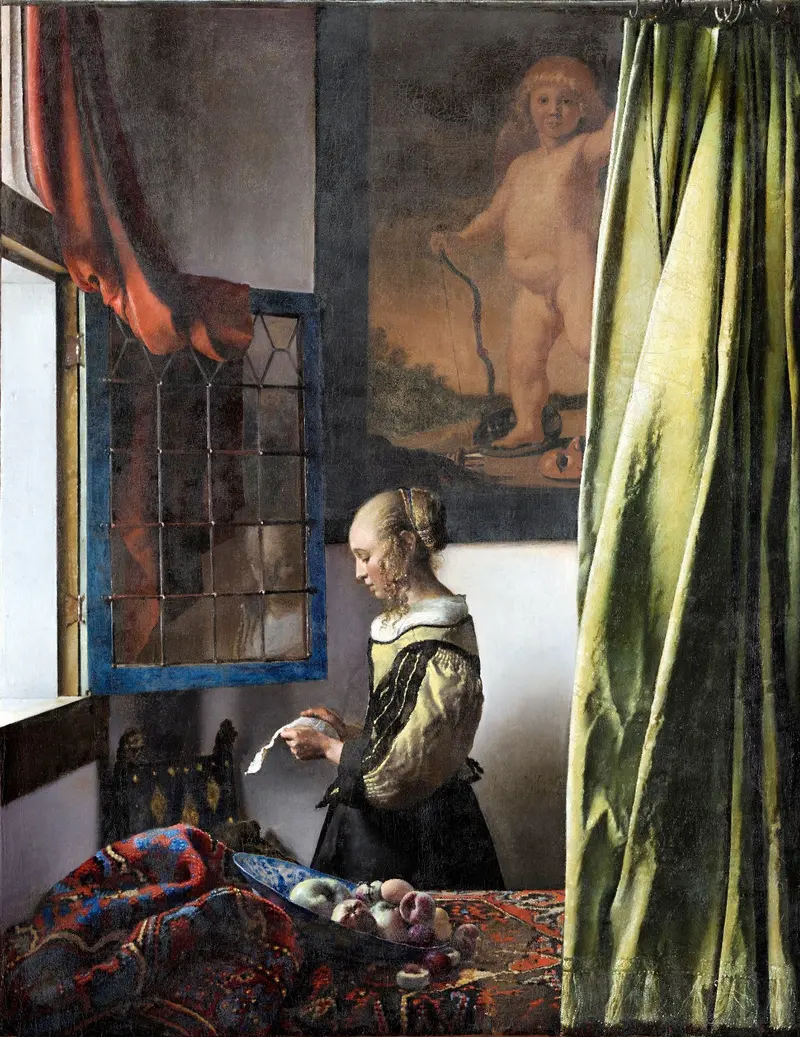
Girl Reading a Letter at an Open Window
Johannes Vermeer
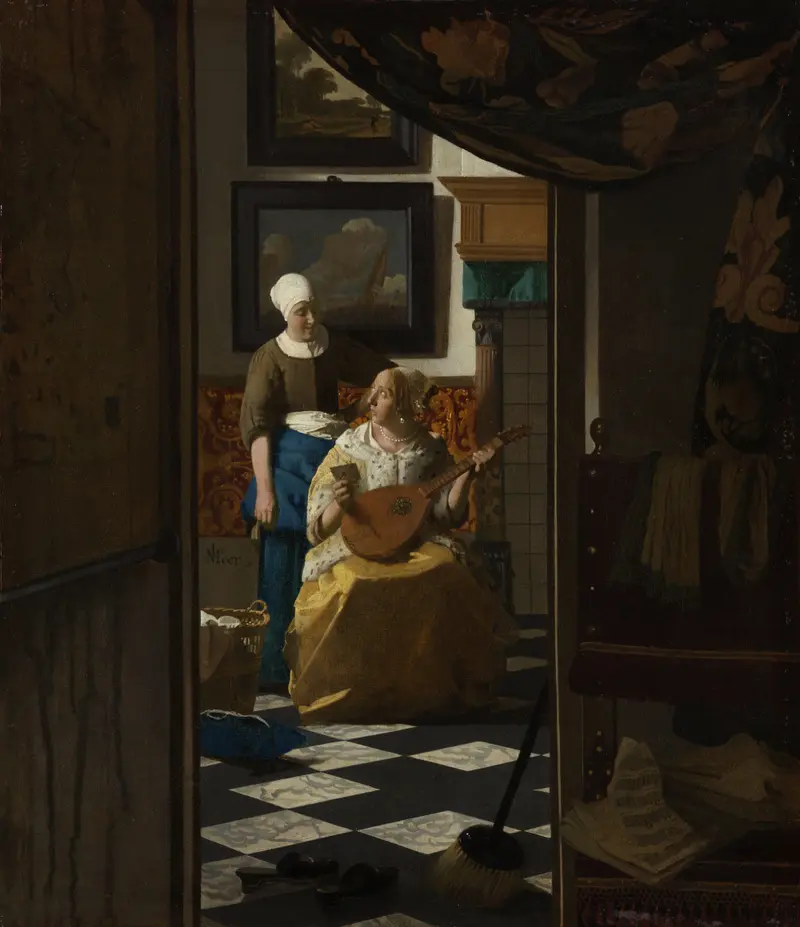
The Love Letter
Johannes Vermeer

The Music Lesson
Johannes Vermeer

A Girl Asleep
Johannes Vermeer
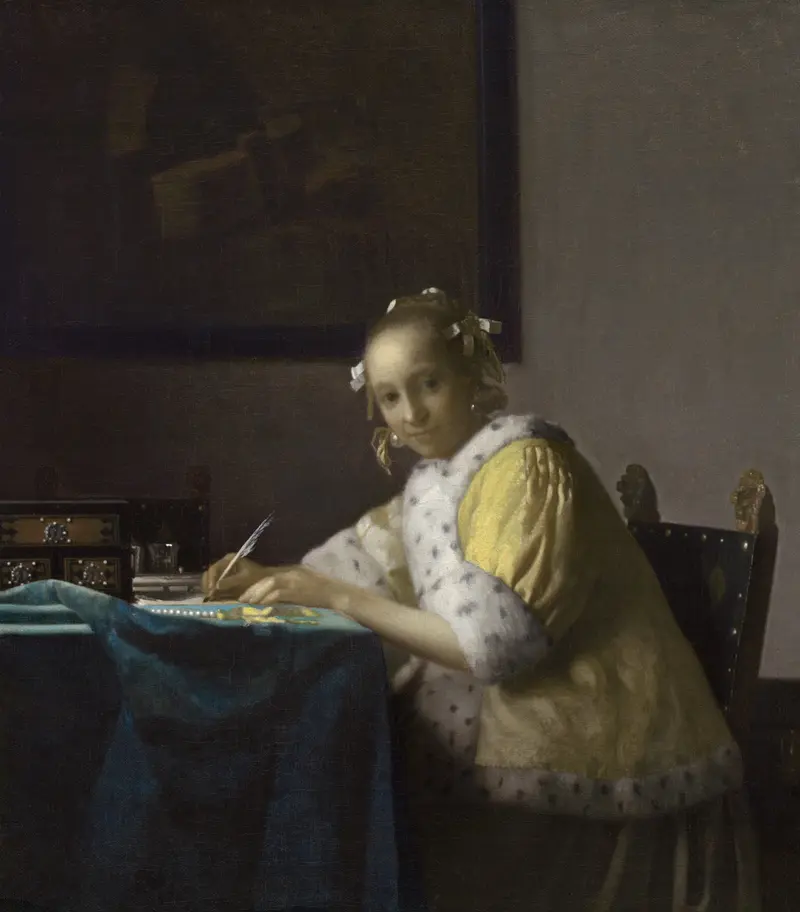
A Lady Writing a Letter
Johannes Vermeer
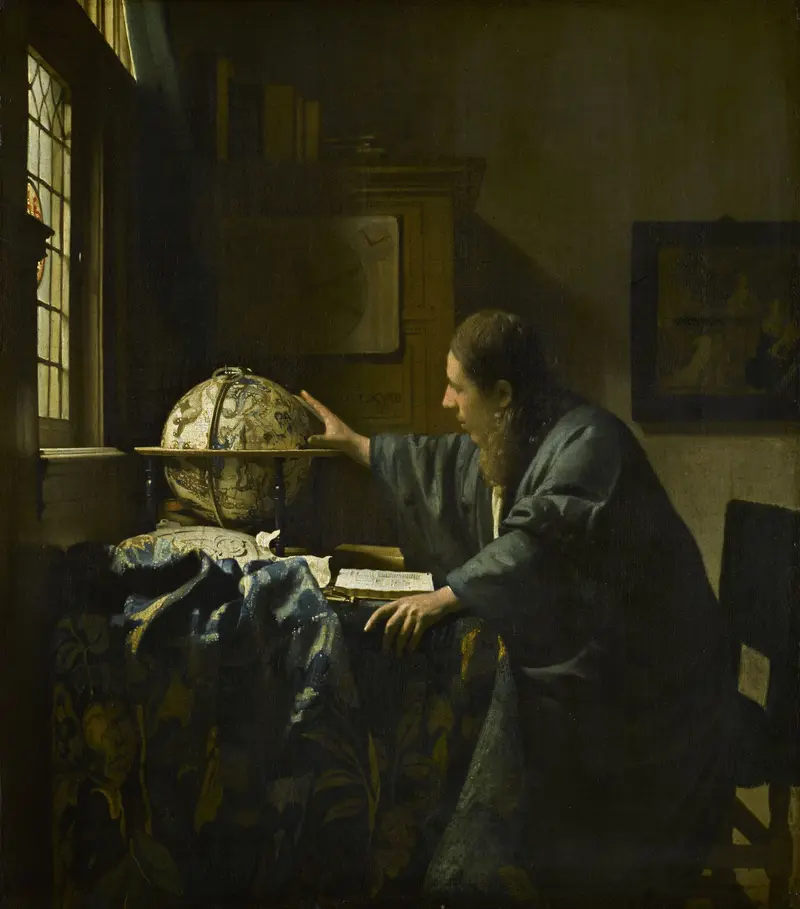
The Astronomer
Johannes Vermeer
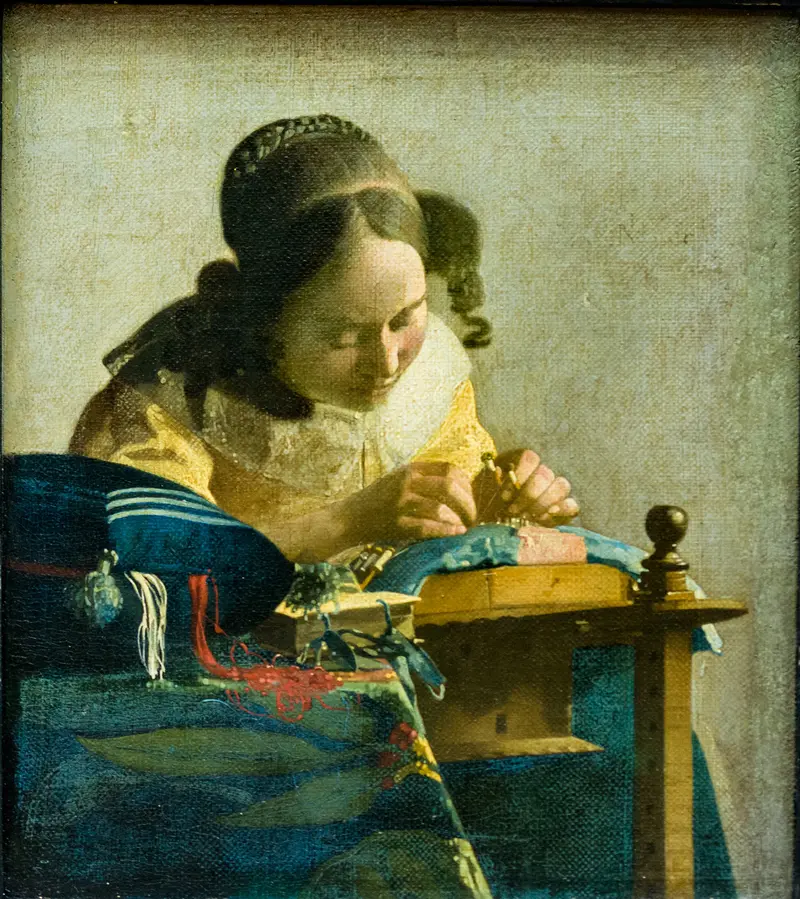
The Lacemaker
Johannes Vermeer




