
Oil Sketch for "La Grande Jatte" — History & Facts
Before Georges Seurat completed his monumental A Sunday on La Grande Jatte, he produced a series of oil sketches, each one a laboratory for his radical new ideas about color and composition. Among these, the Oil Sketch for La Grande Jatte stands out for its immediacy and fluidity—a far cry from the painstaking dots of the finished canvas. Here, we witness Seurat in 1884, still searching for the right balance of light and shadow, experimenting with the placement of figures who would soon become icons of the Post-Impressionist movement.
This sketch is not just a preparatory work; it's a rare glimpse into the artist's process at a moment when he was about to change the course of modern painting. In this study, the banks of the Seine are alive with leisure: women in bustled dresses, men in top hats, children and dogs all scattered across the sunlit grass. Seurat captures a fleeting afternoon, but unlike the spontaneous brushwork of Impressionist contemporaries like Claude Monet, his figures are already beginning to take on the stillness and formality that would define the final composition. The dappled light, rendered in swift, patchy strokes, hints at his developing theory of optical mixing, while the arrangement of figures—some in profile, some facing away—creates a sense of both unity and isolation.
The sketch’s looseness and visible brushwork contrast sharply with the finished La Grande Jatte, where every element is meticulously ordered. After its creation, the Oil Sketch for La Grande Jatte remained in Seurat's studio, part of the cache of studies he guarded closely during his short life. Unlike the finished painting, which debuted at the final Impressionist exhibition in 1886 and now hangs in the Art Institute of Chicago, this sketch was not widely seen until after Seurat’s death in 1891. It has since passed through private collections and exhibitions, valued both as a key document of Seurat’s working method and as a vibrant painting in its own right.
Today, it is recognized as a crucial step in the birth of Pointillism, and as a testament to the restless experimentation of a young artist on the verge of a breakthrough.
More Artworks by Georges Seurat
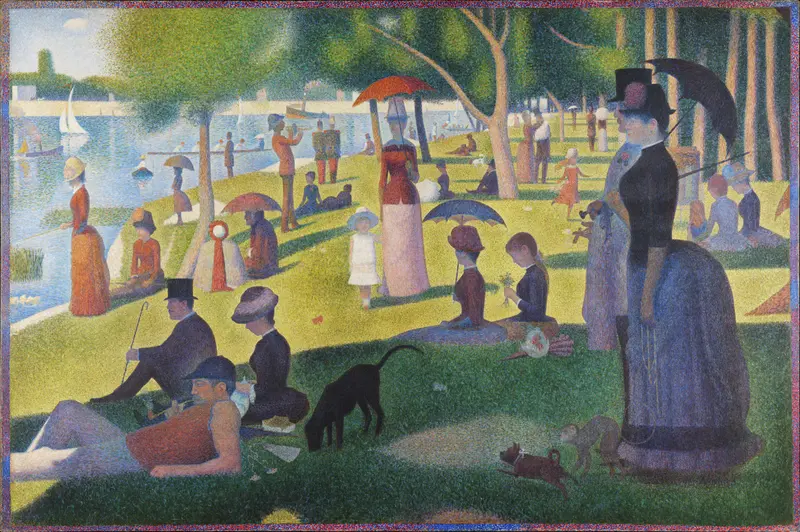
A Sunday Afternoon on the Island of La Grande Jatte
Georges Seurat
Port-en-Bessin, The Outer Harbor (Low Tide)
Georges Seurat
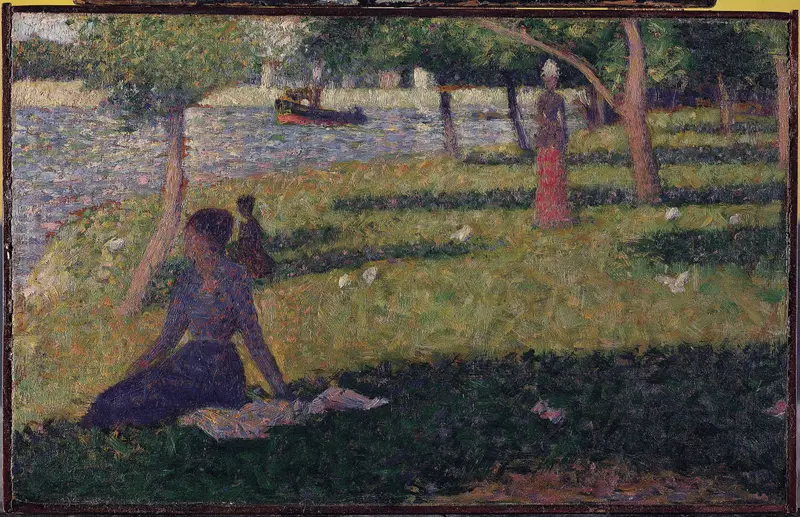
Étude pour ‘La Grande Jatte’ (Study for ‘La Grande Jatte’)
Georges Seurat
Seascape at Port-en-Bessin,Normandy
Georges Seurat
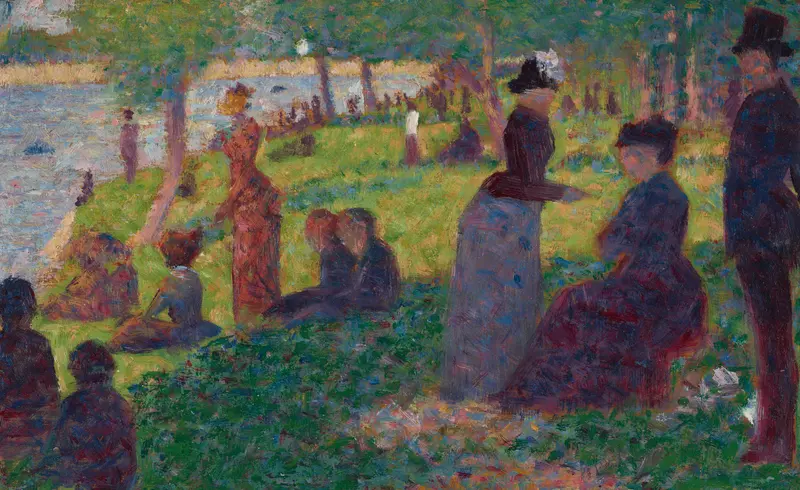
Oil Sketch for "A Sunday on La Grande Jatte — 1884"
Georges Seurat
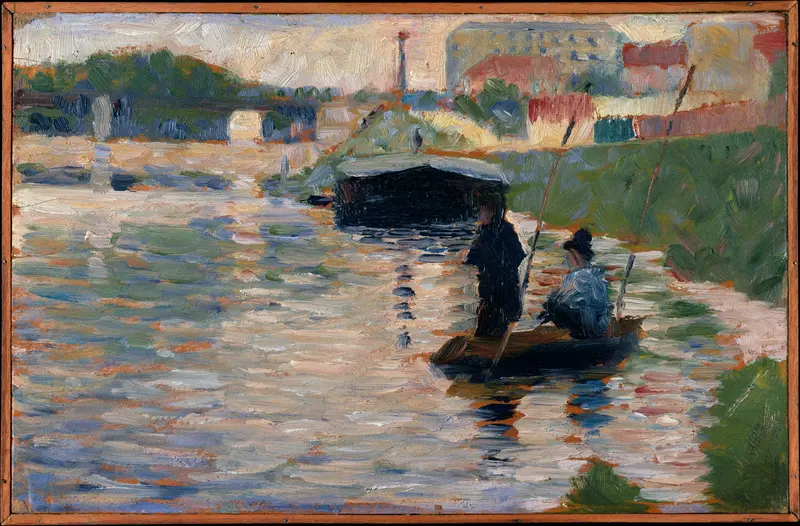
View of the Seine
Georges Seurat
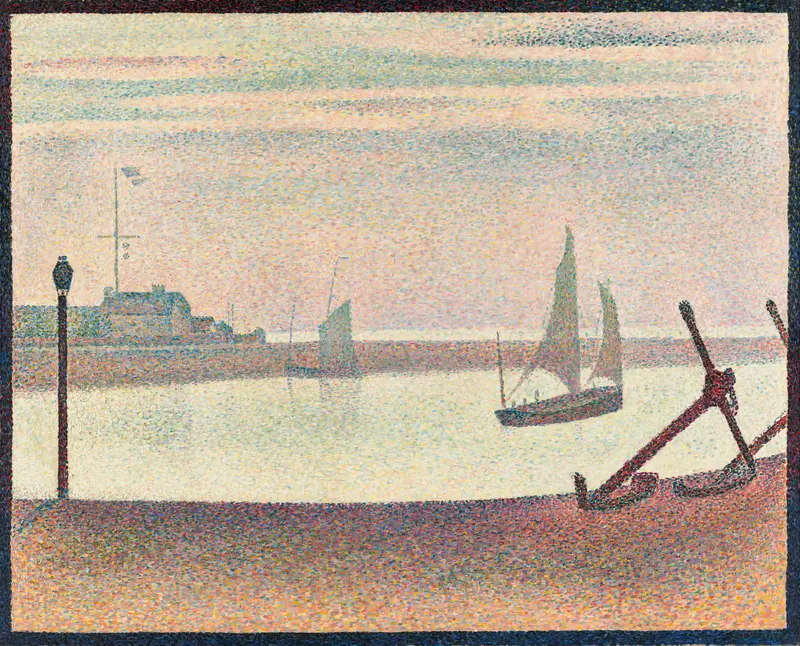
The Channel at Gravelines, Evening
Georges Seurat
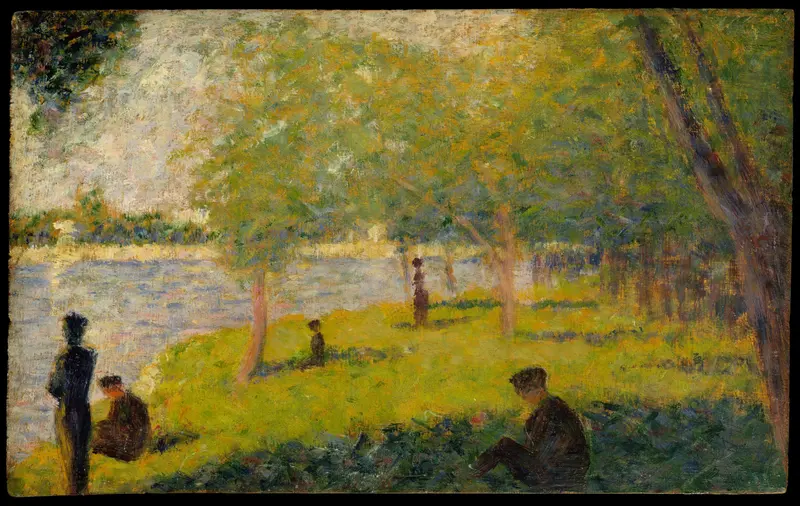
Study for ‘A Sunday on La Grande Jatte’
Georges Seurat
Study for A Sunday on La Grande Jatte
Georges Seurat
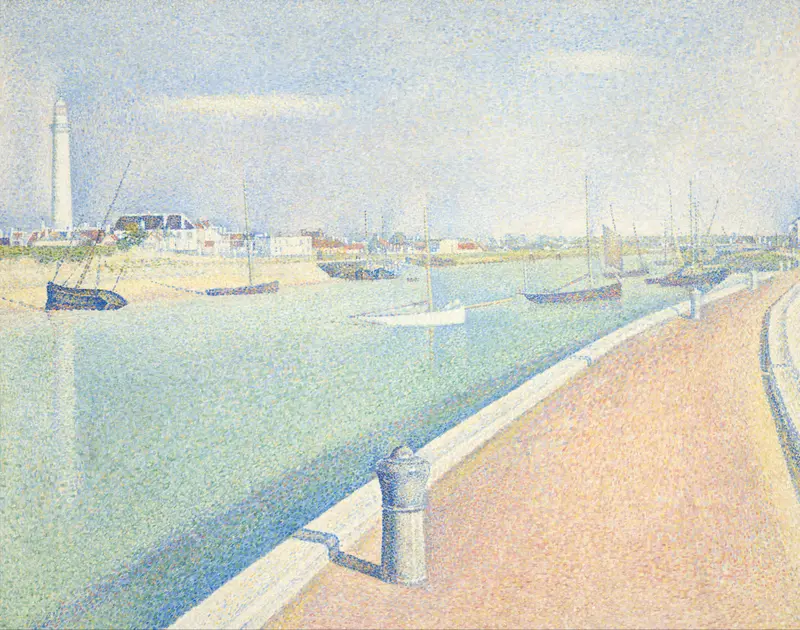
The Channel of Gravelines, Petit Fort Philippe
Georges Seurat
More Genre Scene Art

Banquet of the Officers of the St George Civic Guard
Frans Hals

Rembrandt and Saskia in the Scene of the Prodigal Son
Rembrandt van Rijn

Bal du moulin de la Galette
Pierre-Auguste Renoir

Quadrille at the Moulin Rouge
Henri de Toulouse-Lautrec

A Burial at Ornans
Gustave Courbet

When Will You Marry?
Paul Gauguin