
Peasant with Hoe II — History & Facts
When Georges Seurat painted Peasant with Hoe II in 1882, he was still years away from the pointillist innovations that would make his name, yet already the subject of rural laborers had drawn his eye. What makes this work especially compelling is that it belongs to a small series—Seurat painted at least two known versions of the peasant-with-hoe motif, each exploring the dignity and solitude of agricultural work. This repetition suggests a fascination with the theme, perhaps inspired by the social realities of post-Commune France, where the rural poor were both idealized and overlooked.
The painting also stands at a crossroads in Seurat's career, just before he began to experiment with the scientific color theories that would define Neo-Impressionism. The scene Seurat selects is one of quiet exertion: a lone peasant, mid-stride, leans into his hoe, the earth beneath him freshly turned. The figure’s broad hat casts a shadow over his face, emphasizing anonymity and universality—he could be any laborer in the fields outside Paris. The heavy, deliberate pose echoes the gravity of Jean-François Millet’s earlier The Man with a Hoe, but Seurat’s treatment is less sentimental, more analytical.
The muted palette and careful modeling of light across the peasant’s back and arms draw attention to the physicality of the task, while the open sky and low horizon suggest both isolation and endurance. Unlike Millet’s more heroic framing, Seurat’s peasant is absorbed in his work, a study in concentration rather than drama. The exact provenance of Peasant with Hoe II is uncertain, as the painting’s early history is less documented than Seurat’s later masterpieces. It likely remained in the artist’s studio during his lifetime, part of his private exploration of rural themes before he turned to the urban scenes that would dominate his mature period.
Today, the painting is recognized as an important precursor to Seurat’s later innovations, offering a glimpse into the artist’s evolving technique and interests. Its presence in museum collections underscores Seurat’s early engagement with social subjects, and the work stands as a testament to his careful observation and the changing face of French painting in the 1880s.
More Artworks by Georges Seurat
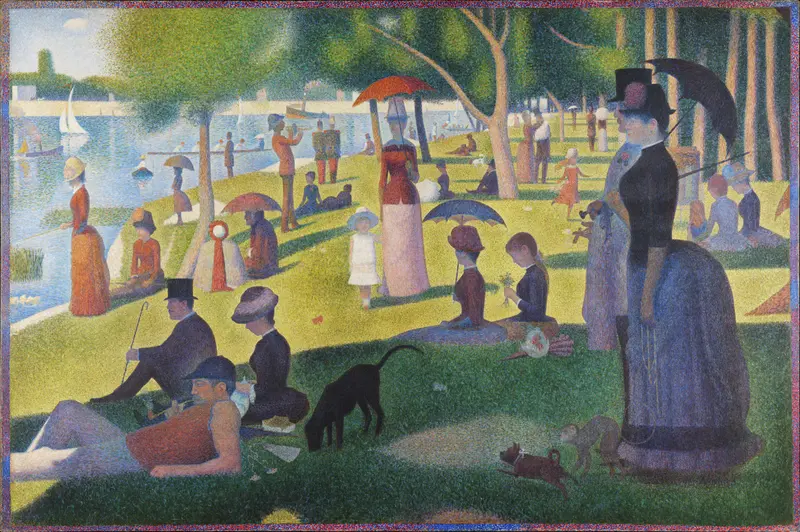
A Sunday Afternoon on the Island of La Grande Jatte
Georges Seurat
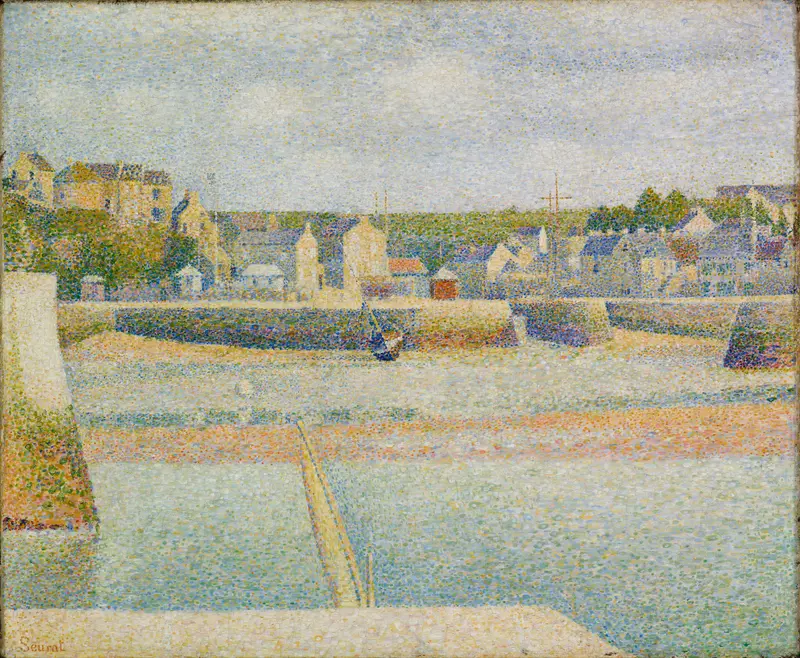
Port-en-Bessin, The Outer Harbor (Low Tide)
Georges Seurat
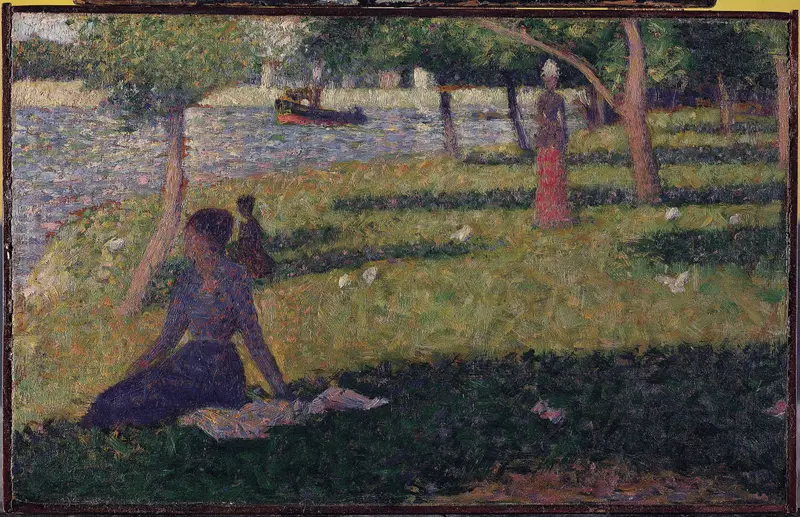
Étude pour ‘La Grande Jatte’ (Study for ‘La Grande Jatte’)
Georges Seurat
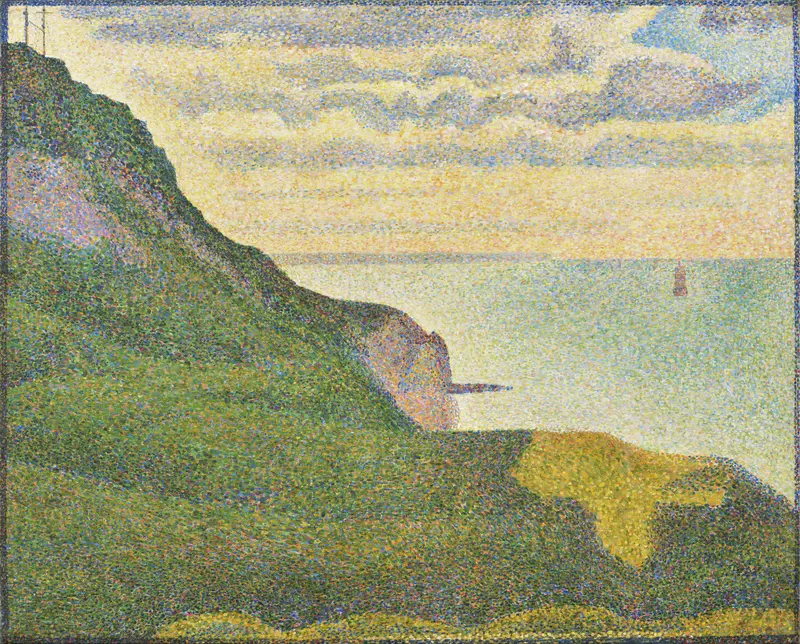
Seascape at Port-en-Bessin,Normandy
Georges Seurat
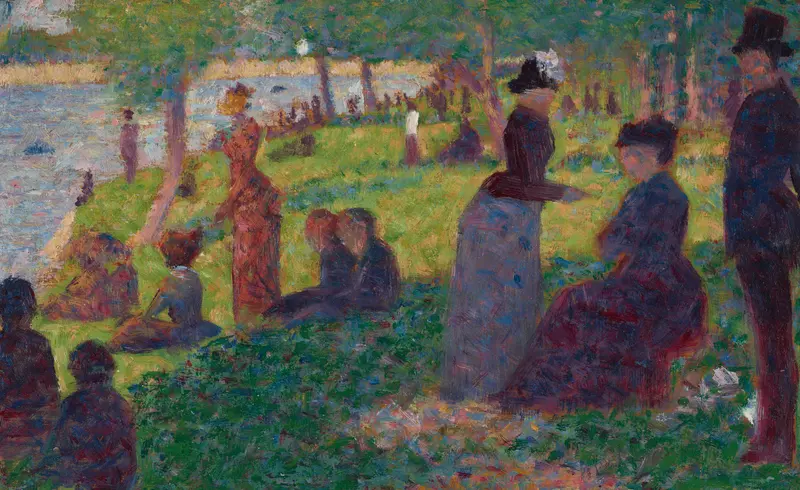
Oil Sketch for "A Sunday on La Grande Jatte — 1884"
Georges Seurat
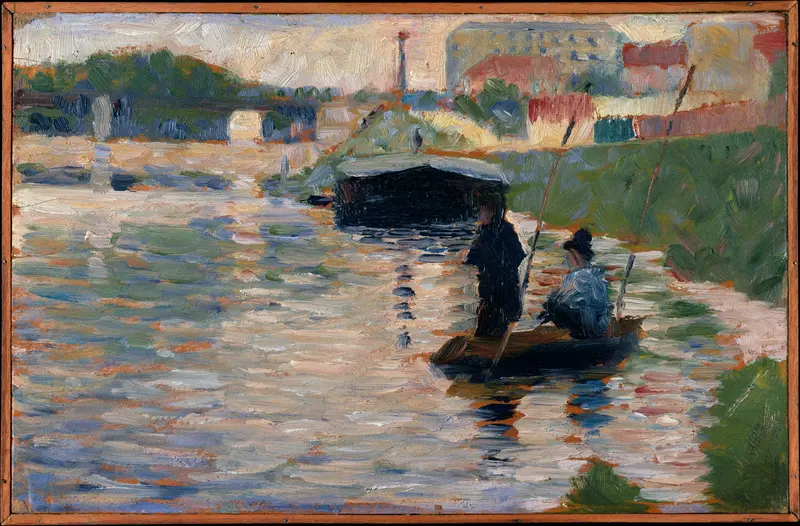
View of the Seine
Georges Seurat
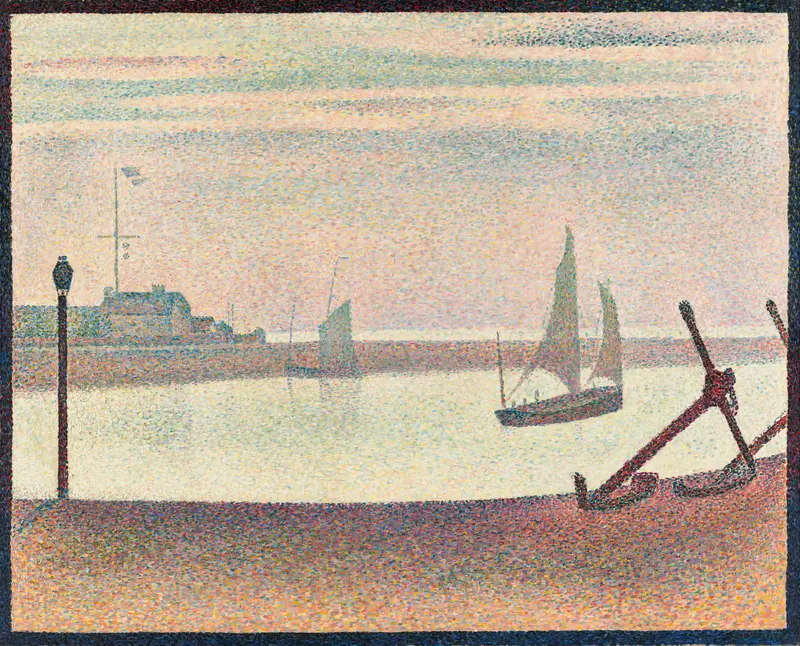
The Channel at Gravelines, Evening
Georges Seurat
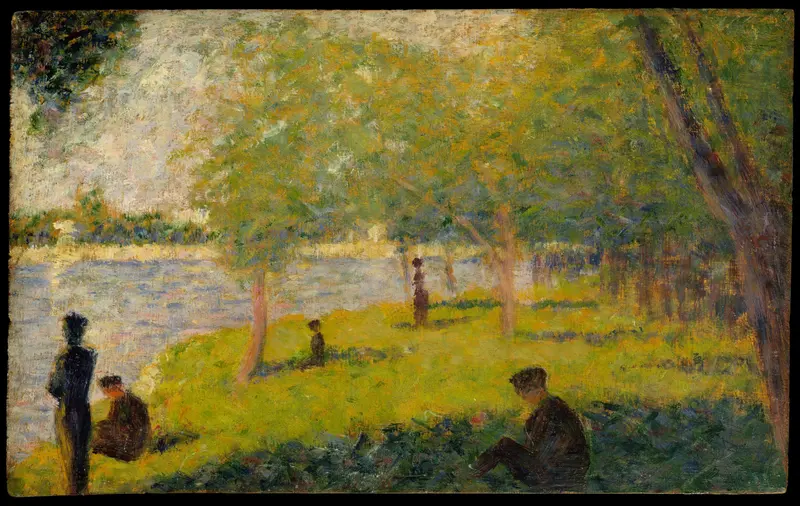
Study for ‘A Sunday on La Grande Jatte’
Georges Seurat
Study for A Sunday on La Grande Jatte
Georges Seurat
The Channel of Gravelines, Petit Fort Philippe
Georges Seurat
More Genre Scene Art

Banquet of the Officers of the St George Civic Guard
Frans Hals

Rembrandt and Saskia in the Scene of the Prodigal Son
Rembrandt van Rijn

Bal du moulin de la Galette
Pierre-Auguste Renoir

Quadrille at the Moulin Rouge
Henri de Toulouse-Lautrec

A Burial at Ornans
Gustave Courbet

When Will You Marry?
Paul Gauguin