
Siegfried and the Rhine Maidens — History & Facts
When Siegfried and the Rhine Maidens first appeared in public exhibitions in the 1890s, viewers were captivated by its mysterious, almost dreamlike atmosphere—so much so that critics struggled to categorize it. This painting is among the most ambitious works by Albert Pinkham Ryder, an American artist whose slow, obsessive working methods became legendary; Ryder was known to labor over a single canvas for more than a decade, reworking surfaces until the paint itself became part of the painting's legend. The subject, drawn from Richard Wagner’s opera cycle Der Ring des Nibelungen, was rare in American art of the period, and Ryder’s interpretation stands almost alone in its moody, visionary approach. The scene Ryder chose is the fateful encounter between Siegfried, the doomed hero, and the Rhine Maidens, guardians of the enchanted gold.
Siegfried, gleaming with innocence and bravado, stands at the river’s edge, oblivious to the warnings and entreaties of the three spectral maidens who rise from the dark waters. The glimmer of the gold at Siegfried’s side is a visual anchor, its promise and curse shimmering in the murky light. Ryder’s brushwork is thick and swirling, the forms nearly dissolving into the night, which sets his work apart from the crisp narrative clarity of, for example, Gustave Doré’s engravings of Wagnerian scenes.
Here, the boundaries between land, water, and figure blur, echoing the moral ambiguity and tragic destiny at the heart of the myth. The precise medium Ryder used for Siegfried and the Rhine Maidens remains uncertain, as he was notorious for his experimental mixtures of oils, resins, and varnishes—an alchemy that has led to conservation challenges today. The painting’s early history is not well documented, but it is believed to have remained in Ryder’s studio until his death in 1917, as was the case with many of his works. Over time, Ryder’s reputation grew, and his paintings became prized by collectors and museums eager to claim a piece of his enigmatic legacy.
Today, Siegfried and the Rhine Maidens is celebrated as a touchstone of late 19th-century American symbolism, a testament to Ryder’s singular vision and the enduring power of myth.
More Artworks by Albert Pinkham Ryder

The Toilers of the Sea
Albert Pinkham Ryder
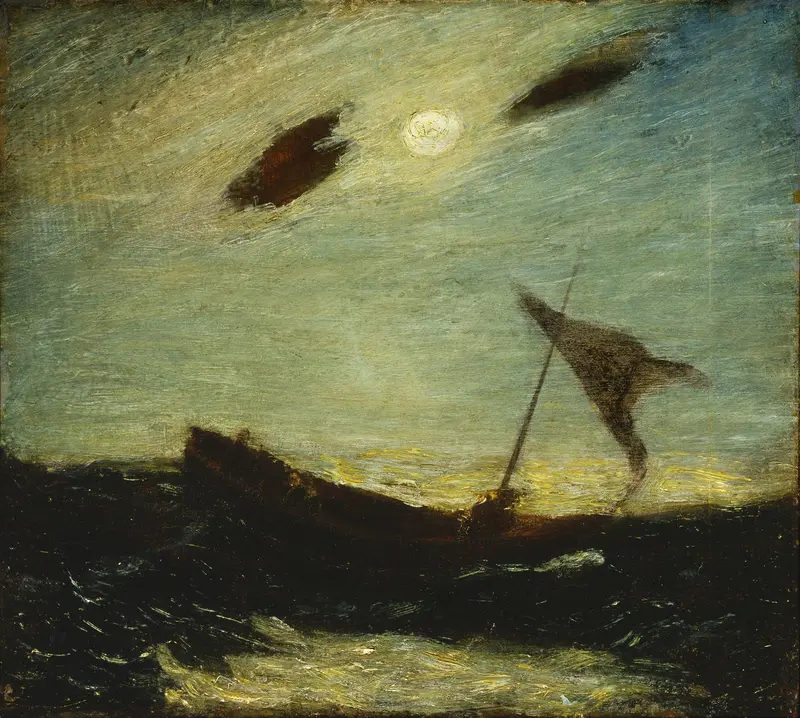
Moonlight
Albert Pinkham Ryder
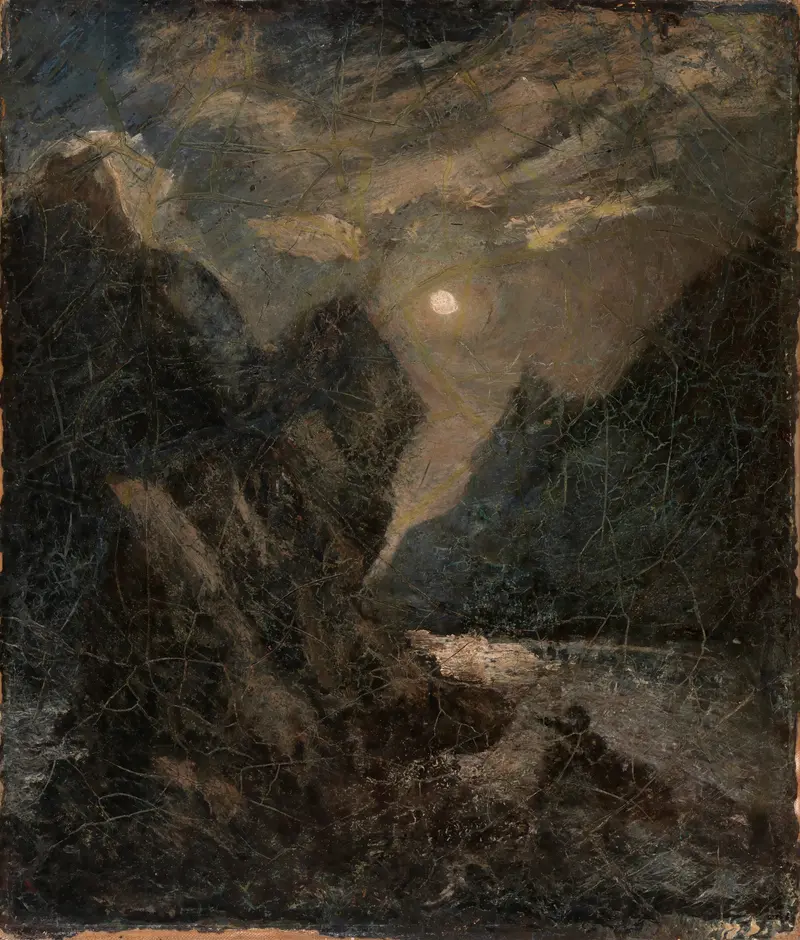
The Lorelei
Albert Pinkham Ryder
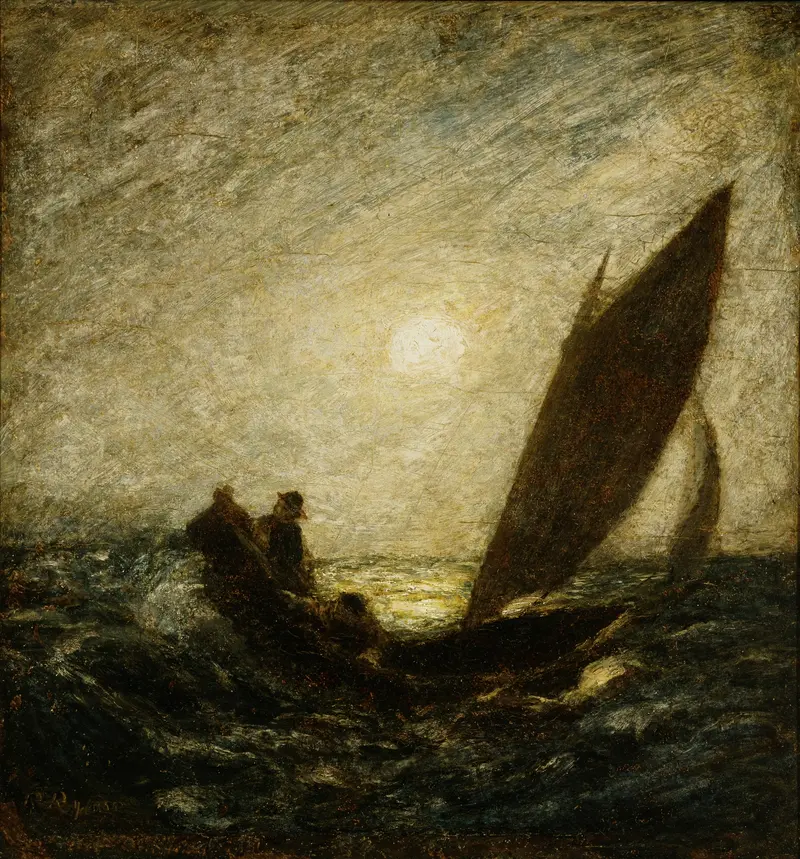
With Sloping Mast And Dipping Prow
Albert Pinkham Ryder
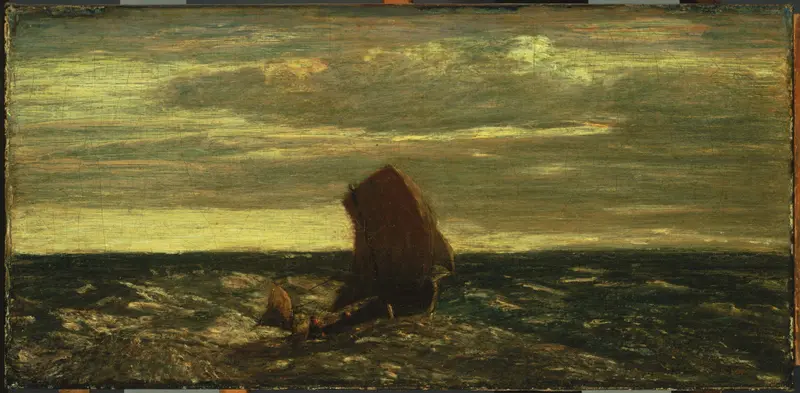
Homeward Bound
Albert Pinkham Ryder
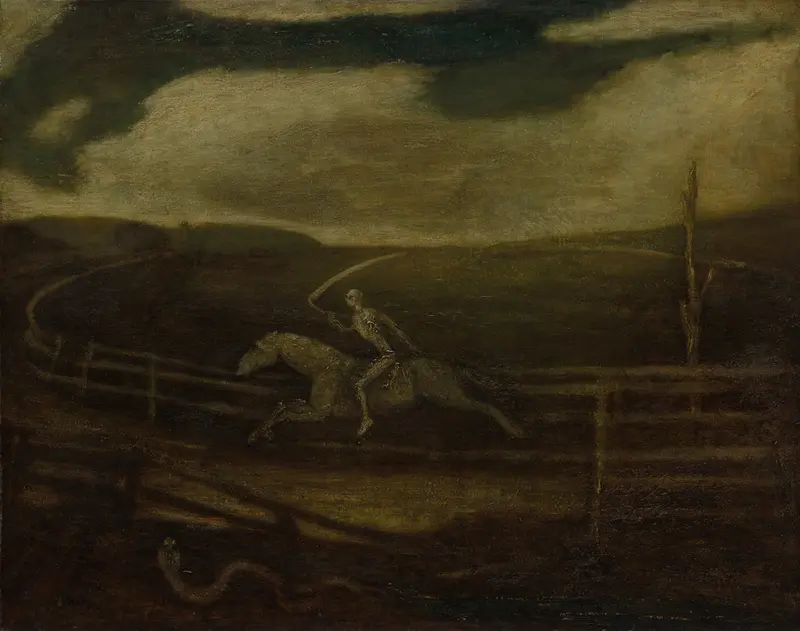
The Race Track (Death on a Pale Horse)
Albert Pinkham Ryder
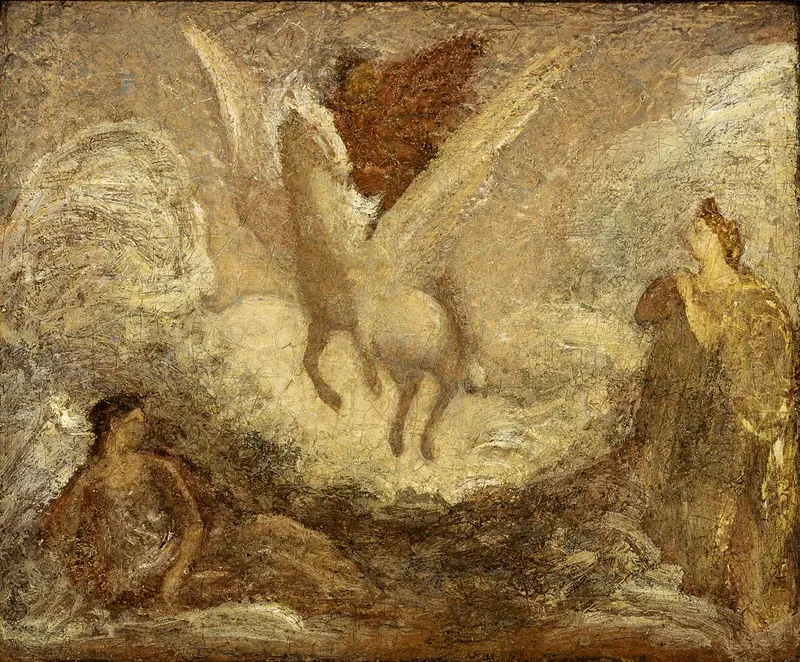
Pegasus Departing
Albert Pinkham Ryder
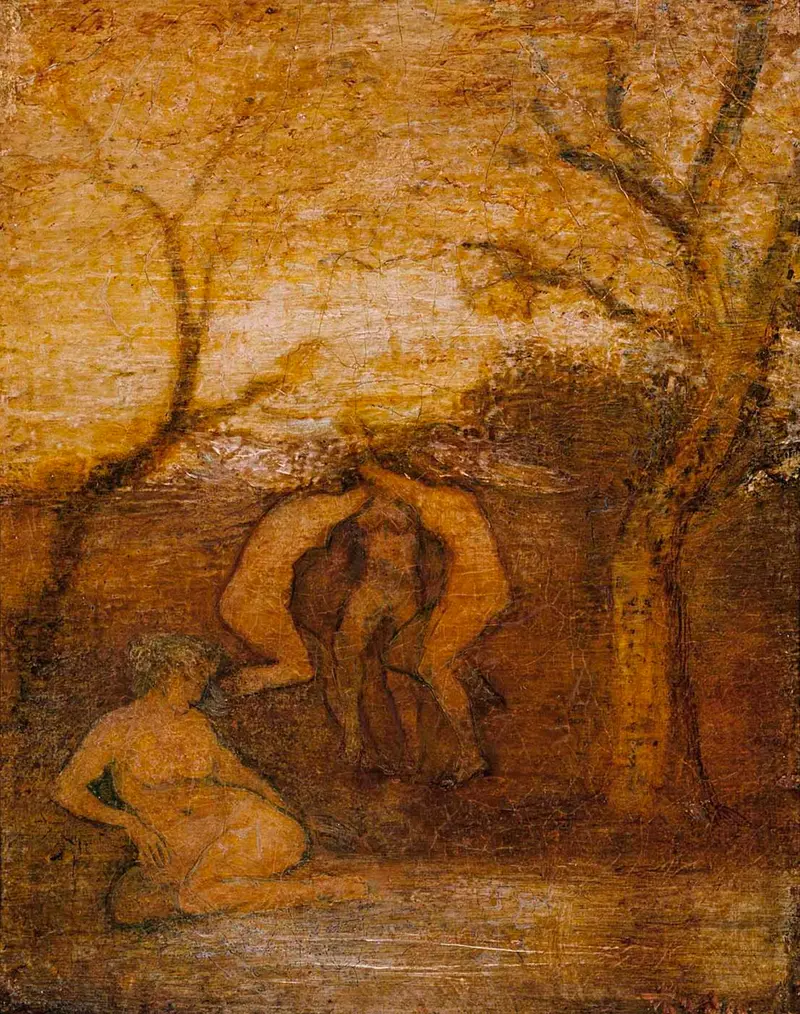
Dancing Dryads
Albert Pinkham Ryder

A Stag Drinking
Albert Pinkham Ryder
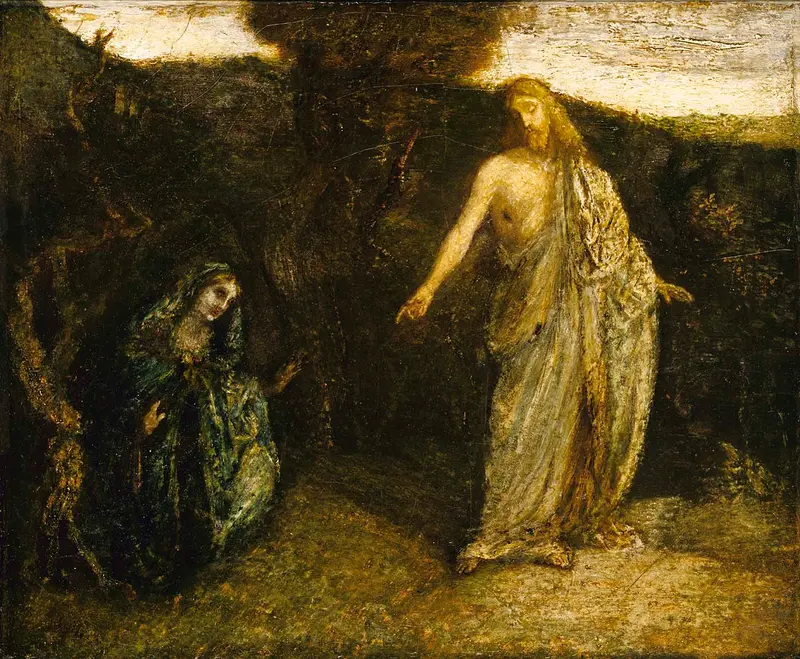
Christ Appearing to Mary
Albert Pinkham Ryder





