
The Fairy (Perrault) — History & Facts
A world of delicate enchantment unfolds in The Fairy (Perrault), where the first thing to catch the eye is not the fairy herself, but the peculiar, dreamlike logic that governs every detail. The scene is set at the edge of a well, where a young woman in muted, tattered dress stands poised between shadow and light. Opposite her, a figure in an extravagant, pastel gown and towering powdered wig—clearly the fairy—holds a wand aloft, its tip aglow, while a tiny, impish attendant prances nearby.
The fairy’s gesture, half-command, half-blessing, and the whimsical animal at the young woman’s feet, suggest a moment of transformation or revelation. The palette, all soft pinks and greens, bathes the encounter in a gentle, otherworldly glow, while the spindly branches and floating birds overhead create a sense of fragile magic that could dissolve at any moment. This illustration was created by Harry Clarke for the 1922 London edition of The fairy tales of Charles Perrault, a period when illustrated storybooks were prized as much for their visual imagination as for their tales. Clarke, known for his jewel-like stained glass and intricate line work, brought a distinctly modern, Art Deco sensibility to Perrault’s seventeenth-century stories, blending rococo fantasy with a sharp, almost surreal wit.
Such images were meant to delight both children and adults, serving as portals to a world where the boundaries between reality and enchantment blur. The copy of this book now held by the New York Public Library is a testament to the era’s hunger for beauty and wonder, and invites us, a century later, to linger over every shimmering detail.
More Artworks by Harry Clarke
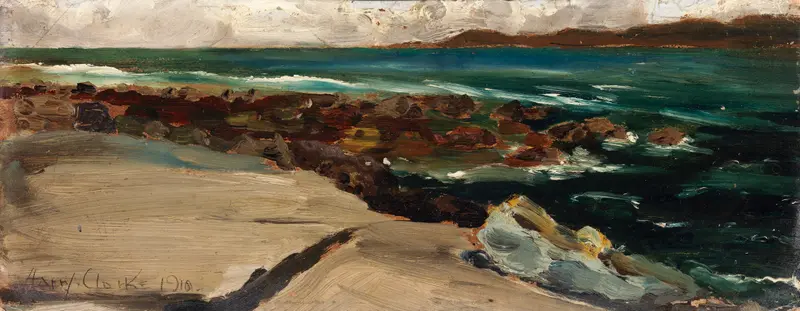
Landscape by the Coast
Harry Clarke
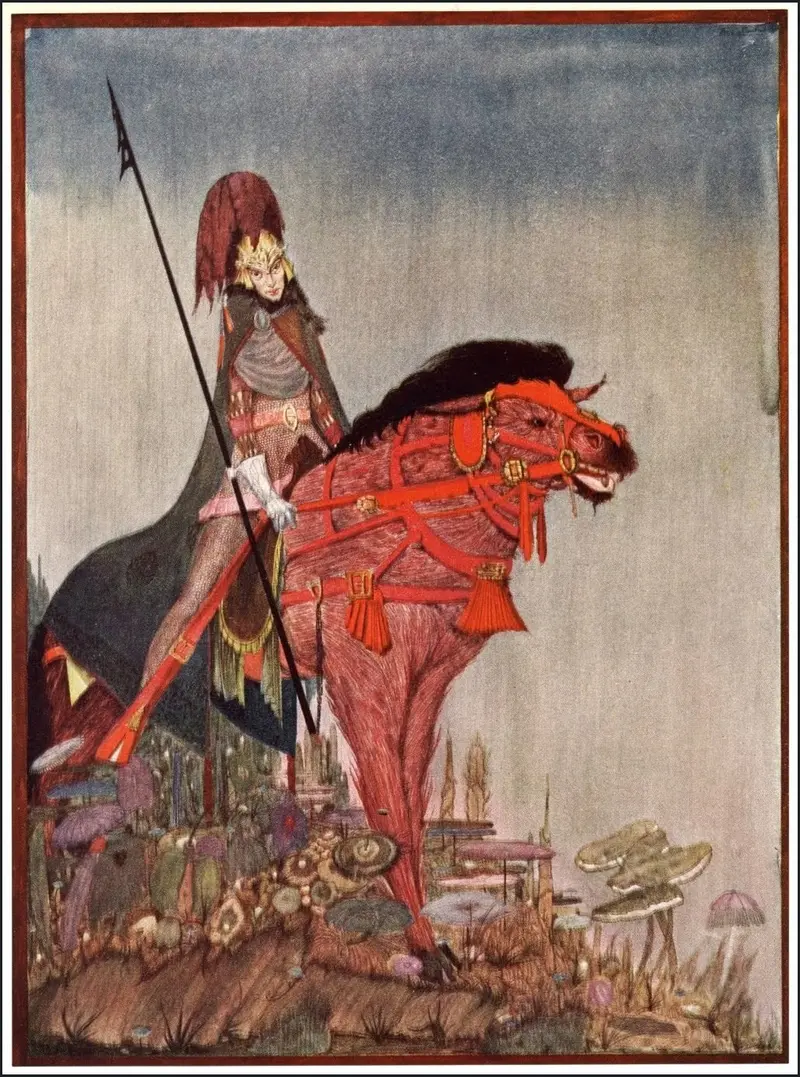
Metzengerstein (Poe)
Harry Clarke
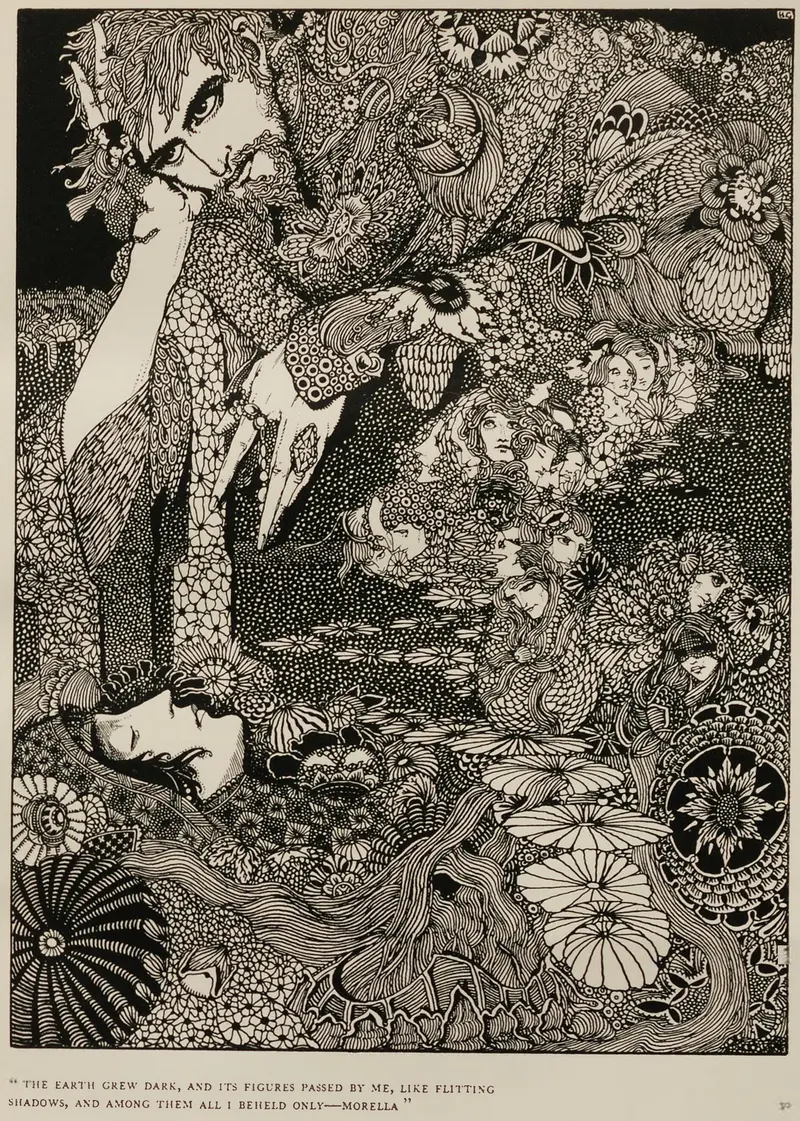
Morella (Poe)
Harry Clarke
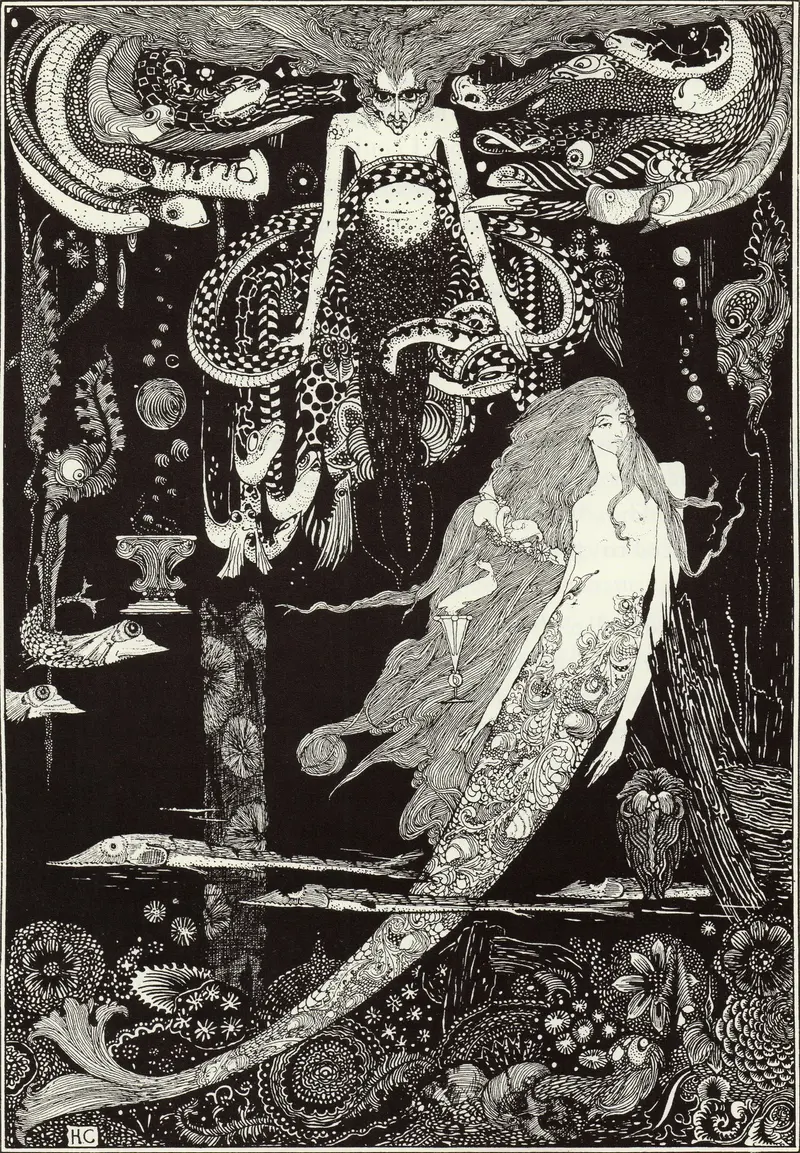
The Little Mermaid (Andersen)
Harry Clarke
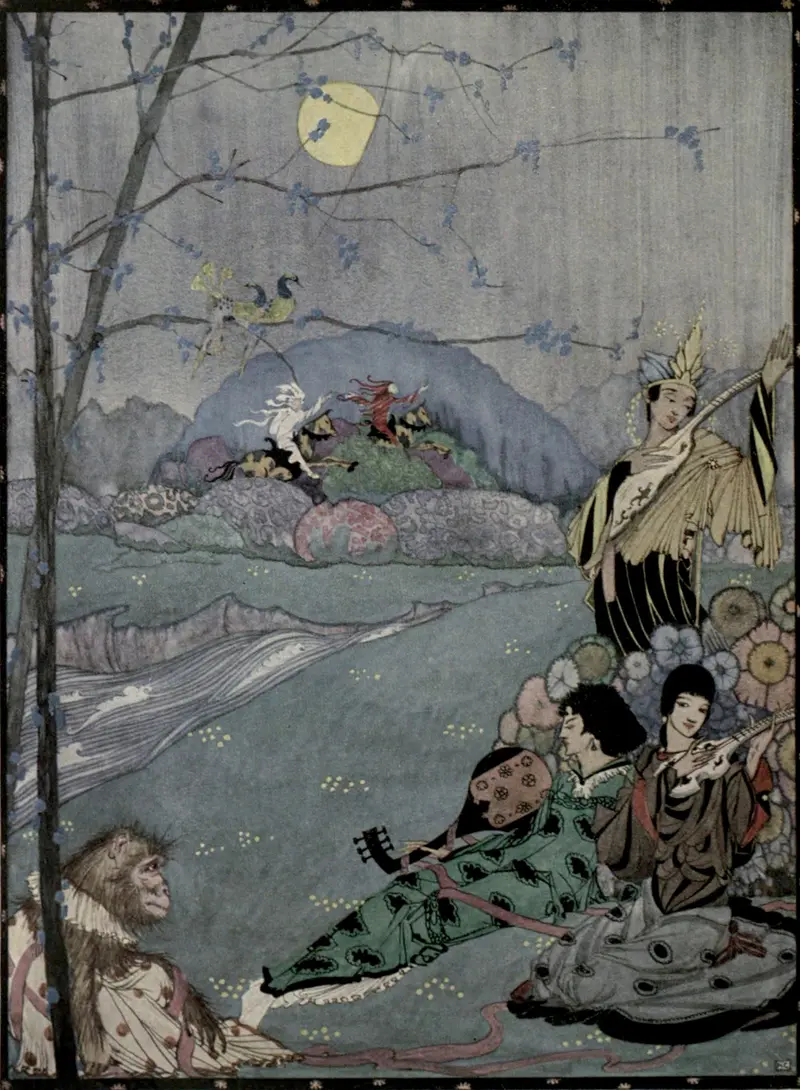
Arabia (The Year's at the Spring)
Harry Clarke
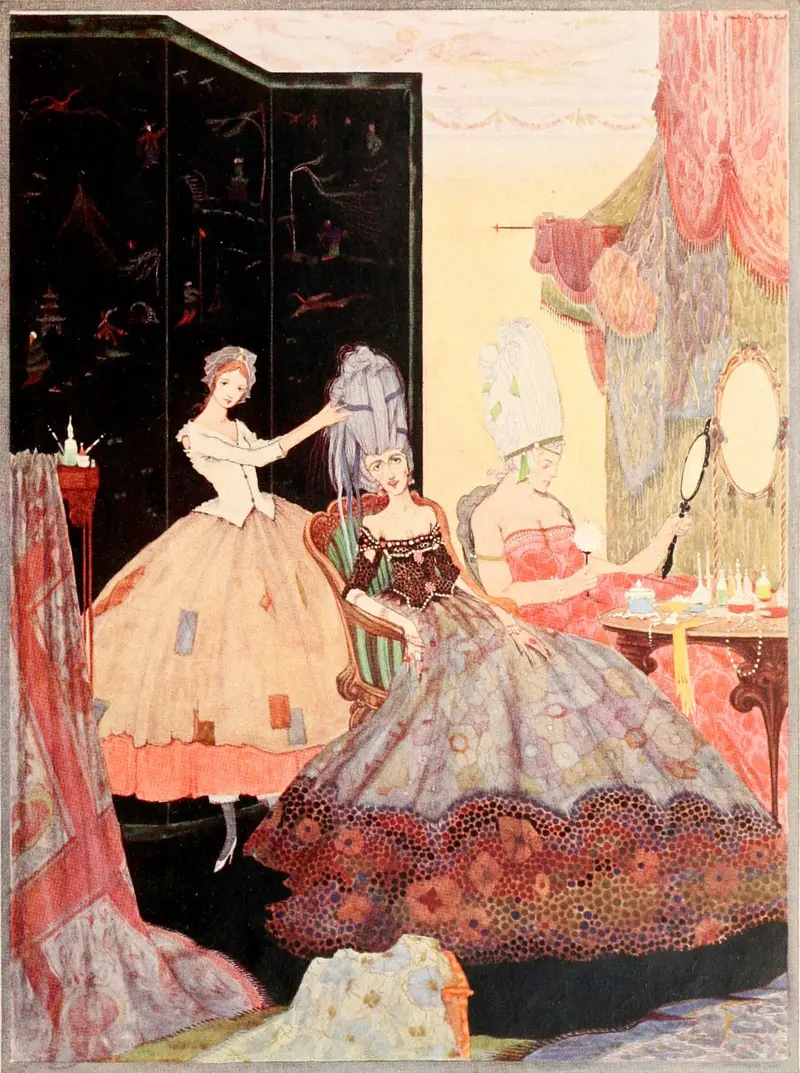
Cinderella (Perrault)
Harry Clarke
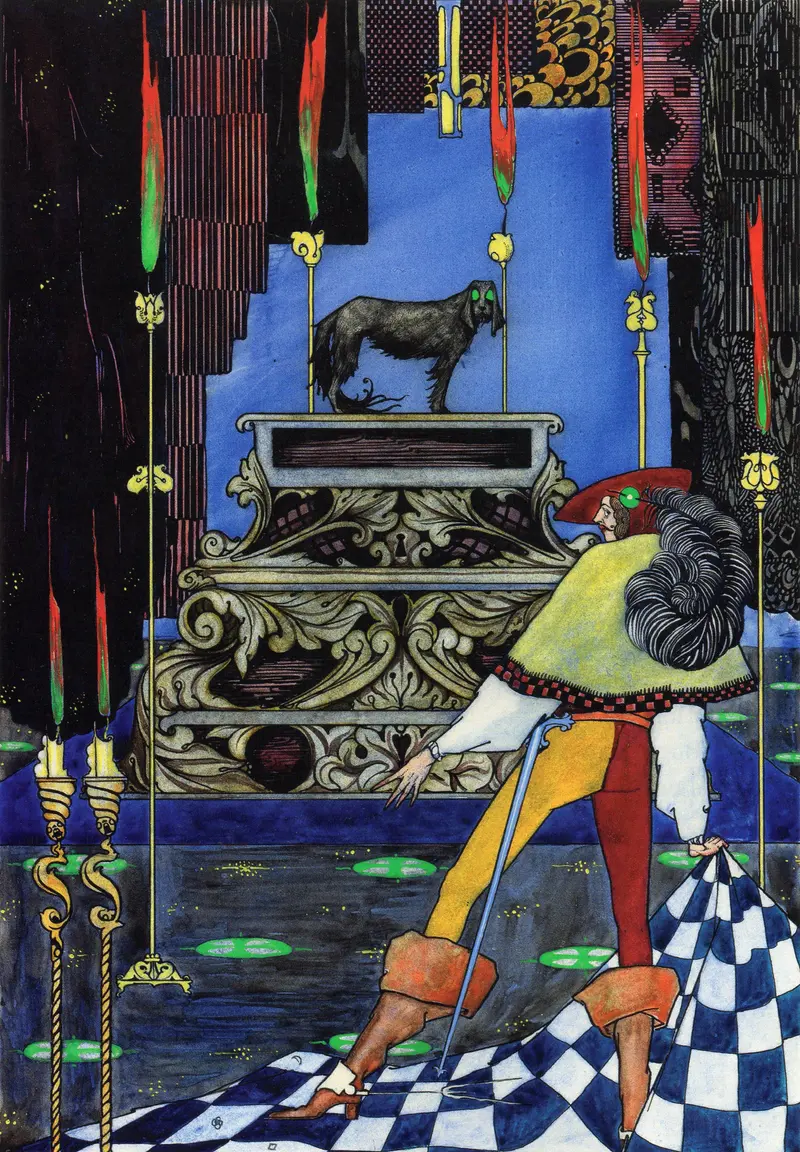
The Tinder Box (Andersen)
Harry Clarke
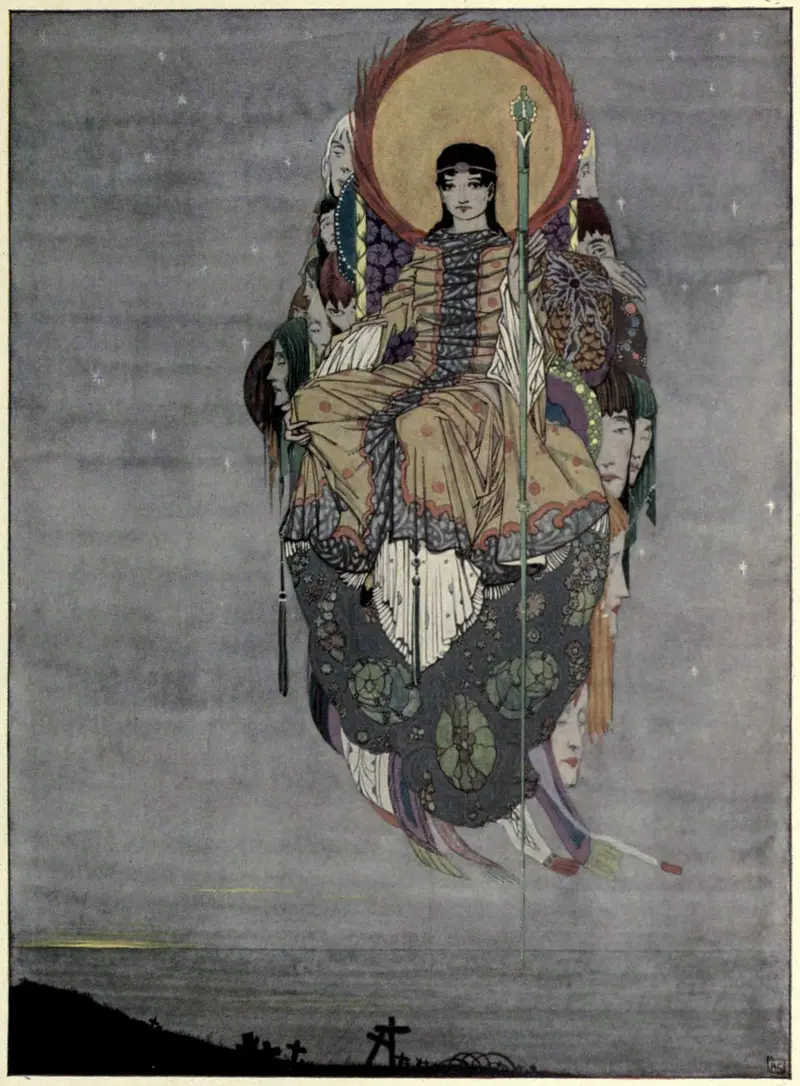
The Dead (The Year's at the Spring)
Harry Clarke
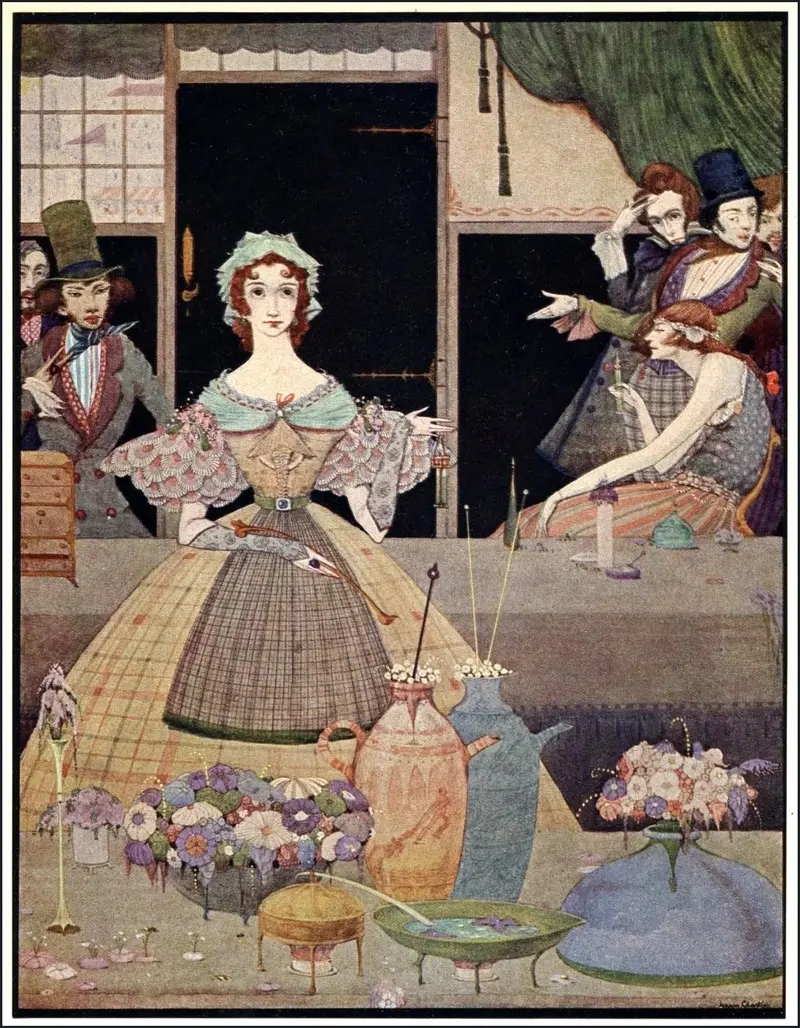
The Mystery of Marie Roget (Poe)
Harry Clarke

The Travelling Companion (Andersen)
Harry Clarke





