
The Progress of Love: The Meeting — History & Facts
Commissioned by none other than Madame du Barry, the last mistress of Louis XV, The Progress of Love: The Meeting was intended to decorate her private château at Louveciennes. Fragonard was handpicked for the project in 1771, tasked with capturing the stages of romantic courtship in a series of four panels. Yet, despite the artist’s fame and the lavish setting, Madame du Barry ultimately rejected the works, replacing them with a more restrained set by Jean-Baptiste-Marie Huet.
The reasons for her change of heart remain debated—perhaps Fragonard’s exuberant style clashed with the new winds of taste at court, or perhaps the scenes felt too revealing for her secluded retreat. In this panel, Fragonard freezes the breathless anticipation of a secret rendezvous. A young woman, dressed in a flowing white gown, descends a garden staircase, her body tilted forward as she rushes to meet her lover, who waits below, half-hidden behind a statue and a screen of greenery. The garden itself is lush and overgrown, a symbol of passion unchecked by social convention.
The young man’s extended arm, his hat in hand, signals both respect and longing, while the marble Cupid presides over the scene, a silent witness to their clandestine meeting. The sense of movement and the soft, golden light recall the playful sensuality of Antoine Watteau’s fêtes galantes, but Fragonard’s brushwork is even more energetic, the foliage almost swirling with the couple’s excitement. After its rejection, The Progress of Love series remained with Fragonard, who later installed the panels in his cousin’s home in Grasse. The set was eventually rediscovered in the 19th century and made its way to the United States, where it became a prized highlight of the Frick Collection in New York.
Today, The Meeting is celebrated as a high point of Rococo painting and a testament to Fragonard’s ability to capture the fleeting joys and anxieties of love. The painting marks a late flourish in Fragonard’s career, just before the French Revolution swept away the world of its patrons. Its journey from royal commission to private delight and finally to public treasure mirrors the changing fortunes of both artist and era.
More Artworks by Jean-Honoré Fragonard

The Swing
Jean-Honoré Fragonard

The Swing
Jean-Honoré Fragonard

A Young Girl Reading
Jean-Honoré Fragonard

The Lock
Jean-Honoré Fragonard

The Triumph of Venus
Jean-Honoré Fragonard

A Game of Hot Cockles
Jean-Honoré Fragonard
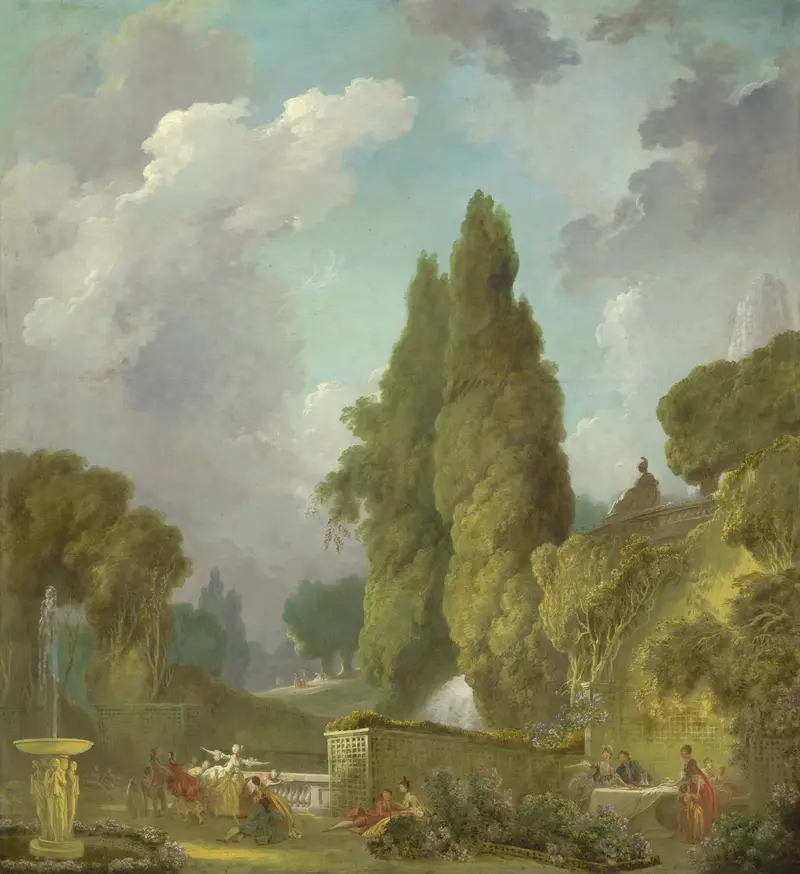
Blindman’s Buff
Jean-Honoré Fragonard
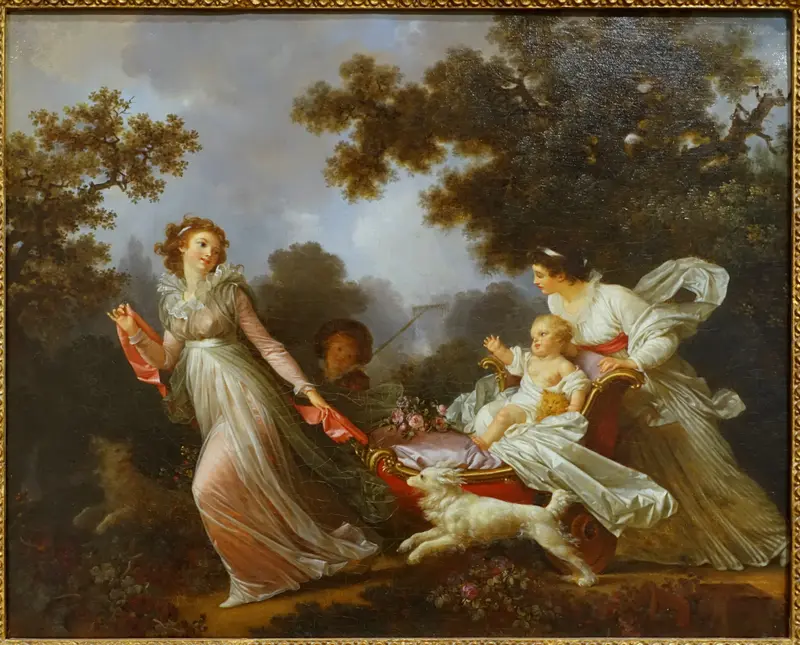
The Beloved Child
Jean-Honoré Fragonard
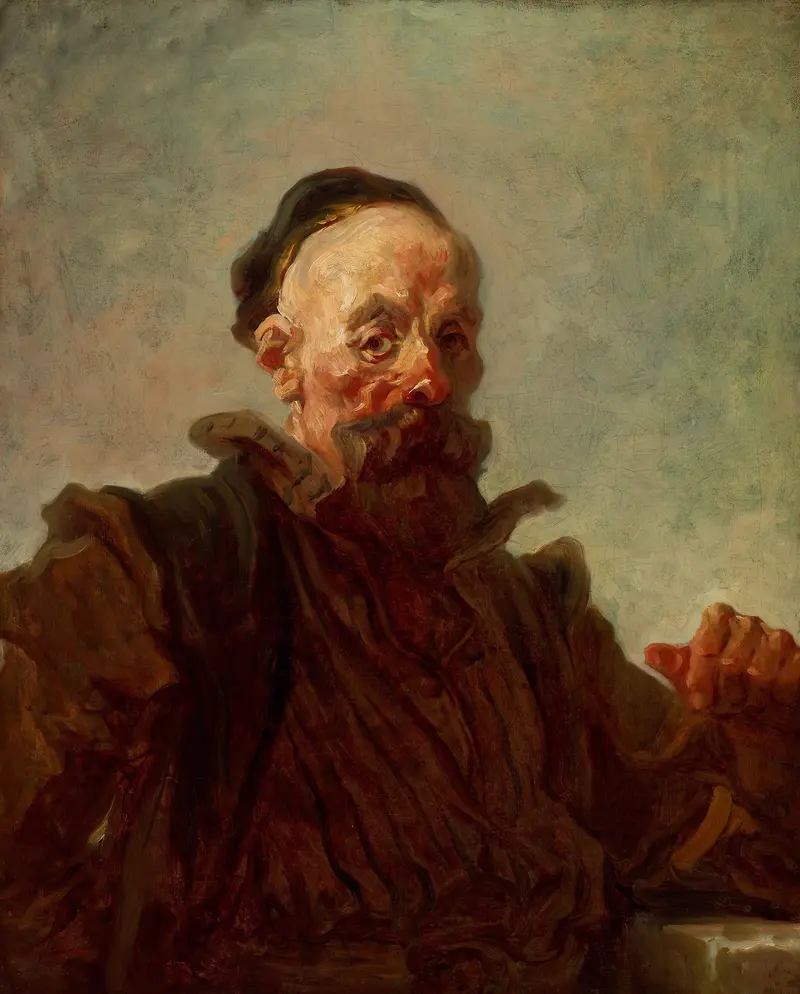
Portrait of a Man in Costume
Jean-Honoré Fragonard
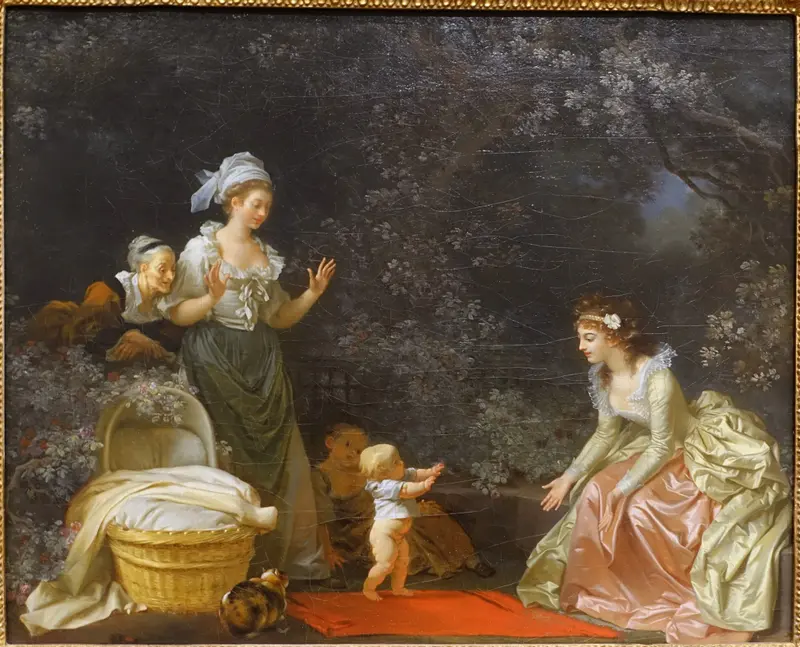
The First Steps
Jean-Honoré Fragonard
More Genre Scene Art

Banquet of the Officers of the St George Civic Guard
Frans Hals

Rembrandt and Saskia in the Scene of the Prodigal Son
Rembrandt van Rijn

Bal du moulin de la Galette
Pierre-Auguste Renoir

Quadrille at the Moulin Rouge
Henri de Toulouse-Lautrec

A Burial at Ornans
Gustave Courbet

When Will You Marry?
Paul Gauguin