
The Raising of Lazarus — History & Facts
Few paintings by Carel Fabritius survive, and even fewer date from his early years, making The Raising of Lazarus a rare glimpse into the artist’s youthful ambitions before his move to Delft and his tragic death in the Delft gunpowder explosion of 1654. Created in 1640, this work stands as one of Fabritius’s earliest known religious scenes, painted while he was still under the influence of his teacher, Rembrandt van Rijn. The painting’s authorship was once debated, with some attributing it to Rembrandt himself, but careful technical analysis has confirmed Fabritius’s hand.
Its survival is remarkable, given the artist’s short life and the losses suffered in the Delft disaster. The Gospel of John tells how, after four days in the tomb, Lazarus is called forth by Christ’s voice, witnessed by the grieving sisters Mary and Martha and a crowd of mourners. Fabritius chooses the instant when Lazarus, still wrapped in his grave shroud, begins to rise, his face turned towards the light that pours from Christ’s outstretched hand. The composition is dense with figures, their gestures a mix of awe and disbelief; Mary clasps her hands in prayer, while others recoil or lean forward in wonder.
Fabritius’s use of chiaroscuro—deep shadows and sudden illumination—owes much to Rembrandt, but the faces are rendered with a nervous, searching realism that hints at the young painter’s developing style. Unlike Rembrandt’s own Raising of Lazarus, where Christ stands apart in shadow, Fabritius places him at the center, commanding the scene with a quiet authority. The early provenance of The Raising of Lazarus remains uncertain, as is often the case with works from the Dutch Golden Age that were not produced for a specific church or patron. It is likely that the painting was intended for private devotion or a collector’s cabinet, reflecting the Protestant taste for biblical narrative in domestic settings.
Over the centuries, the painting passed through several hands, at times misattributed, before scholars reestablished Fabritius’s authorship in the twentieth century through stylistic and technical analysis. Today, it is recognized as a key work in understanding Fabritius’s beginnings and his relationship to Rembrandt, and it hangs in a public collection, where it offers a rare window onto the ambitions of a young artist whose promise was cut short.
More Artworks by Carel Fabritius

The Goldfinch
Carel Fabritius
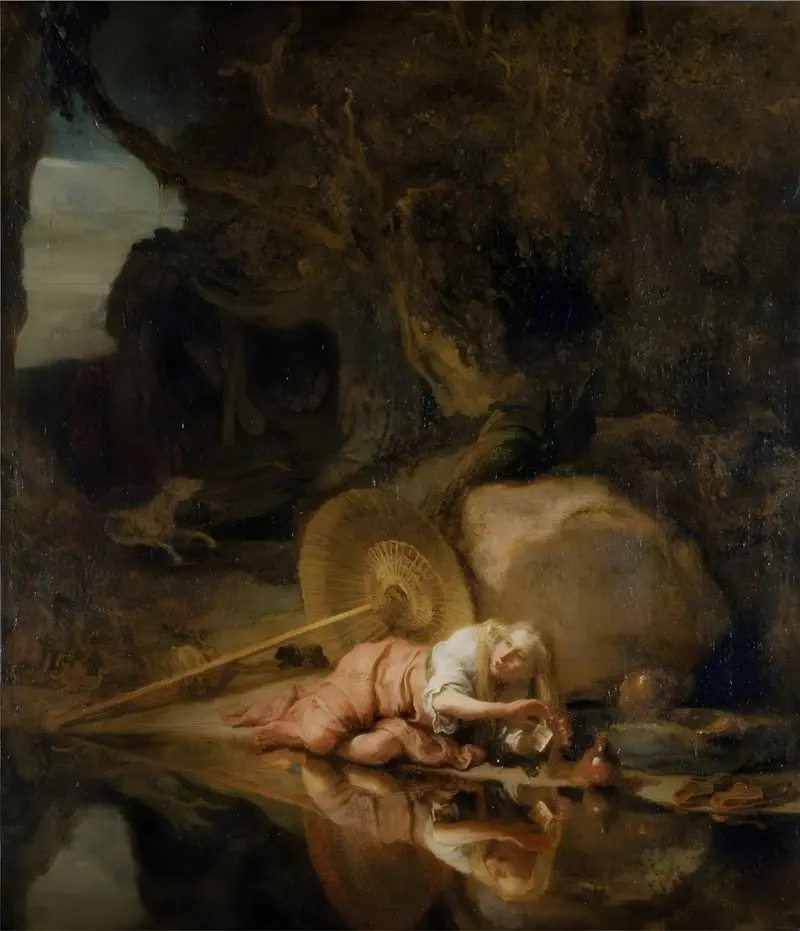
Hera hiding during the battle between the gods and the giants
Carel Fabritius
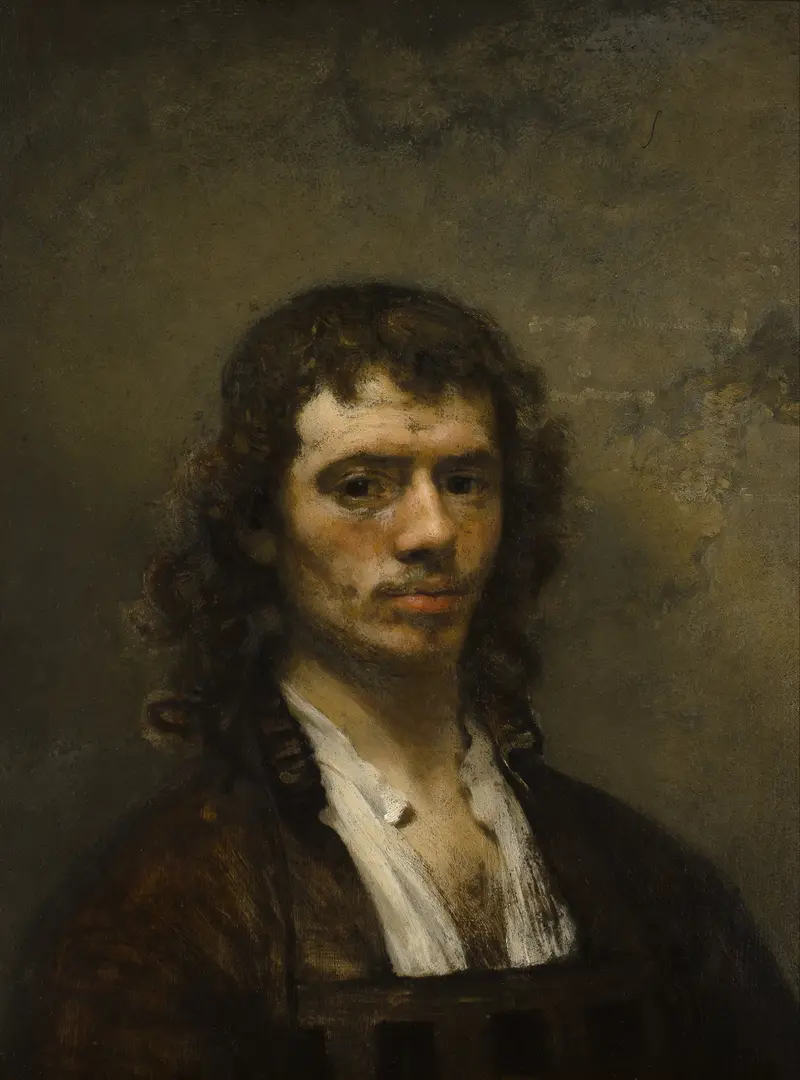
Self-portrait
Carel Fabritius
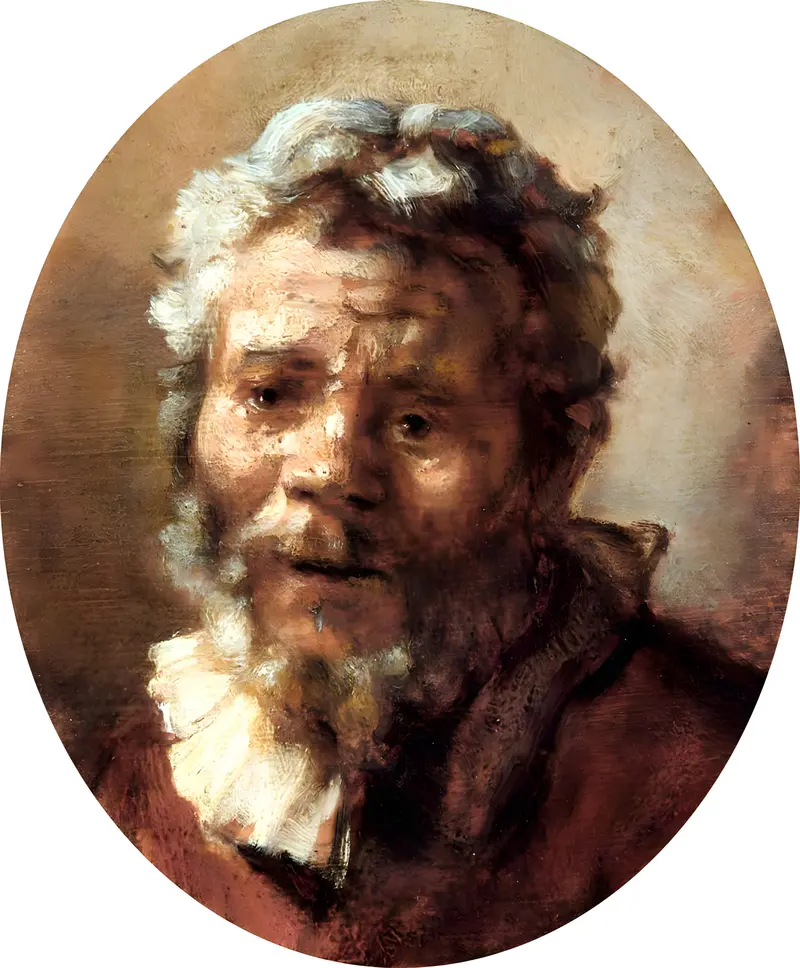
Portrait of a Bearded Man
Carel Fabritius
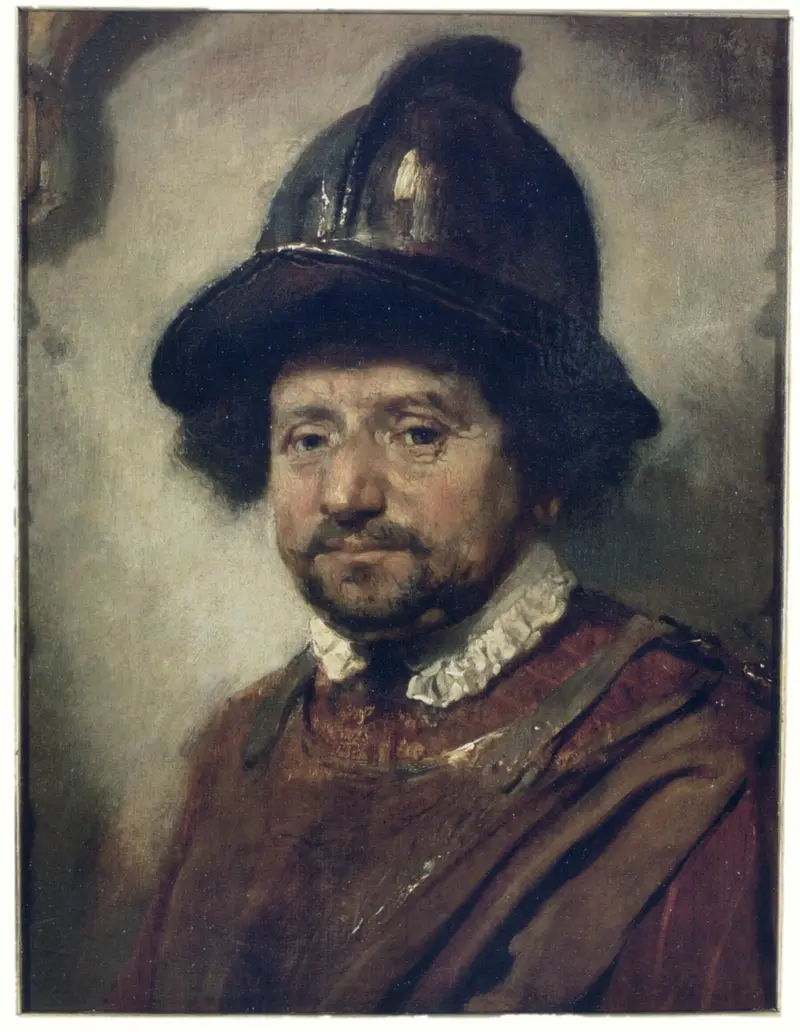
Man with a Helmet
Carel Fabritius
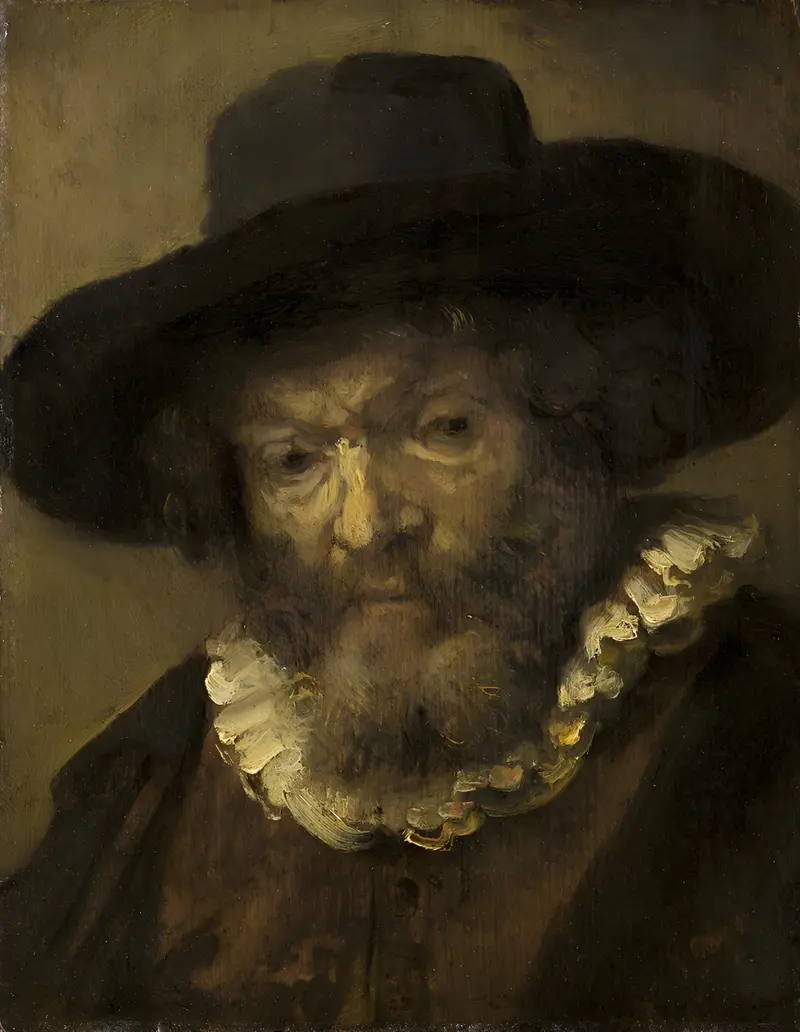
Head of an Old Man
Carel Fabritius
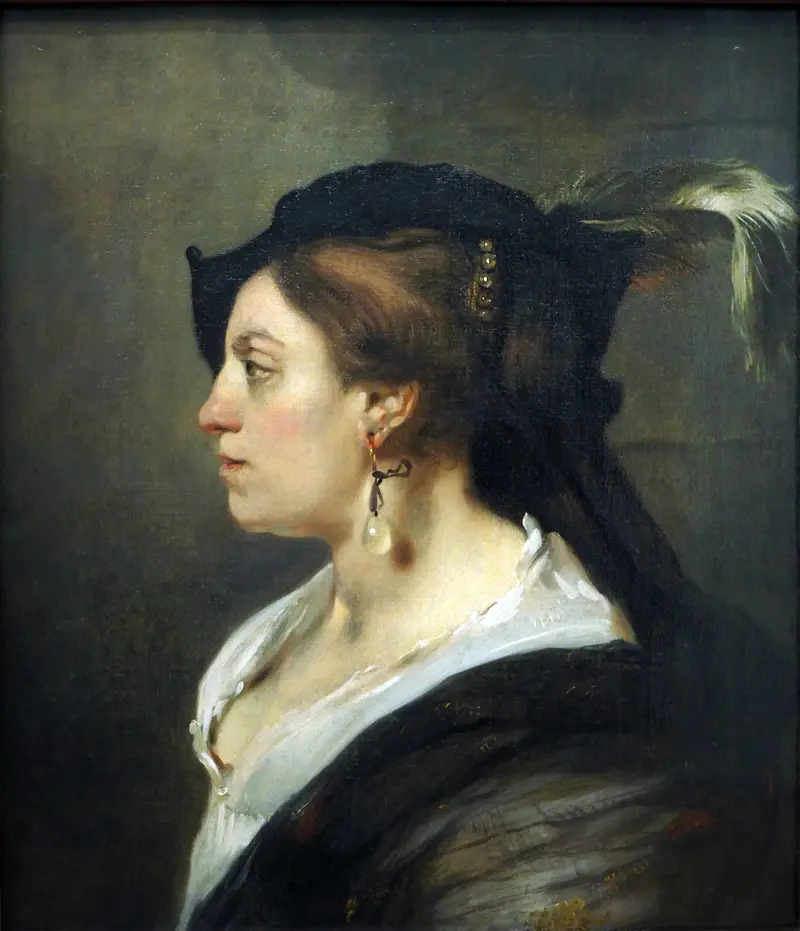
Portrait of a lady in profile
Carel Fabritius
portrait of a boy
Carel Fabritius
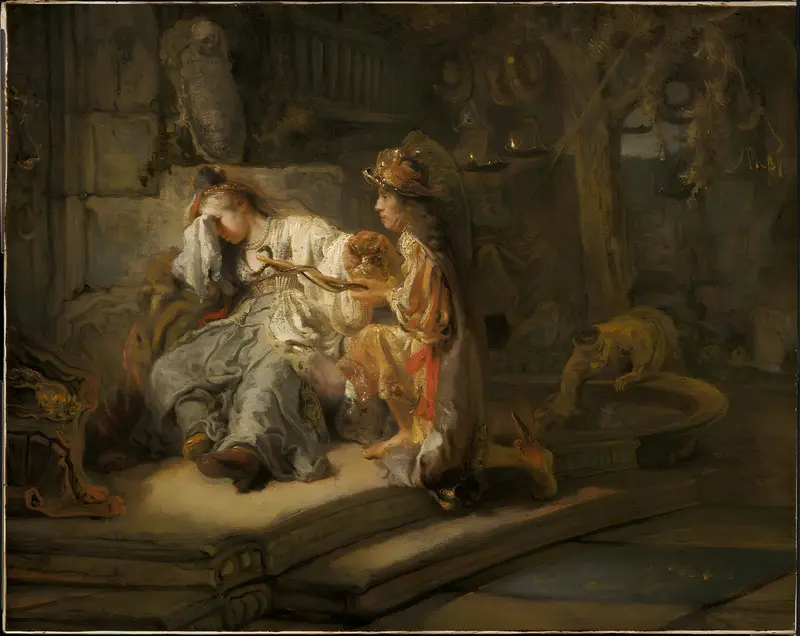
Mercury and Aglauros
Carel Fabritius
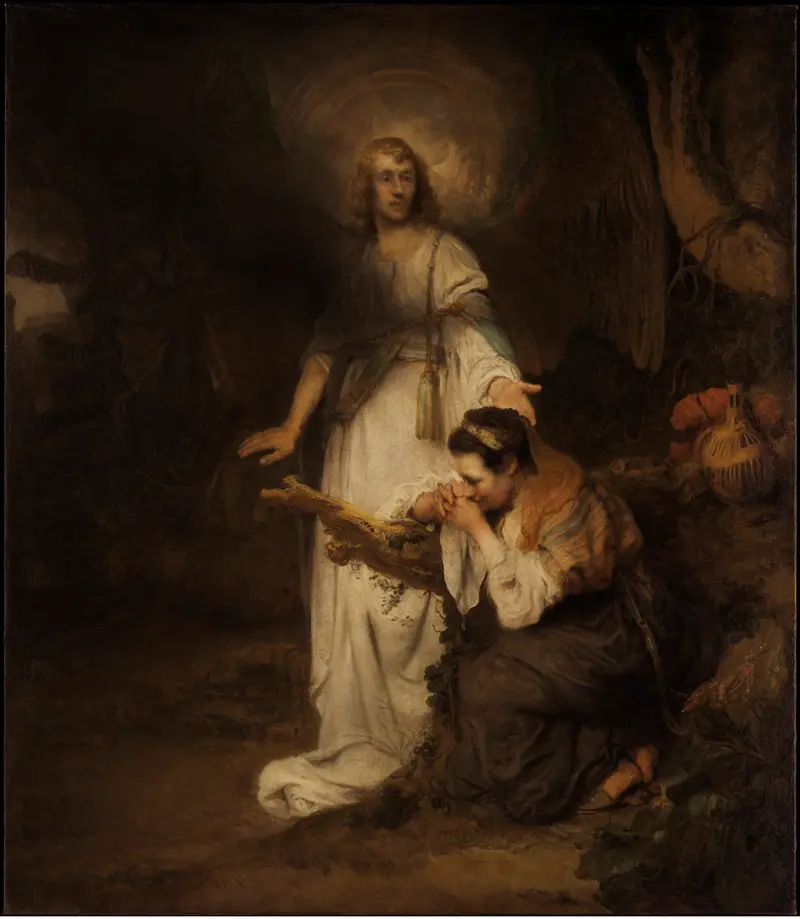
Hagar and the Angel
Carel Fabritius





