
The Wood of the Self-Murderers: The Harpies and the Suicides — History & Facts
When William Blake undertook his illustrations for Dante’s Divine Comedy in 1824, he was already gravely ill, yet he pressed on, producing some of his most visionary work in the shadow of death. The commission came from the young artist and patron John Linnell, who hoped both to support Blake financially and to see the aging poet-painter’s imagination unleashed on the great Italian epic. The Wood of the Self-Murderers: The Harpies and the Suicides stands out among these illustrations for its unflinching portrayal of one of Dante’s most harrowing circles of Hell—a subject rarely attempted with such psychological intensity. In this scene, Dante and his guide Virgil enter a twisted forest where the souls of suicides, transformed into gnarled trees, suffer at the mercy of monstrous harpies.
Blake chooses the moment when a broken branch bleeds and cries out, revealing the torment of the damned: the trees writhe in agony, their faces contorted in the bark, while harpies—part woman, part bird—perch menacingly above. The stark, linear forms and pale washes focus the eye on the horror and pity of the moment; the harpies’ claws grip the branches, embodying the relentless punishment. Unlike Gustave Doré’s later engravings, which emphasize the forest’s oppressive density, Blake’s vision is spare, the space haunted by anguish and the supernatural. The medium of this particular work is uncertain—scholars believe it may be watercolor with ink, typical of Blake’s late technique, but the exact materials remain unconfirmed.
Like most of Blake’s Dante series, The Wood of the Self-Murderers was left unfinished at his death in 1827, yet its power has drawn attention ever since. The illustration remained with John Linnell and his descendants before entering public collections; today it resides in the collection of the Tate Britain. As one of Blake’s final projects, it marks both a culmination of his lifelong fascination with visionary worlds and a testament to his unique synthesis of poetry and image.
More Artworks by William Blake
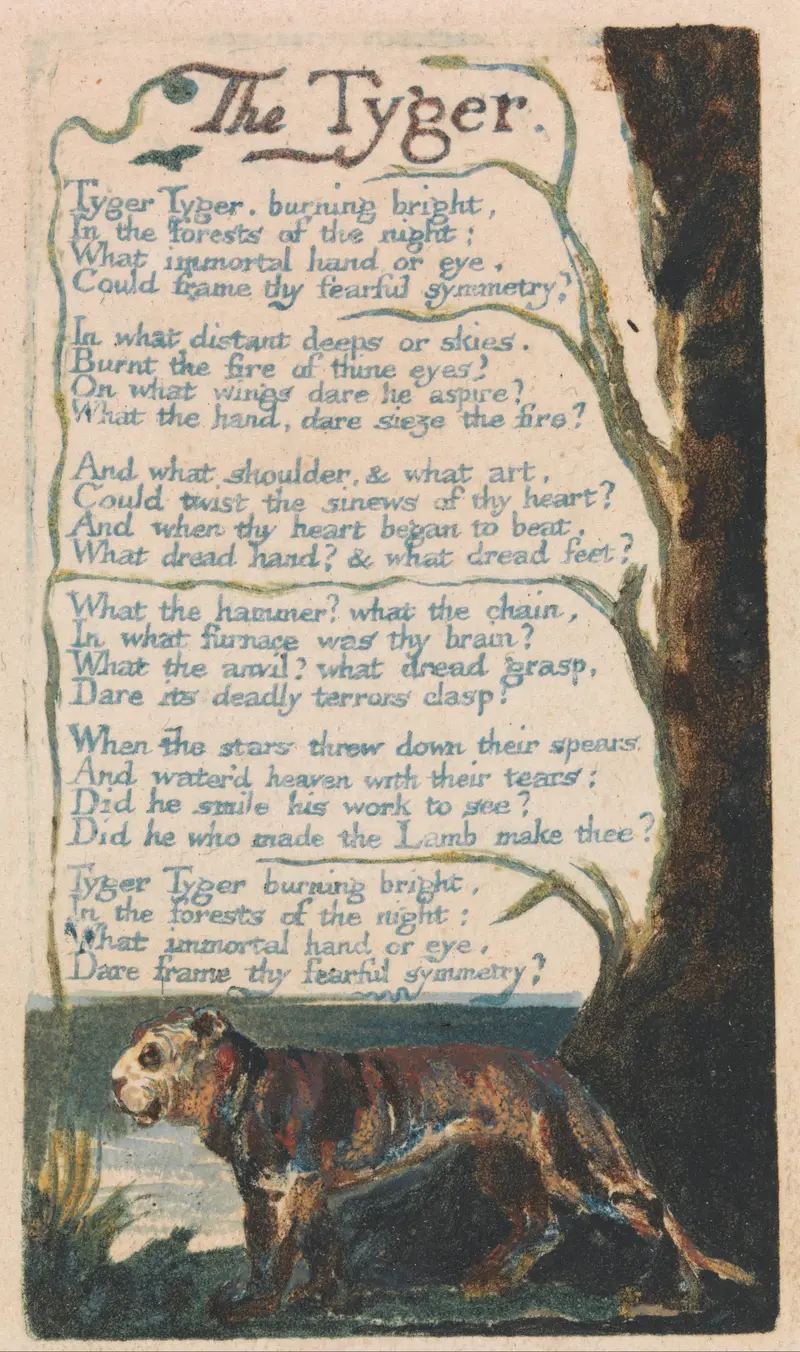
The Tyger
William Blake

Christ Blessing
William Blake
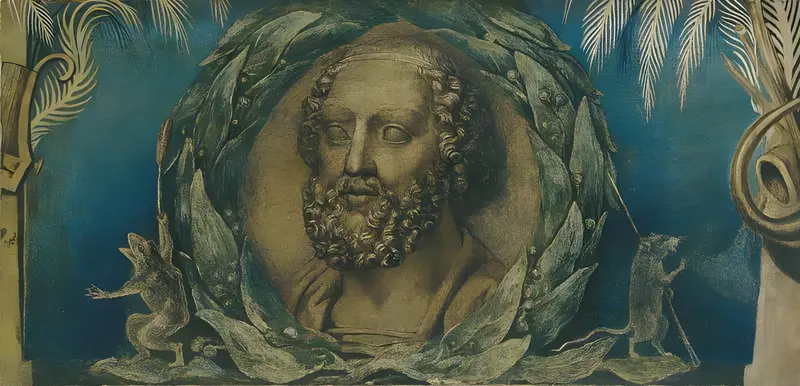
Homer
William Blake
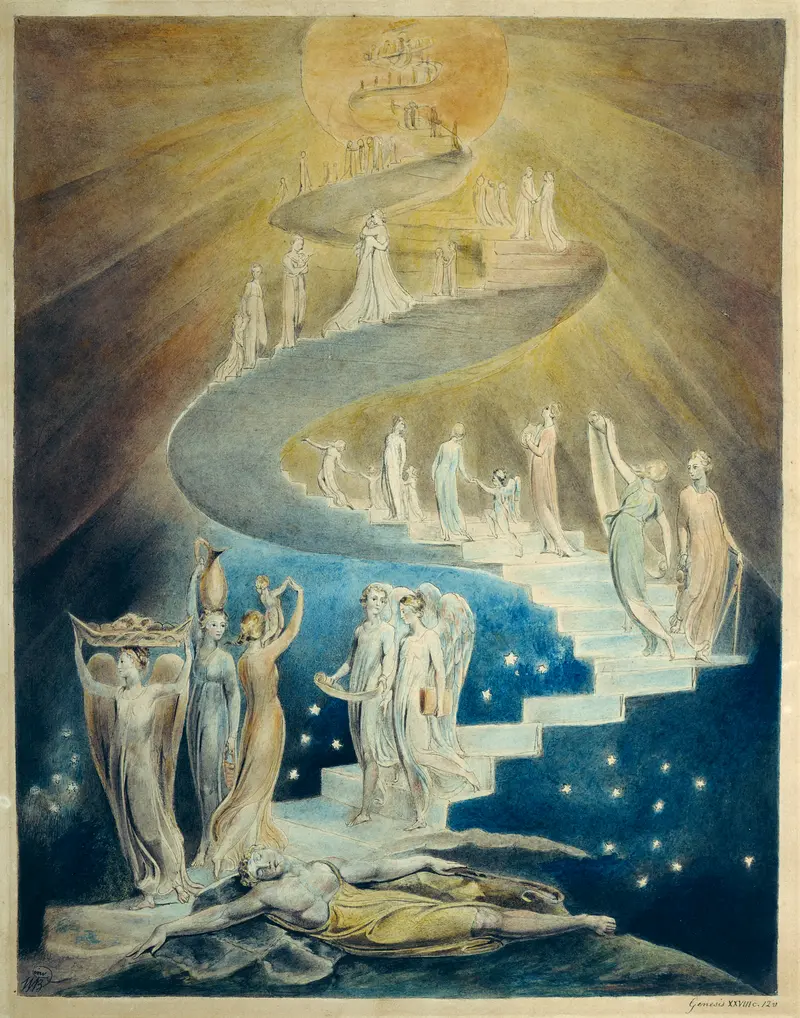
Jacob's Ladder
William Blake
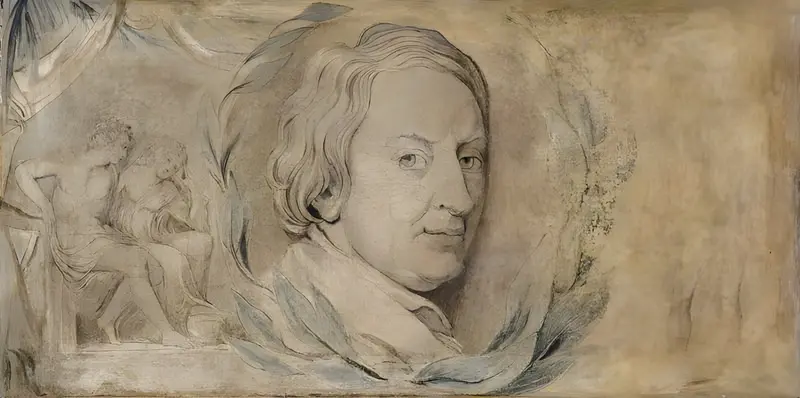
John Dryden (1631–1700)
William Blake
Landscape near Felpham
William Blake
Sacrifice of Job
William Blake
Christ's Entry into Jerusalem
William Blake
The Ancient of Days
William Blake
Adam Naming the Beasts
William Blake





