
A Young Woman seated at a Virginal — History & Facts
No one can say for certain who the young woman in Vermeer’s A Young Woman seated at a Virginal is, nor can they agree on whether she appears in other works by the artist. This uncertainty has fueled centuries of speculation, with some suggesting she may have been a family member or a favored model. The painting is also at the center of a scholarly debate: for years, it was paired with another Vermeer, A Lady Standing at a Virginal, and some believe the two were conceived as pendants, meant to be displayed together.
Yet, no definitive documentation has ever surfaced to confirm this theory. At the heart of the scene, a young woman sits quietly at a virginal, her gaze meeting the viewer’s with a gentle directness. The room is flooded with soft, natural light from the left, illuminating her pale blue gown and the delicate details of the instrument. A viola da gamba rests on the floor, hinting at unseen music or a companion just departed.
The painting within the painting—a Cupid—on the back wall may allude to themes of love or courtship, a subtle message typical of Vermeer’s layered interiors. Unlike the boisterous musical gatherings depicted by Jan Steen, Vermeer’s world is one of stillness and intimate reflection. Painted around 1670, this work is among the last of Vermeer’s known paintings, created during a period of financial strain for the artist. Its early provenance is obscure; the painting vanished from public record for centuries until it resurfaced in the 19th century.
Since then, it has passed through the hands of private collectors and was once misattributed, like many Vermeers, before scholarly consensus restored his authorship. Today, A Young Woman seated at a Virginal resides in the National Gallery, London, where it continues to captivate visitors and fuel debates about Vermeer’s models, methods, and the quiet drama of his interiors.
More Artworks by Johannes Vermeer

View of Delft
Johannes Vermeer

Girl with a Pearl Earring
Johannes Vermeer
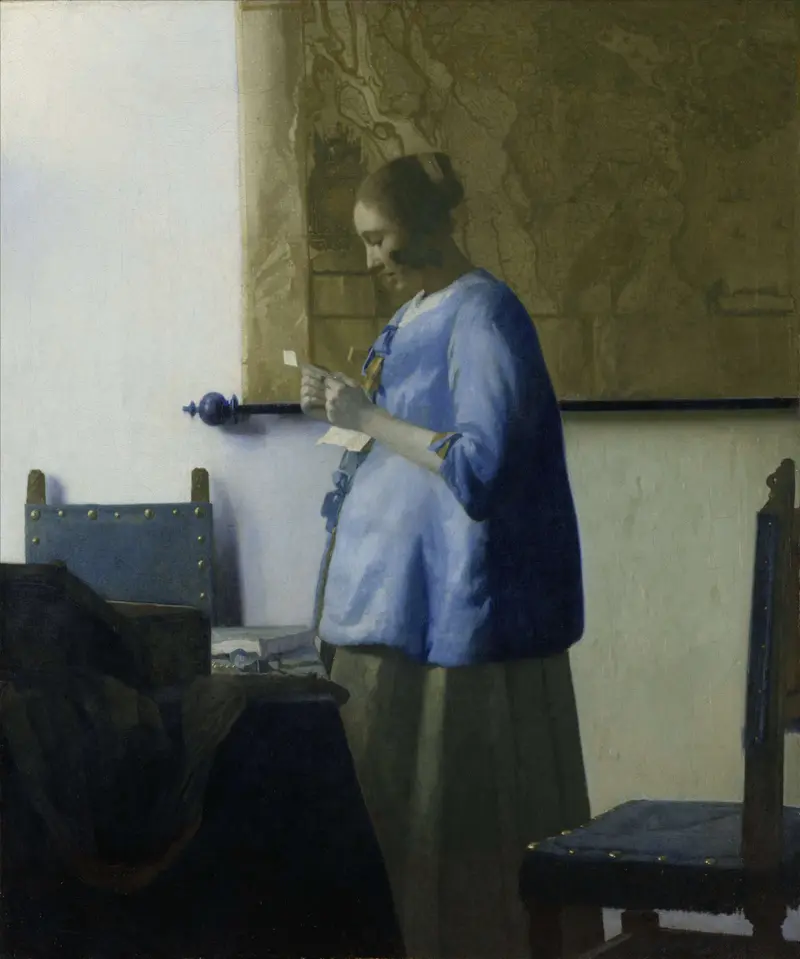
Woman in Blue Reading a Letter
Johannes Vermeer
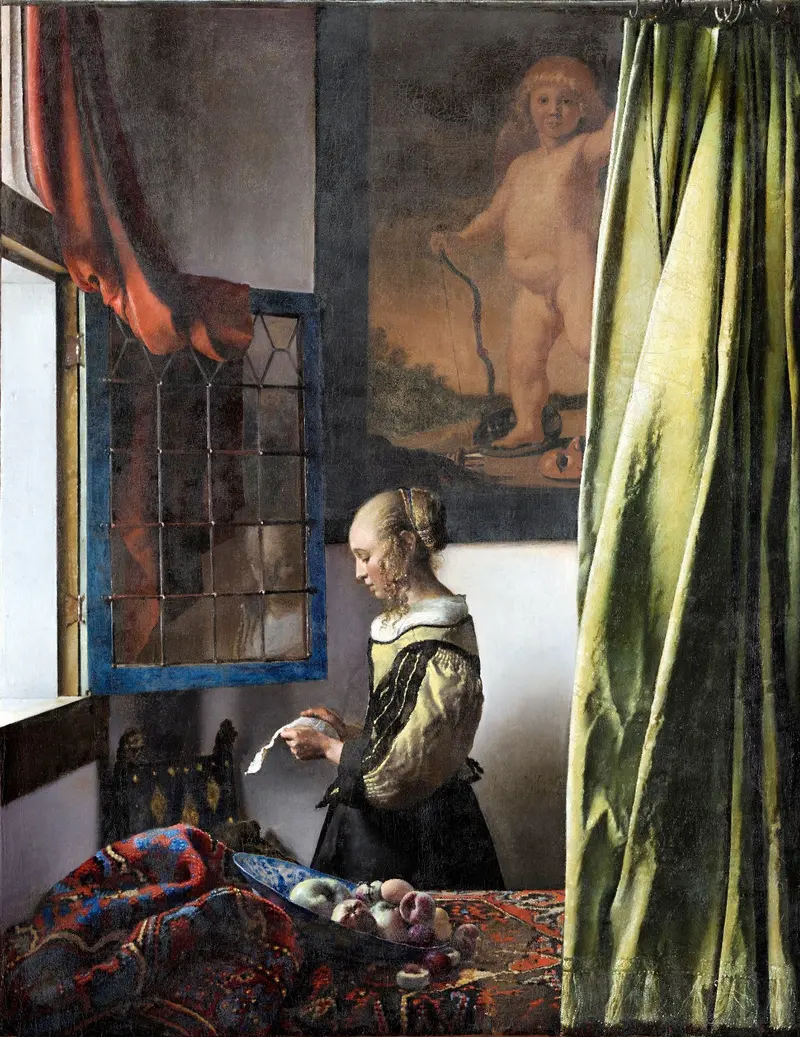
Girl Reading a Letter at an Open Window
Johannes Vermeer
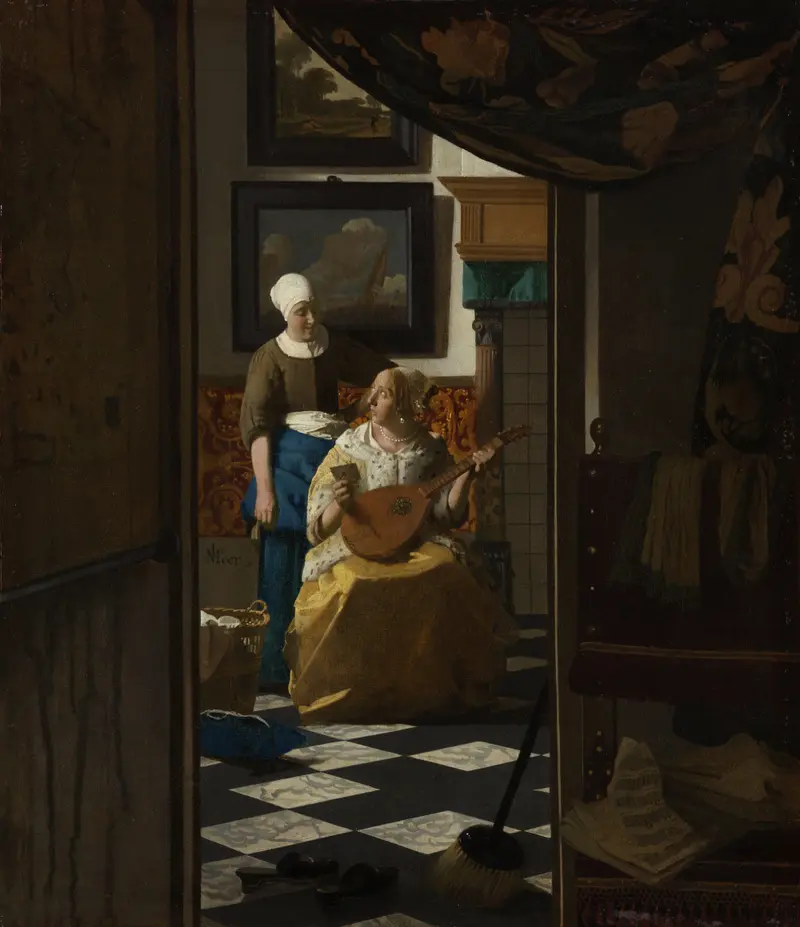
The Love Letter
Johannes Vermeer

The Music Lesson
Johannes Vermeer

A Girl Asleep
Johannes Vermeer
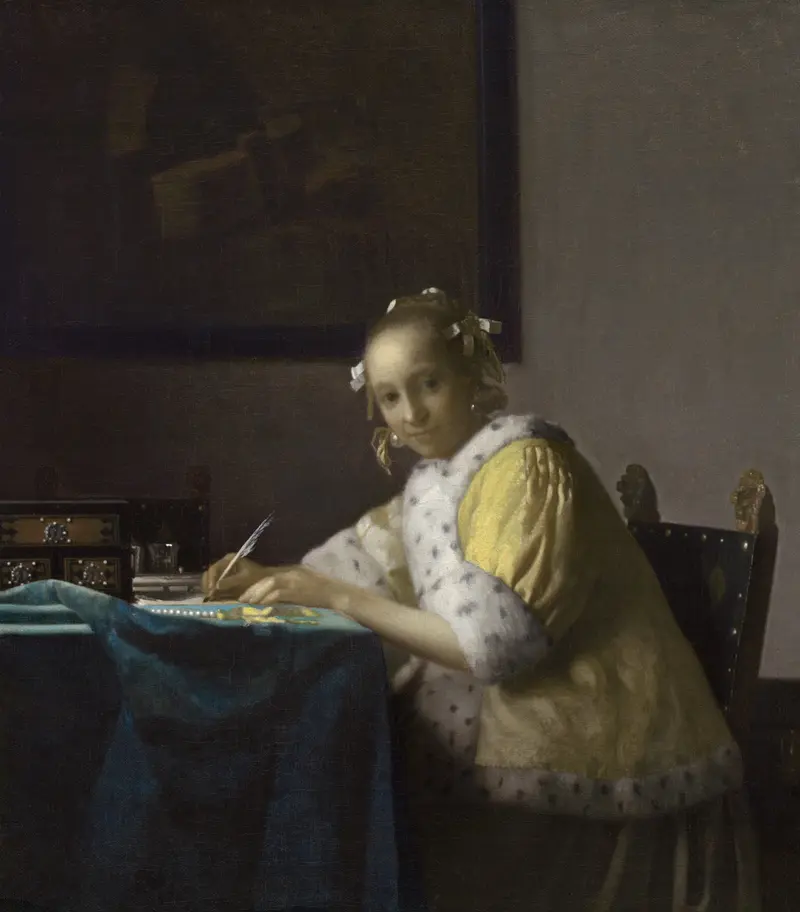
A Lady Writing a Letter
Johannes Vermeer
The Astronomer
Johannes Vermeer
The Lacemaker
Johannes Vermeer




