
Course de chevaux libres à Rome — History & Facts
Every spring during the Roman Carnival, the Via del Corso erupted with the thunder of hooves as wild, riderless horses raced from the Piazza del Popolo to the foot of the Capitoline Hill. This spectacle, known as the "corsa dei barberi," was both celebrated and feared for its chaos and danger. In 1817, Théodore Géricault traveled to Rome and witnessed the event firsthand, capturing its raw energy in Course de chevaux libres à Rome.
The painting stands as one of the earliest French attempts to depict the famous Roman race, a subject that fascinated artists and writers alike, and which Géricault approached not as a mere curiosity, but as a living drama. In Course de chevaux libres à Rome, the moment is electric: a surge of muscular, unsaddled horses bursts forward, their manes flying, eyes wide with instinct and excitement. The crowd, pressed against barriers, leans in with a mix of anticipation and alarm, while Roman architecture looms in the background, rooting the chaos in a specific place and time. Géricault’s brushwork captures the tension between wild nature and human spectacle, the horses both magnificent and barely contained.
His focus on animal anatomy—muscles straining, nostrils flared—recalls his studies of equestrian subjects and sets him apart from earlier depictions, such as those by Vernet, which often placed more emphasis on the festive crowd than on the animals themselves. The precise medium of Course de chevaux libres à Rome is not clearly documented, though it is likely oil on canvas, in keeping with Géricault’s other works from this period. The painting was created during his formative Italian sojourn, a journey that profoundly shaped his later masterpieces, including The Raft of the Medusa. Unlike some of his more famous canvases, this work remained relatively obscure, passing through private collections before entering public view.
Today, it is recognized as a key example of Géricault’s fascination with movement and the unpredictable power of nature—a theme that would define much of his short, intense career.
More Artworks by Théodore Géricault
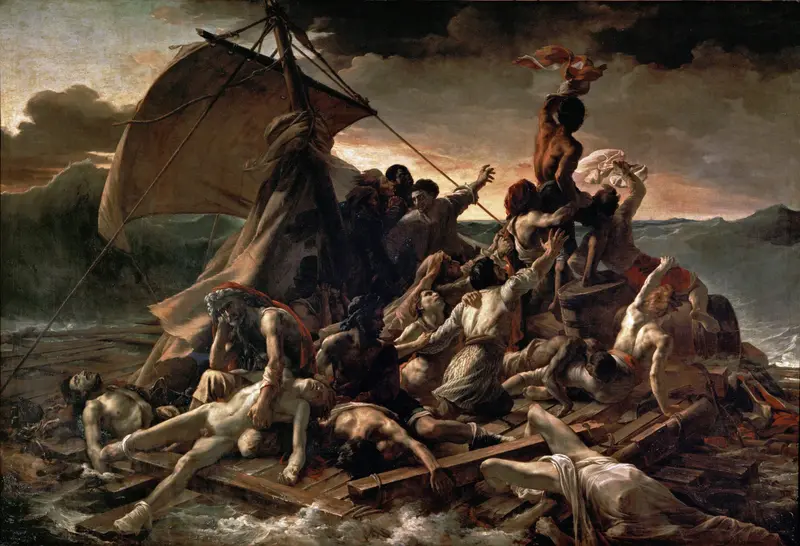
The Raft of the Medusa
Théodore Géricault

Géricault - Le naufrage du radeau de la Méduse, MBA 790
Théodore Géricault
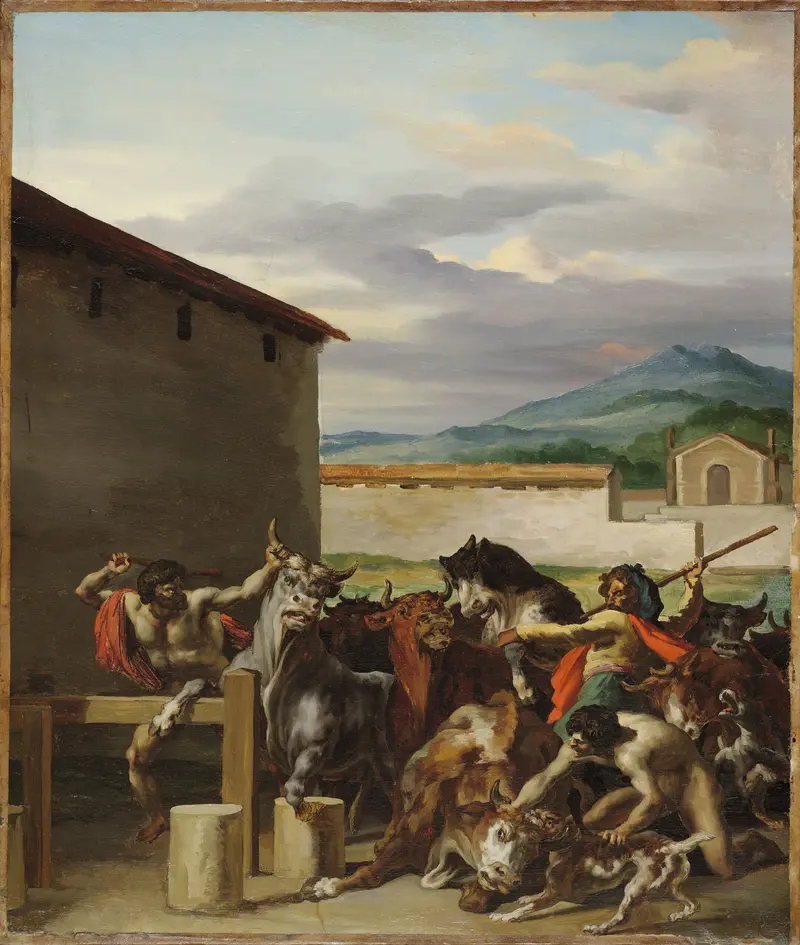
Cattle Market
Théodore Géricault
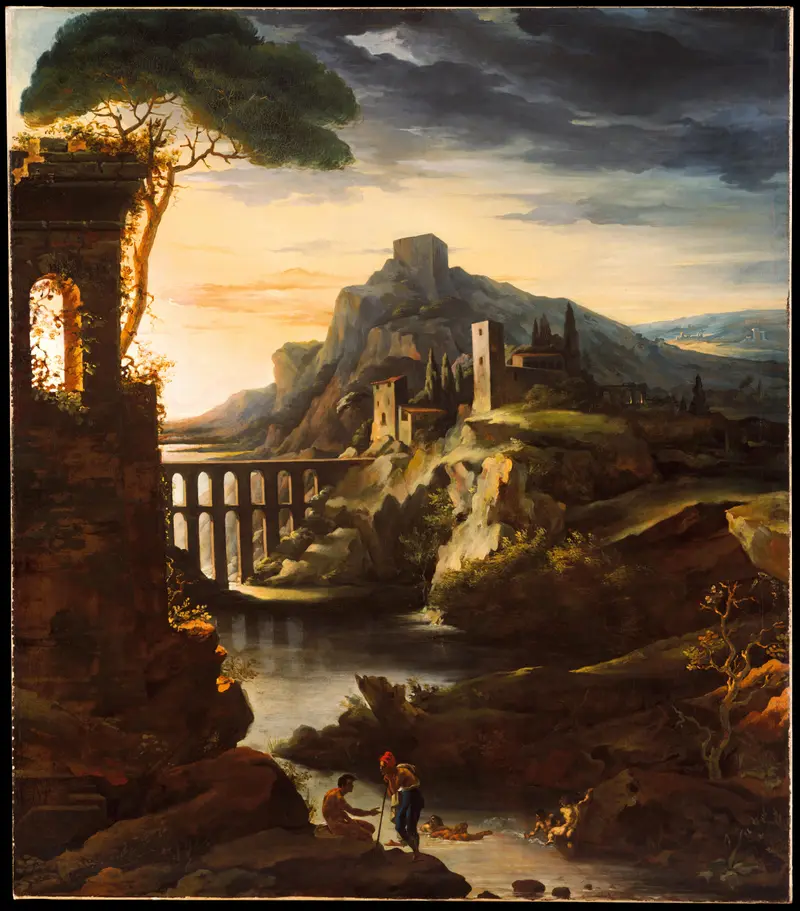
Evening; Landscape with an Aqueduct
Théodore Géricault
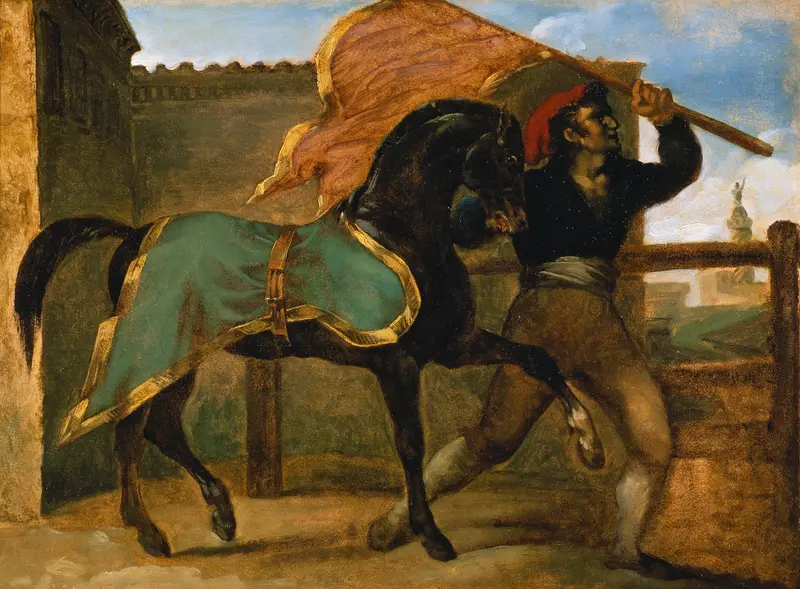
Horse Race
Théodore Géricault

Horses Standing in a Mews
Théodore Géricault
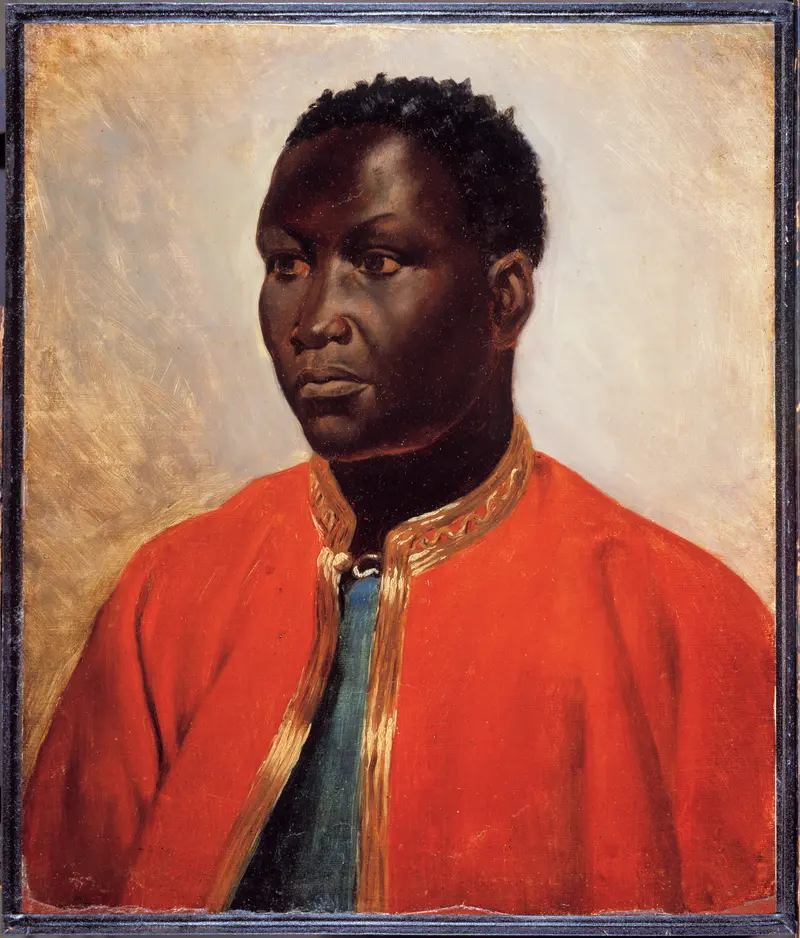
Portrait of a Negro
Théodore Géricault
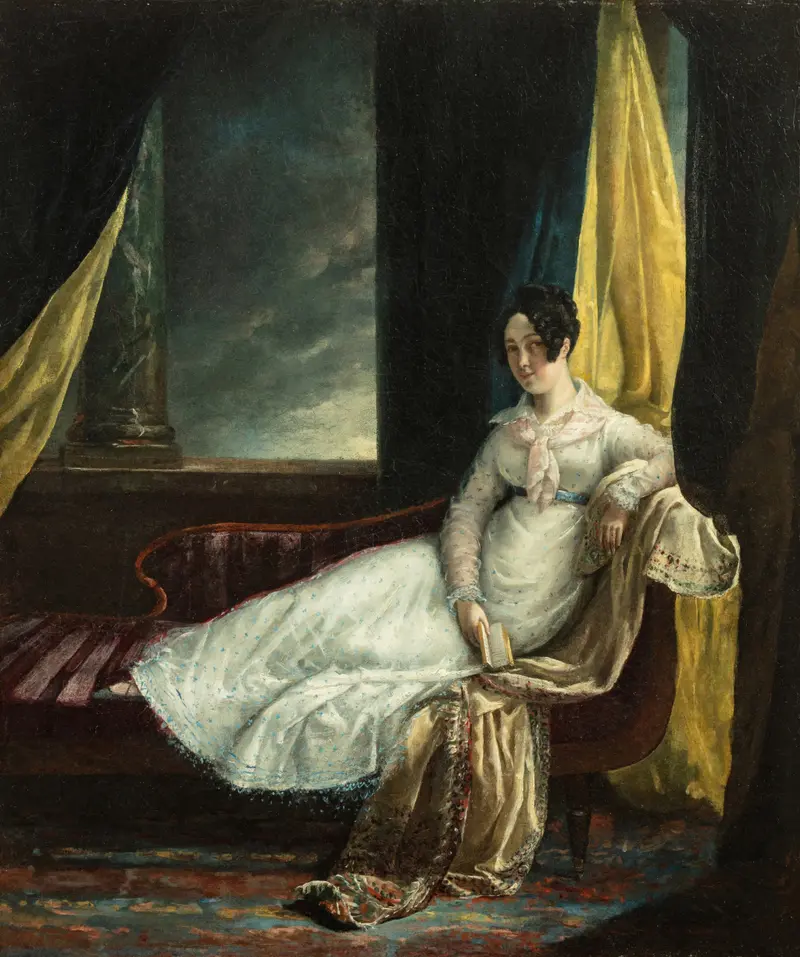
Portrait of Zoë Elmore
Théodore Géricault
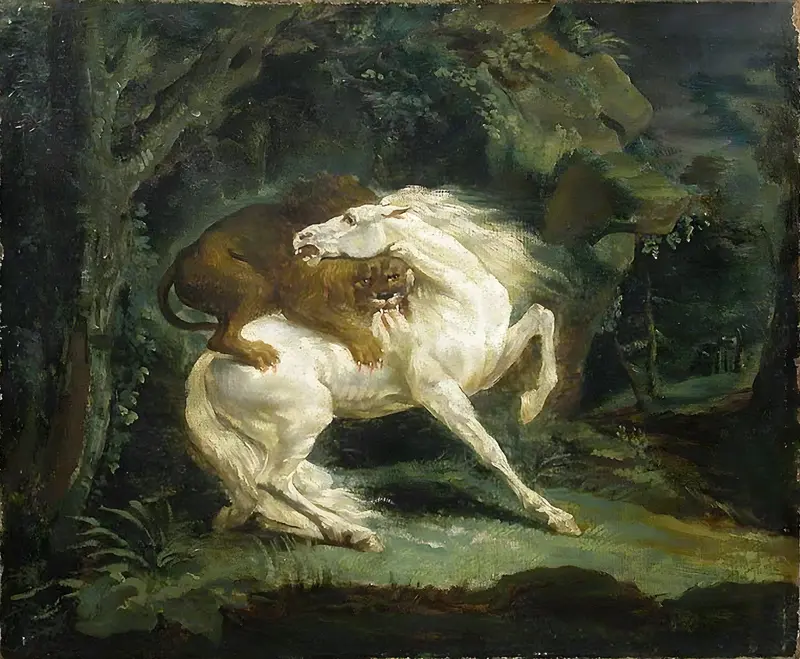
Cheval attaqué par un lion
Théodore Géricault
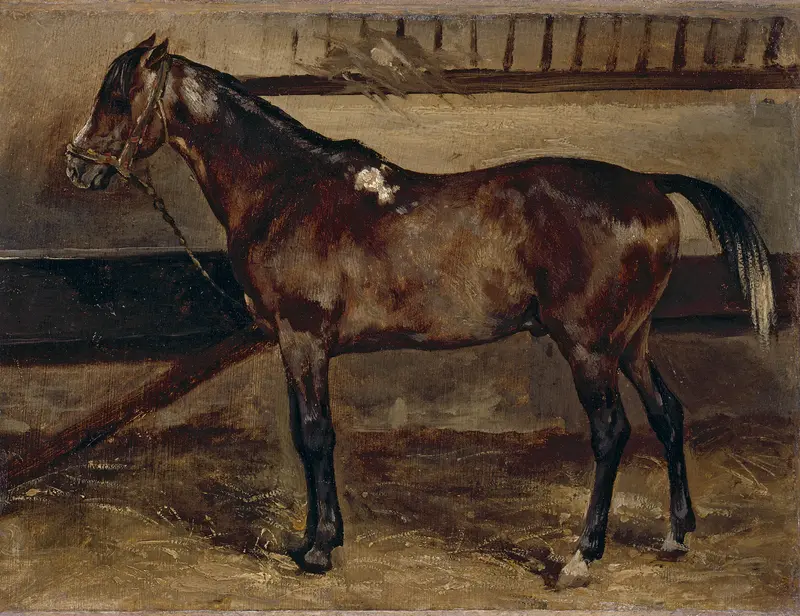
Cheval brun à l'écurie
Théodore Géricault





