
Haymakers at Montfermeil — History & Facts
When Georges Seurat first exhibited Haymakers at Montfermeil in 1882, critics were unsure what to make of its precise, almost scientific approach to rural labor—a far cry from the sentimental harvest scenes popularized by artists like Jean-François Millet. This work marks one of the earliest surviving examples of Seurat’s experiments with color and light, foreshadowing the radical technique of pointillism he would later pioneer. While the exact medium remains uncertain, the painting’s careful division of tone and hue already hints at the systematic method that would define Seurat’s mature style.
The scene’s location, Montfermeil, was a small village east of Paris, known for its hayfields and, later, as a setting in Victor Hugo’s Les Misérables. The painting captures a quiet moment in the fields: two women pause in their work, rakes and scythes resting, their bodies bent but not broken by the day’s labor. The sun, low in the sky, casts long shadows across the stubbled ground, while a distant line of trees marks the edge of cultivated land and the beginning of the wild. The women’s simple dresses and kerchiefs, rendered in broad, flat planes of color, emphasize their dignity and endurance.
Unlike Millet’s The Gleaners, which bathes its subjects in golden light and sentiment, Seurat’s haymakers are observed with a cool detachment—yet there is a quiet respect in the way he records their posture and the geometry of their toil. The rakes and haystacks become almost abstract forms, echoing the rhythms of rural life. Little is known about the early provenance of Haymakers at Montfermeil, and it is not clear whether the work was painted on commission or for exhibition. It remained in relative obscurity until the early 20th century, when scholars began to trace Seurat’s development from his academic training to his revolutionary role in the Neo-Impressionist movement.
Today, the painting is recognized as a key link between Seurat’s formative years and his later masterpieces, such as A Sunday Afternoon on the Island of La Grande Jatte. Its restrained palette and careful composition offer a glimpse into the artist’s evolving vision, and it now hangs in the collection as a testament to the quiet beginnings of a painter who would change the course of modern art.
More Artworks by Georges Seurat
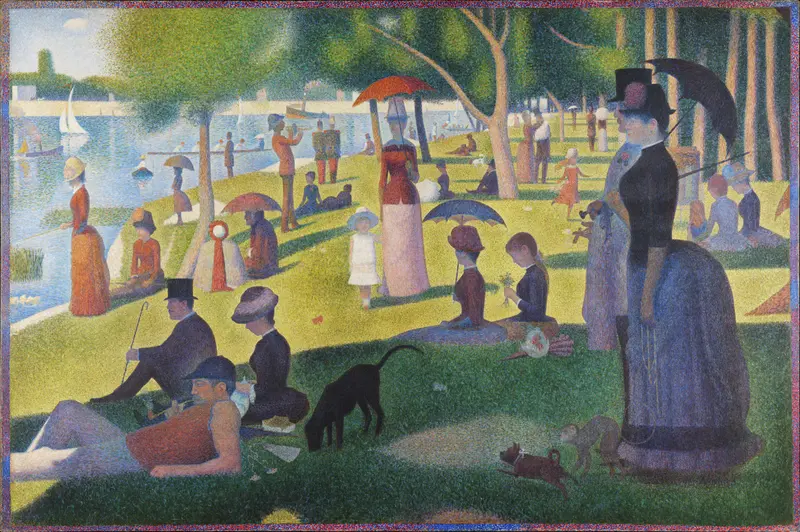
A Sunday Afternoon on the Island of La Grande Jatte
Georges Seurat
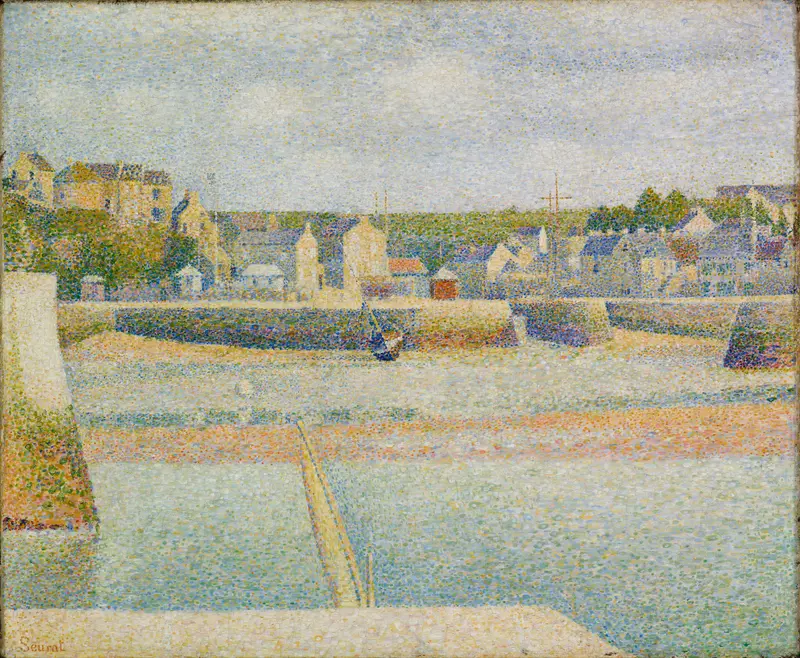
Port-en-Bessin, The Outer Harbor (Low Tide)
Georges Seurat
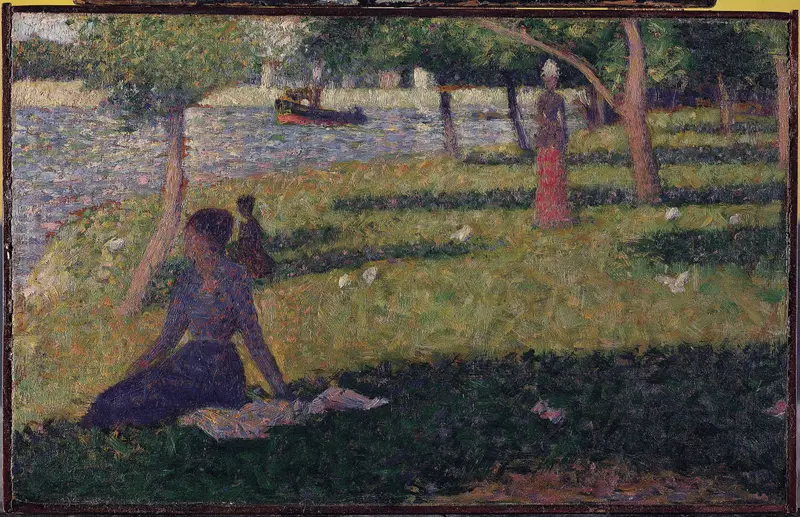
Étude pour ‘La Grande Jatte’ (Study for ‘La Grande Jatte’)
Georges Seurat
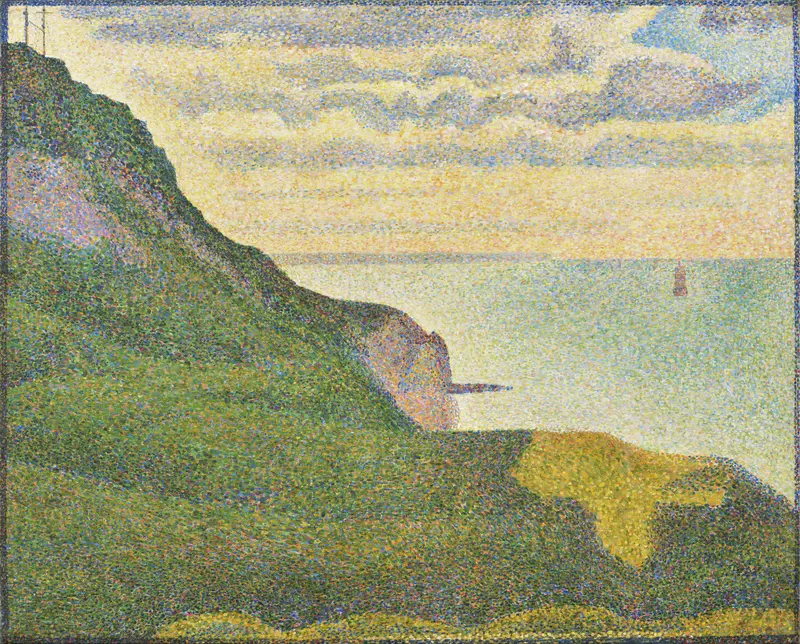
Seascape at Port-en-Bessin,Normandy
Georges Seurat
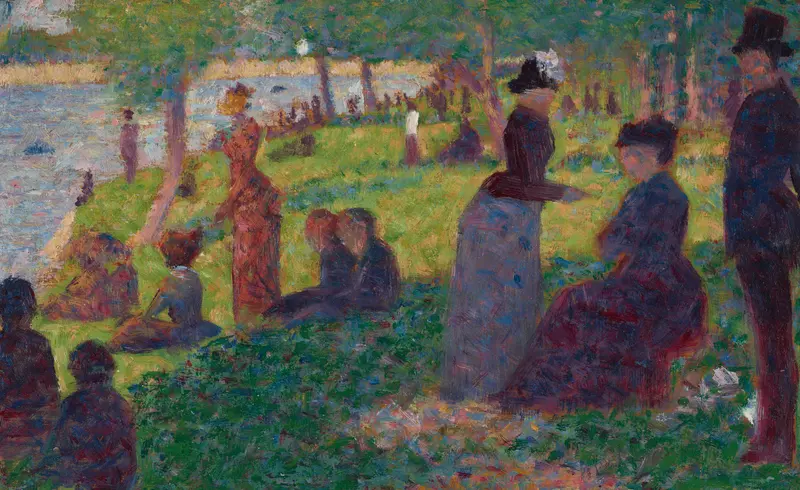
Oil Sketch for "A Sunday on La Grande Jatte — 1884"
Georges Seurat
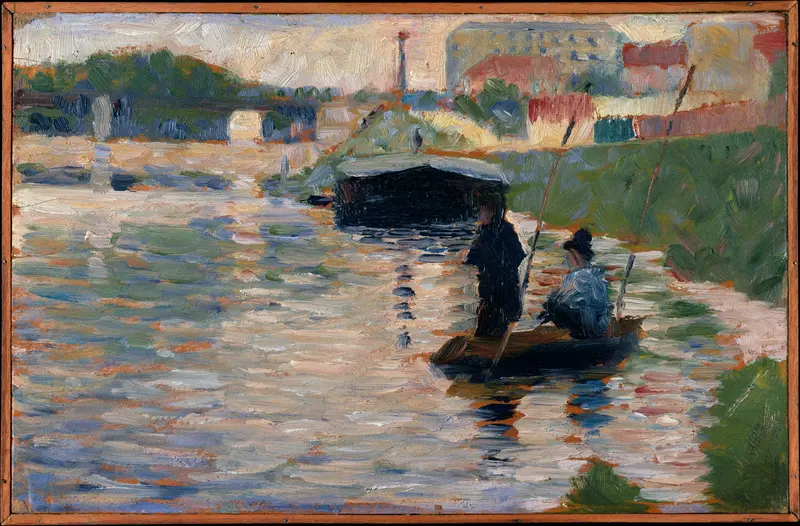
View of the Seine
Georges Seurat
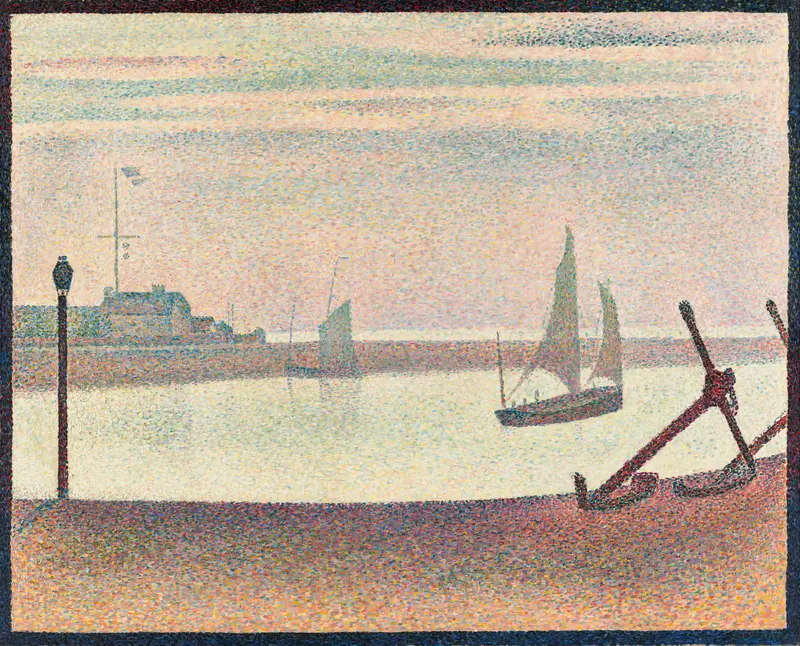
The Channel at Gravelines, Evening
Georges Seurat
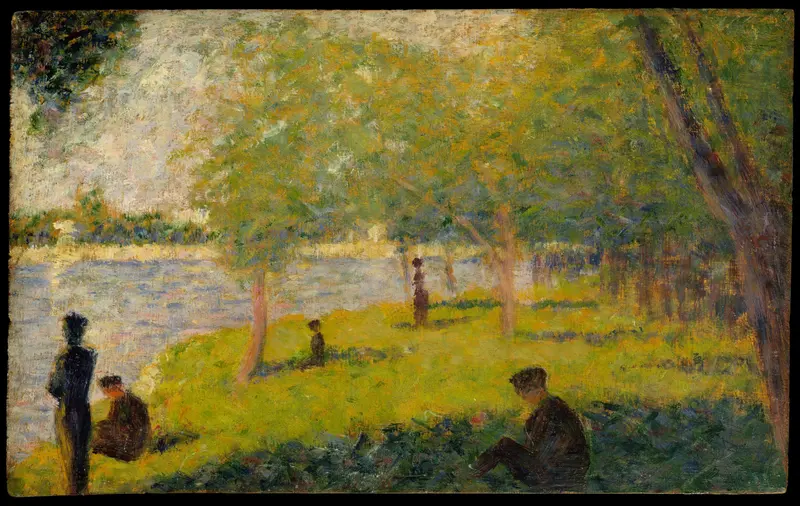
Study for ‘A Sunday on La Grande Jatte’
Georges Seurat
Study for A Sunday on La Grande Jatte
Georges Seurat
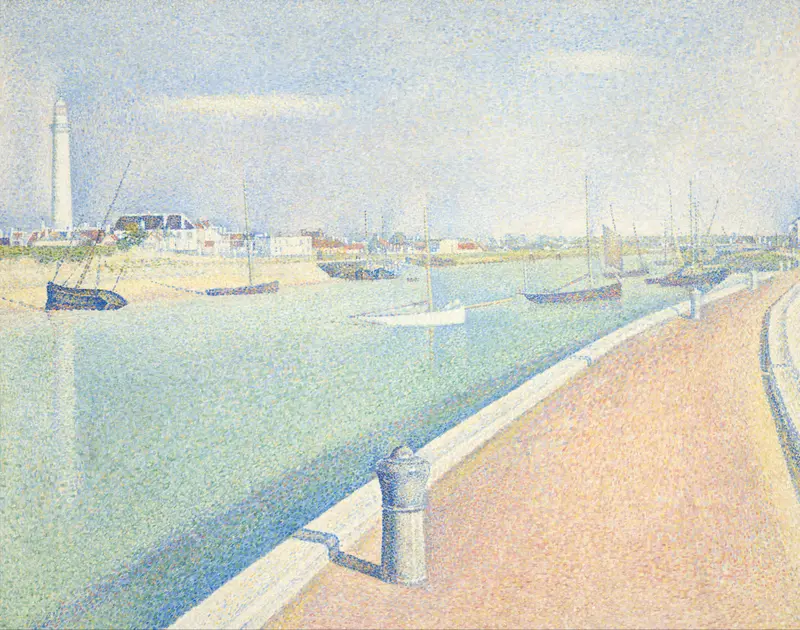
The Channel of Gravelines, Petit Fort Philippe
Georges Seurat
More Genre Scene Art

Banquet of the Officers of the St George Civic Guard
Frans Hals

Rembrandt and Saskia in the Scene of the Prodigal Son
Rembrandt van Rijn

Bal du moulin de la Galette
Pierre-Auguste Renoir

Quadrille at the Moulin Rouge
Henri de Toulouse-Lautrec

A Burial at Ornans
Gustave Courbet

When Will You Marry?
Paul Gauguin