
Kullervo herding his wild Flocks — History & Facts
There is a restless energy at the heart of Kullervo herding his wild Flocks, as if the canvas itself is caught mid-battle. The eye is first seized by the figure’s tense, bare back and the dramatic sweep of his arm, axe raised, while pale, twisting branches cut across the scene like flashes of lightning. Around him, the “flocks” are no gentle herd—these are wild beasts, their bodies coiled and snarling, their eyes fixed on the boy.
The palette is all ochres and stormy greys, the light harsh and almost metallic, sharpening every muscle and bone. It is a world of struggle, where man and nature are locked in a single, unbroken line of motion. Painted in 1917, this work belongs to a moment when Finnish artists like Akseli Gallen-Kallela turned to their national epic, the Kalevala, for subjects that could express both myth and identity. The story of Kullervo—a tragic, fated figure—was a favorite, embodying the wildness and sorrow of the Finnish landscape itself.
In these years, as Finland moved toward independence, such images were more than illustration: they were acts of cultural creation, meant to forge a shared past. The painting is documented in Pinx - maalaustaide Suomessa: Suuria kertomuksia (Weilin+Göös 2001), but history has kept few traces of this specific work’s journey. What remains is the sense of motion and defiance, inviting the viewer to step into the myth and feel the pulse of the old stories.
More Artworks by Akseli Gallen-Kallela
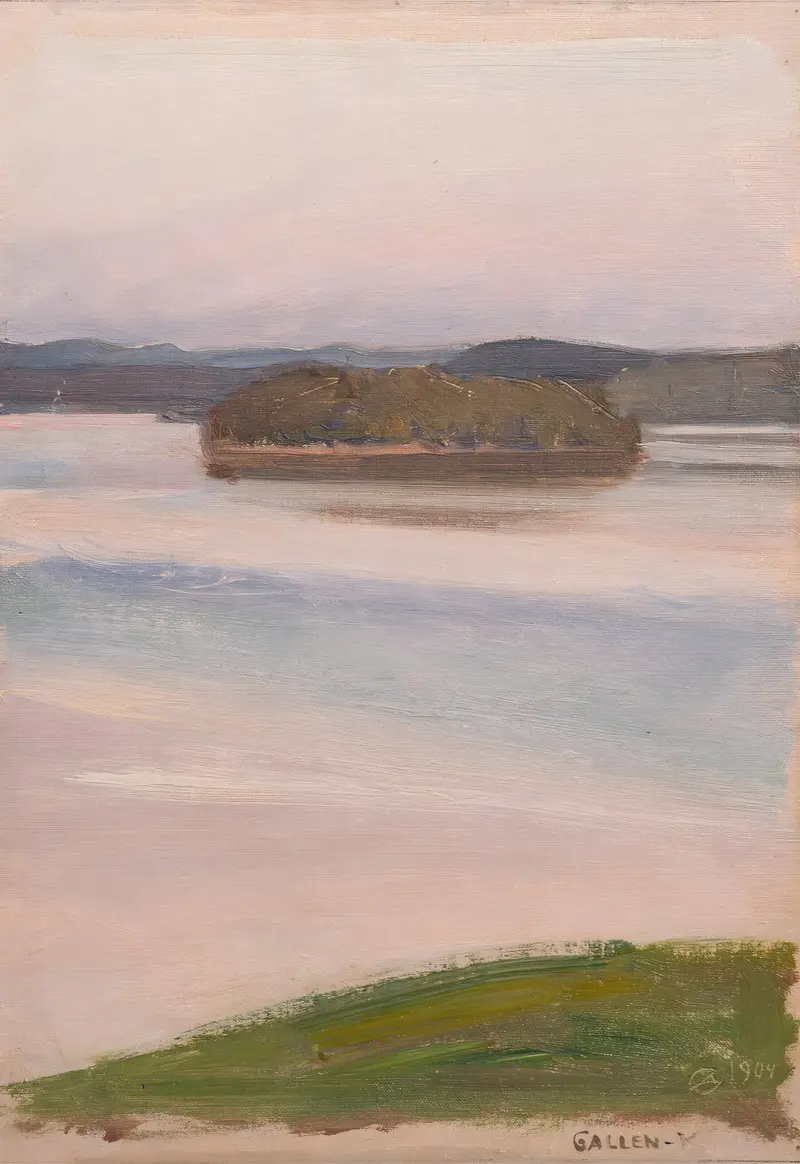
Lake Keitele
Akseli Gallen-Kallela
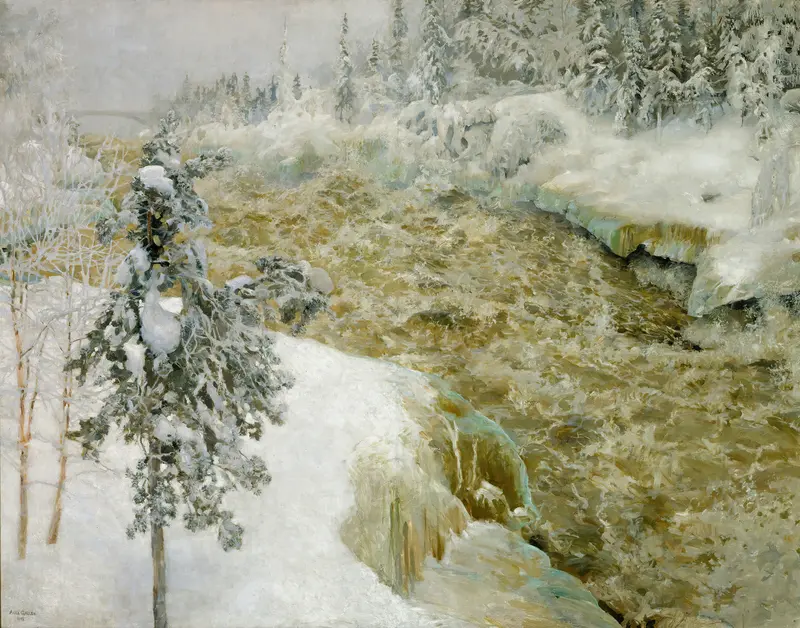
Imatra Falls in Snow ; Imatra in Winter
Akseli Gallen-Kallela
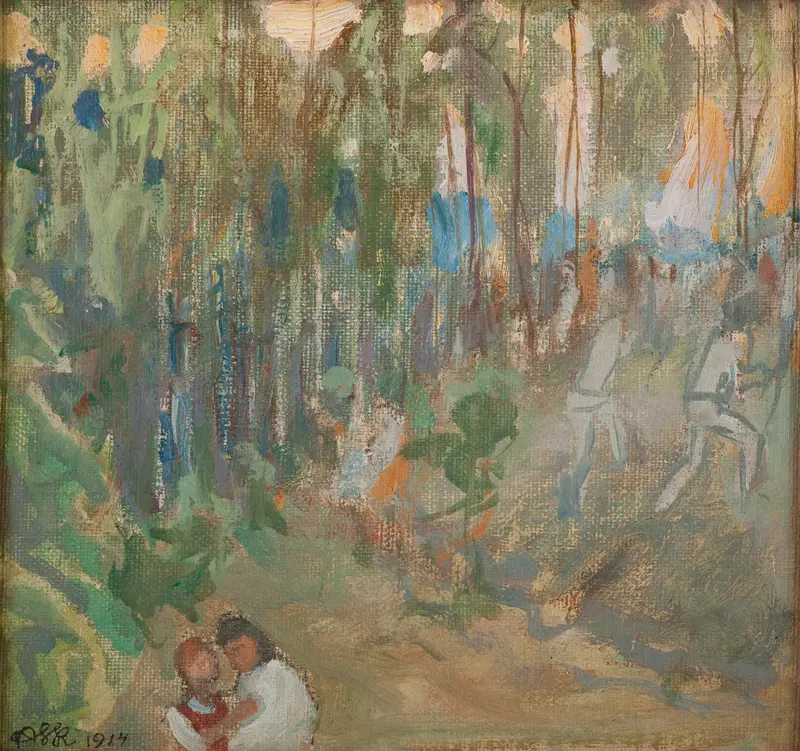
Vainovalkeat
Akseli Gallen-Kallela
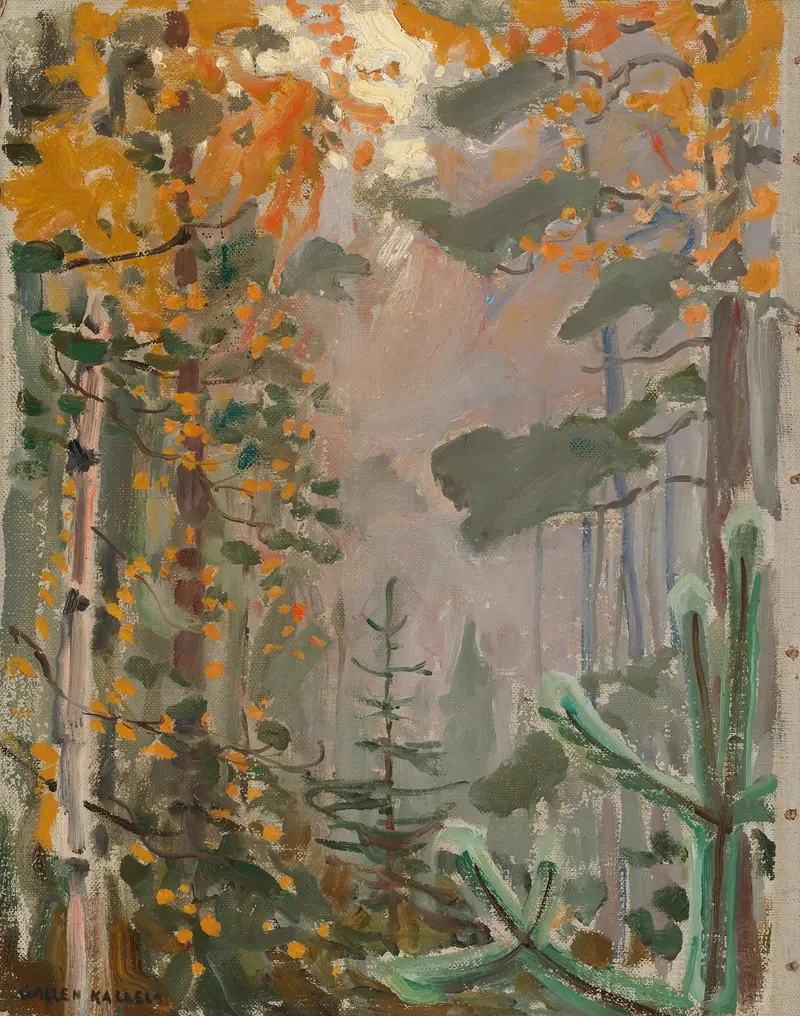
Autumn Landscape
Akseli Gallen-Kallela
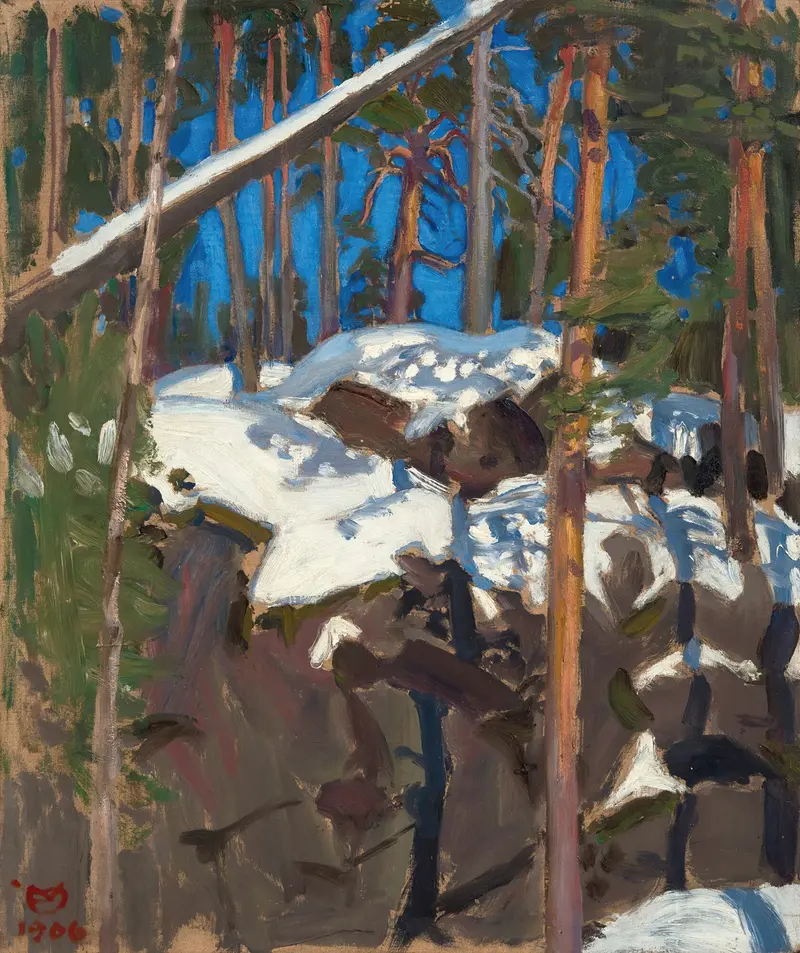
Spring Sun At Konginkangas
Akseli Gallen-Kallela
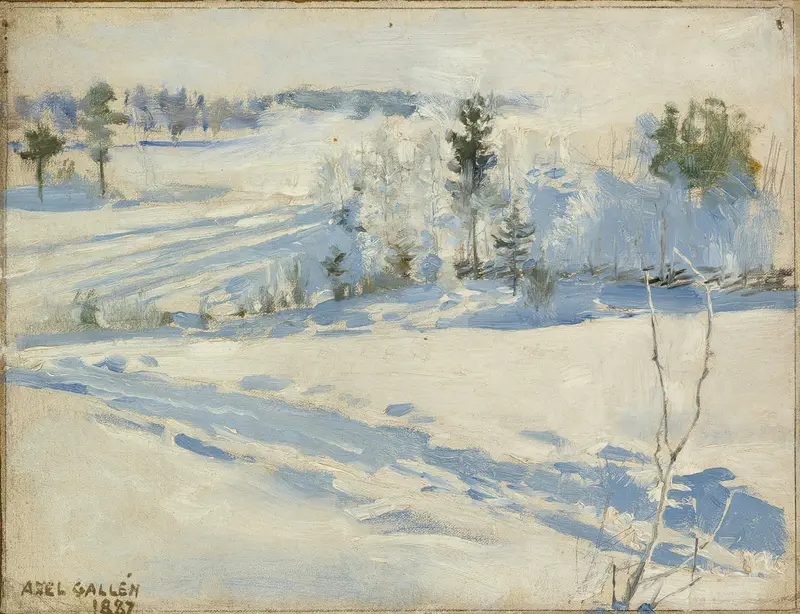
Winter Landscape
Akseli Gallen-Kallela

First Snow
Akseli Gallen-Kallela
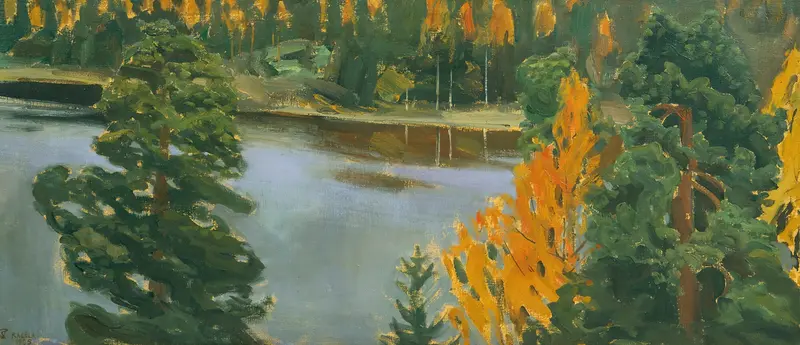
Lake View In Autumn
Akseli Gallen-Kallela
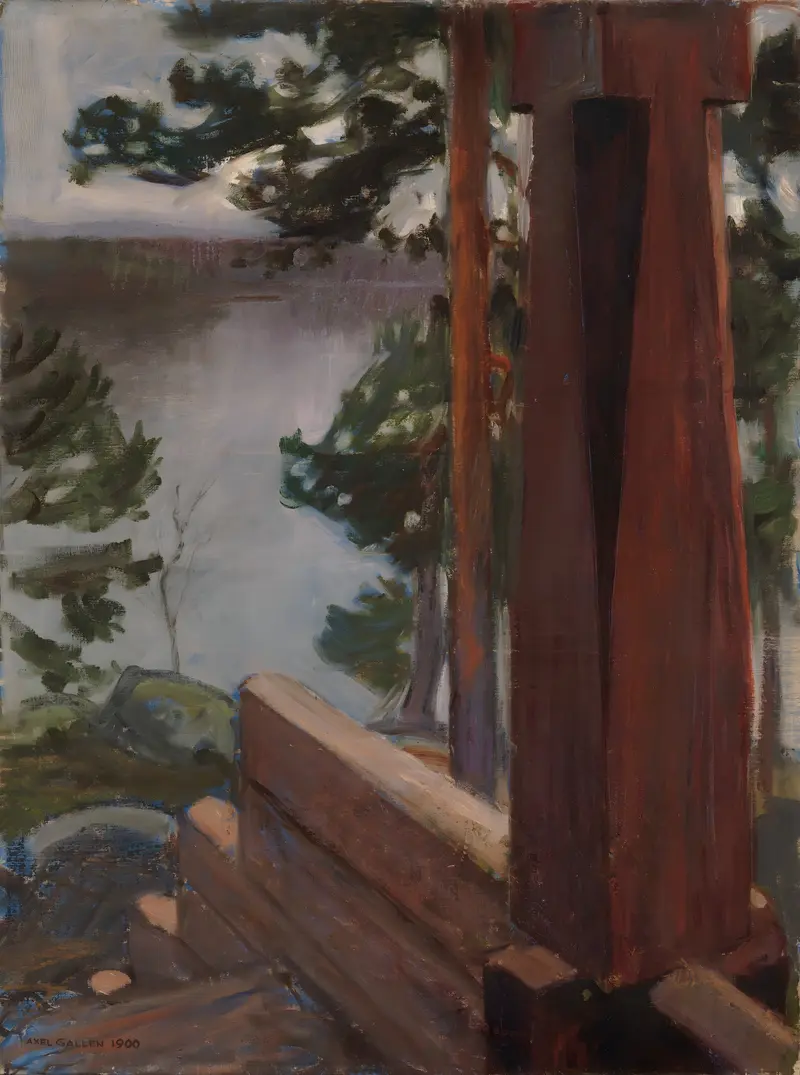
The Kalela Porch
Akseli Gallen-Kallela

Light Behind The Clouds
Akseli Gallen-Kallela





