
Les croupes - Théodore Géricault — History & Facts
Few works by Théodore Géricault have sparked as much curiosity as Les croupes - Théodore Géricault, a study of horses’ hindquarters painted in 1813, when the artist was just in his early twenties. This painting is often cited as a turning point in Géricault’s lifelong obsession with equine anatomy—a passion so intense that he would later dissect horse cadavers at the veterinary school in Paris. While the exact circumstances of its creation remain unclear, Les croupes stands out for its unusual focus: not the heroic rider or the galloping steed, but the muscular, rounded forms of the animals’ backsides, rendered with a frankness that was both admired and, in some quarters, quietly ridiculed. Here, Géricault freezes a moment of raw, physical presence.
The horses, cropped at the haunches, dominate the canvas, their powerful forms bathed in a dramatic play of light and shadow. This close-up, almost sculptural treatment invites the viewer to appreciate the sheer force and tension of equine movement. Unlike the elegant, idealized horses of George Stubbs or the decorative steeds of Jacques-Louis David, Géricault’s animals are earthy and real, their flesh and muscle rendered with a directness that borders on the anatomical.
The absence of riders or landscape further strips the scene to its essentials, making the viewer confront the animal body itself—an approach that foreshadows the realism of later Romanticism. The history of Les croupes as an object is somewhat elusive. There is no record of a formal commission, and its early provenance is uncertain, though it likely remained in the artist’s studio for some time as a study piece. Géricault’s fascination with horses would culminate in his major works, such as The Charging Chasseur and the preparatory studies for The Raft of the Medusa, where his anatomical knowledge shines.
Today, Les croupes is valued not only as a technical exercise but as a window into Géricault’s restless experimentation during the formative years of the Romantic movement. Its current location is not widely publicized, adding a layer of mystery to a work that already invites close, almost forensic, scrutiny.
More Artworks by Théodore Géricault
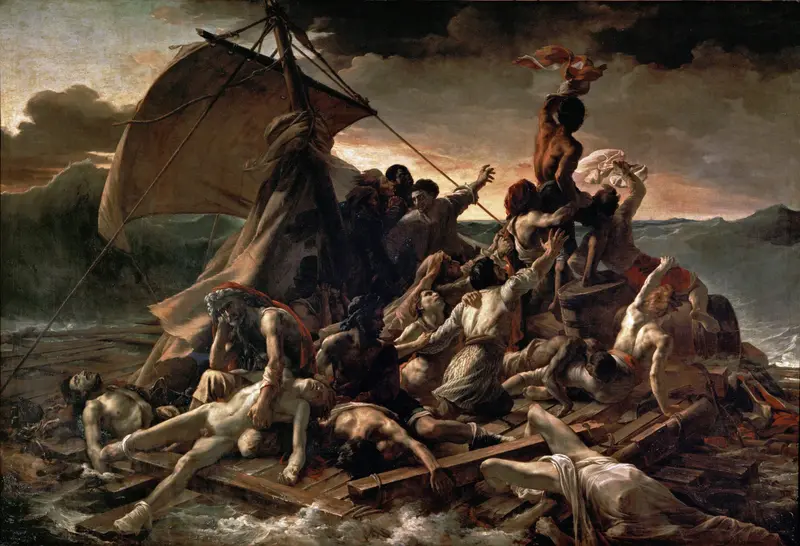
The Raft of the Medusa
Théodore Géricault

Géricault - Le naufrage du radeau de la Méduse, MBA 790
Théodore Géricault
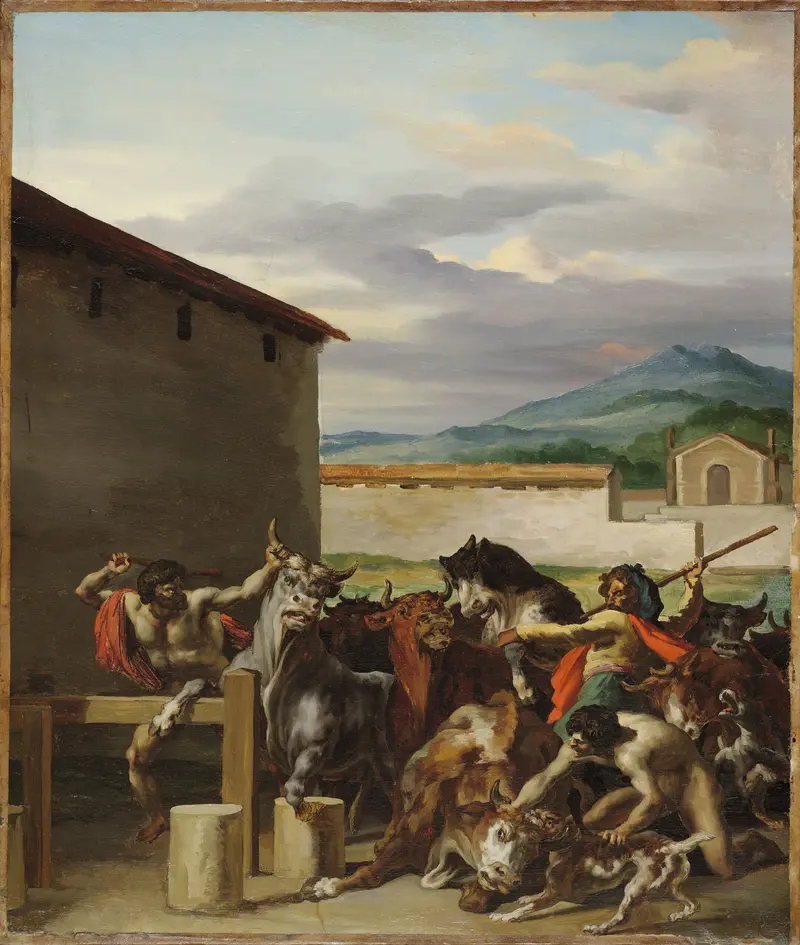
Cattle Market
Théodore Géricault
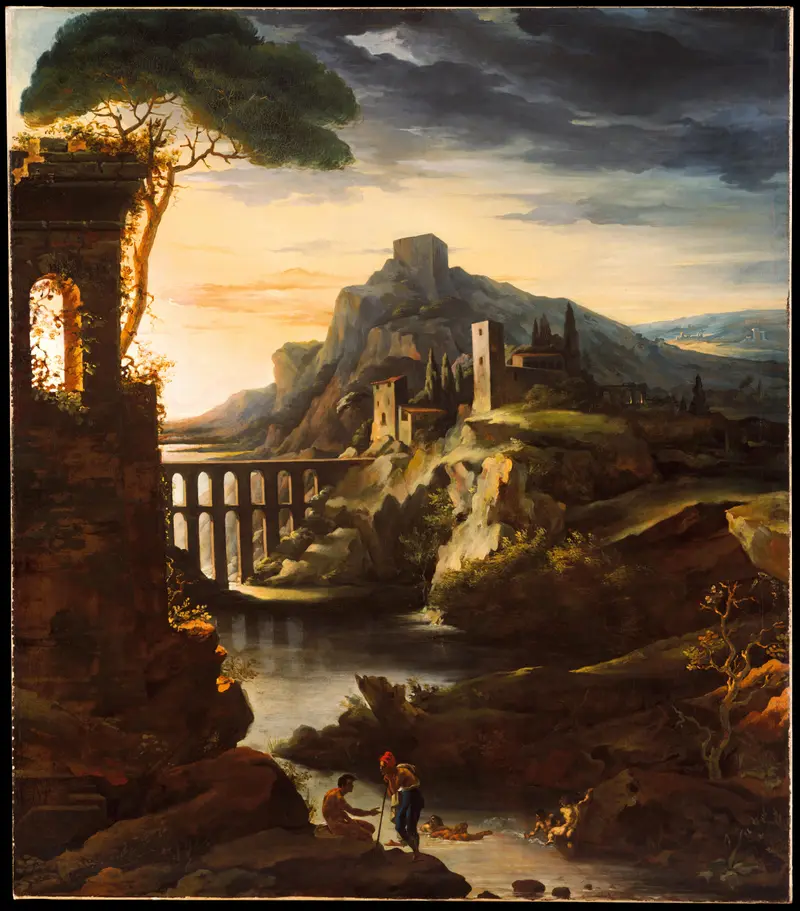
Evening; Landscape with an Aqueduct
Théodore Géricault
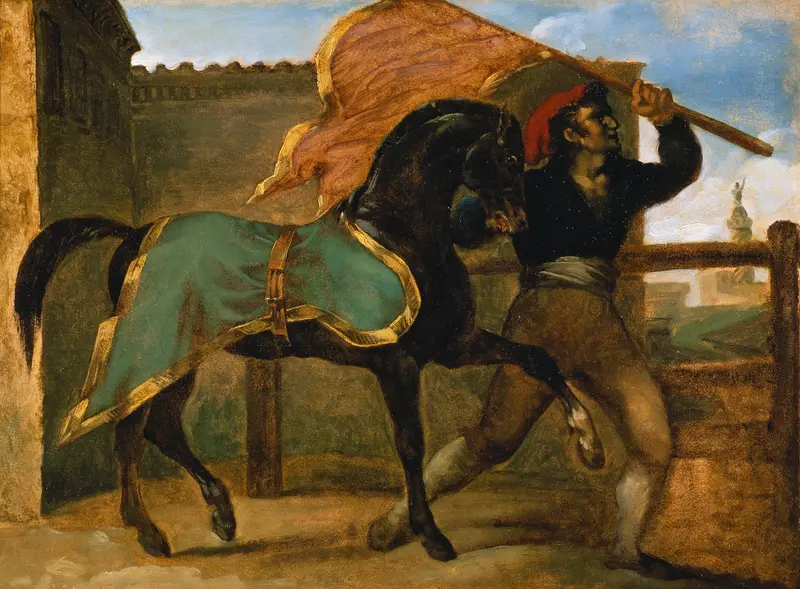
Horse Race
Théodore Géricault

Horses Standing in a Mews
Théodore Géricault
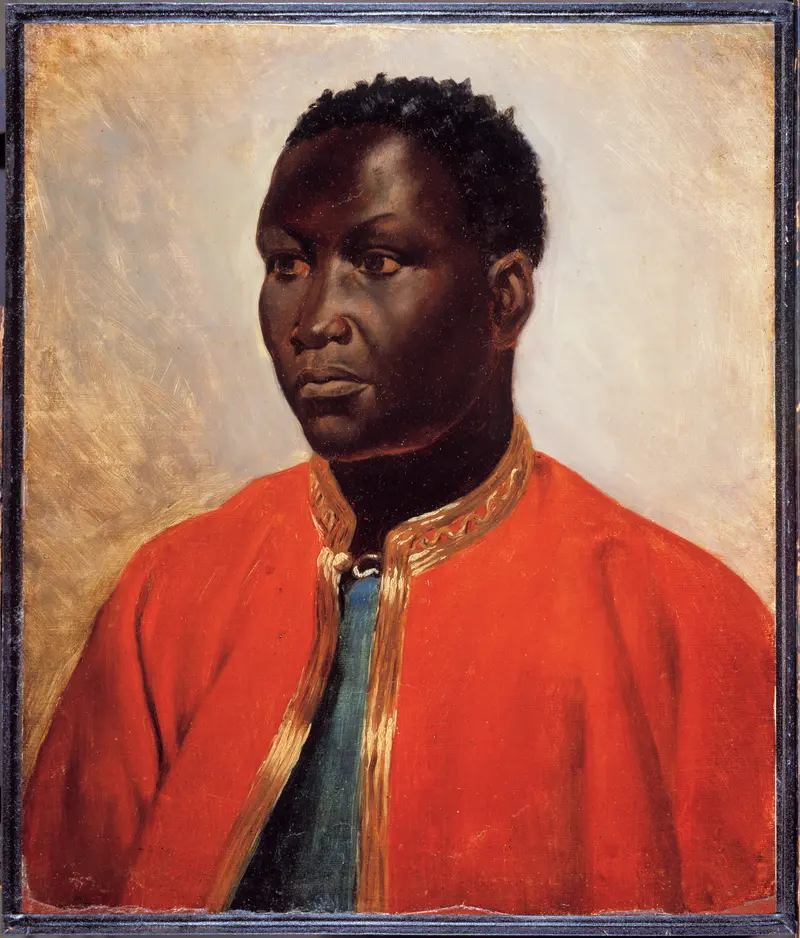
Portrait of a Negro
Théodore Géricault
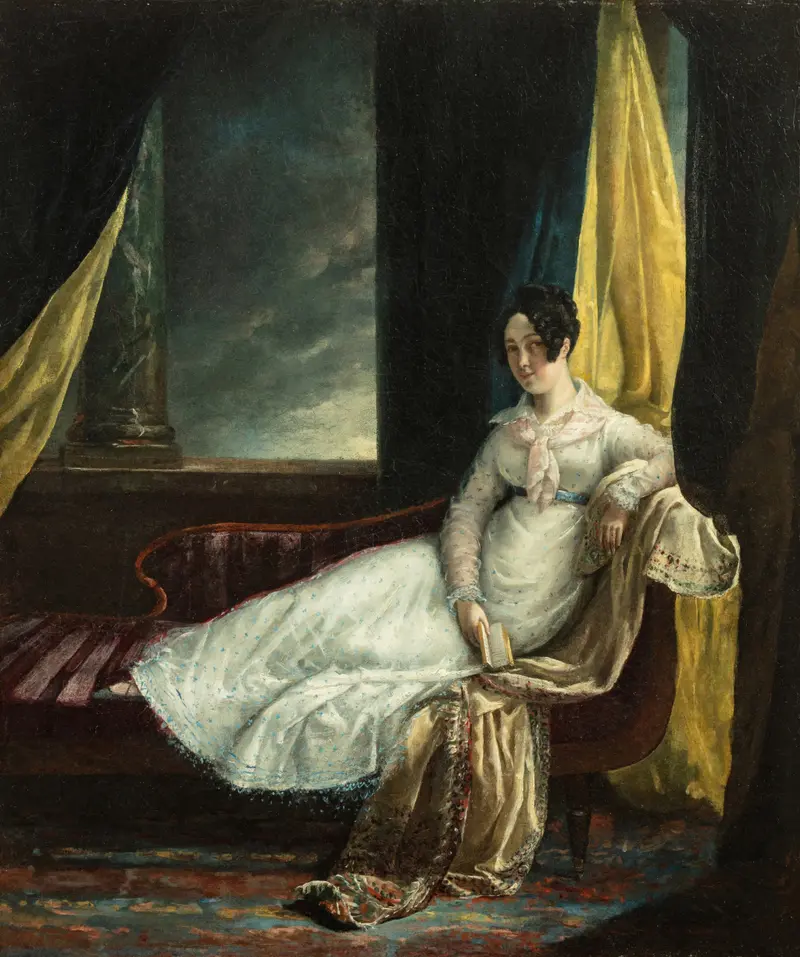
Portrait of Zoë Elmore
Théodore Géricault
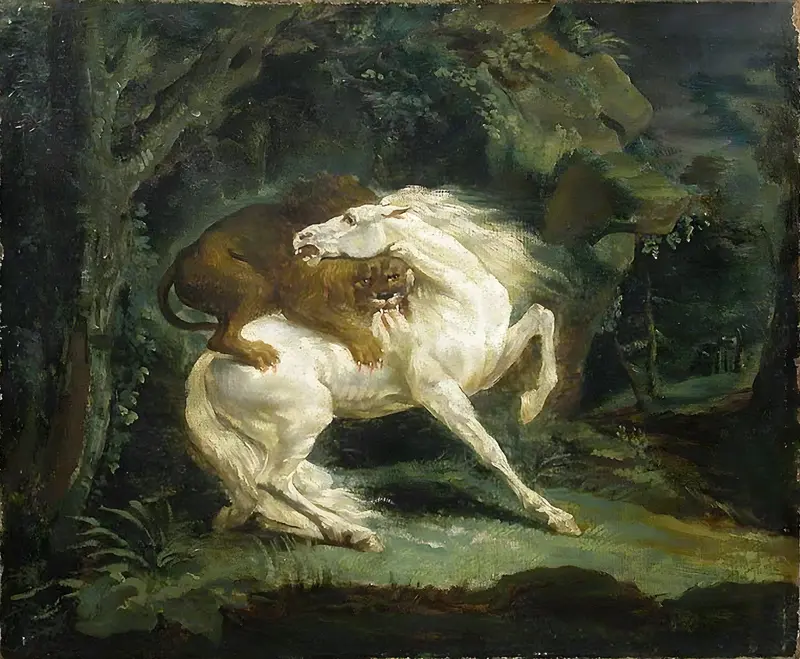
Cheval attaqué par un lion
Théodore Géricault
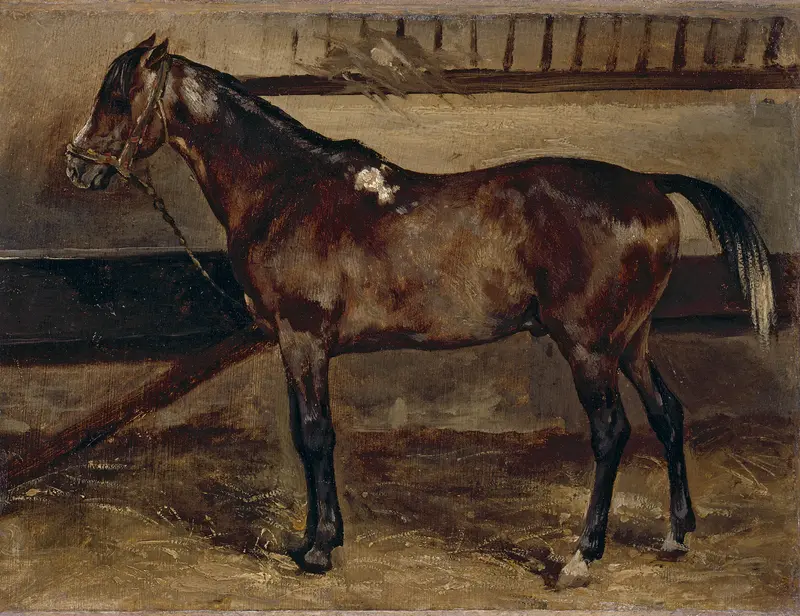
Cheval brun à l'écurie
Théodore Géricault





