
Macbeth and the Witches — History & Facts
Few paintings have so haunted American art as Macbeth and the Witches by Albert Pinkham Ryder, a work shrouded in as much mystery as the supernatural scene it conjures. Ryder, known for his obsessive reworking of canvases, labored over this painting for years, applying layer upon layer of paint until the surface itself became almost sculptural. The result is a work that, even more than a century after its completion in 1899, continues to puzzle conservators and historians: the original medium remains uncertain, as Ryder’s experimental techniques have left the painting’s surface unstable and its materials difficult to identify. The scene draws from Shakespeare’s Macbeth, capturing the fateful encounter between the Scottish general and the trio of witches on a blasted heath.
Ryder freezes the moment when Macbeth, lured by the witches’ prophecy, stands transfixed before their spectral forms, his fate sealed by their cryptic words. The witches, rendered in ghostly whites and sickly greens, seem to dissolve into the murk, while Macbeth’s figure is isolated, caught between light and shadow. The swirling darkness and eerie glow evoke the psychological turmoil at the heart of the play, much as Fuseli did in his own supernatural scenes, but Ryder’s vision is more abstract, the forms almost melting into the night.
Every brushstroke seems to tremble with foreboding, echoing the chaos unleashed by Macbeth’s ambition. As with many of Ryder’s works, the painting’s physical life has been precarious. Ryder rarely sold his paintings, and often reworked them even after they left his studio; Macbeth and the Witches is thought to have remained with him until his death in 1917. Over the decades, the painting has suffered from Ryder’s experimental methods—his use of unorthodox materials and thick, slow-drying paint has caused the surface to crack and darken, challenging conservators.
Today, it is housed in the Smithsonian American Art Museum, where it stands as a testament to Ryder’s singular vision and the restless, haunted spirit of American Symbolism at the turn of the twentieth century.
More Artworks by Albert Pinkham Ryder

The Toilers of the Sea
Albert Pinkham Ryder
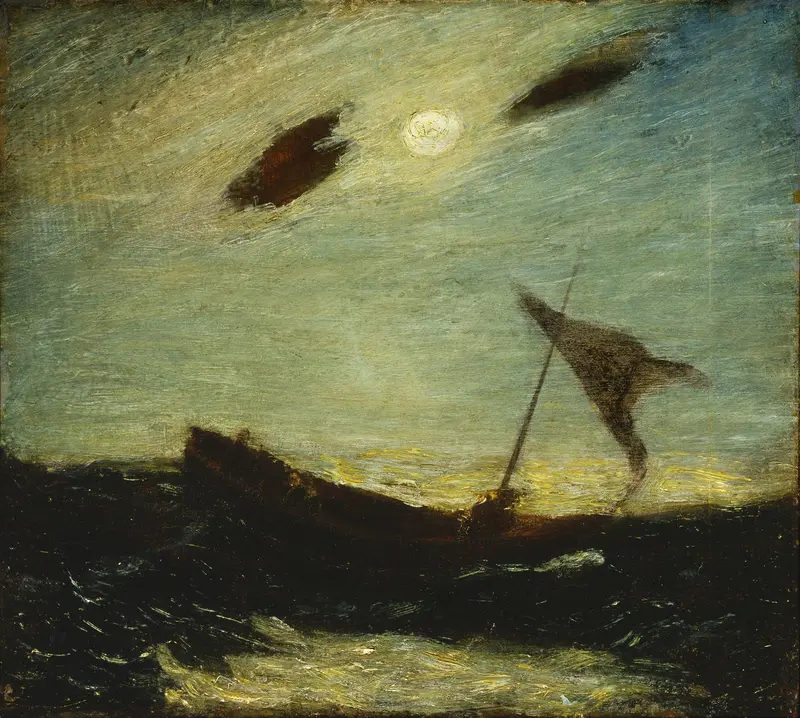
Moonlight
Albert Pinkham Ryder
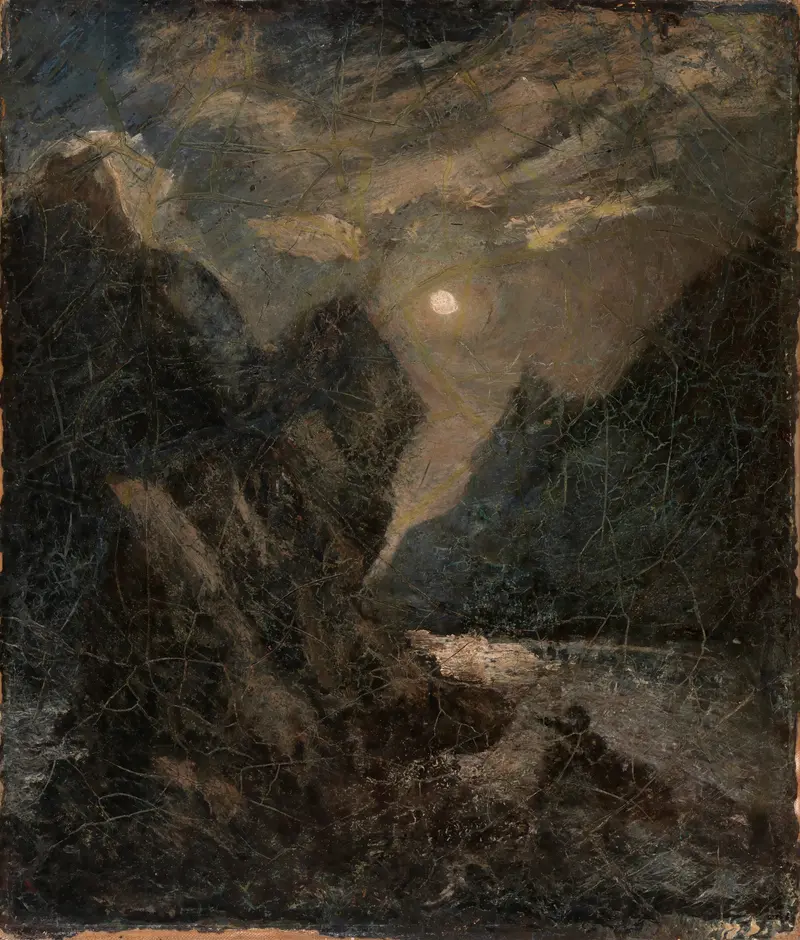
The Lorelei
Albert Pinkham Ryder
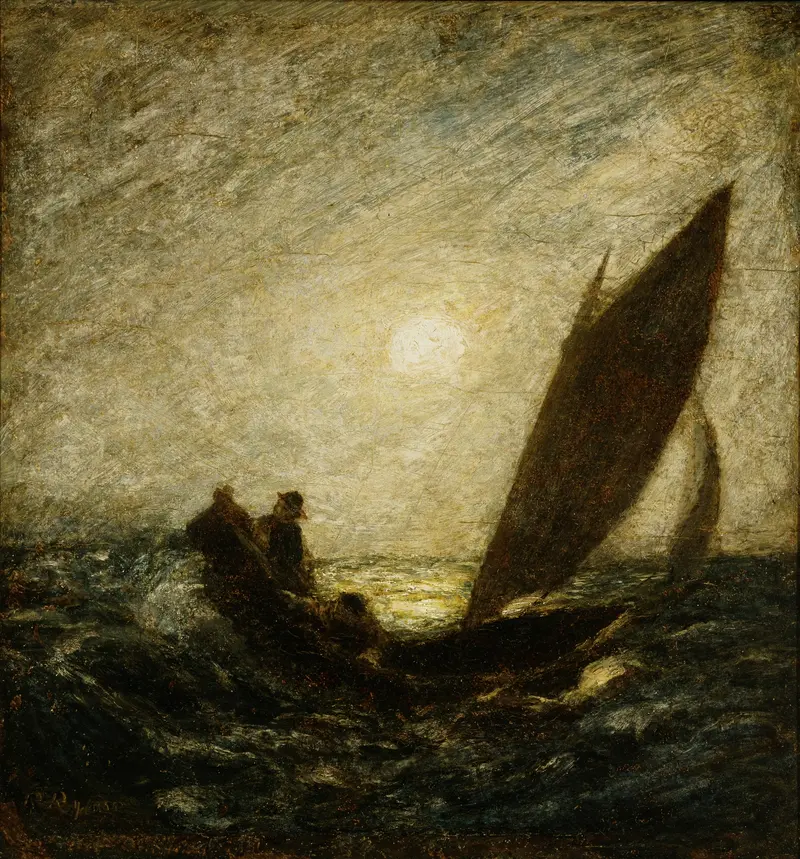
With Sloping Mast And Dipping Prow
Albert Pinkham Ryder
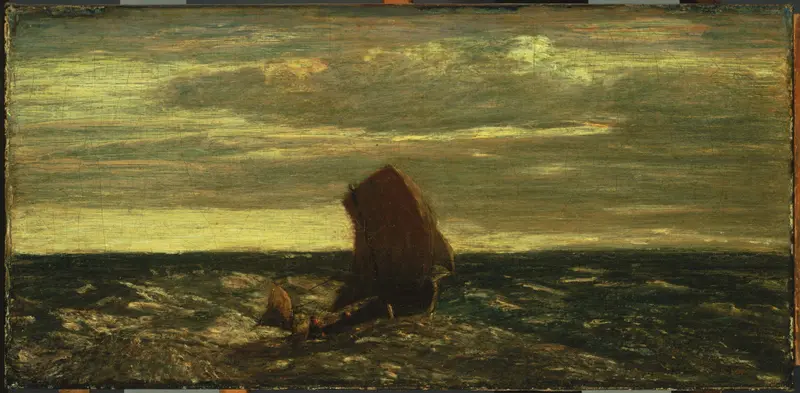
Homeward Bound
Albert Pinkham Ryder
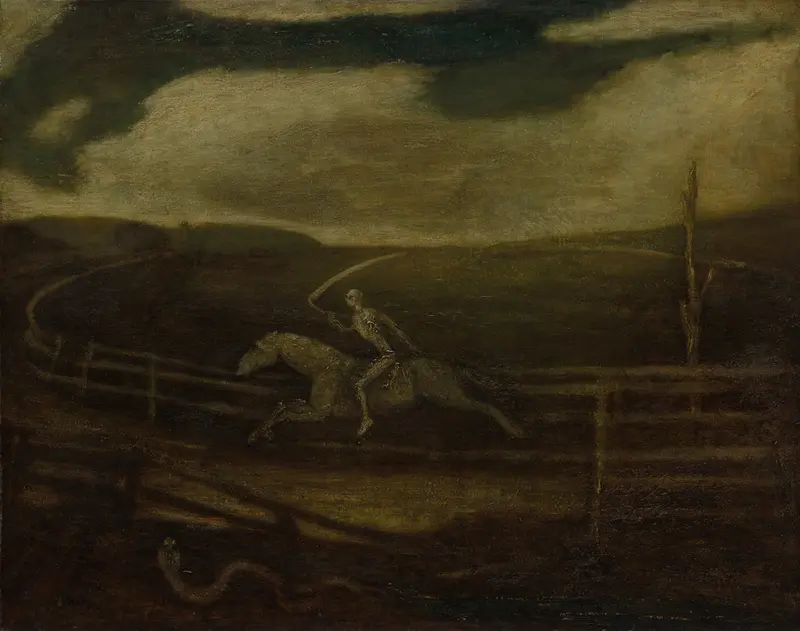
The Race Track (Death on a Pale Horse)
Albert Pinkham Ryder
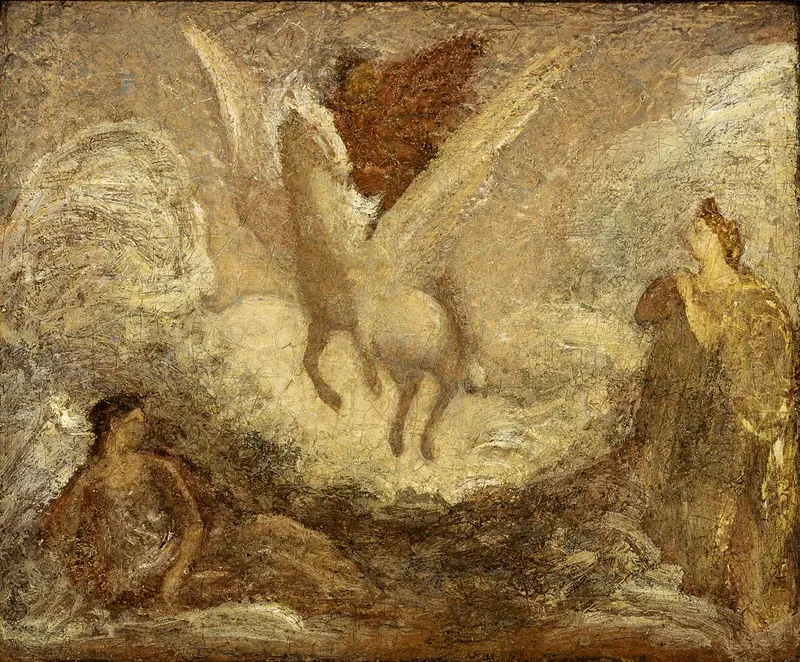
Pegasus Departing
Albert Pinkham Ryder
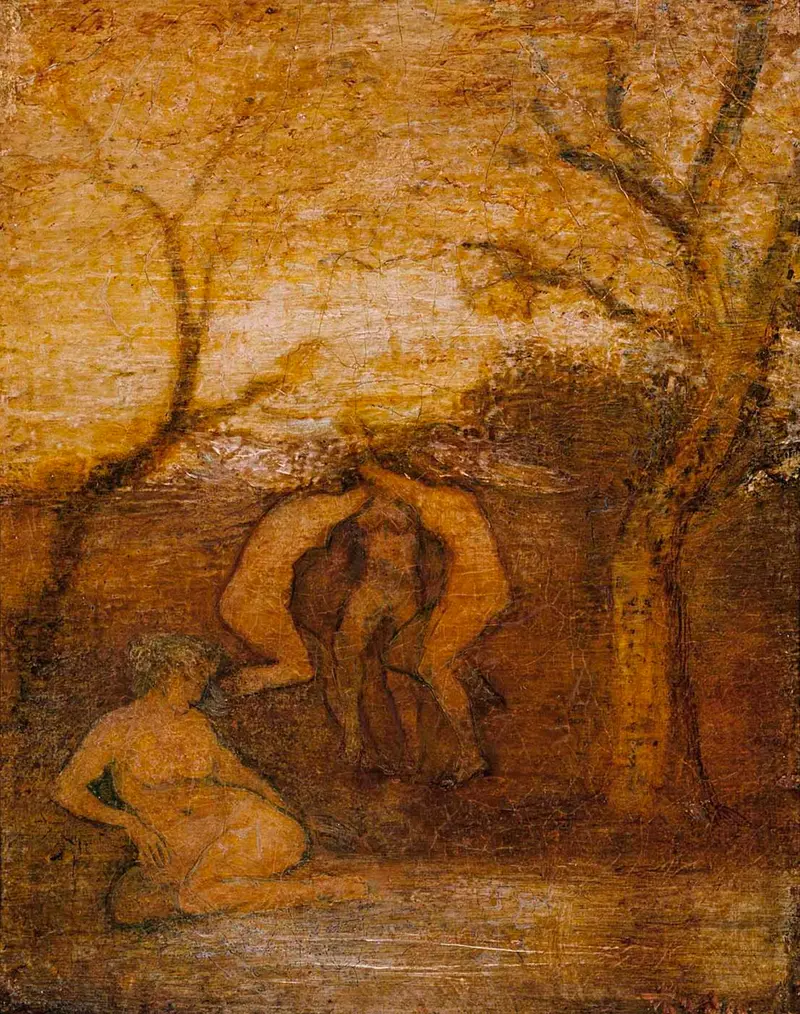
Dancing Dryads
Albert Pinkham Ryder
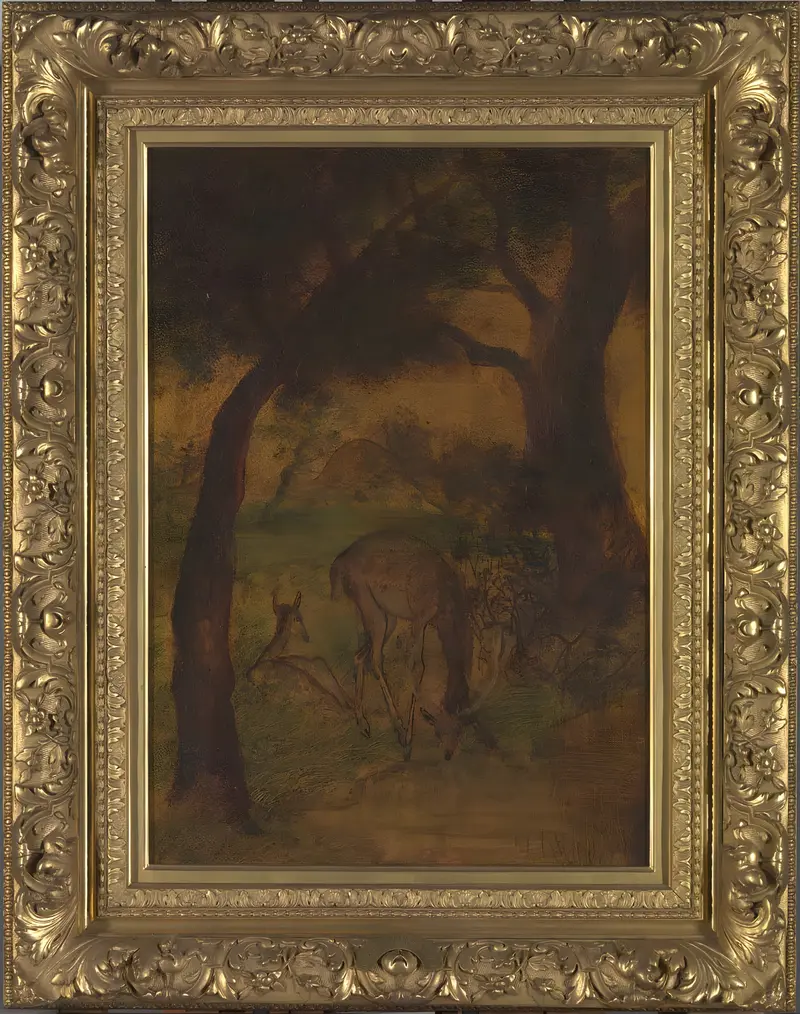
A Stag Drinking
Albert Pinkham Ryder
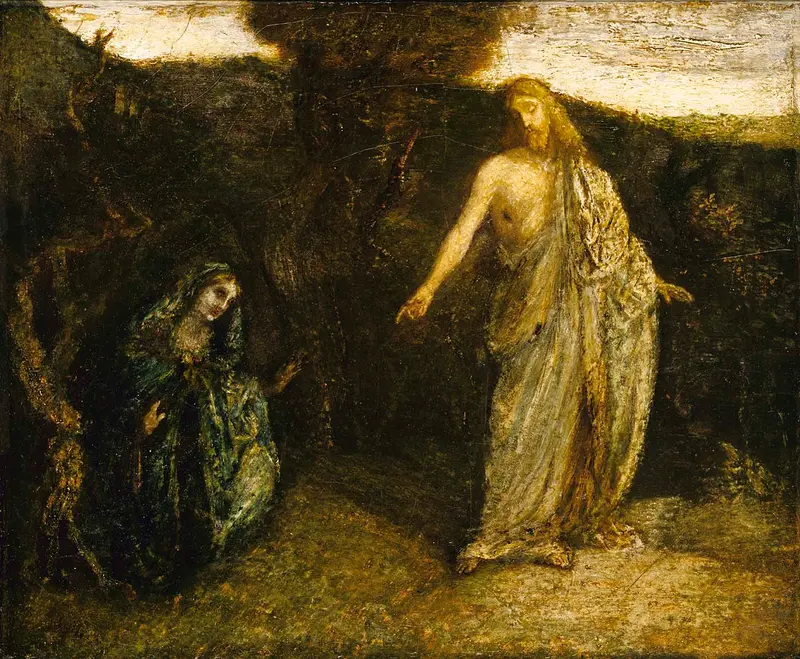
Christ Appearing to Mary
Albert Pinkham Ryder





