
Peasant with a Hoe — History & Facts
When Georges Seurat exhibited Peasant with a Hoe in 1883 at the Paris Salon, it marked one of the earliest public glimpses of the artist’s meticulous approach to rural life—years before he would revolutionize painting with Pointillism. Unlike his later, famously scientific technique, this work is painted in a more traditional style, yet it already hints at Seurat’s fascination with structure and the everyday dignity of labor. The painting stands alone; no preparatory studies or alternate versions have been found, making it a rare insight into Seurat’s formative years.
Its subject matter, a solitary laborer, was a bold choice at a time when the art world was still dominated by grand historical and mythological scenes. At the heart of the canvas, a broad-shouldered peasant pauses mid-task, his hands gripping a heavy hoe, his gaze lowered in concentration. The earth beneath him is rendered with thick, deliberate strokes, echoing the weight of his toil. The light falls from the left, casting long shadows and highlighting the rough textures of his clothes and the soil—details that underscore the physicality of his work.
Unlike Jean-François Millet’s famous The Man with the Hoe, which imbues its subject with a sense of weary resignation, Seurat’s figure stands upright and composed, suggesting endurance rather than defeat. The absence of any background distraction focuses the viewer entirely on the relationship between man and land. The early provenance of Peasant with a Hoe is not fully documented, but it is believed to have remained in private collections for much of its existence, surfacing only occasionally in exhibition records. Its medium is uncertain, though oil on canvas is likely given Seurat’s practice at the time.
Today, the painting is recognized as a key work from Seurat’s “naturalist” phase, before he turned to the scientific color theories that would define Neo-Impressionism. Its honest portrayal of rural life places it among the important French depictions of the working class in the late nineteenth century, bridging the gap between the realism of Millet and the innovations that would soon follow in Seurat’s career.
More Artworks by Georges Seurat
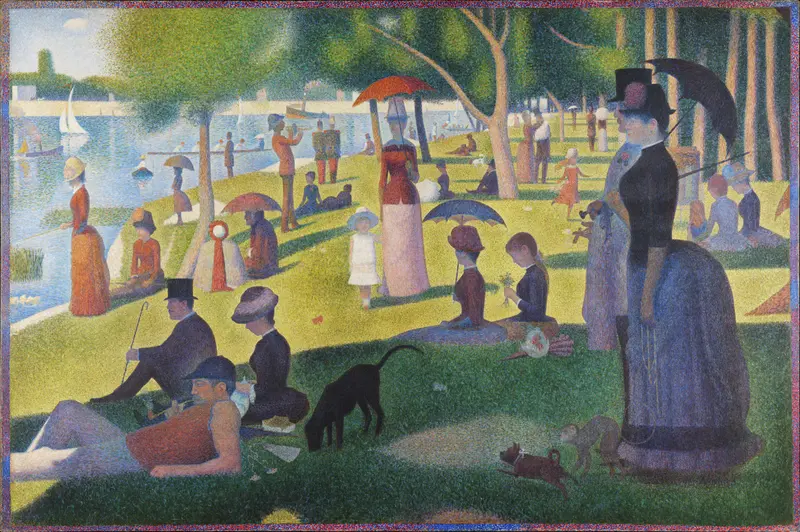
A Sunday Afternoon on the Island of La Grande Jatte
Georges Seurat
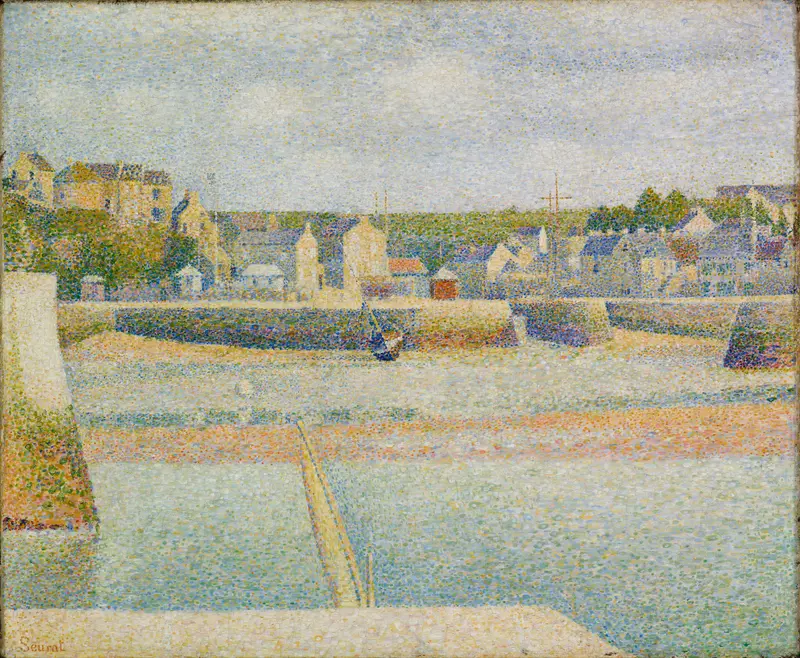
Port-en-Bessin, The Outer Harbor (Low Tide)
Georges Seurat
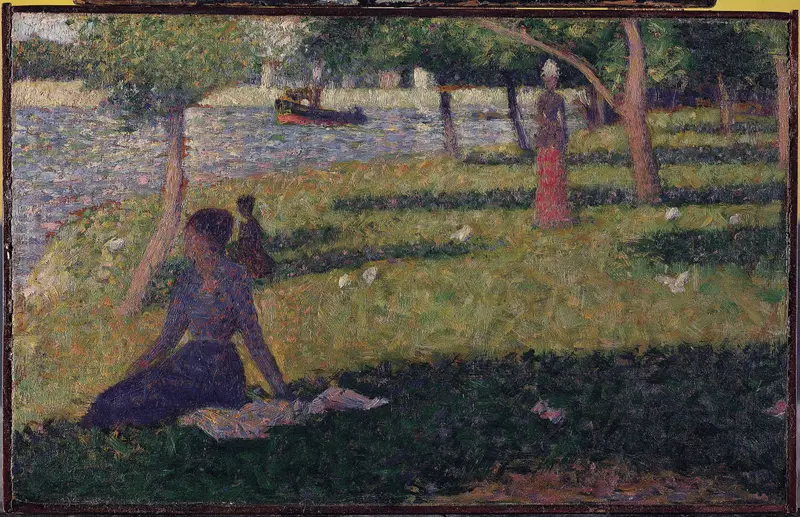
Étude pour ‘La Grande Jatte’ (Study for ‘La Grande Jatte’)
Georges Seurat
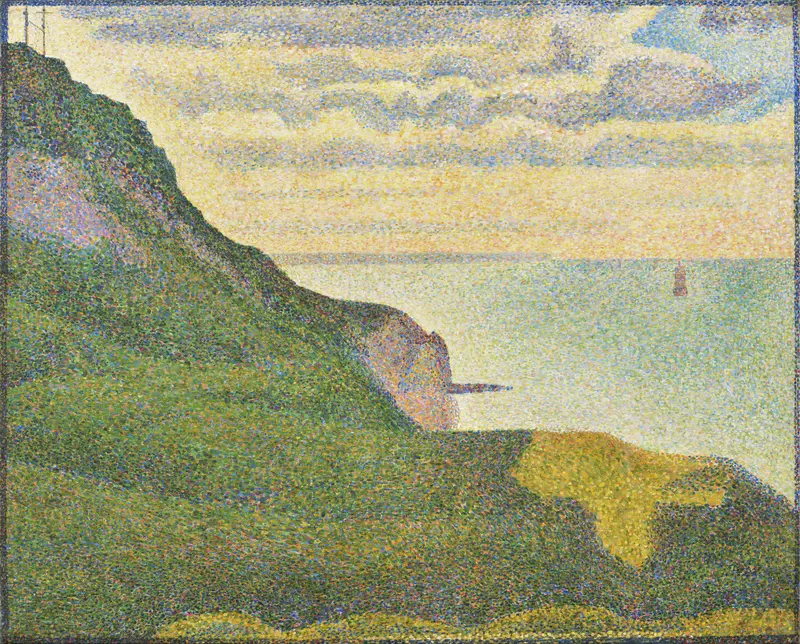
Seascape at Port-en-Bessin,Normandy
Georges Seurat
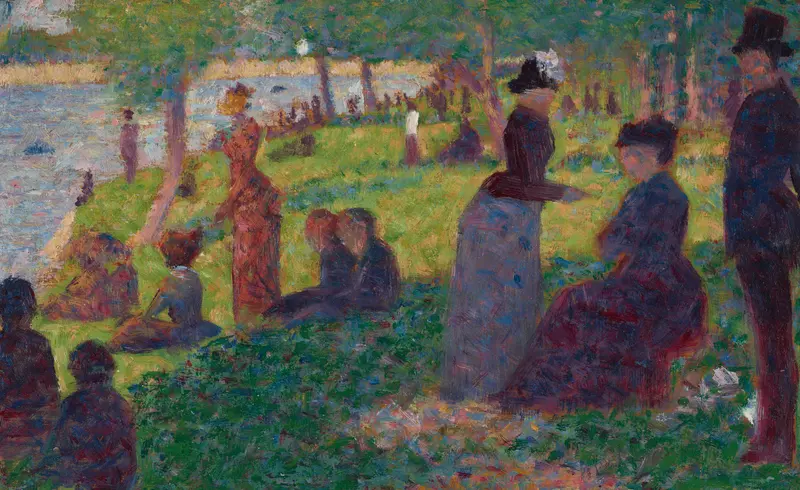
Oil Sketch for "A Sunday on La Grande Jatte — 1884"
Georges Seurat
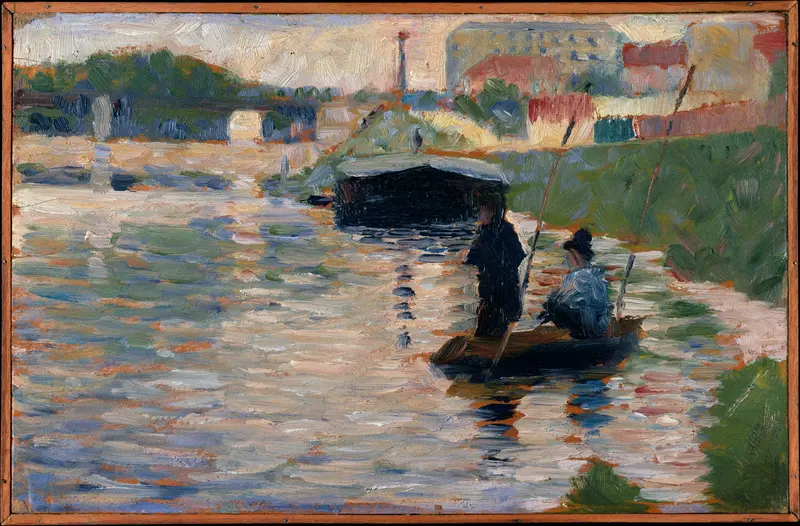
View of the Seine
Georges Seurat
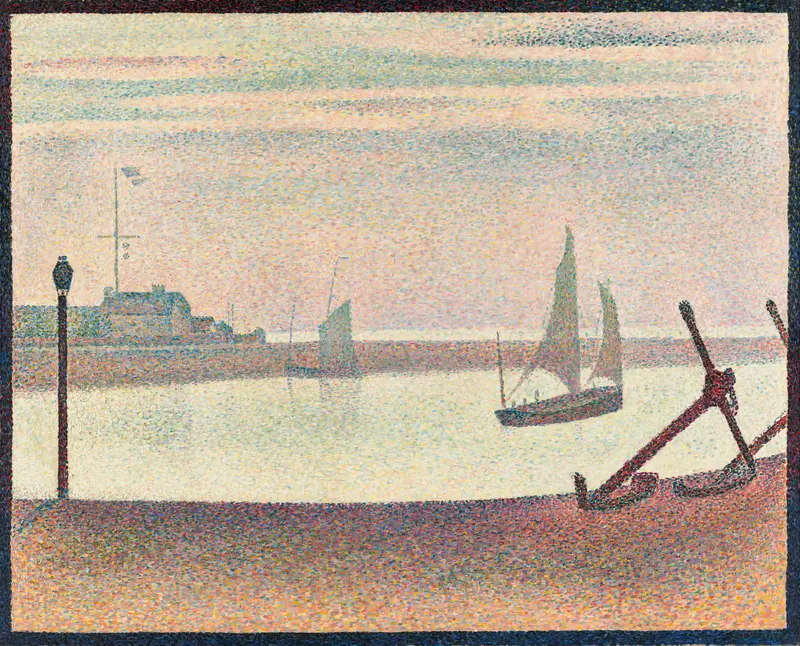
The Channel at Gravelines, Evening
Georges Seurat
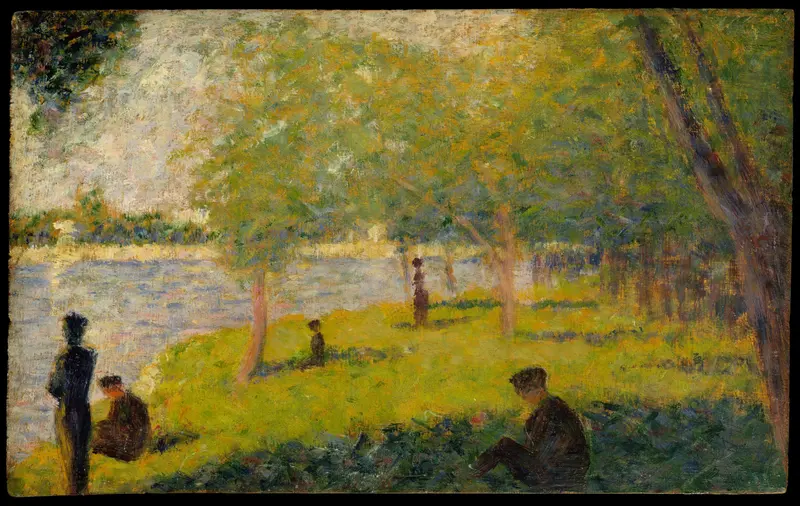
Study for ‘A Sunday on La Grande Jatte’
Georges Seurat
Study for A Sunday on La Grande Jatte
Georges Seurat
The Channel of Gravelines, Petit Fort Philippe
Georges Seurat
More Genre Scene Art

Banquet of the Officers of the St George Civic Guard
Frans Hals

Rembrandt and Saskia in the Scene of the Prodigal Son
Rembrandt van Rijn

Bal du moulin de la Galette
Pierre-Auguste Renoir

Quadrille at the Moulin Rouge
Henri de Toulouse-Lautrec

A Burial at Ornans
Gustave Courbet

When Will You Marry?
Paul Gauguin