
The Last Supper — History & Facts
At the center of the long table, Jesus Christ sits in calm isolation, his right hand open on the table and his left raised, framed by the light from the distant landscape glimpsed through three windows behind him. The twelve apostles are arranged in four groups of three on either side, each figure reacting with distinct gestures and expressions to the moment when Jesus announces that one of them will betray him. Light falls from the left, illuminating the figures and casting soft shadows, while the color scheme is dominated by cool blues and warm earth tones, with Jesus’s robe in vivid red and blue at the center.
The paint surface reveals areas of wear and restoration, with visible cracks and faded passages, yet the composition’s clarity and the expressive lines of the figures remain striking. The perspective lines of the ceiling and walls converge on Christ’s head, reinforcing his central role and organizing the scene with mathematical precision. At the far left of the table, a figure in green and blue leans forward with both hands on the table, his face turned toward the group beside him.
On the right edge, two figures in pale robes are engaged in conversation, with one gesturing toward the other with both hands. The table is set with scattered pieces of bread, small plates, and blue-and-white ceramic cups, with a long white cloth draped over the front edge and faint vertical stripes visible in the fabric. The Last Supper was created by Leonardo da Vinci in the 1490s for the refectory of the Convent of Santa Maria delle Grazie in Milan. The painting’s technique, using tempera on gesso, allowed for regular revisions but has contributed to its fragility and the extensive restoration it has undergone.
Sources: Santa Maria delle Grazie · Wikidata Q128910 · Wikipedia: The Last Supper (Leonardo) · Image source (Wikimedia Commons)
More Artworks by Leonardo da Vinci

Sheet of Studies
Leonardo da Vinci
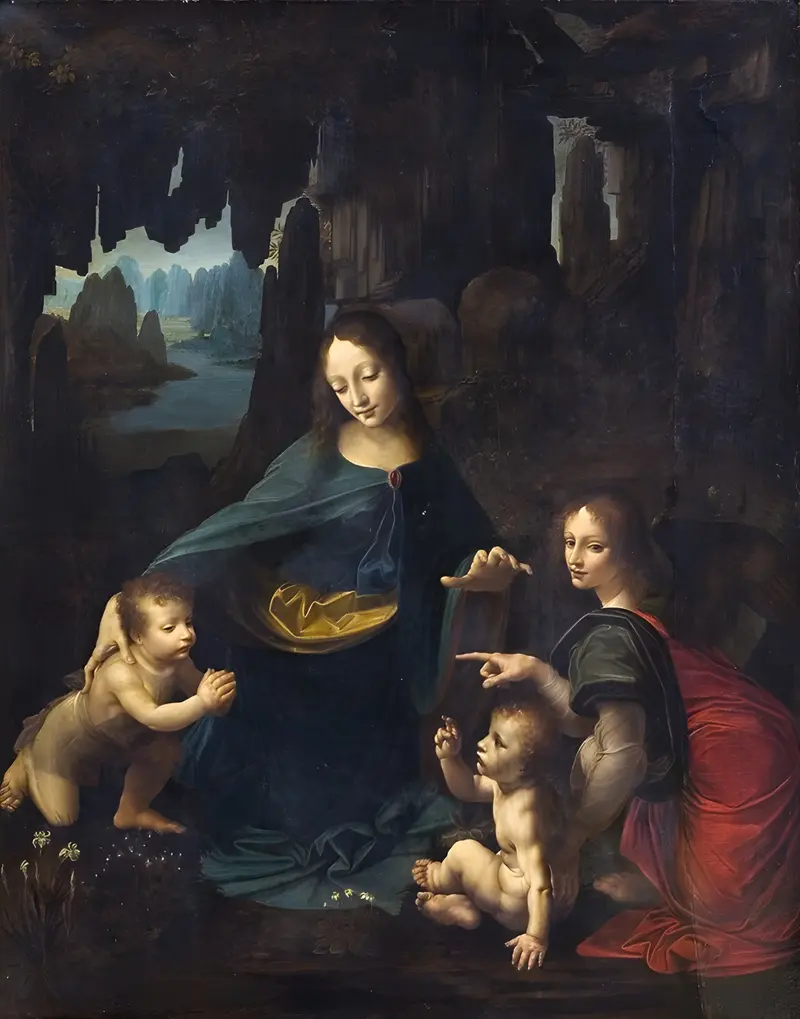
The Virgin of the Rocks
Leonardo da Vinci
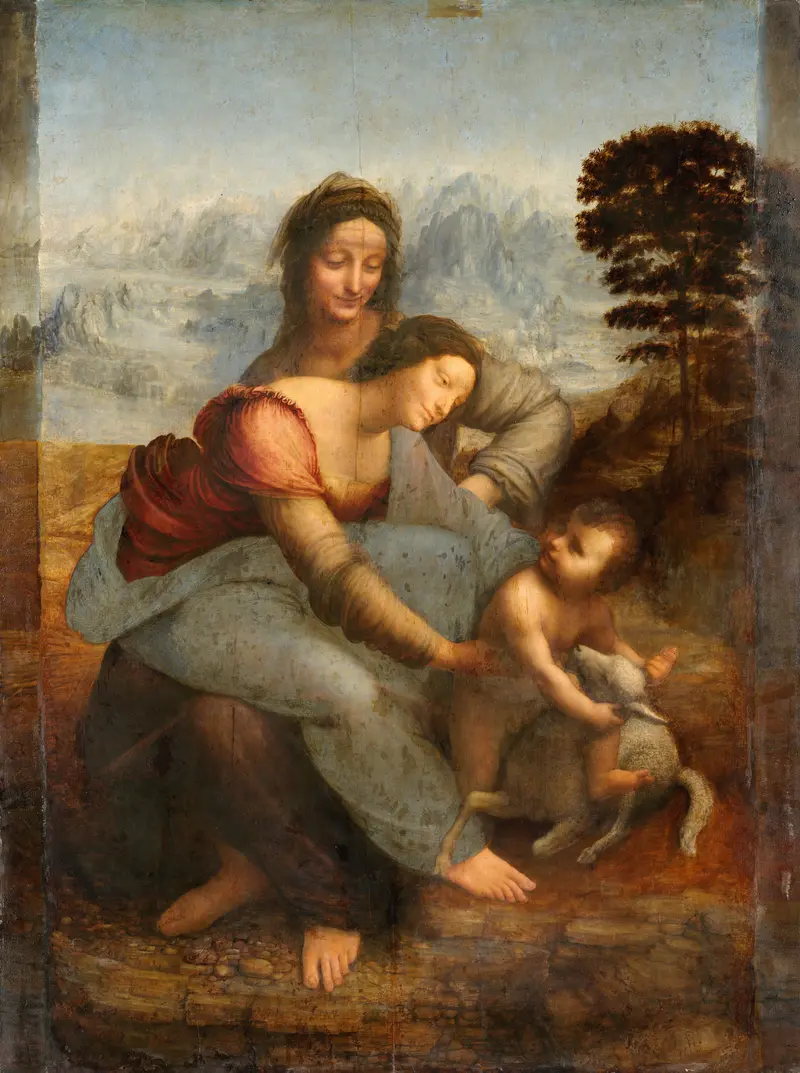
The Virgin and Child with St. Anne
Leonardo da Vinci
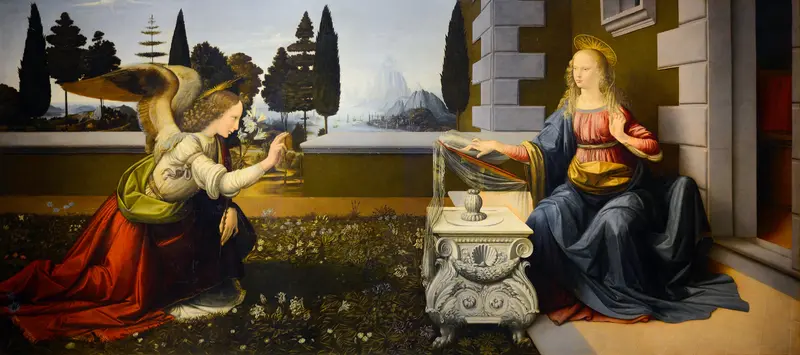
Annunciation
Leonardo da Vinci
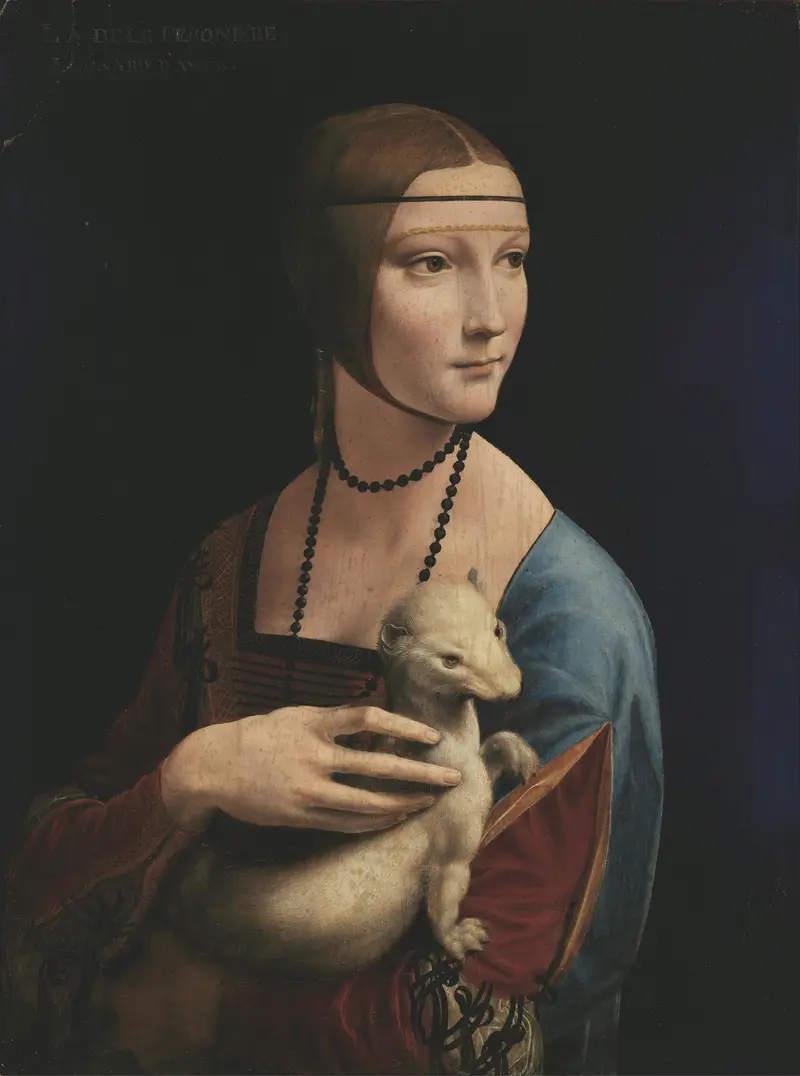
Lady with an Ermine
Leonardo da Vinci
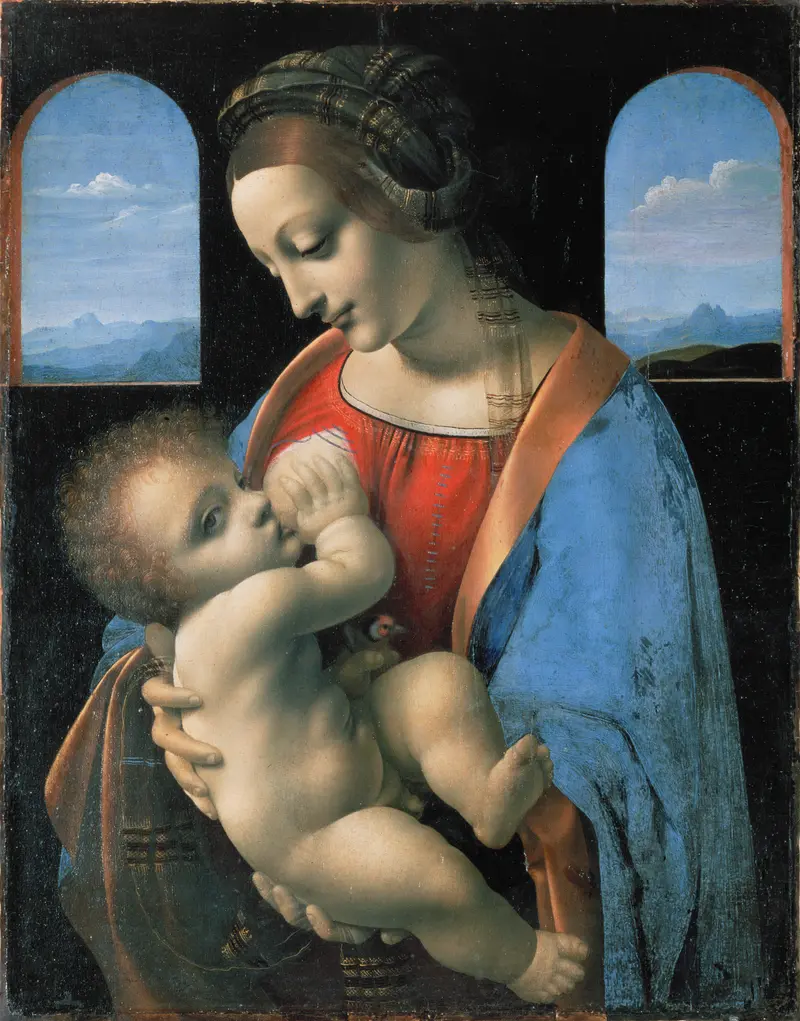
Madonna Litta
Leonardo da Vinci
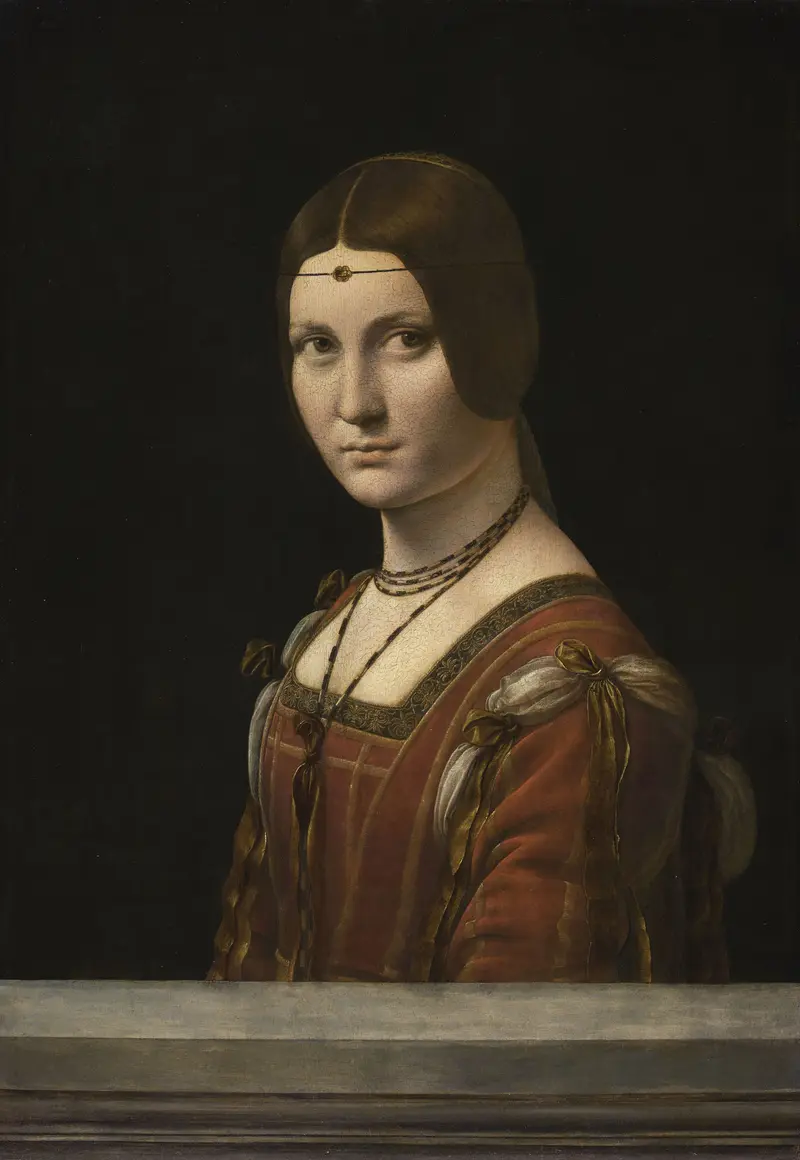
La Belle Ferronnière
Leonardo da Vinci
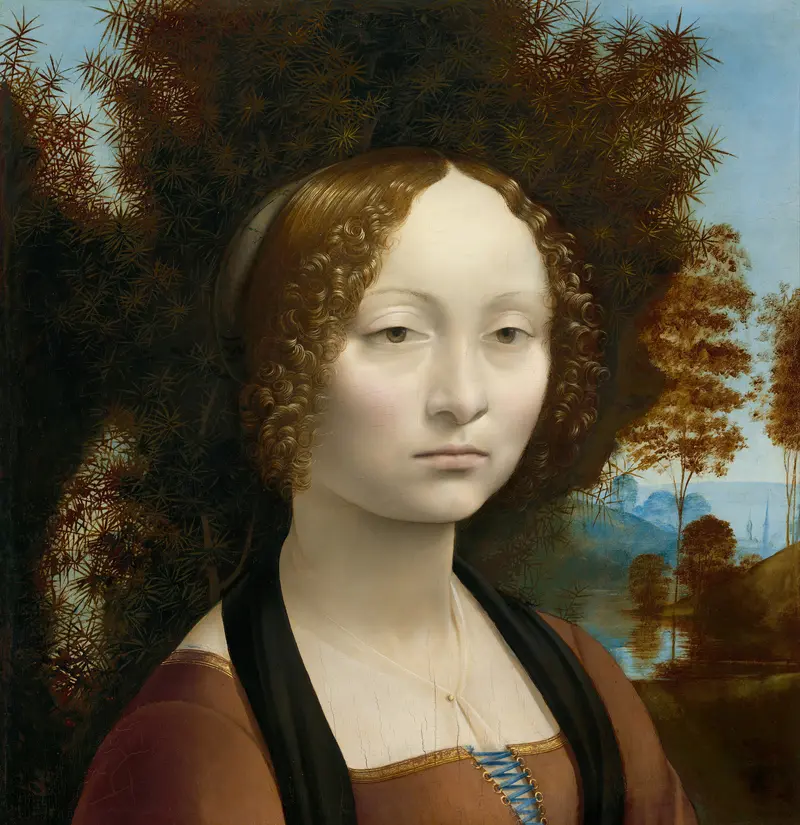
Ginevra de' Benci
Leonardo da Vinci
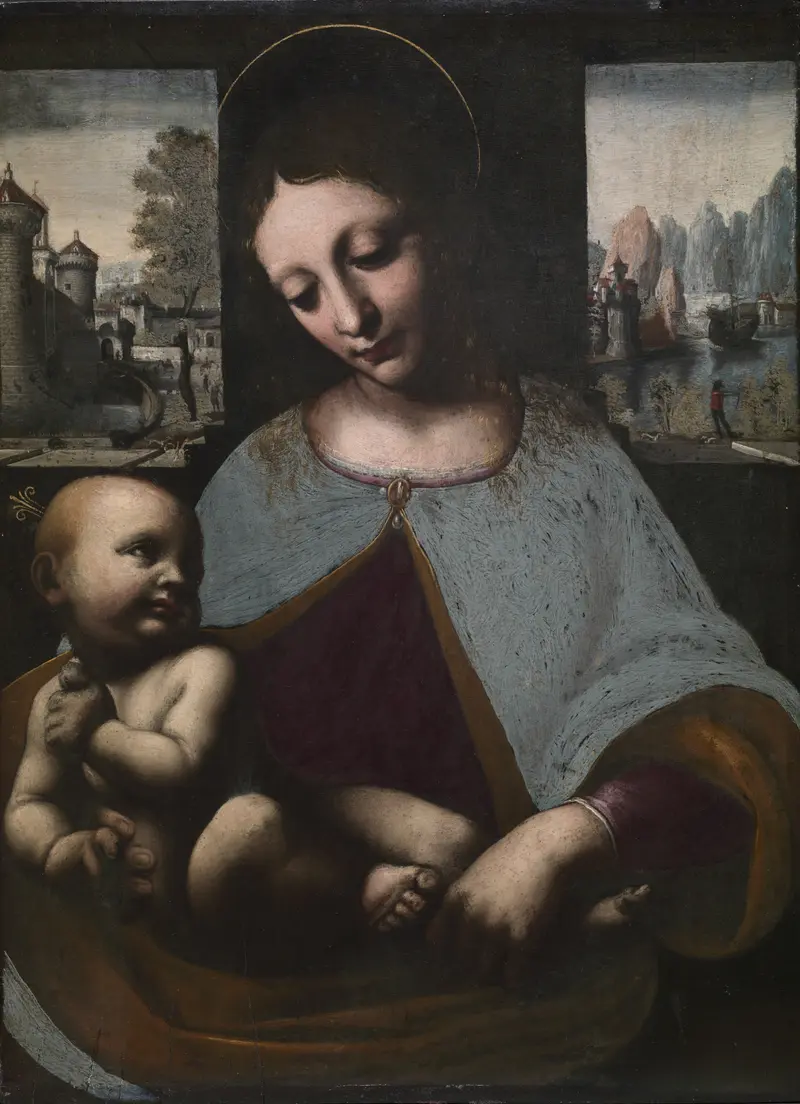
Virgin and Child
Leonardo da Vinci

Head of an Old Man, and Studies of Machinery
Leonardo da Vinci





