
The Procuress — History & Facts
No other painting by Johannes Vermeer is signed and dated as clearly as The Procuress—the artist’s name and the year 1656 are boldly inscribed on the canvas, making it a rare anchor point in his early career. This work stands apart for another reason: it is one of only two Vermeers with a known self-portrait, as the artist is believed to have painted himself in the shadows, holding a glass and looking out at the viewer. The painting’s subject—a brothel scene—was a popular genre in mid-17th-century Delft, but Vermeer’s approach is unusually direct and theatrical, sparking debate about his intentions. At the heart of The Procuress, a young soldier leans in to touch the breast of a richly dressed woman, coins exchanged in the foreground as an older woman, the procuress, looks on approvingly.
The young woman’s gaze is ambiguous, neither welcoming nor rejecting, while the soldier’s bold gesture and the procuress’s knowing smile leave little doubt about the transaction underway. The figure in the dark beret, thought to be Vermeer himself, sits apart from the action, raising a glass in a silent toast—perhaps a comment on the painter’s own role as observer. The strong contrasts of light and shadow, the vivid reds and yellows, and the careful rendering of fabrics all point to the influence of Caravaggio and the Dutch genre painter Dirck van Baburen, whose own brothel scenes hung in Vermeer’s mother-in-law’s house. The early provenance of The Procuress is uncertain, but by the 20th century it had found its way to the Gemäldegalerie Alte Meister in Dresden, where it remains today.
Unlike Vermeer’s later, more serene interiors, this painting is lively and crowded, reflecting the tastes of the Dutch middle class for moralizing genre scenes. Scholars have long debated whether the painting’s brashness is a youthful experiment or a deliberate engagement with popular themes of the time. As one of Vermeer’s earliest surviving works, it offers a glimpse into his artistic development before he turned to the luminous, intimate scenes that would define his legacy.
More Artworks by Johannes Vermeer

View of Delft
Johannes Vermeer

Girl with a Pearl Earring
Johannes Vermeer
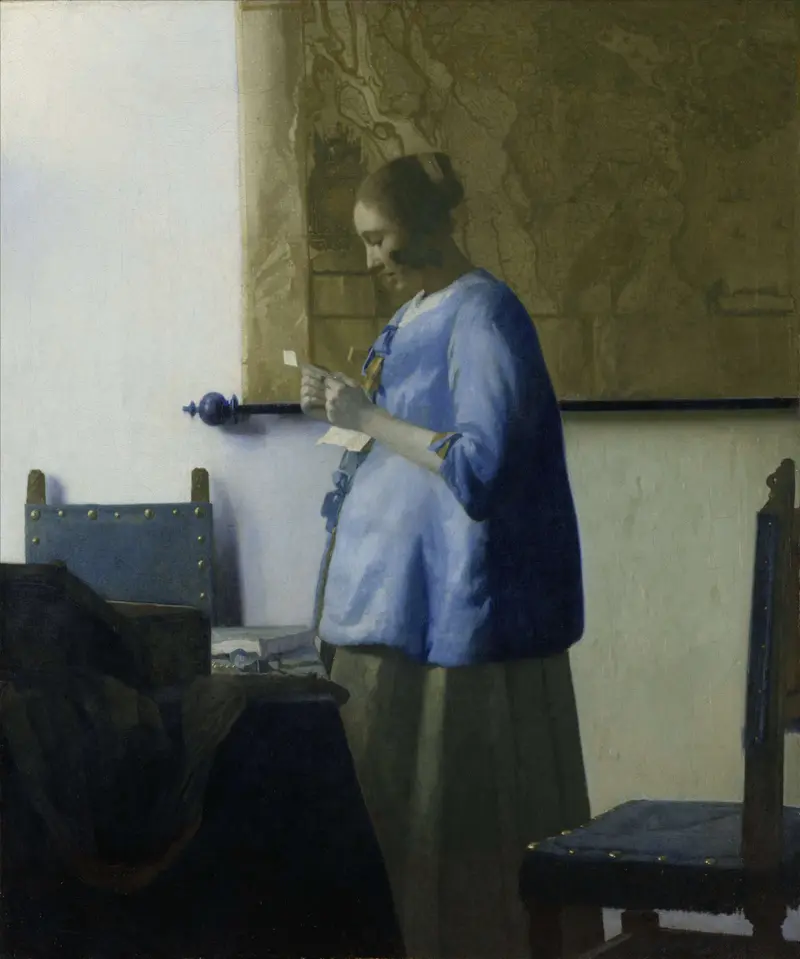
Woman in Blue Reading a Letter
Johannes Vermeer
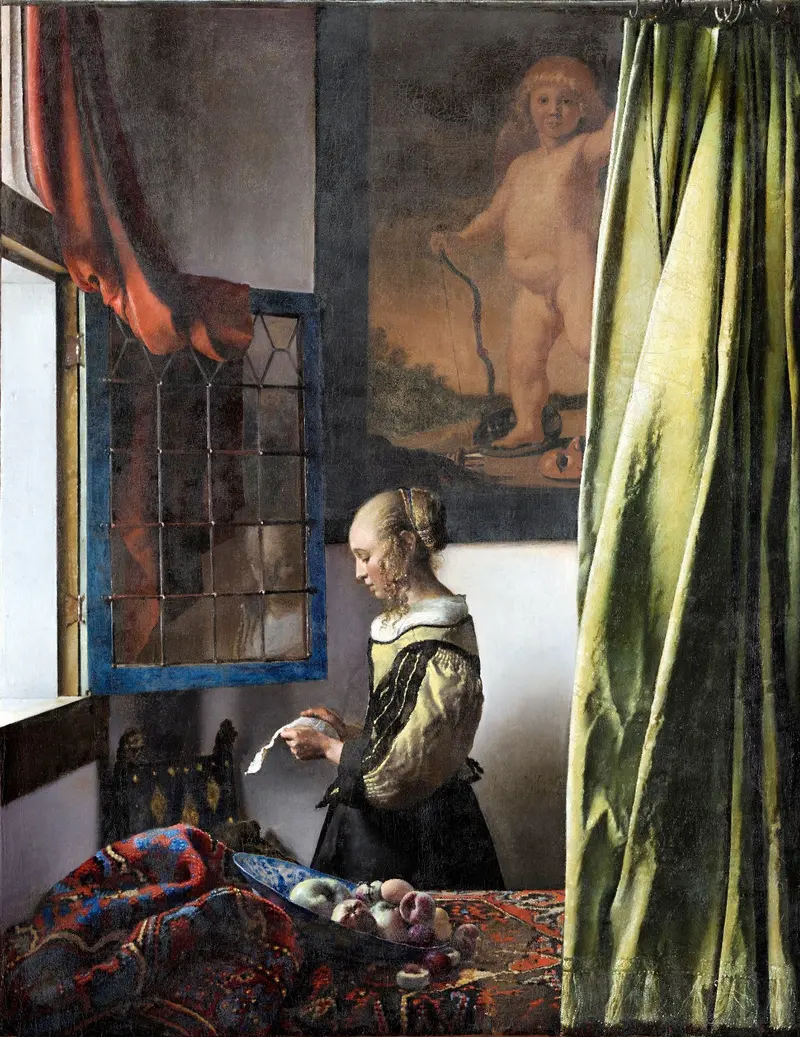
Girl Reading a Letter at an Open Window
Johannes Vermeer
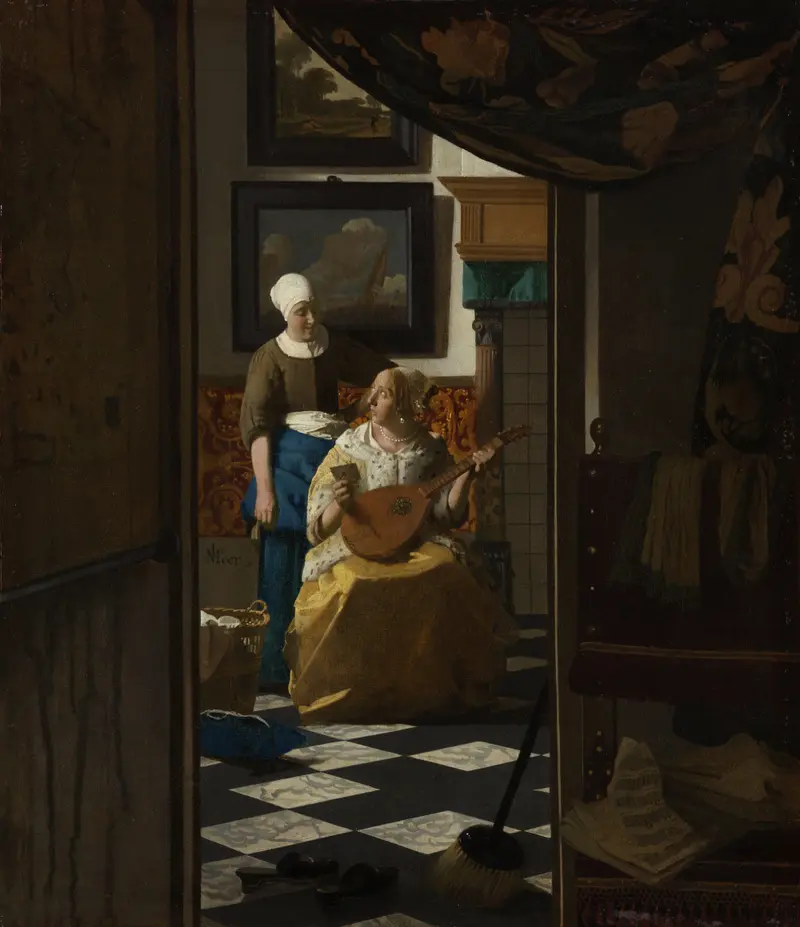
The Love Letter
Johannes Vermeer

The Music Lesson
Johannes Vermeer

A Girl Asleep
Johannes Vermeer
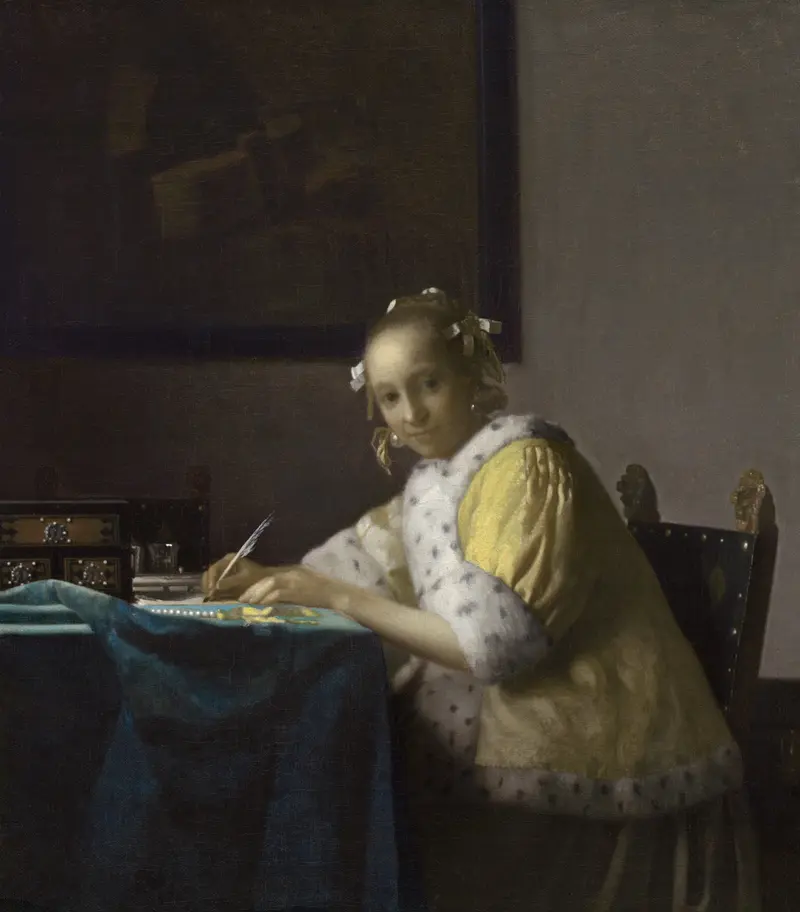
A Lady Writing a Letter
Johannes Vermeer
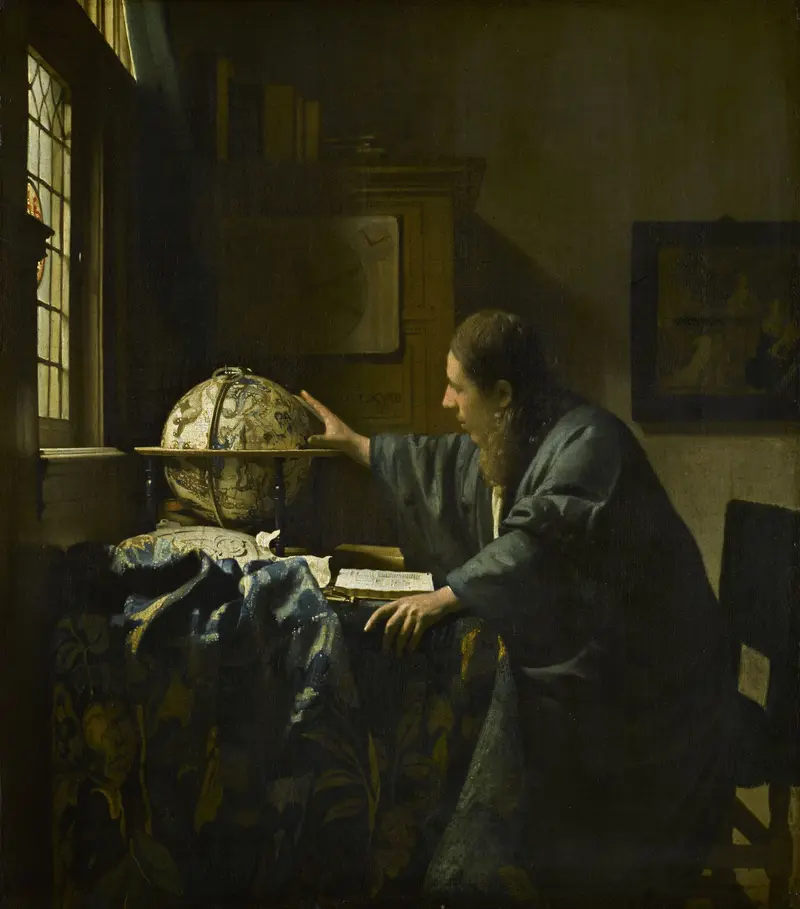
The Astronomer
Johannes Vermeer
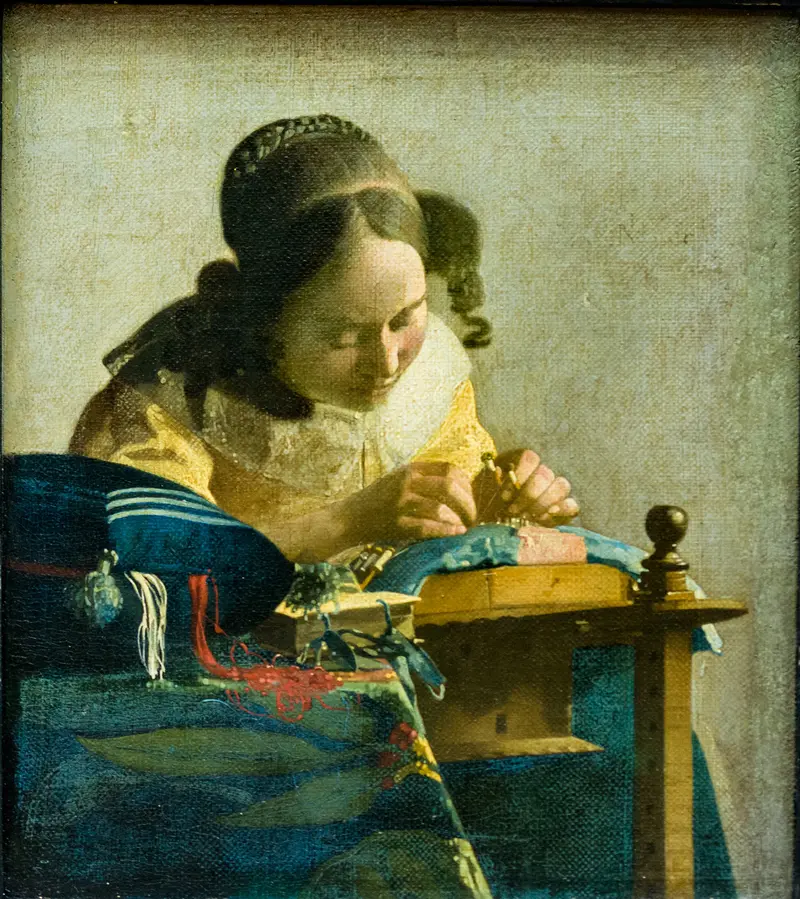
The Lacemaker
Johannes Vermeer
More Genre Scene Art

Banquet of the Officers of the St George Civic Guard
Frans Hals

Rembrandt and Saskia in the Scene of the Prodigal Son
Rembrandt van Rijn

Bal du moulin de la Galette
Pierre-Auguste Renoir

Quadrille at the Moulin Rouge
Henri de Toulouse-Lautrec

A Burial at Ornans
Gustave Courbet

When Will You Marry?
Paul Gauguin