
The Progress of Love: Reverie — History & Facts
Commissioned in 1771 by Madame du Barry, the last mistress of Louis XV, The Progress of Love: Reverie by Jean-Honoré Fragonard was originally intended to decorate her new pavilion at Louveciennes. Yet, despite the artist’s reputation and the lavishness of the project, the series was rejected by Madame du Barry after completion, replaced by the more restrained work of Joseph-Marie Vien. This abrupt dismissal left Fragonard’s cycle in limbo, a rare instance where a royal favorite turned away from the exuberance of Rococo in favor of neoclassical restraint.
The paintings lingered in Fragonard’s family for decades, their fate uncertain and their story emblematic of shifting tastes at the end of the Ancien Régime. In Reverie, Fragonard captures a young woman lost in thought, seated in a lush, overgrown garden. She leans on a stone pedestal, her gaze unfocused, a letter or note slipping from her hand—her mind adrift in the hopes and anxieties of love. The garden, rendered in loose, feathery brushwork, envelops her in a world of private longing, while the soft, diffused light hints at the fleeting, secretive nature of romance.
The motif of the abandoned letter recurs in Fragonard’s work, but here it serves as a silent confession, a visual echo of the uncertainties of the heart. Compared to the more theatrical love scenes of François Boucher, Fragonard’s approach is quieter, more introspective, emphasizing emotion over spectacle. After its rejection, Reverie and its companion pieces remained with Fragonard, passing through his descendants before being sold and scattered. In the twentieth century, the panels were reunited and now reside at The Frick Collection in New York, where they are celebrated as some of the finest achievements of French Rococo painting.
This episode marked a turning point in Fragonard’s career: the disappointment at Louveciennes pushed him to retreat from public commissions, focusing instead on private and intimate works. Today, The Progress of Love: Reverie stands as a testament to both the brilliance and the vulnerability of an artist caught between changing eras.
More Artworks by Jean-Honoré Fragonard

The Swing
Jean-Honoré Fragonard

The Swing
Jean-Honoré Fragonard

A Young Girl Reading
Jean-Honoré Fragonard

The Lock
Jean-Honoré Fragonard

The Triumph of Venus
Jean-Honoré Fragonard

A Game of Hot Cockles
Jean-Honoré Fragonard
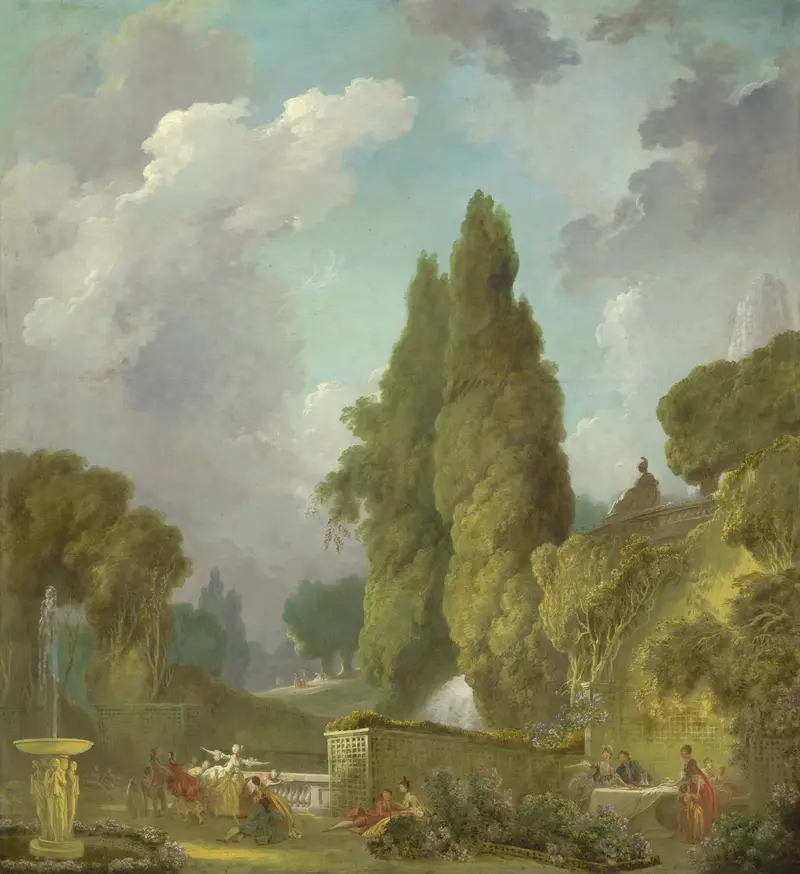
Blindman’s Buff
Jean-Honoré Fragonard
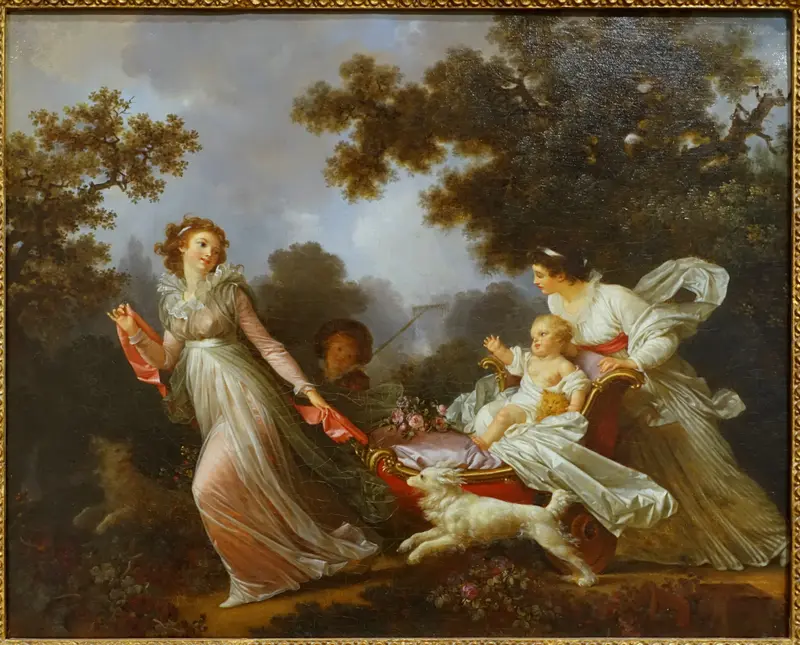
The Beloved Child
Jean-Honoré Fragonard
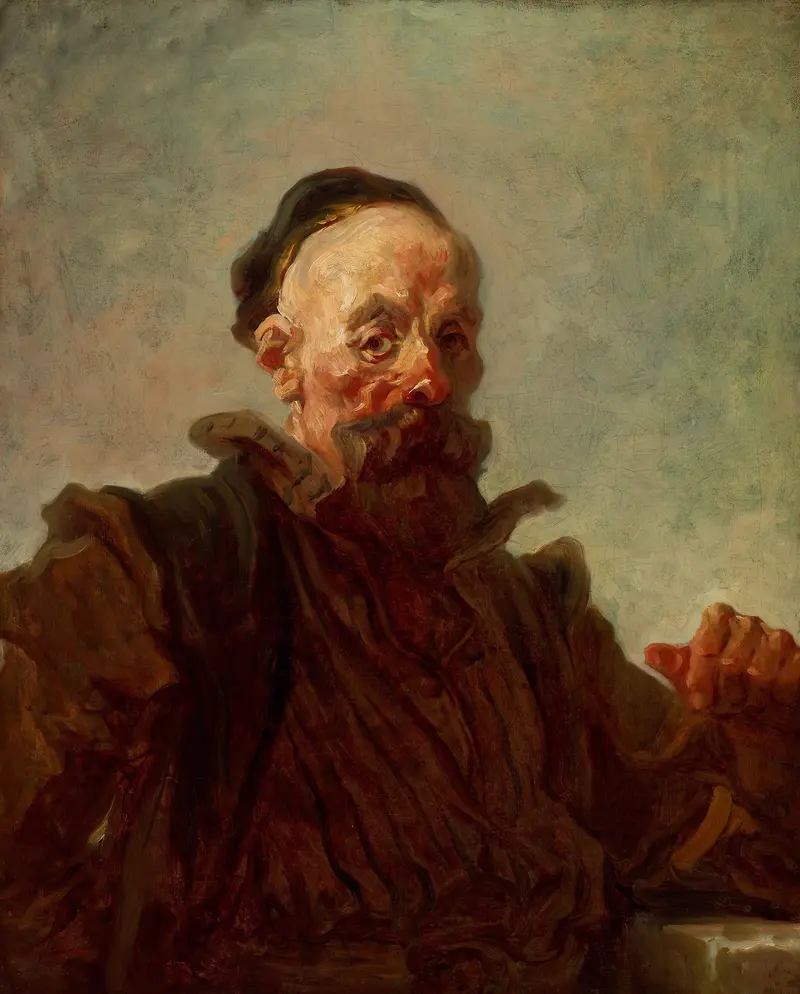
Portrait of a Man in Costume
Jean-Honoré Fragonard
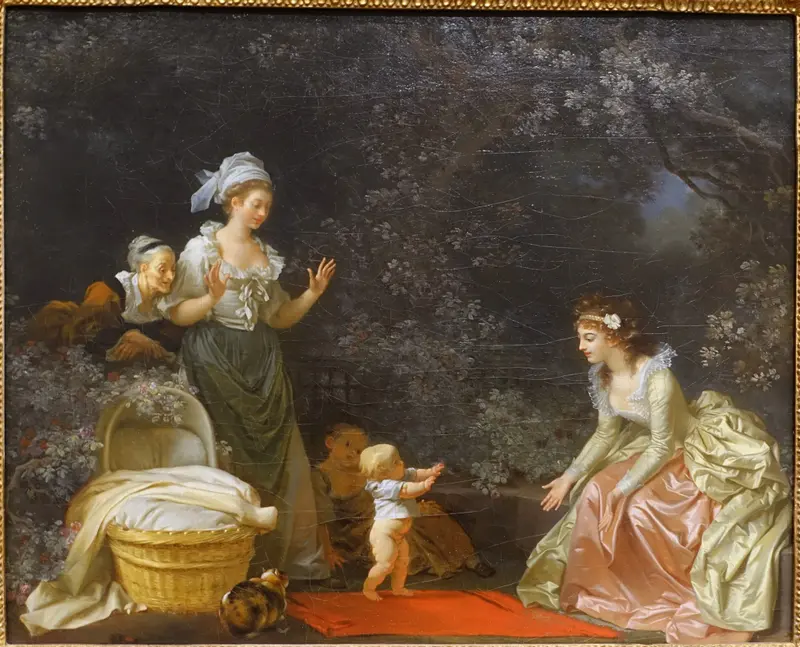
The First Steps
Jean-Honoré Fragonard
More Genre Scene Art

Banquet of the Officers of the St George Civic Guard
Frans Hals

Rembrandt and Saskia in the Scene of the Prodigal Son
Rembrandt van Rijn

Bal du moulin de la Galette
Pierre-Auguste Renoir

Quadrille at the Moulin Rouge
Henri de Toulouse-Lautrec

A Burial at Ornans
Gustave Courbet

When Will You Marry?
Paul Gauguin