A Young Woman Seated at the Virginals — History & Facts
No other painting by Johannes Vermeer has sparked as much debate over its authenticity and attribution as "A Young Woman Seated at the Virginals." For decades, scholars argued over whether this luminous scene was truly by Vermeer’s hand or the work of a follower, due to the absence of a signature and the painting's mysterious provenance. It was not until the late 20th century, after careful technical analysis and comparison with Vermeer’s other works, that a consensus emerged: this is indeed one of the artist’s last surviving canvases, painted around 1670. The scene captures a young woman, elegantly dressed and poised before a virginal, her fingers just above the keys. The moment is suspended between sound and silence; she gazes directly at the viewer, inviting us into her private world of music and reflection.
The soft, cool light entering from the left bathes her face and the instrument, picking out the delicate embroidery of her dress and the sheen of the lacquered wood. Behind her, a painting within the painting—possibly a landscape—suggests a world beyond the music room, while the chair’s lion-head finials echo motifs found in Vermeer’s "The Music Lesson." Every object, from the foot-warmer to the patterned floor tiles, is rendered with a clarity that speaks to Vermeer’s fascination with the quiet drama of domestic life. The painting’s early history remains obscure; it surfaced in the 19th century in England, long after Vermeer’s death and the dispersal of his modest oeuvre. Its attribution was questioned until the 1970s, when scientific analysis of the pigments and canvas matched those used in other Vermeer works.
Today, A Young Woman Seated at the Virginals resides in the Leiden Collection, New York, and stands as one of only about three dozen paintings confidently attributed to Vermeer. Its intimate scale and subject mark it as a late work, created during a period when the artist was exploring the subtleties of light, music, and female interiority.
More Artworks by Johannes Vermeer

View of Delft
Johannes Vermeer

Girl with a Pearl Earring
Johannes Vermeer
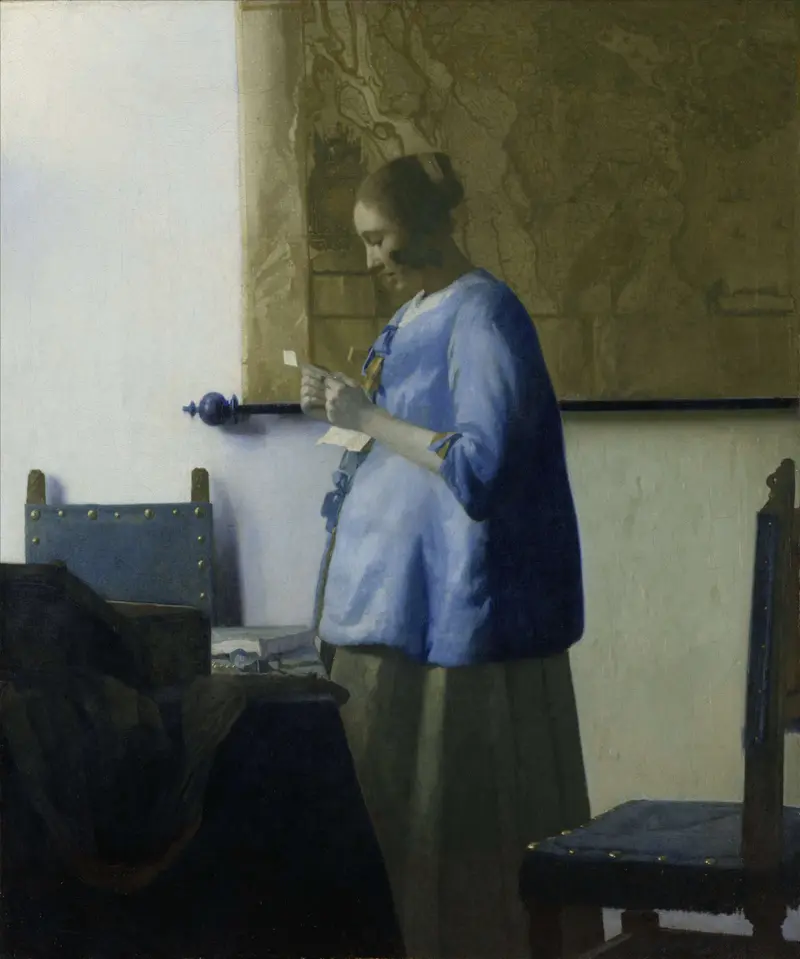
Woman in Blue Reading a Letter
Johannes Vermeer
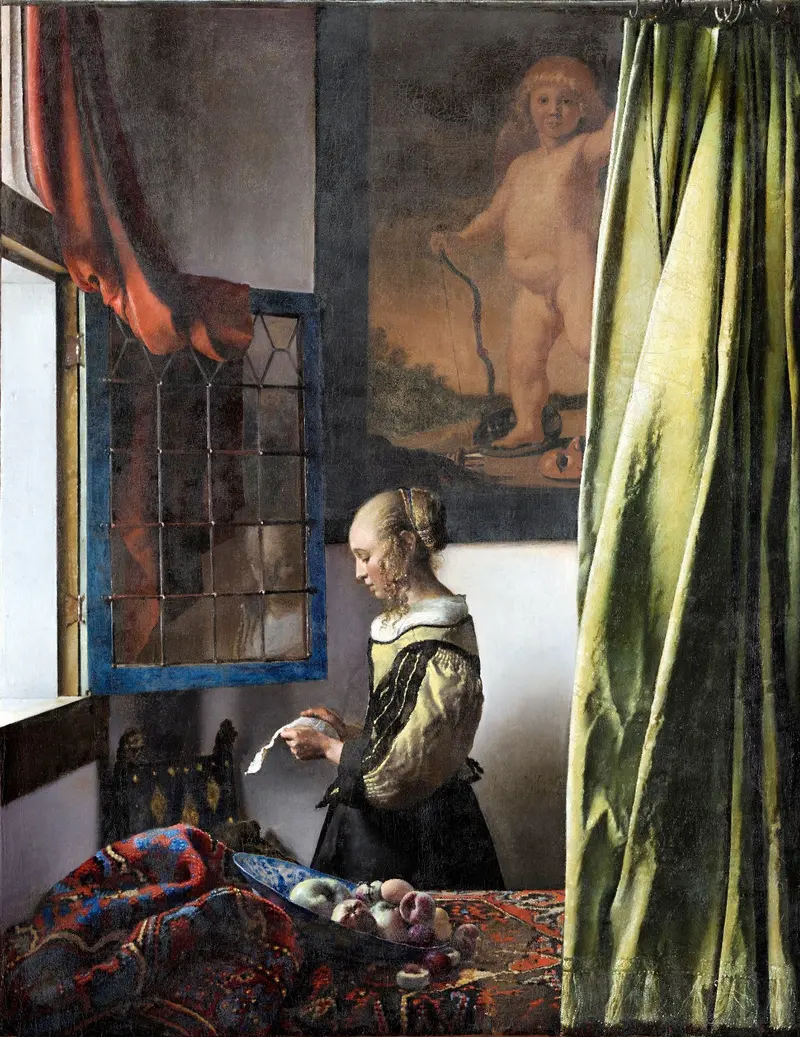
Girl Reading a Letter at an Open Window
Johannes Vermeer
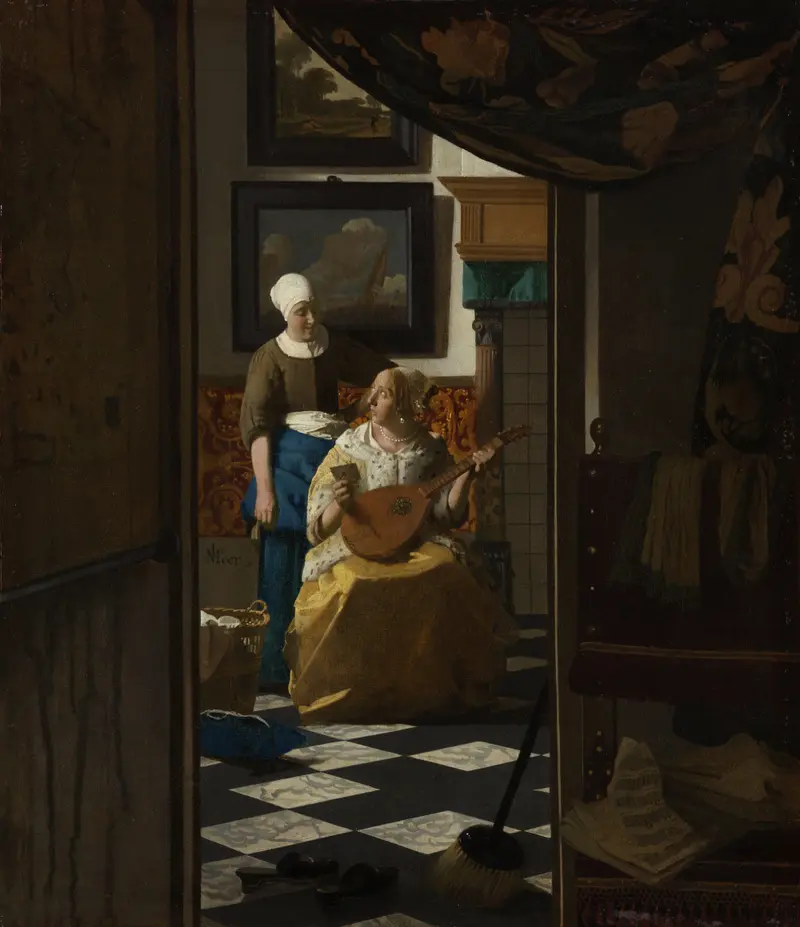
The Love Letter
Johannes Vermeer

The Music Lesson
Johannes Vermeer

A Girl Asleep
Johannes Vermeer
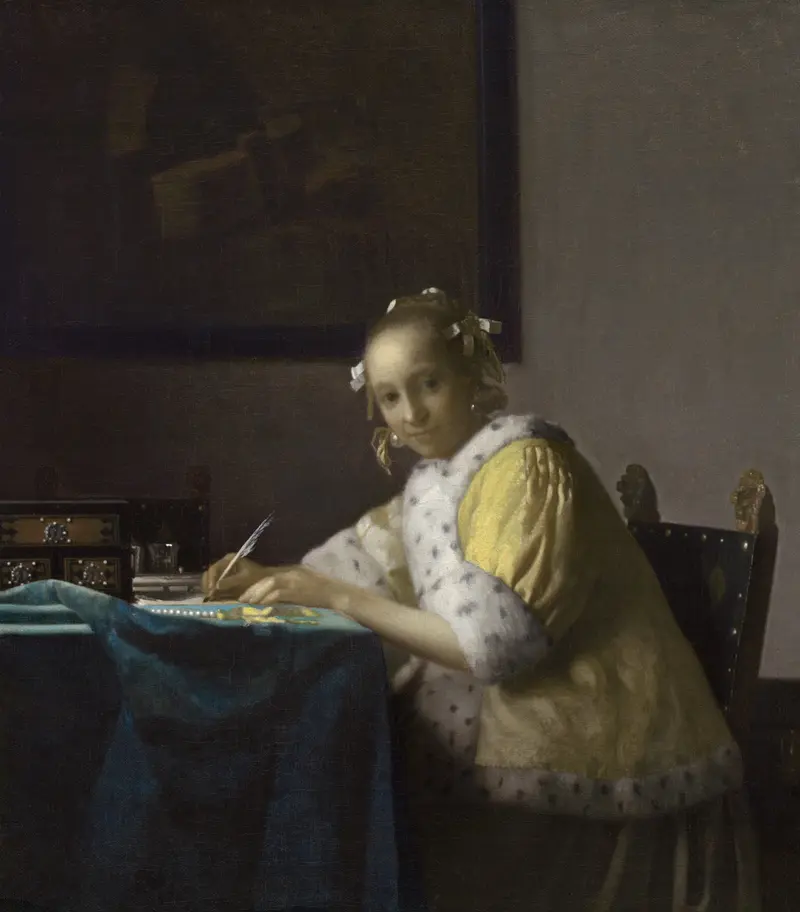
A Lady Writing a Letter
Johannes Vermeer
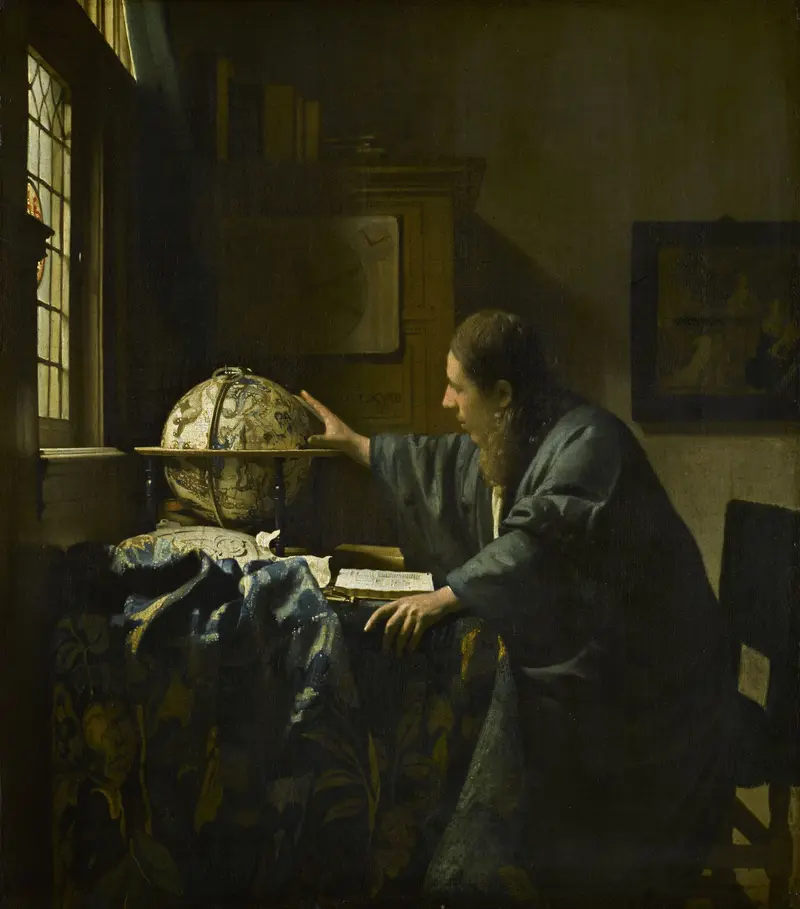
The Astronomer
Johannes Vermeer
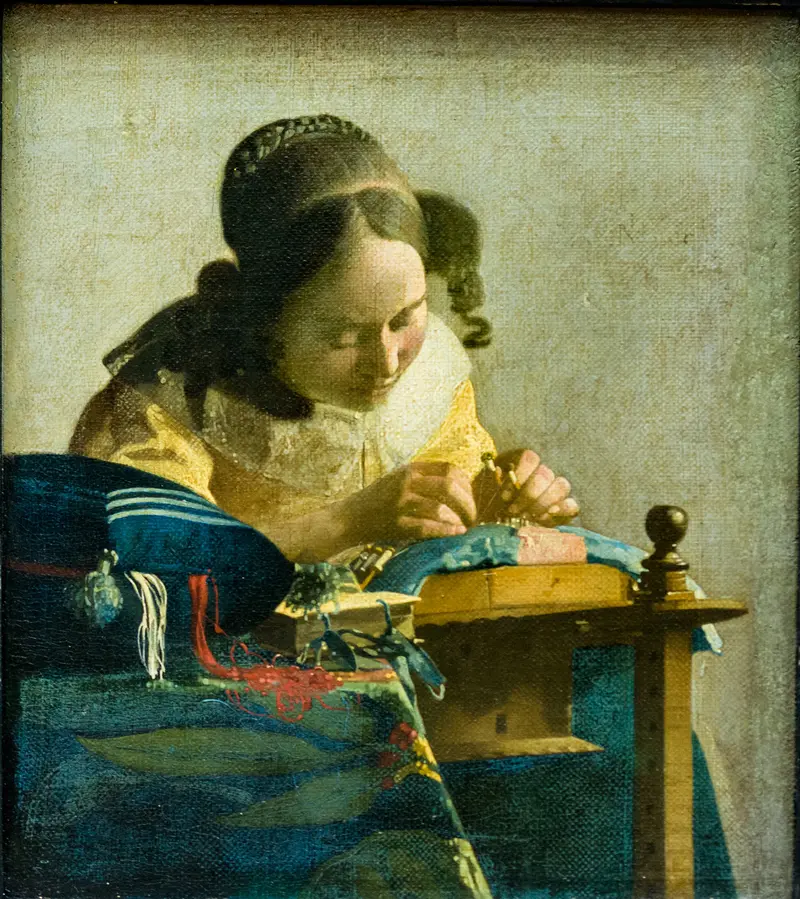
The Lacemaker
Johannes Vermeer