
Lamia — History & Facts
What draws the eye first in Lamia is the charged stillness between the armored knight and the woman at his feet, her pale skin luminous against the dark, tangled wood. The knight leans toward her, his heavy armor a sharp contrast to her bare shoulders and flowing, earth-hued gown. Her hands, delicate and almost trembling, reach up to his gauntlet as if to hold him in the world of the living, or perhaps to draw him into hers.
Light pools on her upturned face and arm, guiding us to the intensity of her gaze and the knight’s troubled, downward look. The forest presses close, thick with shadow, while roses bloom at the base of the stone well, suggesting both beauty and danger in this moment of enchantment. Painted in 1905, this work belongs to the twilight years of the Pre-Raphaelite and Symbolist movements, when artists like John William Waterhouse turned to myth and poetry for subjects that blurred the line between reality and dream. Such paintings were often commissioned or collected by those who longed for a vision of romance and mystery, a world apart from the industrial bustle of Edwardian England.
The title Lamia hints at the mythic or literary source—perhaps Keats’ poem, with its fatal love between mortal and enchantress—yet history has kept few traces of this particular painting’s journey. What remains is the tension of the scene itself: an encounter poised between longing and loss, inviting the viewer to linger over every detail and imagine the story that might unfold.
More Artworks by John William Waterhouse
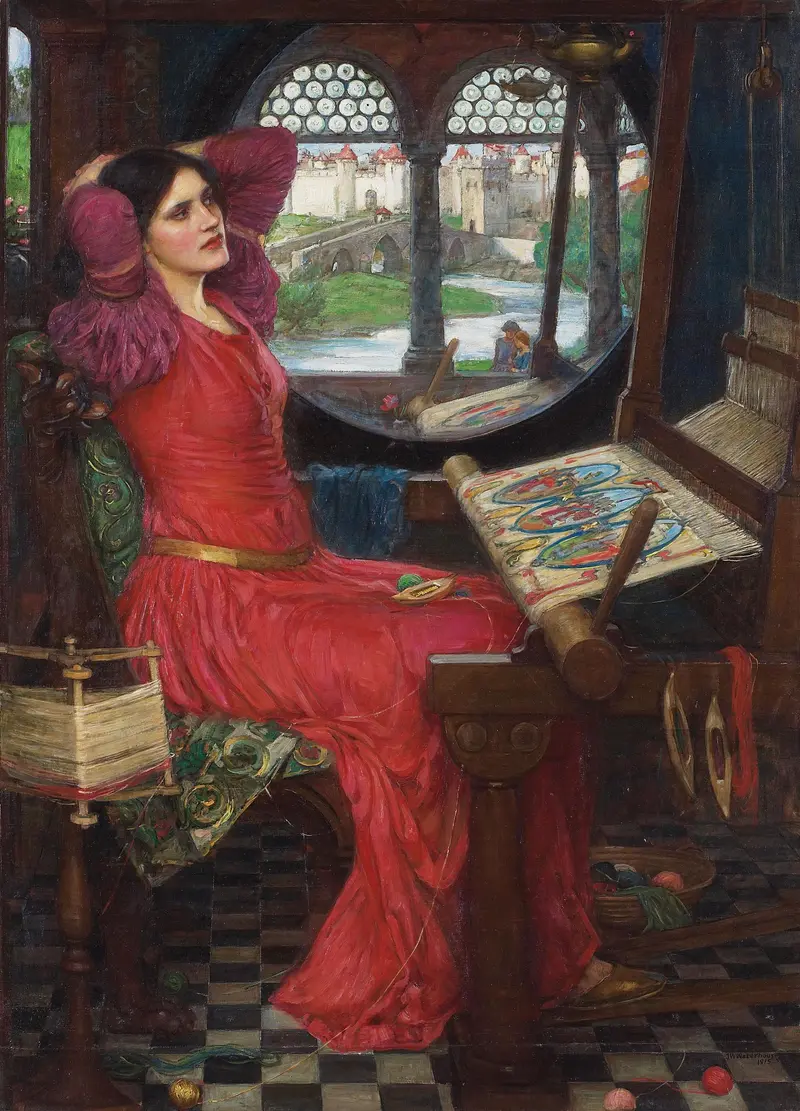
'I Am Half-Sick of Shadows,' Said the Lady of Shalott
John William Waterhouse

The Favourites of the Emperor Honorius, 1883
John William Waterhouse
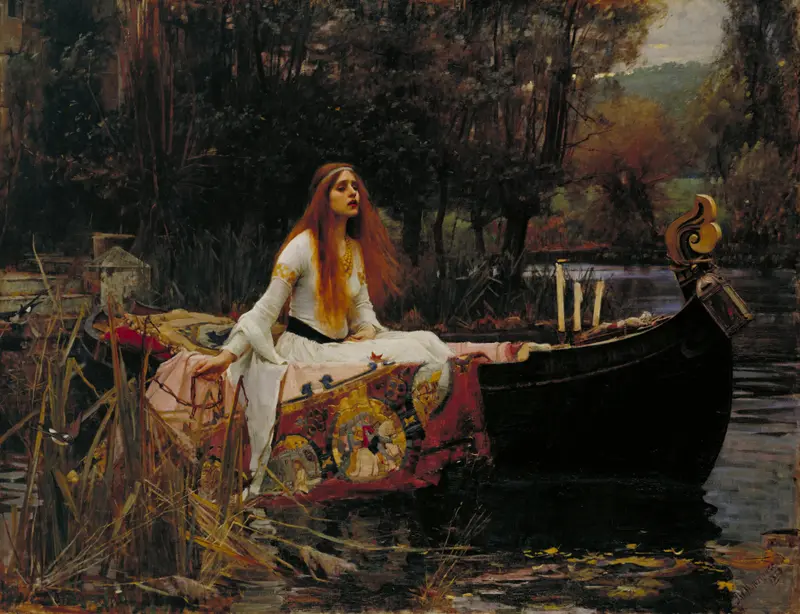
The Lady of Shalott
John William Waterhouse
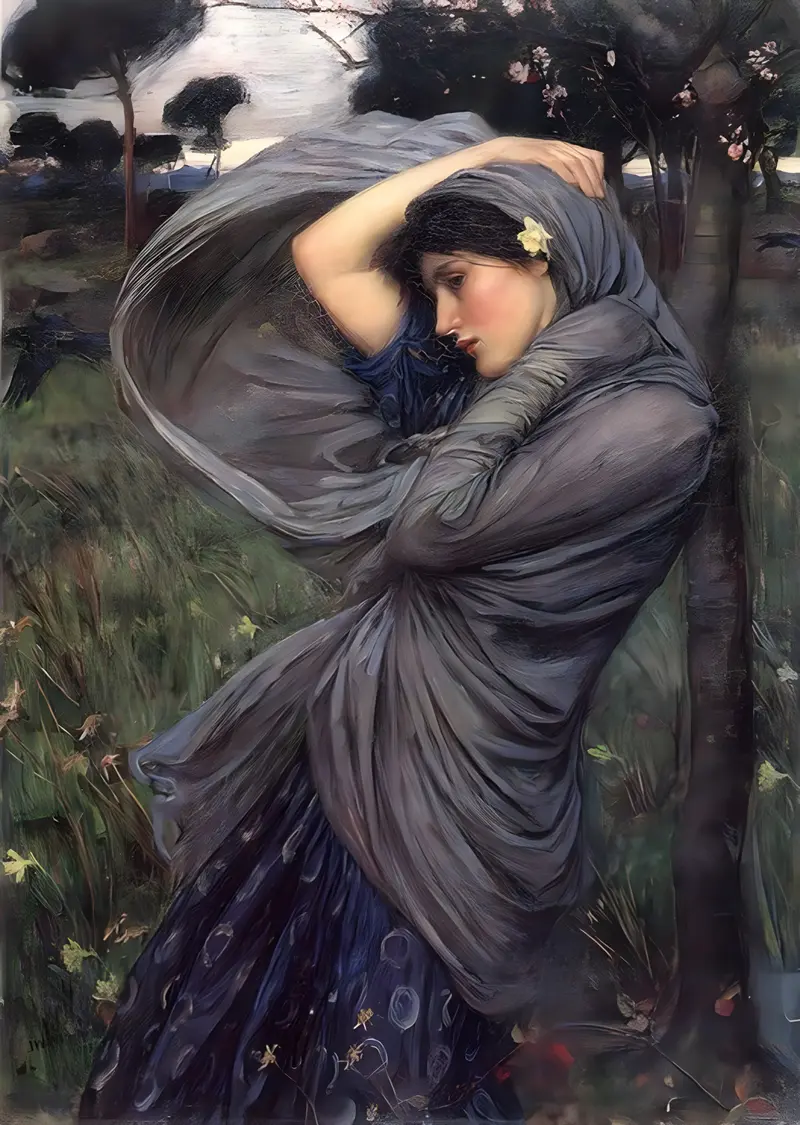
Boreas
John William Waterhouse
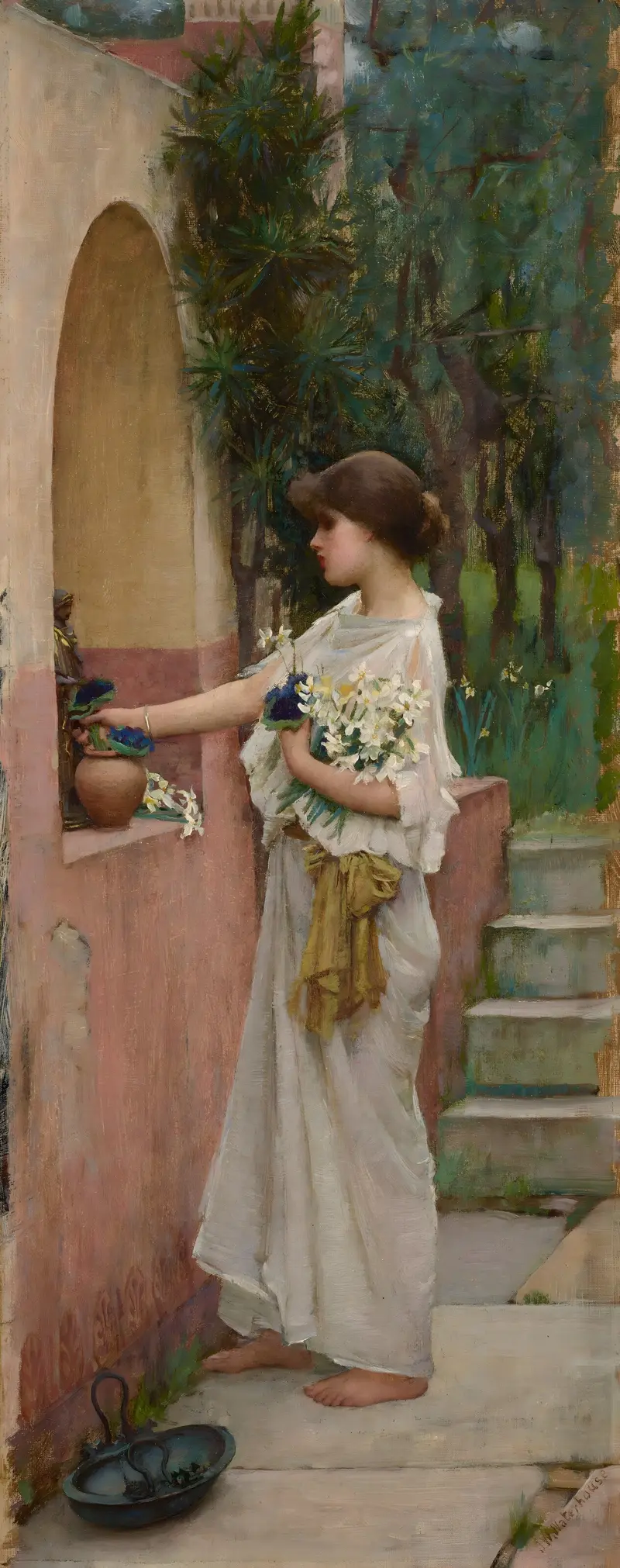
A Roman Offering
John William Waterhouse
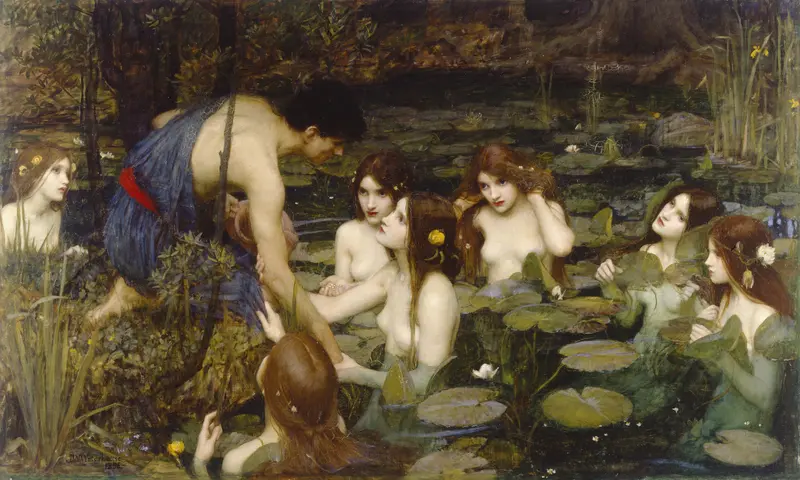
Hylas and the Nymphs
John William Waterhouse
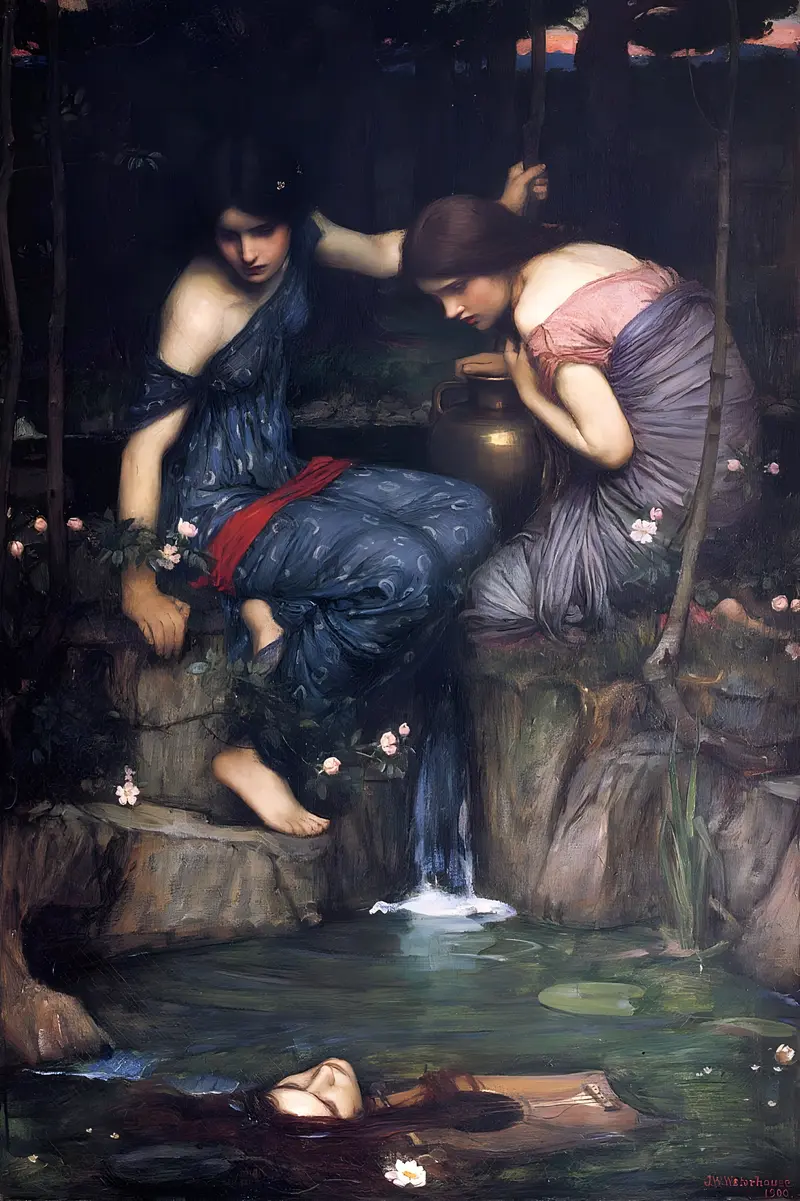
Nymphs Finding the Head of Orpheus
John William Waterhouse
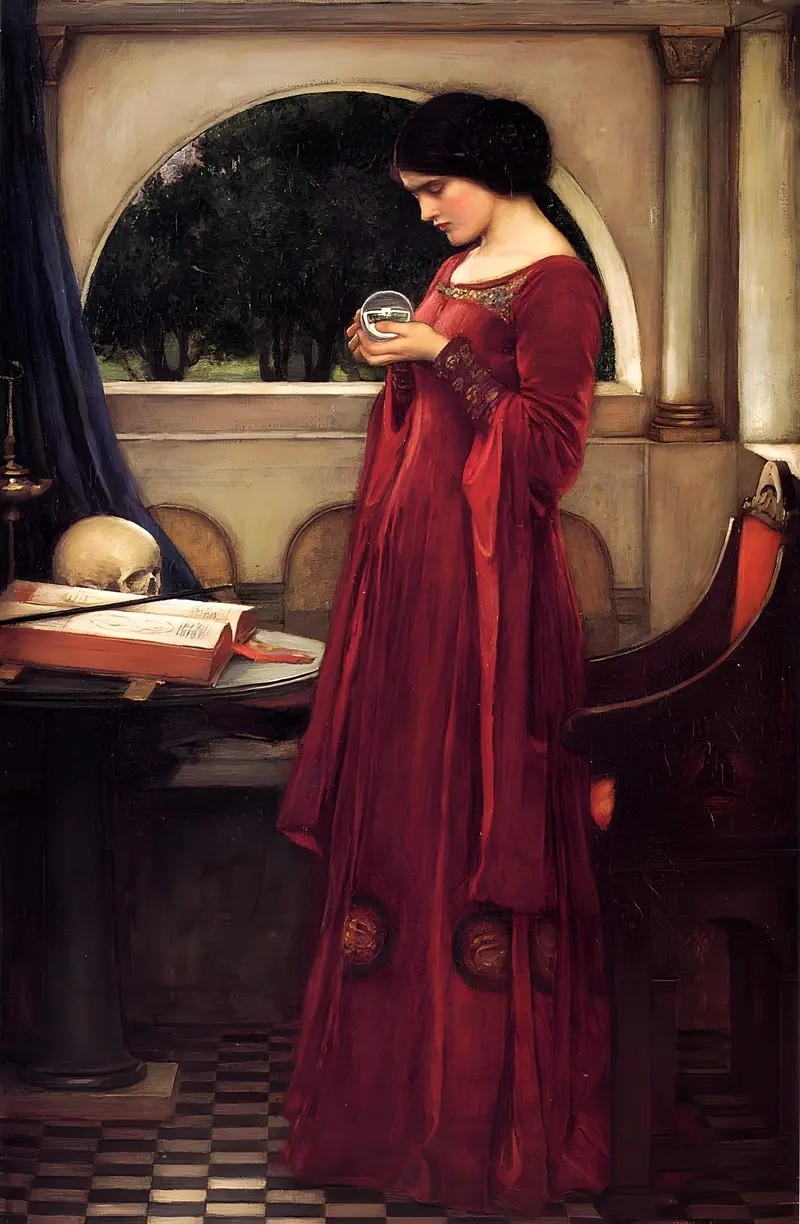
The Crystal Ball
John William Waterhouse
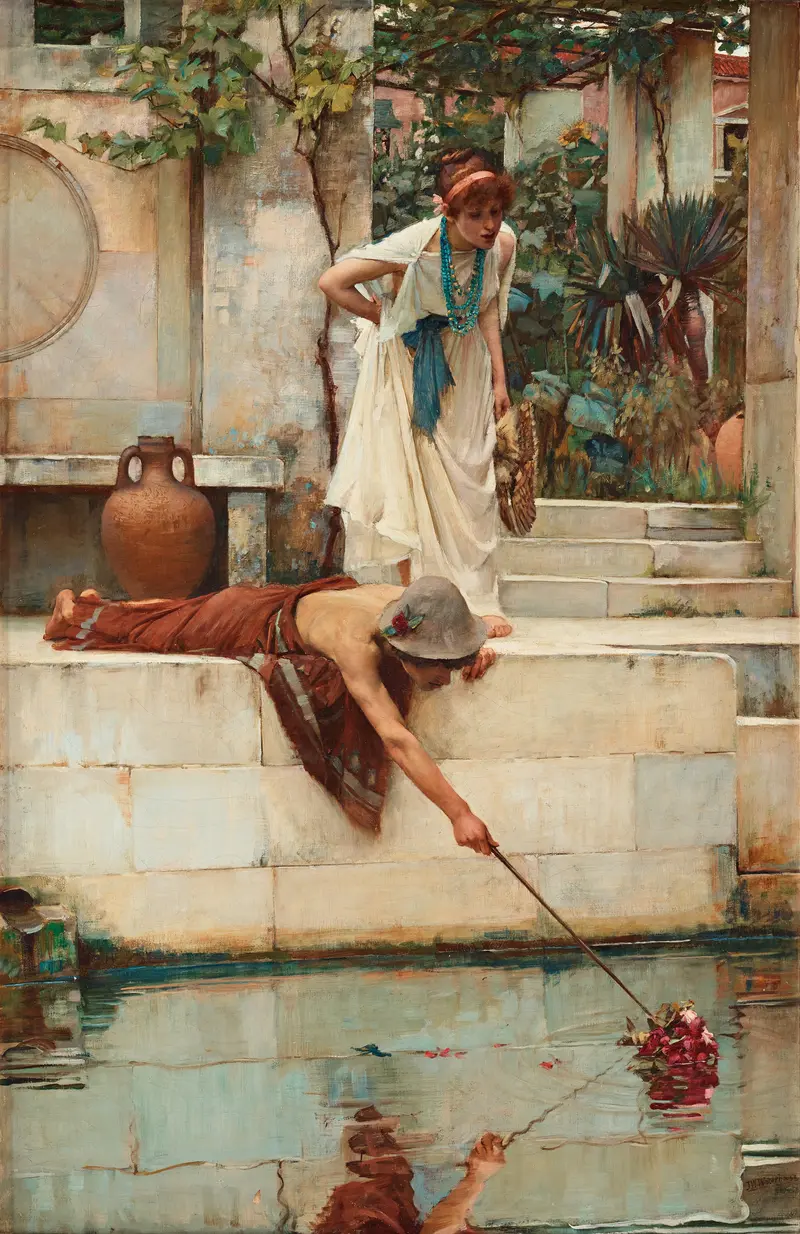
The Rescue
John William Waterhouse
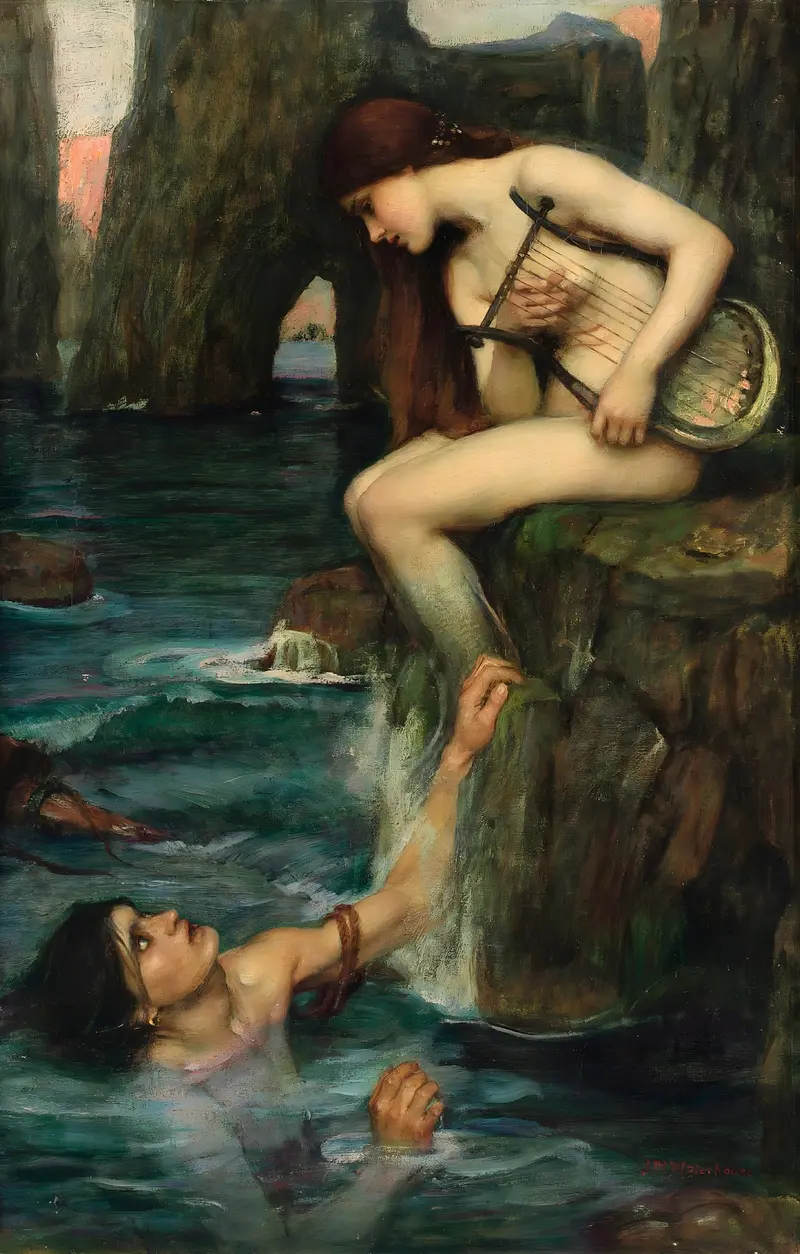
The Siren, 1900
John William Waterhouse





