
Mercury and Argus — History & Facts
When Diego Velázquez painted Mercury and Argus in 1659, he was nearing the end of his career, and this work stands as one of his final mythological subjects. What makes this painting especially intriguing is that it is Velázquez’s only known depiction of the Ovidian myth, and it was created during a period when the artist was deeply engaged with the Spanish royal court. The painting’s provenance is somewhat mysterious, as it was not clearly documented in royal inventories until after Velázquez’s death, adding an air of uncertainty to its early history.
Unlike his more famous mythological canvases, such as The Forge of Vulcan, this work was not widely copied or discussed in contemporary sources, making it a rare and somewhat enigmatic piece in his oeuvre. The moment Velázquez selects is the tense instant before Mercury, disguised as a shepherd, slays the watchful Argus to free Io, as told in Ovid’s Metamorphoses. Mercury, with his winged hat and caduceus, sits beside the giant Argus, who is lulled by music and on the verge of sleep. The composition is spare, with the two figures isolated against a subdued landscape, the drama unfolding in their subtle gestures: Mercury’s poised readiness, Argus’s heavy eyelids.
The cool, silvery light and restrained palette recall the Venetian tradition, yet Velázquez’s brushwork is looser, more atmospheric than the crisp forms of, for example, Peter Paul Rubens’s energetic Mercury and Argus of 1636. Here, the violence is suspended, the narrative tension heightened by the stillness before the act. The painting’s early history remains unclear, but it is generally believed to have been produced for the Spanish royal collections, likely for the decoration of the Buen Retiro Palace. Over the centuries, Mercury and Argus has remained in Spain, passing through various royal inventories before entering the holdings of the Museo del Prado, where it resides today.
Scholars have long debated the exact circumstances of its commission, as well as its place within Velázquez’s late style, which is marked by increasing freedom and subtlety. Despite its relative obscurity compared to the artist’s larger mythological works, this painting offers a rare glimpse into Velázquez’s fascination with myth and his ability to distill narrative into a moment of psychological depth.
More Artworks by Diego Velázquez

Las Meninas
Diego Velázquez
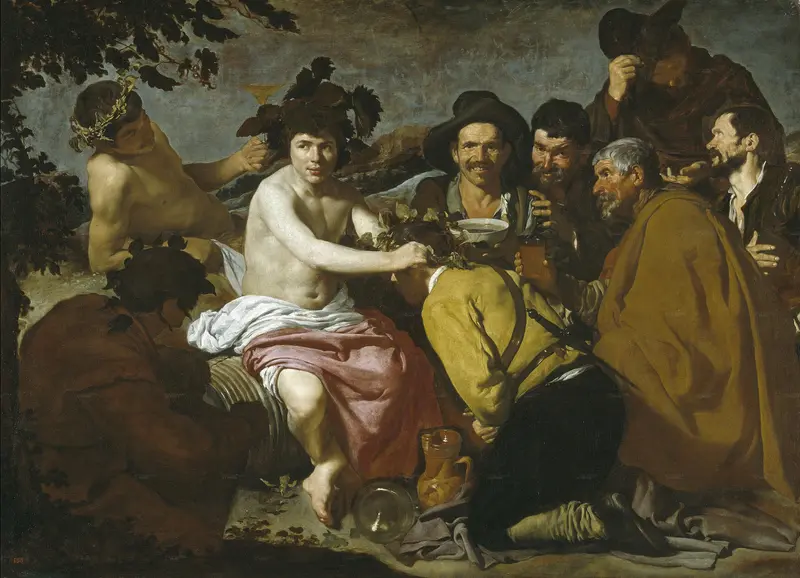
The Triumph of Bacchus
Diego Velázquez
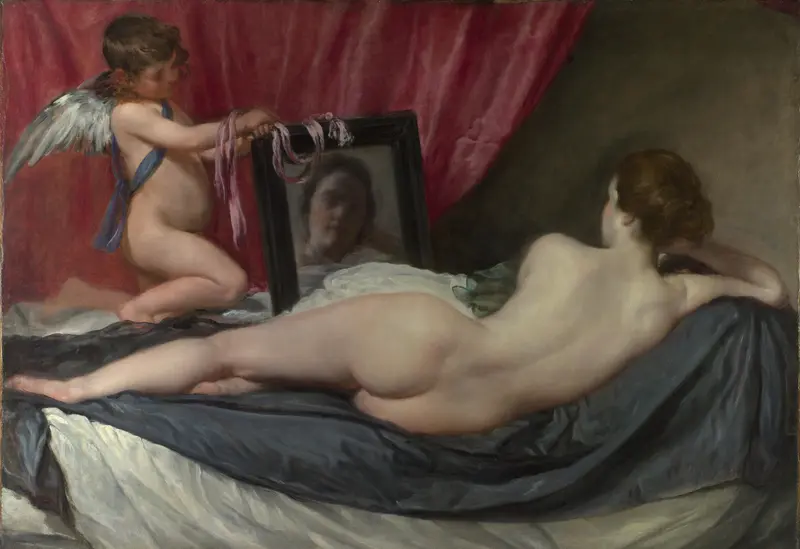
Rokeby Venus
Diego Velázquez
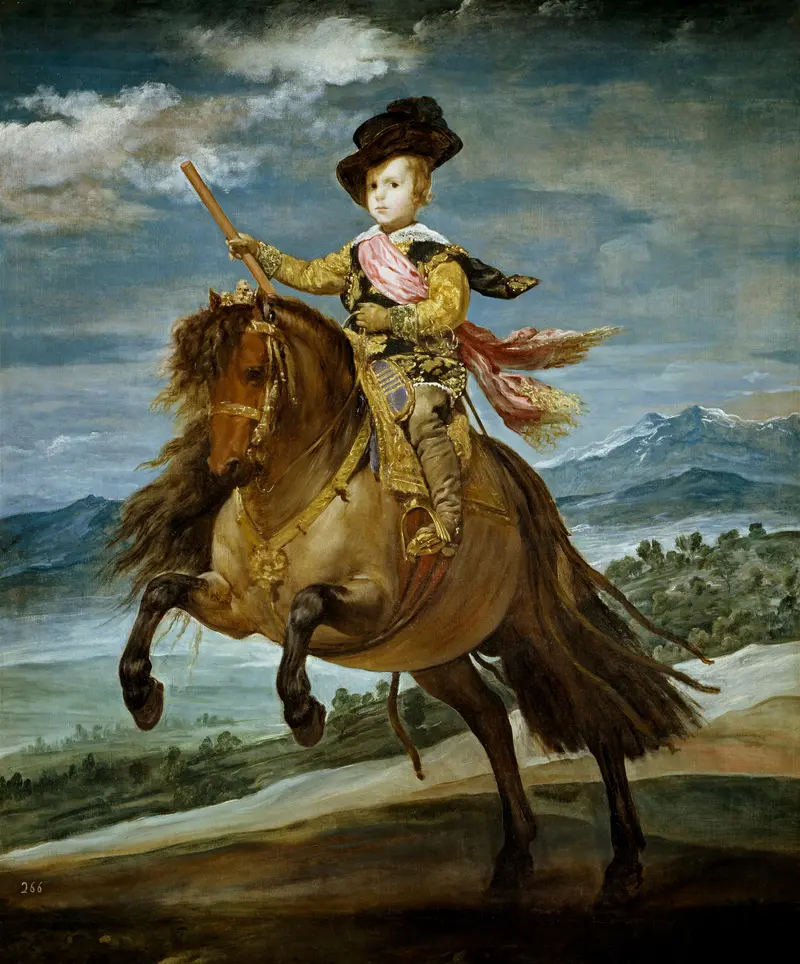
Equestrian Portrait of Prince Balthasar Charles
Diego Velázquez
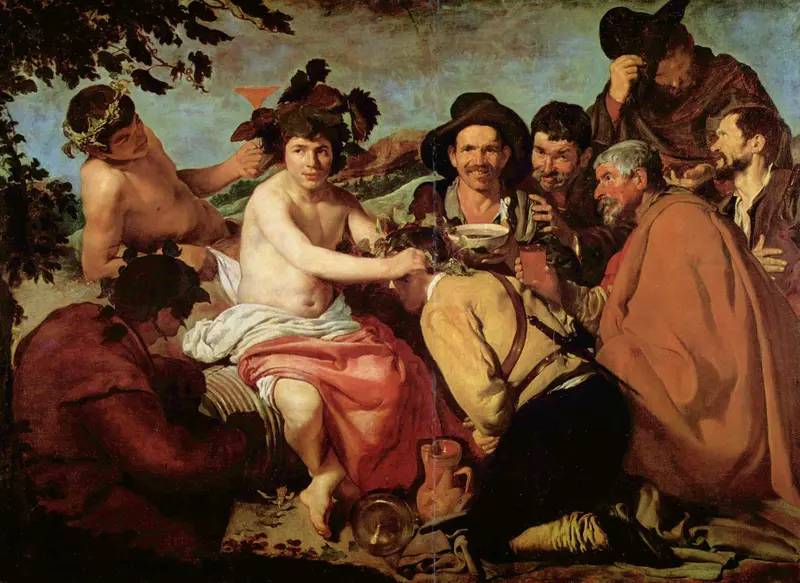
Bacchus
Diego Velázquez
Don Gaspar de Guzmán (1587–1645), Count-Duke of Olivares
Diego Velázquez
El príncipe Baltasar Carlos de Austria
Diego Velázquez
Equestrian Portrait of Philip III
Diego Velázquez
Equestrian Portrait of Margarita of Austria
Diego Velázquez
Las Hilanderas
Diego Velázquez





