Ornament of Indigenous Peoples No. 2 — History & Facts
What first grips the eye in Ornament of Indigenous Peoples No. 2 by Owen Jones is the sheer rhythm of repetition—motifs marching in rows, lines echoing across the page, each band of pattern both distinct and harmoniously interlocked with its neighbors. The chromolithograph’s warm ochres and deep browns evoke the tactile sense of carved wood or woven fiber, suggesting a world where ornament is not mere decoration but a language.
Faces peer out from the central frieze, their stylized forms both mask and guardian, while the surrounding bands pulse with chevrons, triangles, and undulating waves. The composition is almost architectural, as if each strip might be lifted and wrapped around a pillar, a drum, or a ceremonial object, carrying with it the memory of hands and tools. Created in the mid-nineteenth century, this page belongs to an era when European designers and scholars, like Jones, sought to catalogue the world’s decorative arts in encyclopedic volumes. Published in London in 1910 and now preserved in the Polona Digital Library, this work is part of a larger movement that both admired and appropriated non-European design, often through a colonial lens.
Such plates were intended as models for architects, artists, and craftsmen, feeding the Victorian hunger for ornament and the belief that design could be systematized and taught. Yet, history has kept few traces of the individual makers whose traditions inspired these patterns—leaving us, as viewers, to ponder the distance between the source and its reproduction, and to let our eyes wander once more across the intricate, living surface.
More Artworks by Owen Jones

Greek Ornament No. 1
Owen Jones
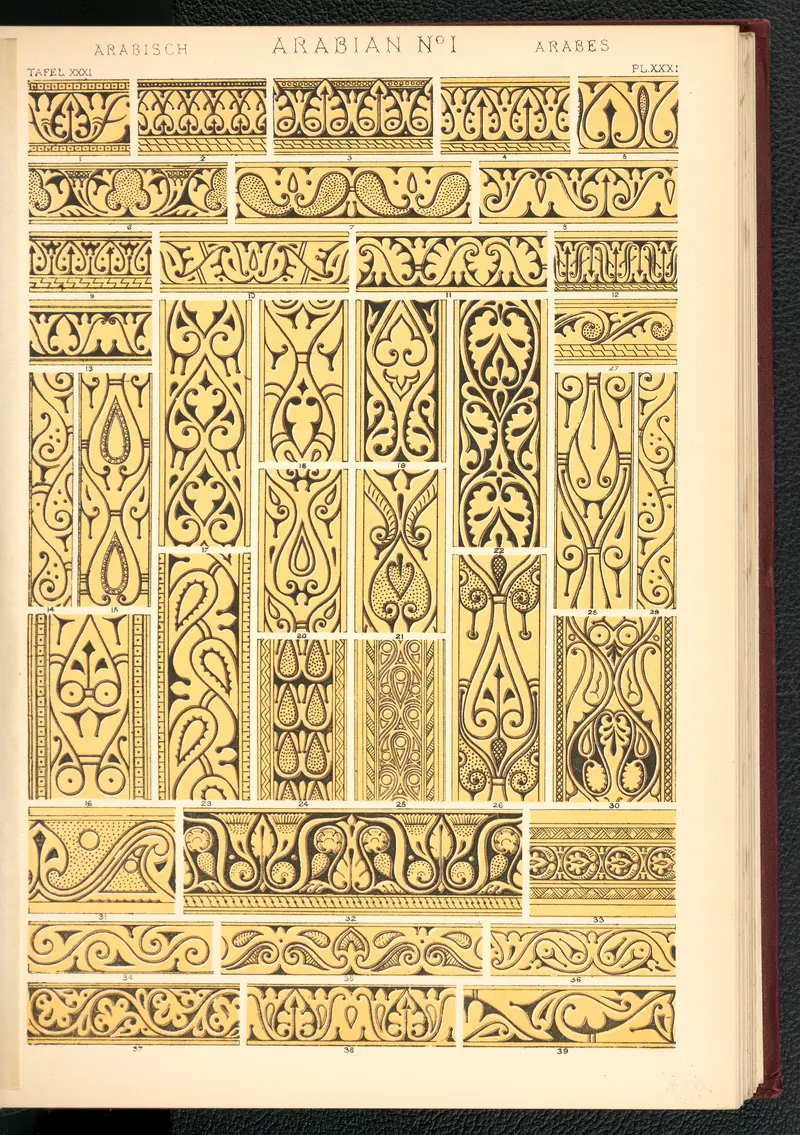
Arabian Ornament No. 1
Owen Jones
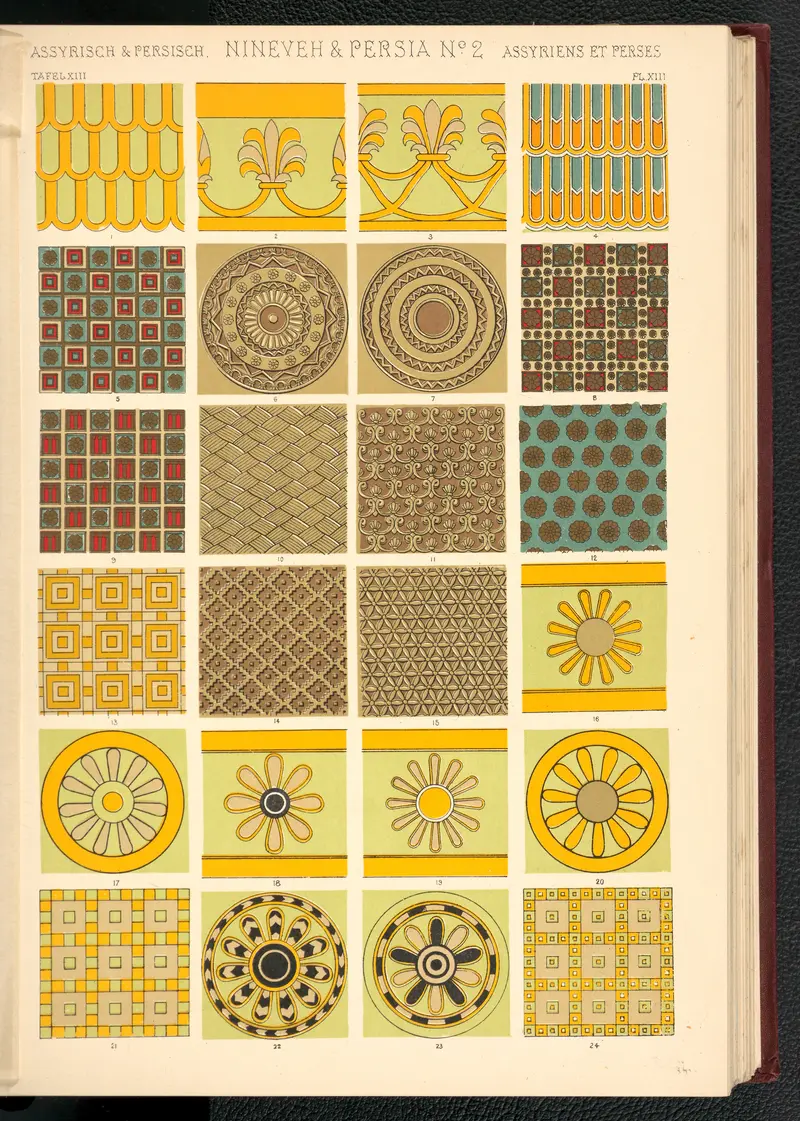
Assyrian Ornament No. 2
Owen Jones

Egyptian Ornament No. 3
Owen Jones
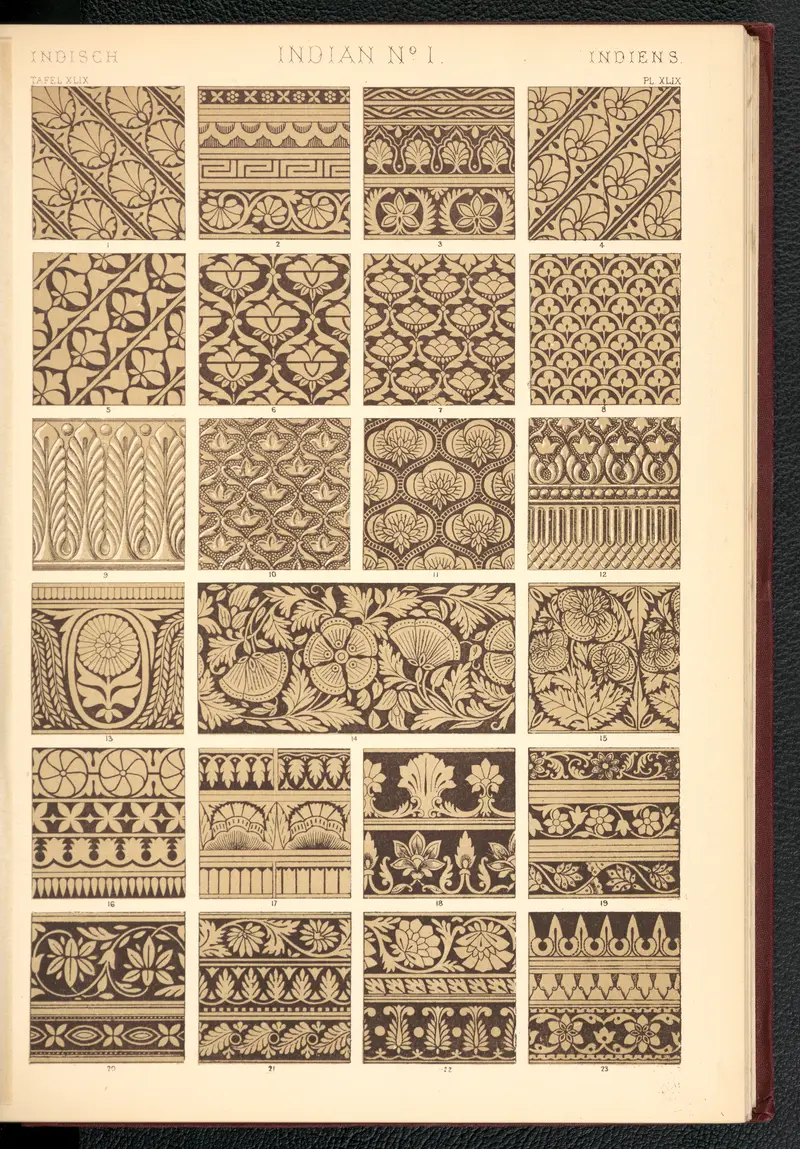
Indian Ornament No. 1
Owen Jones
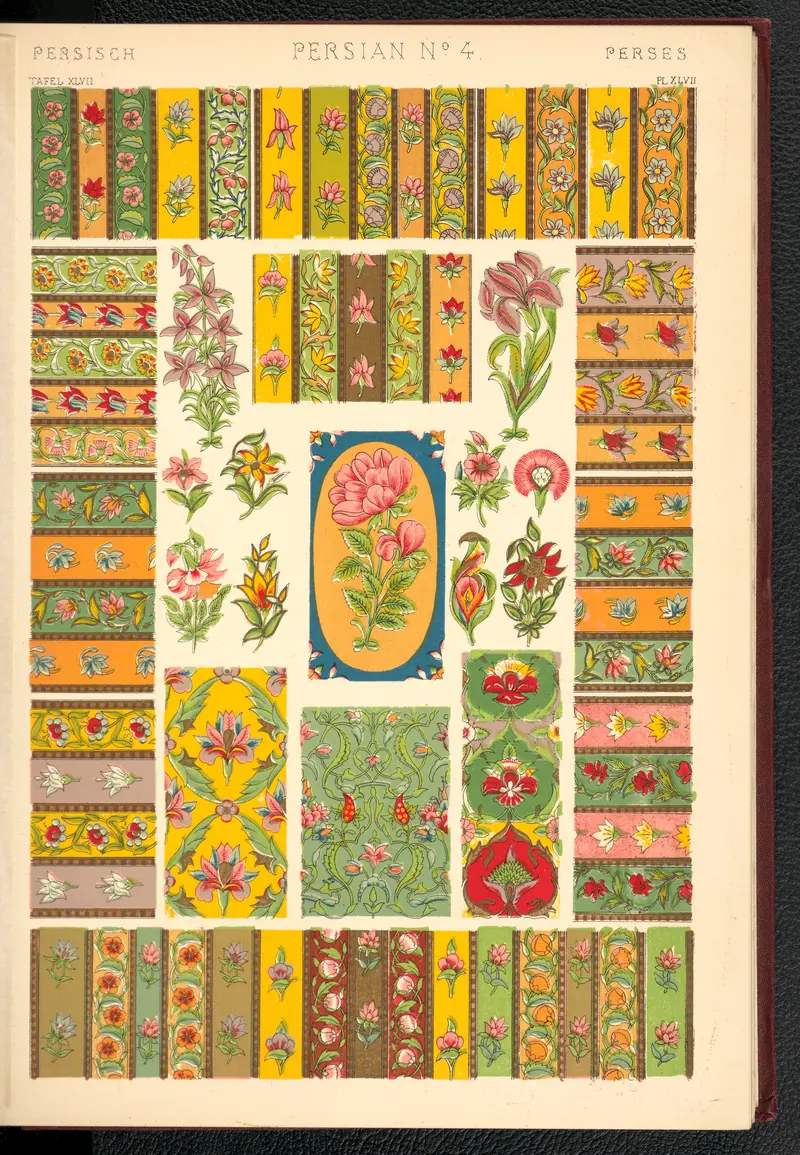
Persian Ornament No. 4
Owen Jones
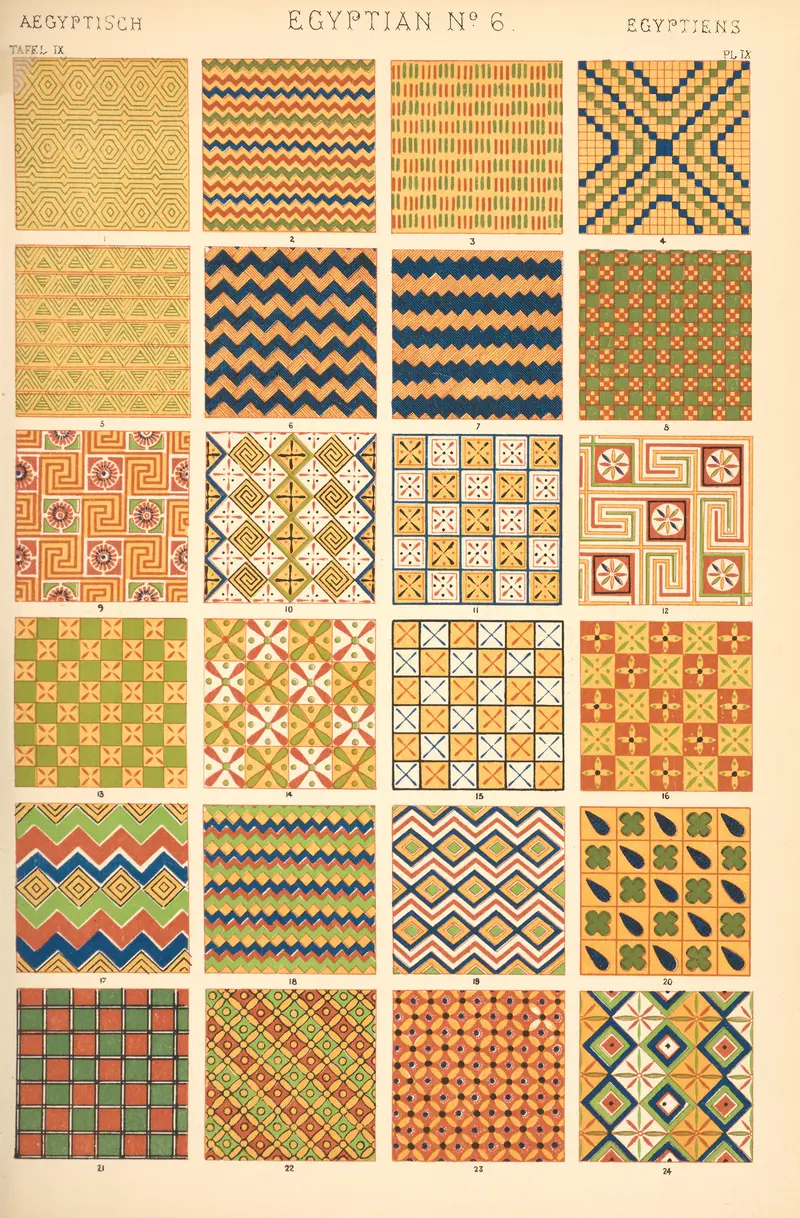
Egyptian Ornament No. 6
Owen Jones
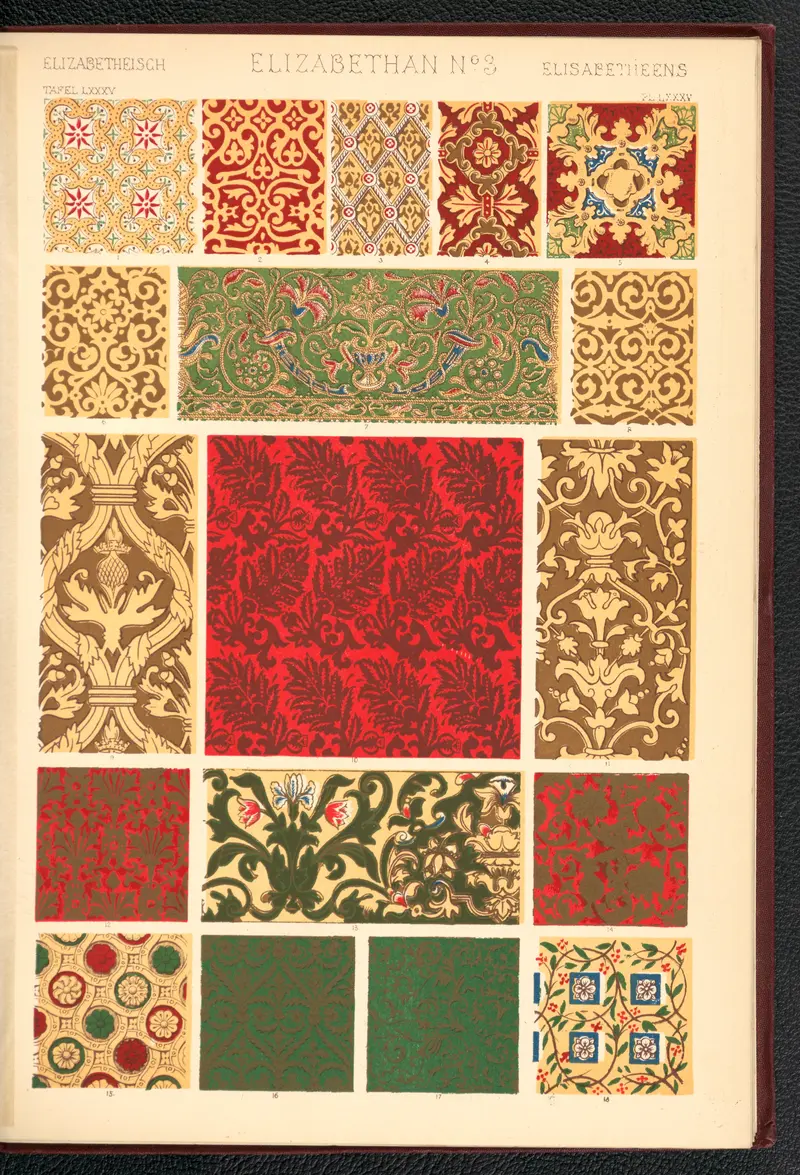
Elizabethan Ornament No. 3
Owen Jones
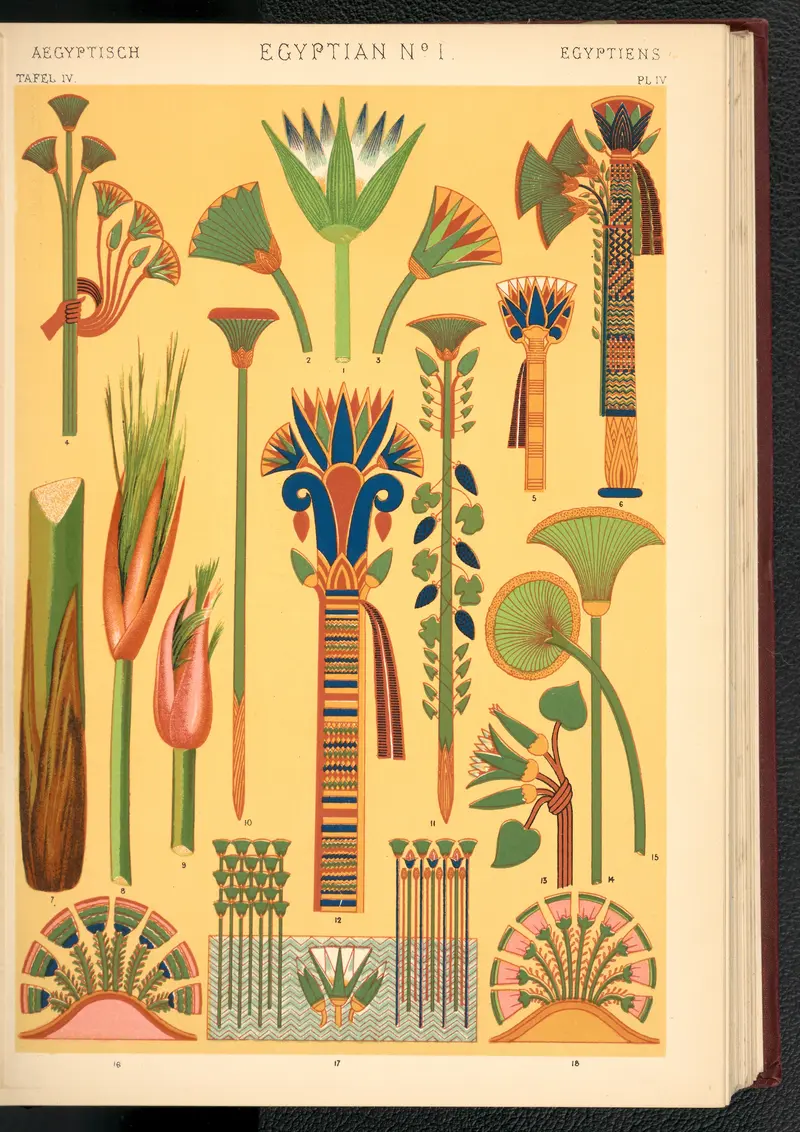
Egyptian Ornament No. 1
Owen Jones
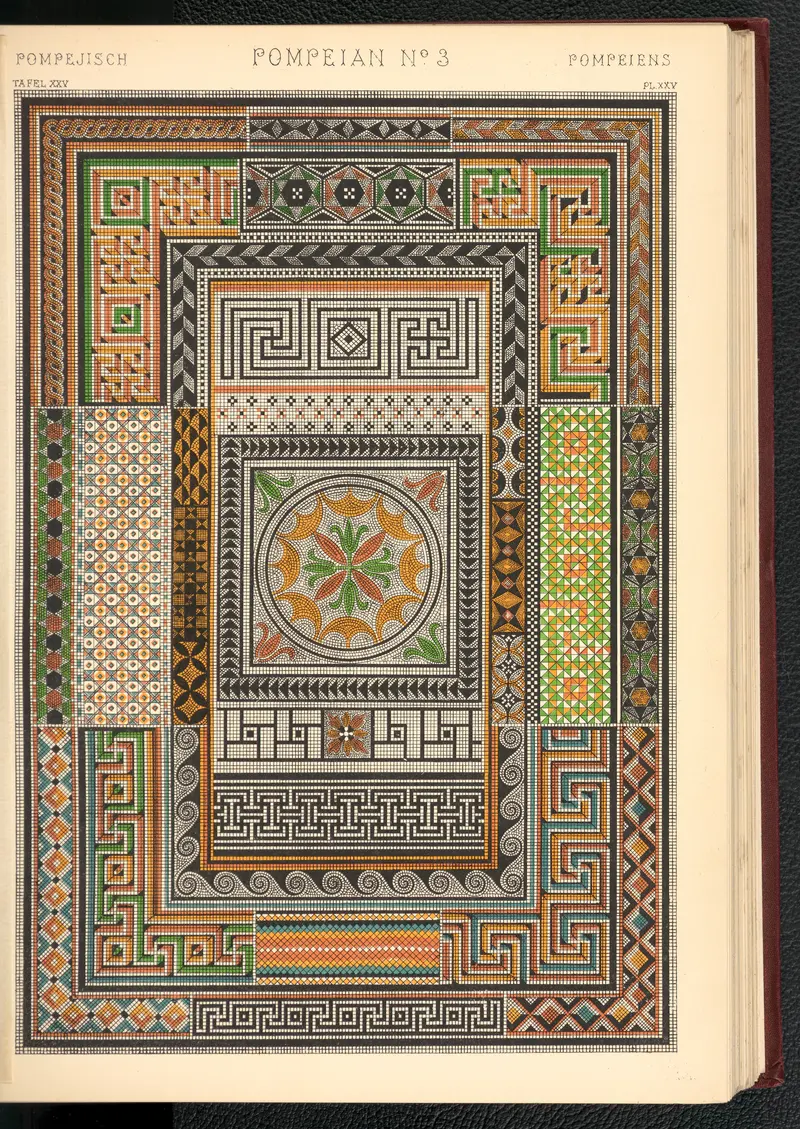
Pompeian Ornament No. 3
Owen Jones